Linda's Literary Home

Tag: poetry

  • Emily Dickinson’s “Delayed till she had ceased to know”

    Image: Emily Dickinson - Amherst College - Daguerrotype of the poet at age 17, circa 1847 - likely the only authentic, extant likeness of the poet
    Image: Emily Dickinson – Amherst College – Daguerrotype of the poet at age 17, circa 1847 – likely the only authentic, extant likeness of the poet

    Emily Dickinson’s “Delayed till she had ceased to know”

    Emily Dickinson’s “Delayed till she had ceased to know” explores the tragic irony of fulfillment arriving only after the recipient has surrendered consciousness, while its spiritual implications echo Paramahansa Yogananda’s emphasis on inner realization, perseverance, and the danger of abandoning the search for divine fulfillment too soon.

    Introduction and Text of “Delayed till she had ceased to know”

    In my earlier essays on Dickinsonian poems, I have discussed the speaker’s tendency to privilege inward experience over outward appearances. In “Delayed till she had ceased to know,” the speaker turns that concern toward the painful consequences of mistimed fulfillment. 

    The poem presents a woman who dies only an hour before the arrival of some long-awaited joy or victory. The terrible irony is not merely that fulfillment comes too late, but that it comes so close to her death that the knowledge of its approach might have enabled her to continue living.

    This idea has a meaningful parallel in the teachings of Paramahansa Yogananda, who repeatedly emphasizes that genuine fulfillment must ultimately be discovered within rather than dependent upon changing external circumstances. 

    From that perspective, the poem’s tragedy can be understood not simply as the loss of an earthly reward, but as the surrender of hope immediately before the possibility of fulfillment becomes apparent. 

    The speaker does not explicitly identify the anticipated “bliss” as divine realization, and the poem wisely leaves its nature uncertain. Nevertheless, Yogananda’s spiritual emphasis on perseverance and inner awareness provides a useful lens through which to consider the speaker’s haunting question: What if the defeated soul had known how near the victory really was?

    Delayed till she had ceased to know

    Delayed till she had ceased to know –
    Delayed till in its vest of snow
    Her loving bosom lay –
    An hour behind the fleeting breath –
    Later by just an hour than Death –
    Oh lagging Yesterday!

    Could she have guessed that it would be –
    Could but a crier of the joy
    Have climbed the distant hill –
    Had not the bliss so slow a pace
    Who knows but this surrendered face
    Were undefeated still?

    Oh if there may departing be
    Any forgot by Victory
    In her imperial round –
    Show them this meek appareled thing
    That could not stop to be a king –
    Doubtful if it be crowned!

    Commentary on “Delayed till she had ceased to know”

    Emily Dickinson’s “Delayed till she had ceased to know” examines the poignant consequences of a victory or blessing that arrives only after the person who longed for it has passed beyond the ability to receive it.

    First Movement: “Delayed till she had ceased to know”

    Delayed till she had ceased to know –
    Delayed till in its vest of snow
    Her loving bosom lay –
    An hour behind the fleeting breath –
    Later by just an hour than Death –
    Oh lagging Yesterday!

    The speaker begins with the stark repetition of the word “Delayed.” The repetition immediately establishes the central grievance: something desirable was coming, but it came too late. 

    The woman has “ceased to know” before the anticipated joy arrives, suggesting that the tragedy involves not simply physical death but the loss of consciousness necessary to experience fulfillment.

    The speaker then places the woman’s “loving bosom” within a “vest of snow.” The image of snow suggests both physical burial and emotional stillness. The warmth associated with the “loving bosom” has been overcome by the cold finality of death. 

    The contrast between love and snow emphasizes the gulf between the woman’s former vitality and her present condition.  The precise measurement of time makes the tragedy especially painful:  “An hour behind the fleeting breath – / Later by just an hour than Death –.”

    The speaker could have described the reward as arriving long after the woman’s death, but instead the poem specifies “an hour.” The narrow interval intensifies the sense of missed possibility. The desired fulfillment was not impossibly distant; it was almost within reach. Death simply arrived first.

    The closing apostrophe—“Oh lagging Yesterday!”—personifies the past as something capable of moving too slowly. Yesterday itself seems responsible for the delay. Time, rather than simply passing, has become an adversary that has failed the woman at the precise moment when she needed it to move differently.

    From Yogananda’s perspective, the passage can also suggest the spiritual danger of allowing external circumstances to determine one’s inner state. Yogananda repeatedly taught that lasting peace and fulfillment are not ultimately dependent upon the changing conditions of the material world. 

    The woman, however, appears to have reached a point at which the external arrival of bliss matters desperately because she has no evidence that it is coming. The tragedy therefore lies partly in the absence of inward assurance. 

    If the soul could remain convinced of an approaching fulfillment even when outward circumstances offered no confirmation, surrender might be postponed.  The first movement thus establishes the poem’s fundamental irony: fulfillment was not necessarily impossible; it was simply not known to be coming before death intervened.

    Second Movement: “Could she have guessed that it would be”

    Could she have guessed that it would be –
    Could but a crier of the joy
    Have climbed the distant hill –
    Had not the bliss so slow a pace
    Who knows but this surrendered face
    Were undefeated still?

    The second movement shifts from certainty about death to speculation about what might have happened differently. The speaker asks whether the woman could have survived if she had somehow known that joy was approaching.

    The image of a “crier of the joy” is especially significant. A crier is a herald, someone who announces important news before the event itself occurs. The speaker imagines such a messenger appearing on a distant hill, carrying evidence that fulfillment is approaching. The joy itself might still be far away, but knowledge of its arrival could have provided the hope necessary to endure.

    The distance of the hill is important as well. The messenger is not yet at the woman’s side. The desired event remains separated from her by space and time. Nevertheless, even an announcement of its approach might have changed her decision to surrender.

    This possibility resonates particularly strongly with Yogananda’s emphasis on perseverance in spiritual life. His teachings repeatedly encourage the seeker not to abandon the inward quest merely because the desired realization has not yet appeared.

    Spiritual progress may remain invisible for a considerable period before its results become apparent. In that sense, the speaker’s “distant hill” can be read metaphorically as the place from which the first evidence of approaching fulfillment might appear.

    Yet the speaker is more uncertain than a straightforward spiritual teaching would be. The poem does not say that the woman would certainly have survived. Instead, the speaker asks:  “Who knows but this surrendered face / Were undefeated still?”

    The phrase “Who knows” preserves the poem’s mystery. The speaker can imagine another outcome but cannot prove it. The woman’s surrender may have been premature, but the poem cannot determine whether knowledge of the approaching bliss would actually have saved her.

    The word “surrendered” nevertheless connects physical death with spiritual defeat. The woman’s face has yielded because hope apparently arrived too late. Yogananda’s teachings provide an illuminating counterpoint here: the spiritual seeker must continue looking inward even when external circumstances seem to announce defeat. Inner awareness can sustain perseverance precisely when visible evidence is absent or contrary.

    The tragedy, then, is not simply that the woman died. It is that the poem leaves readers wondering whether she died one hour before she needed to, because the knowledge of impending joy might have given her the strength to continue.

    Third Movement: “Oh if there may departing be”

    Oh if there may departing be
    Any forgot by Victory
    In her imperial round –
    Show them this meek appareled thing
    That could not stop to be a king –
    Doubtful if it be crowned!

    In the final movement, the speaker broadens the poem from the fate of one woman to the larger question of those whom Victory overlooks. Victory is personified as a powerful imperial figure moving through the world in a triumphant procession:  “Any forgot by Victory / In her imperial round –.”

    The language of “imperial” introduces images of conquest, authority, and worldly power. Victory seems almost like a monarch distributing crowns to those who have succeeded.

    Yet the speaker asks that, if Victory ever forgets anyone along her grand procession, she should be shown this particular woman.  The contrast between imperial grandeur and personal humility becomes especially striking in:  “Show them this meek appareled thing”

    The woman is not dressed in the outward symbols of power. She is “meek,” apparently possessing none of the conventional magnificence associated with victory. Yet the speaker asks that Victory recognize her nonetheless.  The next line deepens the irony “That could not stop to be a king –.”

    The woman did not live long enough to claim the triumph that may have been approaching. The word “king” continues the poem’s imagery of crowns, imperial power, and worldly recognition. 

    Yet the speaker’s phrasing also makes conventional victory seem strangely inadequate. The woman who could not become a “king” may possess a worth that does not depend upon earthly status.

    Here again, Yogananda’s distinction between external achievement and inward realization offers a useful parallel. The world’s definition of victory depends upon visible accomplishment, recognition, and the attainment of desired circumstances. Spiritual realization, by contrast, is inward. A person may appear externally defeated while possessing an inner consciousness that is untouched by worldly failure.

    The woman occupies precisely this ambiguous position. Outwardly, she has lost. She has died before receiving the anticipated joy. She has not become a “king,” and she does not receive an obvious crown. Yet the speaker refuses to reduce her to defeat.  That refusal becomes most powerful in the final line:  “Doubtful if it be crowned!”

    The speaker does not resolve the question by declaring that the woman ultimately receives a spiritual crown. Instead, the speaker leaves her status uncertain. The uncertainty is essential. The woman may have missed worldly victory, but perhaps worldly victory was never the highest measure of her worth.

    Yogananda’s spiritual philosophy can therefore deepen, rather than settle, the poem’s ambiguity. If true fulfillment is inward, then the external delay of victory need not determine the ultimate condition of the soul. 

    Yet the speaker refuses to reveal whether such an inward victory was actually achieved. The final “Doubtful” keeps the poem suspended between tragedy and transcendence.

    Ultimately, “Delayed till she had ceased to know” is a poem about the cruel importance of timing, but it is also a poem about the relationship between outward circumstances and inward endurance. 

    The speaker presents fulfillment as something that may exist only a moment beyond the reach of the person who desires it. The poem’s deepest tragedy is that the woman might have endured had she known how near the promised joy had become.

    Read alongside Paramahansa Yogananda’s teachings, the poem acquires an additional spiritual dimension. Yogananda’s emphasis on inner realization suggests that the seeker should not measure ultimate fulfillment solely by external events or abandon the inward search because visible victory has been delayed. 

    The speaker, however, remains deliberately less certain. The poem does not assure us that the woman possessed such inward certainty, nor does it identify the delayed bliss as explicitly divine. Instead, the speaker leaves her audience with the haunting possibility that the woman surrendered at the very threshold of fulfillment.

    By placing the “meek appareled thing” before the personified figure of Victory, the speaker finally questions whether conventional victory can adequately measure human worth. The woman may never have received her earthly crown, but perhaps the absence of that crown does not constitute the final truth about her.

    In the space between surrender and victory, between death and delayed bliss, the speaker leaves readers to contemplate a question that Yogananda’s spiritual teachings likewise encourage us to consider: How can we know how close we may be to fulfillment when outward circumstances give us no evidence that it is near?


    Image: Emily Dickinson - Commemorative Stamp
    Image: Emily Dickinson – Commemorative Stamp
  • No Sharks

    Image created by Gemini inspired by the poem
    Image created by Gemini inspired by the poem

    No Sharks

    an American-Innovative villanelle inspired by my little story “No Sharks”  from my memoir My Life in Little Stories

    The flat rock had gone missing from the sheet metal covering the well.
    I saw it but then turned it from my mind—
    Then a headline flashed my thoughts, “Boy drowns in well.”

    On a cold March day to Granny’s we visited for a spell.
    Rodney and Kelly ran to play in the cold March wind.
    The flat rock had gone missing from the sheet metal covering the well.

    Granny’s houseplants held us talking, so much to tell.
    I heard a thump, guessed a ball had hit the house behind?
    Then a headline flashed my thoughts, “Boy drowns in well.”

    I ran outside, not knowing what I’d find.
    Kelly stood a few feet from the well looking stunned.
    The flat rock had gone missing from the sheet metal covering the well.

    “Where’s Rodney?” She pointed; I ran and nearly fell.
    I lifted the metal, saw pale eyes; the worst stabbed my mind:
    Again, the headline flashed my thoughts, “Boy drowns in well.”

    Granny screamed, “He’s alive!” She held my legs. I pulled from him from the well.
    No water in his lungs! no injury him befell!—
    His only fear was that sharks might dwell
    In the big pond he thought was connected to the well.

  • Water

    Image created by Grok inspired by the poem
    Image created by Grok inspired by the poem

    Water

    we never walked by the river.
    we never ate at some little diner.

    never watched the sun come up together.
    never made poetry on the back of a turtle.

    never made songs out of riming fish.
    never rested at some little motel,

    else I’d hear you say ‘i’m hungry, ready for breakfast?’
    and I’d say ‘yeah, let’s go’.

    sprawled across the bed with old books.
    a river of words rushing my fancy.

    it’s not a dream, it’s drops of chatter
    distilled by windowless silence, I need water—

    I’ll just float here awhile 
    and rearrange the strange clouds

  • Edgar Lee Masters’ “Nicholas Bindle”

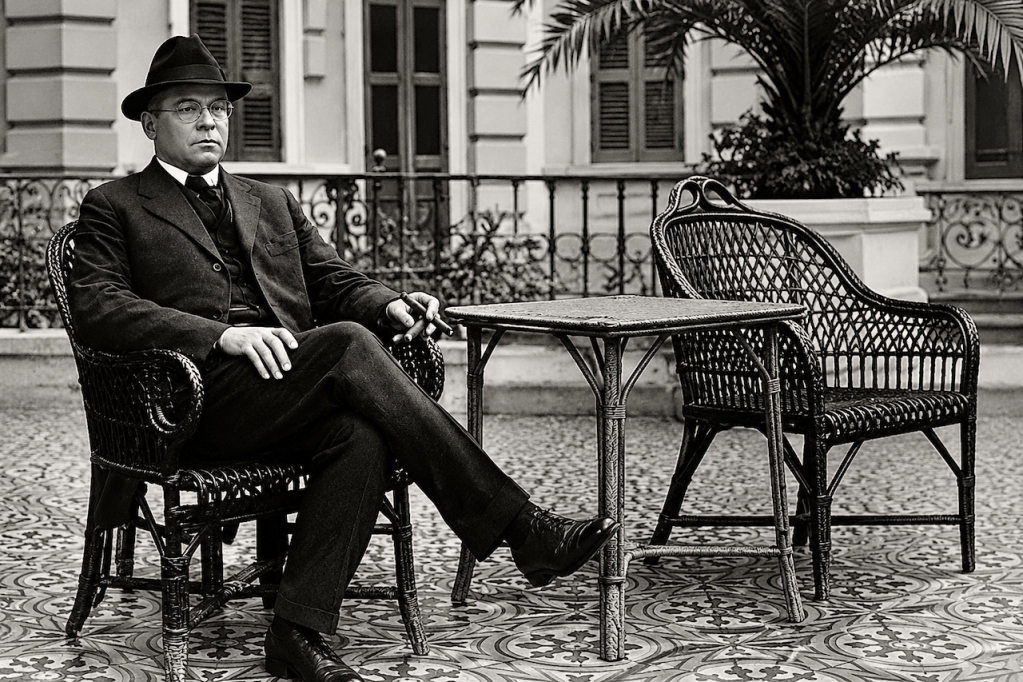
    Image: Edgar Lee Masters http://www.poorwilliam.net/al-082314.html Poor William’s Almanack
    Image: Edgar Lee Masters Poor William’s Almanack

    Edgar Lee Masters’ “Nicholas Bindle”

    In Edgar Lee Masters’ “Nicholas Bindle,” the speaker vents his outrage at the town’s citizenry for continuing to harass him for charitable offerings while his financial situation was not strong.

    Introduction and Text of “Nicholas Bindle”

    In Edgar Lee Masters’ “Nicholas Bindle” from Masters’ American classic Spoon River Anthology, the speaker is expressing his outrage at the town’s citizenry for continuing to harass him for charitable offerings while his financial situation was not strong.

    Nicholas also demonstrates his disgust that Deacon Rhodes was acquitted of bank fraud. This poem’s speaker begins with a question for his fellow citizens who, he feels, should be ashamed for their role in urging him to donate.  

    Nicholas’ opening question reveals his own beliefs about the situation and therefore is rhetorical in nature.  Of course, he wants them to feel shame as he is berating them. The speaker concludes his tirade also with a question that again reveals his own disgust at how unfairly he thinks he was treated.

    Nicholas Bindle condenses his tirade into a mere eleven lines that bellow his deep displeasure from the grave. Nicholas Bindle is one of the extremely unhappy deceased who use their epitaph to castigate their fellow citizens with sharp, critical words. 

    Bindle expresses deep contempt for the citizens of Spoon River. He is one of the many unhappy dead who have unkind words for the citizens of Spoon River.

    Nicholas Bindle

    Were you not ashamed, fellow citizens,  
    When my estate was probated and everyone knew
    How small a fortune I left?—
    You who hounded me in life,
    To give, give, give to the churches, to the poor,
    To the village!—me who had already given much.
    And think you not I did not know  
    That the pipe-organ, which I gave to the church,
    Played its christening songs when Deacon Rhodes,
    Who broke the bank and all but ruined me,
    Worshipped for the first time after his acquittal?

    http://www.youtube.com/watch?v=DgkaaqcjxU8&t=

    Commentary on “Nicholas Bindle”

    The speaker in “Nicholas Bindle” declares himself an innocent man destroyed by the guilt of others—a common theme with these reporters from the graveyard.

    First Movement:  Chiding for Charity

    Were you not ashamed, fellow citizens,  
    When my estate was probated and everyone knew
    How small a fortune I left?—

    The speaker Nicholas Bindle chides his “fellow citizens” for begging him to give to charity.  He needles them as he asked if they were “not ashamed” when they became aware that his estate was so meager.  

    After Nicholas’ death, his estate was “probated” in the courts, and the size of his holdings would have been exposed.  Of course, he is implying that his generosity in giving to charities has depleted his funds.  Nicholas knows that those citizens understand “how small a fortune [he] left” behind, and he wants to vent his anger and frustration over the issue.

    Second Movement:  Begging for More

    You who hounded me in life,
    To give, give, give to the churches, to the poor,
    To the village!—me who had already given much.

    Nicholas continues his rant, accusing the citizens of “hound[ing]” him to “give, give, give.”  They constantly implored him to donate to church and the support the poverty stricken, as well as to the town in general.

    Indignantly, the speaker claims that he had indeed given quite a bit of fortune, yet they continued to badger him to contribute even more.  Nicholas wants to make sure his fellow citizens understand the deep frustration their pleading for charitable offerings has engendered in him.

    Third Movement:   Guilt That Goes Unpunished

    And think you not I did not know  
    That the pipe-organ, which I gave to the church,
    Played its christening songs when Deacon Rhodes,
    Who broke the bank and all but ruined me,
    Worshipped for the first time after his acquittal?

    Finally, Nicholas does reveal that he actually did provide some bounty: he gave the church a pipe-organ.  But instead of taking any comfort in his giving, he is outraged because “Deacon Rhodes” had been in attendance when the pipe-organ first “played its christening songs.” 

    In an earlier poem/epitaph, the reader learned about Deacon Rhodes, who won his acquittal through some legal chicanery.  The unfairness of this situation rankles the frustrated Nicholas as he derides those who caused it to happen.

    Although Nicholas does not allude to those specific circumstances, because he probably does not know the details, he is obsessed because Rhodes’ guilt went unpunished.   Nicholas along with other citizens would have experienced financial hardship and even ruin because of old Thomas Rhodes breaking the bank. 

    Nicholas expresses his outrage as he compares his own situation to those whom he believes bear guilt, while he is an innocent man hounded by the busy-body citizens of Spoon River.

  • My Onions, My Opinions

    269a Image created by ChatGPTinspired by the poem
    Image created by ChatGPTinspired by the poem

    My Onions, My Opinions

    “Understand therefore, that the LORD thy God giveth thee not this good land to possess it for thy righteousness.  For thou art a stiffnecked people.”  Deut. 9:6

    When Auden said, “About suffering they were never wrong, 
    The Old Masters
    ,” he meant my parents.
    They went about it loud and long.
    My mother lost her father when she was twenty,
    married mine when she was twenty-one
    & practiced a vinegar tongue.
    He cursed the weather and my attitude.
    But they knew how to grow a garden.

    When my husband plants onions, he doesn’t set
    them deep enough.  They sit there growing
    like little pots sticking out of the ground.  That’s wrong.
    They need to grow deep in the earth.  So later when you
    pull up a green onion, the useless layers
    sluff off.

    I never knew how they worshiped,
    I never knew if they prayed.
    I sat on the floor cross-legged like an Indian 
    but as stiffnecked as an Israelite.
    I do, however, plant onions right.

  • Edgar Lee Masters’ “Dorcas Gustine”

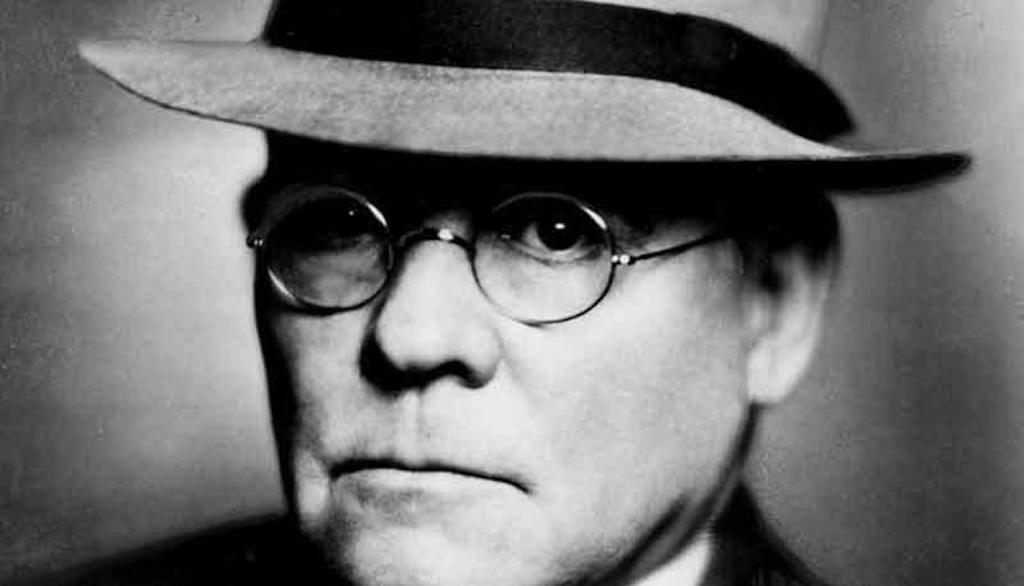
    Image: Edgar Lee Masters https://chicagoliteraryhof.org/inductees/profile/edgar-lee-masters
    Image: Edgar Lee Masters – Chicago Literary Hall of Fame

    Edgar Lee Masters’ “Dorcas Gustine”

    Dorcas Gustine did not let any grievance go unchallenged, and her post-mortem pride is displayed in her report from beyond the grave.  As in the other epitaphs, Dorcas’ report is actually airing a grievance as it disparages the behavior and thinking of others.

    Introduction and Text of  “Dorcas Gustine”

    Edgar Lee Masters’ “Dorcas Gustine” from the poet’s American classic Spoon River Anthology is an American sonnet which dramatizes the thoughts of a strong-willed character.  Dorcas reports that she defended herself against wrongs, or perhaps perceived wrongs, and thereby was “not beloved of the villagers.”

    Because Dorcas Gustine felt great pride in her behavior of not allowing any grievance to go unchallenged, she now displays that post-mortem pride in her revealing report from beyond the grave.

    Dorcas Gustine

    I was not beloved of the villagers,
    But all because I spoke my mind,
    And met those who transgressed against me
    With plain remonstrance, hiding nor nurturing  
    Nor secret griefs nor grudges.
    That act of the Spartan boy is greatly praised,  
    Who hid the wolf under his cloak,  
    Letting it devour him, uncomplainingly.  
    It is braver, I think, to snatch the wolf forth
    And fight him openly, even in the street,
    Amid dust and howls of pain.
    The tongue may be an unruly member—  
    But silence poisons the soul.
    Berate me who will—I am content.

    Commentary on“Dorcas Gustine”

    Dorcas Gustine did not let any grievance go unchallenged, and her post-mortem pride is displayed in her report from beyond the grave.

    First Movement:   Not Well Liked

    I was not beloved of the villagers,
    But all because I spoke my mind,
    And met those who transgressed against me
    With plain remonstrance, hiding nor nurturing  
    Nor secret griefs nor grudges.

    The speaker Dorcas Gustine begins her monologue by asserting that the villagers of Spoon River did not particularly care for her.  She then offers her belief that they did not like her because she “spoke [her] mind.”   

    Dorcas did not allow any transgression against her to go unchallenged.  She calls her self-defense “plain remonstrance,” which implies that she is certain that she was simply defending herself with honesty.  

    Because of Dorcas’ habit of meeting every slight with a response, she declares that she was, therefore, able to go about without concealing those griefs, which she did not allow to grow in “secret,” nor did she keep her grudges hidden.

    What Dorcas does not seem to realize is that her failure to nurse secret griefs and grudges did not translate positively by the other villagers; she likely felt that airing each disaffection should be a healthy act.

    Second Movement:   Allusion to Plutarch

    That act of the Spartan boy is greatly praised,  
    Who hid the wolf under his cloak,  
    Letting it devour him, uncomplainingly.  

    Dorcas alludes to Plutarch’s tale of the Spartan boy who, to avoid detection, held a baby wolf—which is a fox in Plutarch’s telling—under his garment, and even though the wolf gnawed into the boy’s stomach, he did not grimace.  

    Dorcas does not realize the irony of her allusion.  The Spartan boy’s act demonstrated his severe training in conquering pain, while Dorcas demonstrates a self-involved attitude that will not accept pain or any discomfort.

    Third Movement:  An Open Fight

    It is braver, I think, to snatch the wolf forth
    And fight him openly, even in the street,
    Amid dust and howls of pain.

    Dorcas then explains that she finds the braver act “to snatch the wolf forth / And fight him openly.”  But such an act for the Spartan boy would have demonstrated weakness, as the boy explained,  ” . . . better to die without yielding to the pain than through being detected because of weakness of spirit to gain a life to be lived in disgrace.”

    Dorcas’ idea of bravery differs greatly from that of the Spartan boy.  Dorcas found that she had to remove the source of her consternation immediately.  She had no patience and probably felt herself superior to those who would “remonstrate” against her.

    Fourth Movement:  Not Content

    The tongue may be an unruly member—  
    But silence poisons the soul.
    Berate me who will—I am content.

    Dorcas concludes by admitting that “the tongue may be an unruly member,” but despite that unruliness, she believes holding one’s tongue is poisonous, that is, “silence poisons the soul.”  Dorcas then calls for those who disagree with her to “berate [her]” if they choose, and concludes by stating that she is “content.”

    The reader never discovers how Dorcas Gustine died.  That she is providing a post-mortem report, however, belies her claim that she is content.    As the reader has discovered from all the other deceased reporters, none can be thought to be content.  All of them display some grievance or strongly held tie to their former lives that they wish to share.

  • A Bright Charm

    Image created by Gemini inspired by the poem
    Image created by Gemini inspired by the poem

    A Bright Charm

    His squeal was not at all 
    As pathetic as the barnyard pig
    Whose blood jets propelled
    That old expression, “bled like a stuck hog”—
    He bled beautifully, just the right color 
    And sticky-sweet texture she expected from him
    And his flesh shucked off those bones easy
    And clean as pulling his t-shirt right off his back.
    His plump rump slid off as easy as his white cotton 
    Undies.  His joints unhooked quick as any brassiere 
    She ever shucked.

    Standing ankle-deep in guts
    She marveled at the cooperation
    Of the sum of his parts,
    They seemed to want to be put asunder.

    Still, she’s truly sorry it had to end that way—
    She’d rather his tongue be sliding over hers
    Than down the gullet of those buzzards—but oh well,
    His cherubic face glowing like the moon 
    Is a bright charm dangling from her bracelet of old lovers.

  • Edgar Lee Masters’ “The Town Marshal” and “Jack McGuire”

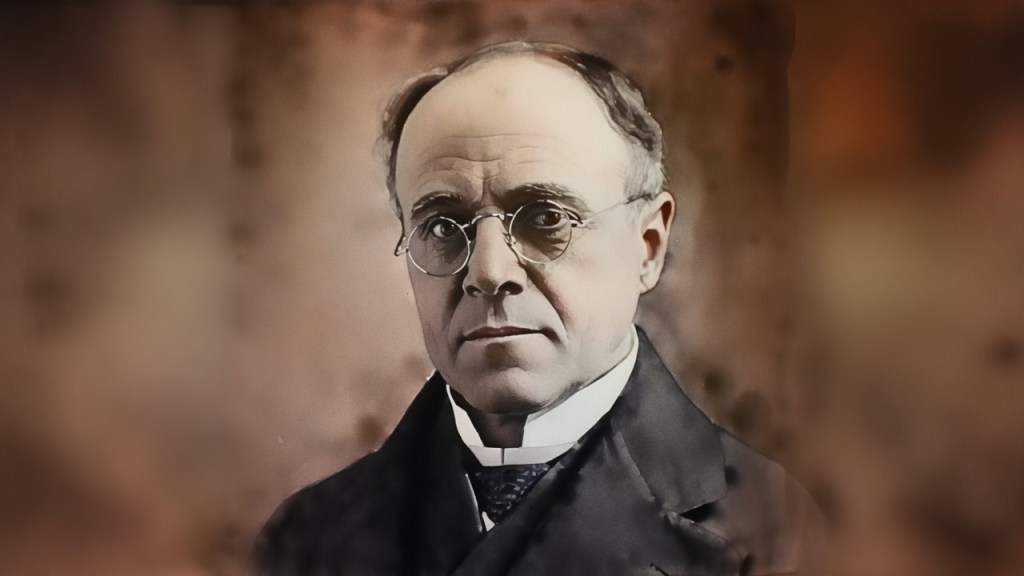
    005a Image/Edgar-Lee-Masters-Portrait.jpg
    Image: Edgar Lee Masters

    Edgar Lee Masters’ “The Town Marshal” and “Jack McGuire”

    In Edgar Lee Masters’ “The Town Marshal,” a man named Logan is hired by prohibitionists. Logan meets his demise because of his bullying personality.  In “Jack McGuire,” the protagonist escapes a lynch mob, and more is learned about the marshal he shot.

    Introduction and Text of “The Town Marshal”

    The epitaph “The Town Marshal” is followed in the sequence by “Jack McGuire” in Edgar Lee Masters’ American classic Spoon River Anthology.  The two need to be read together in order to get the total essence of the marshal’s personality, as well as his name.

    Logan, the town marshal, speaks in “The Town Marshal.” Although he remains nameless in his own poem, he is called “Logan” in the companion piece, “Jack McGuire.”   Marshal Logan, who was hired by prohibitionists,  is killed because he was a bully, but in the final analysis, he can be credited with admitting his fatal flaw.

    The Town Marshal

    The prohibitionists made me Town Marshal
    When the saloons were voted out,
    Because when I was a drinking man,  
    Before I joined the church, I killed a Swede  
    At the saw-mill near Maple Grove.
    And they wanted a terrible man,
    Grim, righteous, strong, courageous,
    And a hater of saloons and drinkers,
    To keep law and order in the village.
    And they presented me with a loaded cane
    With which I struck Jack McGuire  
    Before he drew the gun with which he killed me.
    The Prohibitionists spent their money in vain
    To hang him, for in a dream
    I appeared to one of the twelve jurymen
    And told him the whole secret story.
    Fourteen years were enough for killing me.

    Commentary on “The Town Marshal”

    The town marshal, hired by prohibitionists, is a man named Logan, who meets his demise because of his bullying personality.

    First Movement:  Marshal by Prohibition

    The prohibitionists made me Town Marshal
    When the saloons were voted out,
    Because when I was a drinking man,  
    Before I joined the church, I killed a Swede  
    At the saw-mill near Maple Grove.

    Logan begins by reporting that he became town marshal because of prohibition.  He had been “a drinking man” and had once “killed a Swede,” before he “joined the church.”  Logan’s reputation seemed to lend itself to the kind of individual the prohibitionists wanted to enlist to enforce the new statute. 

    Logan’s grating, obnoxious personality is that of a braggadocio, who is not shy about tooting his own horn.  His assessment of the conclusion of the trial of the man who shot him demonstrates this trait.

    Second Movement:  A Strong Anti-Boozer

    And they wanted a terrible man,
    Grim, righteous, strong, courageous,
    And a hater of saloons and drinkers,
    To keep law and order in the village.

    Logan explains that prohibitionists wanted a strong, anti-booze man who was “a terrible 

    man, / Grim, righteous, strong, courageous, / And a hater of saloons and drinkers.” Logan, no doubt, sees himself as his “terrible man,” who could “keep law and order in the village.” Again, the town marshal shows the high estimation he has of himself.  His strong sense of self-accomplishment motivates his actions.

    Third Movement:   Armed with a Loaded Cane

    And they presented me with a loaded cane
    With which I struck Jack McGuire  
    Before he drew the gun with which he killed me.

    Logan reveals that the prohibitionists armed him with “a loaded cane,” that is, a walking-stick that contains lead in one end, which renders it a legal weapon.   Quickly, the marshal cuts to the heart of the matter, stating that he struck Jack McGuire with this loaded cane just before McGuire pulled a gun and shot Logan dead.

    The details of the encounter with McGuire are recounted in McGuire’s testimony, the poem that follows “The Town Marshal” in the Spoon River Anthology.   After the reader is apprised of those details, Logan’s personality becomes clearer.

    Fourth Movement:  Fourteen Years instead of Hanging

    The Prohibitionists spent their money in vain
    To hang him, for in a dream
    I appeared to one of the twelve jurymen
    And told him the whole secret story.
    Fourteen years were enough for killing me.

    Logan boastfully takes credit for McGuire’s receiving a sentence of only fourteen years, despite the fact that the prohibitionists “spent their money in vain” trying to get McGuire to swing at the end of a rope.  

    Marshal Logan claims that he visited one of the jurymen in a dream and told him the whole sordid tale about how he was shot. The story vindicates McGuire, at least, enough so that hanging was not the recommended punishment.  

    Thus McGuire was sentenced to only fourteen years, and Logan feels that that punishment is appropriate.   At least, Logan does finally recognize himself as a bully and wants to see justice prevail.

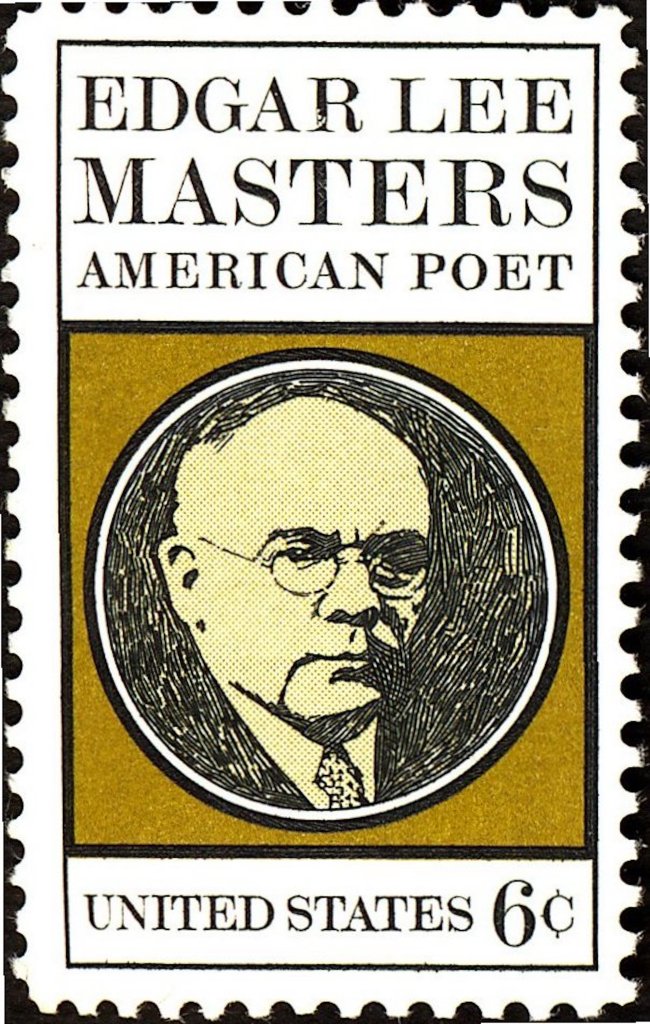
    Edgar Lee Masters - Commemorative Stamp
    Image: Edgar Lee Masters – Commemorative Stamp

    Introduction and Text of “Jack McGuire”

    Edgar Lee Masters’ “Jack McGuire” from his American classic Spoon River Anthology is a companion piece to “The Town Marshal.”   In this epitaph “Jack McGuire,” the reader learns more about Logan, the town marshal, in addition to Logan’s “The Town Marshal” soliloquy.

    Jack McGuire

    They would have lynched me
    Had I not been secretly hurried away
    To the jail at Peoria.
    And yet I was going peacefully home,
    Carrying my jug, a little drunk,
    When Logan, the marshal, halted me,
    Called me a drunken hound and shook me,
    And, when I cursed him for it, struck me
    With that Prohibition loaded cane—
    All this before I shot him.
    They would have hanged me except for this:
    My lawyer, Kinsey Keene, was helping to land
    Old Thomas Rhodes for wrecking the bank,
    And the judge was a friend of Rhodes
    And wanted him to escape,
    And Kinsey offered to quit on Rhodes
    For fourteen years for me.
    And the bargain was made. I served my time
    And learned to read and write.


    Commentary on “Jack McGuire”

    Jack McGuire escapes a lynch mob, and more is learned about the marshal he shot.

    First Movement:  Potential Lynch Mob

    They would have lynched me
    Had I not been secretly hurried away
    To the jail at Peoria.

    Jack begins by reporting the startling news that he would have been hanged by a lynch mob, if he had not been “secretly hurried away / To the jail in Peoria.”   Jack then implies that his deed in Spoon River had worked up a number of folks who were ready to administer vigilante justice. this is, without a proper trial.

    Second Movement: Minding His Own Business

    And yet I was going peacefully home,
    Carrying my jug, a little drunk,
    When Logan, the marshal, halted me,
    Called me a drunken hound and shook me,

    Jack explains that he was minding his own business, “going peacefully home,” when he was accosted by “Logan, the marshal.”  Jack admits that he was “a little drunk” and that he was “carrying [his] jug” on his way home.

    But Logan, who was employed by the prohibitionists to enforce the ban on booze in Spoon River, stopped Jack and bullied him, calling him “a drunken hound.”  In his bullying fashion, Logan also invaded Jack’s personal space and “shook him.”

    Third Movement:  Violent Confrontation 

    And, when I cursed him for it, struck me
    With that Prohibition loaded cane—
    All this before I shot him.

    Jack reacted to Logan’s harassment by swearing at the marshal.  Logan then struck Jack with his “Prohibition loaded cane.”  Jack responded by drawing out his gun and shooting the marshal dead.

    Fourth Movement:  Avoiding Hanging

    They would have hanged me except for this:
    My lawyer, Kinsey Keene, was helping to land
    Old Thomas Rhodes for wrecking the bank,
    And the judge was a friend of Rhodes
    And wanted him to escape,
    And Kinsey offered to quit on Rhodes
    For fourteen years for me.

    Jack explains how he avoided the gallows, and his explanation differs from Logan’s.  Jack’s lawyer, Kinsey Keene, was also the counsel against “Old Thomas Rhodes” who was charged with “wrecking the bank.”  The judge in Jack’s case was a friend of Rhodes’ and wanted Rhodes to be acquitted.  So Jack’s lawyer Keene “offered to quit on Rhodes / For fourteen years for me.”

    The reader will recall that Logan interpreted the fourteen-year sentence very differently; Logan claimed that he appeared to a juryman in a dream and revealed his complicity in his own death, and that resulted in the short sentence for Jack.  

    Fifth Movement:  So He Learns to Read and Write

    And the bargain was made. I served my time
    And learned to read and write.

    Jack says he served his term and “learned to read and write.”  Jack, of course, knows nothing about Logan’s claim to have appeared in a dream to the juryman.   And Logan could not have known about the deal struck between the judge and Keene. 

    This disconnect opens up a fascinating arena for the evaluation of the worth of each man’s story.  While the reader accepts Jack’s version as probably the correct one, the reader cannot with certainty discount Logan’s version.

    A bitter irony prevails, however, that Jack, who actually took the life a fellow human being—as opposed to merely being a bully, as Logan was—appears to be the one who came out the winner; not only was his sentence light, but he also learned to read and write to boot.

  • Emily Dickinson’s “If I should cease to bring a Rose”

    Image: Emily Dickinson - Amherst College - Daguerrotype of the poet at age 17, circa 1847 - likely the only authentic, extant likeness of the poet
    Image: Emily Dickinson – Amherst College – Daguerrotype of the poet at age 17, circa 1847 – likely the only authentic, extant likeness of the poet

    Emily Dickinson’s “If I should cease to bring a Rose”

    The speaker in Emily Dickinson’s “If I should cease to bring a Rose” asserts that only death can prevent her small acts of tribute and remembrance.

    Introduction and Text of “If I should cease to bring a Rose”

    Emily Dickinson’s “If I should cease to bring a Rose” thematically sections into two balanced stanzas. The speaker contemplates the only force that could interrupt her customary offerings of a rose on festival days and her naming of commemorative buds.

    On the literal level the speaker announces that absence from these gentle rituals will signal her departure beyond earthly flowers. Paramahansa Yogananda explains that our real self, the soul, is immortal and that death is only an experience through which one learns one cannot die.

    If I should cease to bring a Rose

    If I should cease to bring a Rose
    Upon a festal day,
    ‘Twill be because beyond the Rose
    I have been called away –


    If I should cease to take the names
    My buds commemorate –
    ‘Twill be because Death’s finger
    Claps my murmuring lip!

    Commentary on “If I should cease to bring a Rose”

    The speaker calmly names death as the sole cause that would end her quiet gestures of remembrance and tribute.

    First Stanza: “If I should cease to bring a Rose”

    If I should cease to bring a Rose
    Upon a festal day,
    ‘Twill be because beyond the Rose
    I have been called away –

    The speaker opens with a conditional statement about ending the gift of a rose on a festival day. Such a cessation would not arise from forgetfulness or indifference.  The reason rests solely in her having been summoned beyond the rose itself.

    The flower stands as the last earthly token she might offer.  In my earlier essays on Dickinsonian poems, I have discussed the speaker’s habit of treating death as a quiet summons rather than a violent rupture.

    The phrase “called away” softens the departure into an invitation issued from a realm past physical blossoms. Contemplative musing reveals the speaker’s quiet certainty that only this call could silence her ritual.  Paramahansa Yogananda explains that the soul merely sleeps a little while in the change called death yet remains eternally existing.

    Second Stanza: “If I should cease to take the names”

    If I should cease to take the names
    My buds commemorate –
    ‘Twill be because Death’s finger
    Claps my murmuring lip!

    The speaker next considers the naming of buds that keep memory alive. Should that naming stop, the cause would again be death alone.  Death’s finger is pictured as gently closing the lip that still murmurs names. The image remains tender rather than harsh.

    In my earlier essays on Dickinsonian poems, I have discussed the speaker’s steady focus on immortality as the true condition of the soul.The final image seals the poem with quiet finality. Only the touch of death can still the voice that once spoke the commemorative names.

  • Emily Dickinson’s “By Chivalries as tiny”

    Image: Emily Dickinson - Amherst College - Daguerrotype of the poet at age 17, circa 1847 - likely the only authentic, extant likeness of the poet
    Image: Emily Dickinson – Amherst College – Daguerrotype of the poet at age 17, circa 1847 – likely the only authentic, extant likeness of the poet

    Emily Dickinson’s “By Chivalries as tiny”

    In Emily Dickinson’s “By Chivalries as tiny,” the speaker advances the idea that small chivalrous acts function as spiritual seeds, planting joy that matures beyond sight. This idea aligns with the metaphysical fact that inner realities outlast outer show.

    Introduction and Text of “By Chivalries as tiny”

    Emily Dickinson’s “By Chivalries as tiny” discloses the speaker’s insight that small seemingly insignificant courtesies sow seeds of joy which later bloom unseen. The poem asserts that small gestures hold cosmic power to produce inner light.

    By Chivalries as tiny
    A Blossom, or a Book
    The seeds of smiles are planted—
    Which blossom in the dark

    Commentary on “By Chivalries as tiny”

    The speaker assets that oft-overlooked courtesies function as spiritual seeds, planting joy that matures beyond sight. This sentiment aligns with the metaphysical reality that inner realities are permanent while outer acts remain temporary..

    First Line: “By Chivalries as tiny”

    The speaker opens by foregrounding the paradox that smallness contains greatness. “Chivalries” signals courteous acts—gentle, self-forgetting gestures that honor another’s dignity without fanfare. 

    In my earlier essays on Dickinsonian poems, I have discussed the speaker’s ability to dramatize quiet virtues that the world overlooks, yet which sustain the soul’s equilibrium. Paramahansa Yogananda explains that service to others expands consciousness and kindles the soul’s joy, especially when one forgets the little self. 

    The phrase “as tiny” does not diminish value; it magnifies the mystery that divine influence often arrives through humble channels. Such acts mirror the inner light that glows when the mind grows calm and attentive. The speaker thus frames ethics as aesthetics: courtesy becomes a form of beauty that radiates beyond the moment of giving.

    Second Line: “A Blossom, or a Book”

    The second line specifies two examples of small gifts: “A Blossom, or a Book.” Both are tangible yet symbolic—nature’s fragrance and thought’s fragrance. A blossom offers sensory delight; a book offers mental illumination.

     In my earlier essays on Dickinsonian poems, I have discussed the speaker’s treatment of material objects as vessels of metaphysical meaning. Paramahansa Yogananda explains that giving opens the flow of divine abundance and blesses the instrument through which it flows. 

    The blossom signifies ephemeral beauty that nonetheless points to enduring grace; the book signifies lasting wisdom that feeds the inner life. Either gift can awaken a smile because each carries the giver’s attention and care. The speaker thus presents choice without hierarchy: both nature and art serve as conduits of joy.

    Third Line: “The seeds of smiles are planted—”

    Here the speaker shifts from object to effect.  The dash invites a pause, enacting the moment of planting before the bloom. “Seeds” implies latency; “smiles” indicates  inward gladness made visible. 

    In my earlier essays on Dickinson’s poems, I have discussed the speaker’s frequent use of agricultural imagery to map spiritual growth. Paramahansa Yogananda explains that when we think kindly of others, our consciousness expands, and a part of our being goes forth with that thought. 

    The planting is silent, yet it initiates a chain of cause that the planter may never witness. The speaker suggests that joy propagates like a living organism, rooted in the soil of the heart. Thus, courtesy becomes generative, not merely decorative.

    Fourth Line: “Which blossom in the dark”

    The closing line declares, “Which blossom in the dark,” completing the riddle of unseen fruition. “Dark” denotes privacy, night, or the interior where outer eyes cannot track growth. 

    In my earlier essays on Dickinsonian poems, I have discussed the speaker’s habit of privileging inner evidence over public display. Paramahansa Yogananda explains that the inner light awakens as the mind grows calm, becoming a home base for perception beyond the senses. 

    The speaker’s claim is audacious: what is planted in daylight may flower where no one looks. This revelation affirms a metaphysics of hidden abundance, where value accrues without applause. The poem thus ends in confidence: the soul’s garden blooms even while the world sleeps.

    Image:  Emily Dickinson - Commemorative Stamp
    Image: Emily Dickinson – Commemorative Stamp