Image: Emily Dickinson – Amherst College – Daguerrotype of the poet at age 17, circa 1847 – likely the only authentic, extant likeness of the poet
Emily Dickinson’s “Success is counted sweetest”
Emily Dickinson’s “Success is counted sweetest” reveals the speaker’s conviction that victory is most deeply understood by those who have experienced its absence. The poem turns deprivation into a peculiar form of insight. This poem is one of Dickinson’s most anthologized and studied poems.
Introduction and Text of “Success is counted sweetest”
In Emily Dickinson’s “Success is counted sweetest,” the speaker presents success as something whose value becomes clearest through profound need. The person who possesses victory may enjoy it, but the person who has been denied success may understand its sweetness more intensely.
The speaker creates a little drama involving two contrasting figures: the victorious soldiers who possess the “Flag” and the defeated soldier who lies dying. The contrast allows the speaker to suggest that possession and comprehension are not necessarily the same thing.
On the literal level, the speaker is describing a battlefield in which one group has achieved victory while another has suffered defeat. Yet the language quickly moves beyond the battlefield toward a larger contemplation of desire, deprivation, perception, and the strange ways suffering can deepen understanding.
The image of “nectar” introduces sweetness into an otherwise painful setting. The speaker suggests that something desired becomes especially precious when it has been withheld. The defeated soldier, unable to possess victory, nevertheless receives an agonizingly clear awareness of its meaning.
This paradox gives the poem its particular force. The person who has lost may understand the value of winning more profoundly than the person who has won. The speaker thus transforms defeat into a peculiar kind of knowledge.
Success is counted sweetest
Success is counted sweetest By those who ne’er succeed. To comprehend a nectar Requires sorest need.
Not one of all the purple Host Who took the Flag today Can tell the definition So clear of Victory
As he defeated – dying – On whose forbidden ear The distant strain of triumph Burst agonized and clear!
Commentary on “Success is counted sweetest”
The speaker presents success as a mysterious experience whose meaning becomes clearest when it has been denied. The battlefield supplies the literal drama, but the deeper subject concerns the relationship between desire and understanding.
First Stanza: “Success is counted sweetest”
Success is counted sweetest By those who ne’er succeed. To comprehend a nectar Requires sorest need.
The speaker begins with an apparently simple statement: “Success is counted sweetest” by those who never experience it. The claim immediately creates a paradox because ordinary thinking assumes that the person who achieves success should understand its value best.
The speaker reverses that expectation. The successful person possesses the desired object, while the unsuccessful person remains painfully conscious of its absence. That absence produces an intensity of desire that possession may actually diminish.
The word “sweetest” introduces the language of taste. Success becomes something almost edible, something that can be savored like nectar. Yet the speaker does not allow the reader simply to enjoy the sweetness. She connects comprehension with “sorest need.”
The word “nectar” suggests something precious, desirable, and almost divine. To taste such sweetness would ordinarily require possession, but the speaker introduces a startling alternative: the deepest comprehension may arise through hunger rather than satisfaction.
The status “In need” is therefore more than simply lacking something. Need creates attention. The person who desperately wants something studies its value, imagines its qualities, and becomes intensely aware of what its absence means.
Paramahansa Yogananda offers a spiritual parallel when he explains that ordinary desire can produce temporary pleasure, while deeper fulfillment lies beyond the repeated cycle of wanting and satisfying desire.
The speaker’s “sorest need” likewise becomes a doorway to understanding. The unsuccessful person cannot taste the literal nectar of success, but deprivation makes the imagined sweetness extraordinarily vivid.
In my earlier essays on Dickinsonian poems, I have discussed the speaker’s privileging inner evidence over outer awareness. Here that tendency appears in another form: outward possession does not guarantee inward comprehension.
The first stanza therefore establishes the poem’s central paradox. What appears to be deprivation may actually produce a more penetrating awareness. The person without success may understand its value with an intensity unavailable to the person who simply possesses it.
Second Stanza: “Not one of all the purple Host”
Not one of all the purple Host Who took the Flag today Can tell the definition So clear of Victory
The speaker now introduces the victorious soldiers. The “purple Host” suggests a magnificent military company, while the “Flag” functions as the visible emblem of their triumph.
The word “today” makes the victory immediate. These soldiers have just experienced the excitement of conquest. They possess the very thing that the first stanza says the unsuccessful person understands most deeply.
Yet the speaker declares that not one of these victorious soldiers can provide a definition of victory as clear as the defeated soldier can. This claim deepens the paradox established earlier.
The soldiers who have captured the Flag know victory through possession. They have experienced the excitement, satisfaction, and public recognition associated with winning. Their understanding, however, remains limited by the very fact that they have succeeded.
The defeated soldier possesses no Flag and receives no public celebration. Instead, he receives the painful knowledge of what victory means because he is excluded from it.
The speaker’s choice of “definition” is especially interesting. She is not merely saying that the defeated soldier feels victory more intensely; she is suggesting that he can define it more accurately.
A definition ordinarily belongs to the realm of intellectual understanding. Dickinson therefore joins emotion and knowledge. The deepest understanding may not come from detached observation but from experiencing the painful consequences of what one lacks.
The “purple Host” also creates a visually impressive picture of victory. The soldiers appear splendid, powerful, and successful. Yet the speaker quietly strips that outward magnificence of its authority to define the experience.
The victorious soldiers possess the external evidence of success, while the defeated soldier possesses the inward evidence of its meaning. The contrast recalls the speaker’s recurring interest in unseen realities beneath visible circumstances.
Paramahansa Yogananda similarly directs attention toward inner realization rather than merely outward circumstances. He teaches that spiritual progress becomes evident through inner changes such as increasing calmness, joy, understanding, and security.
Thus the speaker’s battlefield becomes something larger than a military scene. The Flag represents outward achievement, while the defeated soldier represents the inward consciousness produced by deprivation.
The stanza ends with the victorious soldiers apparently holding everything that matters. Yet the speaker has already prepared readers to question whether possession itself constitutes the deepest form of understanding.
Third Stanza: “As he defeated – dying”
As he defeated – dying – On whose forbidden ear The distant strain of triumph Burst agonized and clear!
The final stanza brings the reader directly to the defeated soldier. He is not merely unsuccessful; he is “defeated – dying –.” The dashes slow the statement and create a dramatic pause around his terrible condition.
The word “forbidden” is particularly powerful. The soldier’s ear is forbidden to hear victory in the sense that victory does not belong to him. Yet he hears it anyway, and what he hears becomes extraordinarily vivid.
The image “distant strain of triumph” is both musical and military. The victorious soldiers may be celebrating somewhere beyond him, but their sounds reach the dying man. Their triumph becomes audible precisely because he has been excluded from it.
The speaker then introduces the astonishing phrase “agonized and clear.” The sound of victory is beautiful to those who have won, but to the defeated soldier it is agonizing. His suffering makes the meaning of the sound sharper rather than less distinct.
The dying soldier therefore possesses something the victorious soldiers do not: an almost unbearable awareness of what victory means to the person who has been denied it.
The poem ends without offering consolation. The speaker does not pretend that defeat is actually preferable to victory. Instead, she leaves readers contemplating the strange relationship between loss and understanding.
The dying soldier’s position also creates a profound irony. He cannot claim the Flag, participate in the triumph, or survive to enjoy any victory. Nevertheless, he may understand victory more clearly than those who celebrate it.
This final image turns the poem into a riddle about human experience. The reader must consider whether possession, deprivation, suffering, and understanding can ever be separated as neatly as ordinary thinking assumes.
In my earlier essays on Dickinsonian poems, I have discussed the speaker’s tendency to create little dramas that operate as riddles, allowing readers to discover meanings that are not stated directly. That same strategy is evident here.
The battlefield can therefore be read literally while also functioning as a larger representation of human striving. Success may be visible from the outside, while its deepest significance remains hidden within the person who longs for it.
Paramahansa Yogananda explains that true success ultimately involves something deeper than worldly achievement. He describes realization of the divine Self as “the ultimate success,” connecting genuine fulfillment with victory over the limitations of worldly existence.
Dickinson’s speaker does not explicitly make this spiritual assertion, but her drama leaves room for such contemplative musing. The victorious soldiers possess the Flag, while the defeated soldier possesses a painful clarity that outward victory cannot provide.
The poem’s final irony is therefore its most enduring insight: sometimes the person who appears to have lost possesses the clearest understanding of what the winner has gained. Success may belong to one person outwardly while its deepest meaning belongs to another inwardly.
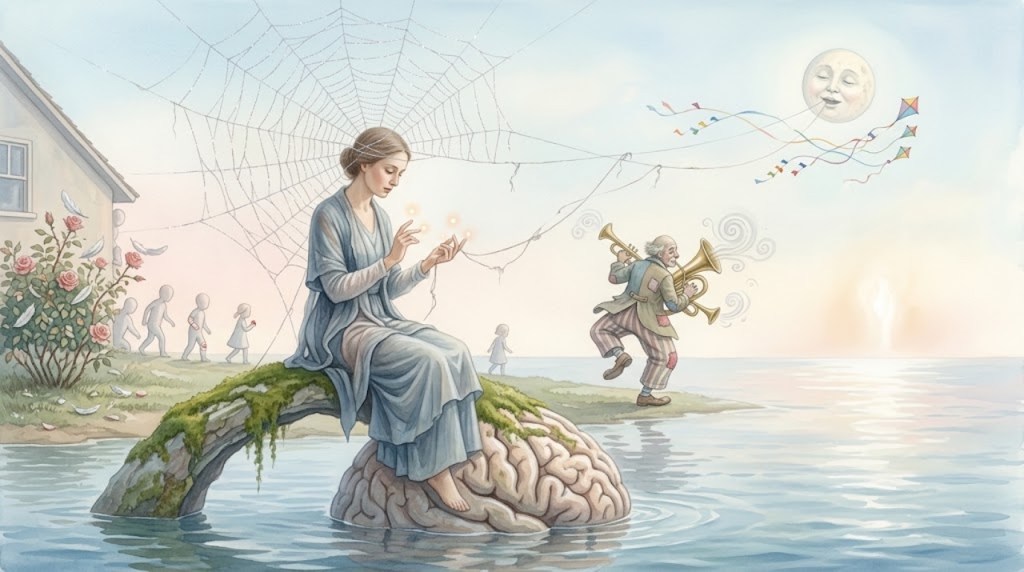
After sorrow has settled, and the breath has become a gentle wind, you will sit in the dark and count on your fingers the day’s blessings. You will not let a spider cross your eyes, nor the moon come singing far-off sea songs that tug your heart like the strings of a colorful kite.
Motherhood assumed your body, and strange children came running out. They played a mystery-game in your backyard. Feathers from scared birds stuck in the thorns of the rose-bushes, and the bloody fingers you had to wipe, and the knees bandage, until your house squeezed them out.
Age and departure have settled in your heart and play in your mind. You are not starting anything new, and now you know you never have begun a thing though you have spun like a sense clown, decked out in duds that toot. Now you will carry your load of dreams in the belly of your pregnant brain
until you can finally sit and have a quiet talk with God and tell Him all you have learned about how to love, and He suddenly understands you.
Image: Emily Dickinson – Amherst College – Daguerrotype of the poet at age 17, circa 1847 – likely the only authentic, extant likeness of the poet
Emily Dickinson’s “I can’t tell you – but you feel it”
Emily Dickinson’s “I can’t tell you – but you feel it” dramatizes a spiritual experience that resists explanation but becomes unmistakably real through inward perception. The speaker suggests that some truths are too sublime for ordinary language and must instead be quietly and intuitively felt.
Introduction and Text of “I can’t tell you – but you feel it”
In Emily Dickinson’s “I can’t tell you – but you feel it,” the speaker presents April as something more profound than a change in weather or season. April becomes an experience that cannot be adequately explained through ordinary language.
The speaker immediately establishes a peculiar agreement between two people: neither can explain the experience to the other, yet both apparently recognize it. The poem then moves from April’s sweetness and swiftness toward angels, Heaven, and a childlike preparation for a “sublimer Recitation.”
The speaker’s reluctance to “prate” about the experience is especially significant. She does not want to reduce something sacred to fashionable conversation or ordinary social language. Instead, she recommends quiet participation in the experience itself.
In my earlier essays on Dickinsonian poems, I have discussed the speaker’s mystical intuition and her habit of discovering spiritual meaning through ordinary experiences of nature. Her poetry repeatedly transforms the familiar world into a doorway toward questions of immortality, God, consciousness, and the soul.
I can’t tell you – but you feel it
I can’t tell you – but you feel it – Nor can you tell me – Saints, with ravished slate and pencil Solve our April Day!
Sweeter than a vanished frolic From a vanished green! Swifter than the hoofs of Horsemen Round a Ledge of dream!
Modest, let us walk among it With our faces veiled – As they say polite Archangels Do in meeting God!
Not for me – to prate about it! Not for you – to say To some fashionable Lady “Charming April Day”!
Rather – Heaven’s “Peter Parley”! By which Children slow To sublimer Recitation Are prepared to go!
Commentary on “I can’t tell you – but you feel it”
The speaker creates a world in which an experience may be known without being explained. April becomes an occasion for spiritual recognition, and ordinary language proves inadequate. The poem gradually moves from seasonal delight toward a reverent awareness of something beyond ordinary human understanding.
First Stanza: “I can’t tell you – but you feel it”
I can’t tell you – but you feel it – Nor can you tell me – Saints, with ravished slate and pencil Solve our April Day!
The speaker begins with an admission that sounds almost conversational: “I can’t tell you.” Yet the admission is immediately balanced by the assurance that the other person “feel[s] it.” The experience therefore does not depend upon verbal explanation.
The second line completes the mutual arrangement: “Nor can you tell me.” Neither participant possesses language sufficient to communicate the experience fully. Both know something, but neither can convert that knowledge into a conventional explanation.
The word “feel” becomes important because the speaker is shifting attention away from intellectual analysis toward direct inward experience. What cannot be stated can nevertheless become real through perception. The poem therefore begins with an experience that belongs more to consciousness than to ordinary description.
The reference to “Saints” introduces a spiritual dimension. Even saints, armed metaphorically with “slate and pencil,” cannot easily solve the mystery of “our April Day.” The image is humorous because the tools seem almost childlike when confronted with something spiritually immense.
The expression “ravished slate and pencil” suggests that the attempt to record the experience is itself overwhelmed by delight. The speaker does not reject thought or writing; rather, she recognizes that certain experiences exceed the capacity of either.
Paramahansa Yogananda similarly distinguishes intellectual understanding from direct intuitive perception. He explains that intuition is soul guidance, arising when the mind becomes calm. The connection with Dickinson’s speaker is striking: both value a form of knowing that does not depend entirely upon verbal or intellectual explanation.
The “April Day” consequently becomes more than a date on the calendar. It becomes an inward event. The speaker seems to suggest that April can be experienced as a spiritual revelation whose reality is immediately available to those who possess the sensitivity to feel it.
Second Stanza: “Sweeter than a vanished frolic”
Sweeter than a vanished frolic From a vanished green! Swifter than the hoofs of Horsemen Round a Ledge of dream!
The speaker now attempts another comparison, but her comparisons demonstrate only the difficulty of describing the experience. The April sensation is “Sweeter” than something already pleasurable, yet that pleasurable experience itself has “vanished.”
The repeated word “vanished” introduces impermanence. Whatever the earlier “frolic” may have been, it belongs to the past. Whatever “green” represents, it too has disappeared. The speaker therefore compares April with something remembered rather than something presently available.
This vanishing quality gives the stanza an almost dreamlike character. The experience is beautiful precisely because it seems fleeting. The speaker cannot hold it still long enough to examine it completely.
She then changes the comparison from sweetness to speed: “Swifter than the hoofs of Horsemen.” The image is energetic and almost dramatic. Horsemen rushing across a landscape suggest movement that cannot easily be stopped or captured.
The final phrase, “Round a Ledge of dream,” carries the experience into a more mysterious realm. A ledge suggests an edge or boundary, while a dream suggests a condition in which ordinary rules become uncertain.
The speaker therefore seems to be approaching the boundary between ordinary consciousness and something more expansive. April is not merely pleasant; it is an experience that arrives swiftly, transforms perception, and then threatens to disappear before language can capture it.
In my earlier essays on Dickinsonian poems, I have discussed her speakers’ mystical intuition in conjunction with her tendency to use natural phenomena as evidence for realities beyond the immediately visible world. Here, the season becomes another such phenomenon.
Paramahansa Yogananda teaches that inner perception becomes clearer as the mind grows calm. Self-Realization Fellowship presents his teaching that meditation brings “greater clarity, understanding, and guidance from within.” Dickinson’s speaker similarly turns away from ordinary explanation and toward an experience that must be directly perceived.
Third Stanza: “Modest, let us walk among it”
Modest, let us walk among it With our faces veiled – As they say polite Archangels Do in meeting God!
The speaker now changes her approach. Instead of attempting to explain April, she proposes that the two participants simply “walk among it.” The verb “walk” gives the experience a physical quality, yet the object of the walking remains mysterious.
The instruction “Modest” establishes the proper attitude. The speaker does not recommend intellectual conquest, confident explanation, or boastful proclamation. She recommends humility before something greater than ordinary human understanding.
The veiled faces deepen this sense of reverence. The image recalls religious representations of angels who cover themselves in the presence of divine glory. The veil therefore suggests that some forms of reality should be approached with restraint.
The speaker then introduces “polite Archangels” who apparently veil themselves when “meeting God.” The adjective “polite” is delightfully Dickinsonian because it reduces a majestic heavenly encounter to the language of social manners.
Yet beneath the humor lies a serious spiritual insight. If even archangels behave modestly in the presence of God, human beings should hardly presume that they can completely explain divine mysteries.
The speaker’s April experience therefore becomes increasingly associated with sacred encounter. She has moved from seasonal sweetness to vanished dreams and now to the presence of God.
The movement is subtle rather than doctrinal. The speaker does not announce a theological proposition. Instead, she creates a little drama in which the reader is encouraged to experience reverence rather than merely receive information.
Paramahansa Yogananda likewise emphasizes inward stillness as a means of approaching divine reality. He teaches that the temple of God is within your soul and encourages the seeker to enter that inner quietness.
That teaching offers a useful parallel to Dickinson’s speaker. She does not send her companion into a public institution or toward a formal lecture. She invites the companion to walk quietly within the experience, veiled and modest, allowing the mystery itself to make its impression.
Fourth Stanza: “Not for me – to prate about it!”
Not for me – to prate about it! Not for you – to say To some fashionable Lady “Charming April Day”!
The speaker now becomes almost comic in her rejection of conventional conversation. Her effusion—“Not for me – to prate about it!”—announces that she has no intention of turning the experience into empty chatter.
The word “prate” is particularly revealing because it suggests excessive or foolish talk. The speaker is not merely saying that she lacks words. She is saying that ordinary social talk would diminish the experience.
She then extends the prohibition to her companion: “Not for you – to say” the conventional thing either. Both participants are being asked to resist the temptation to translate a profound experience into a fashionable compliment.
The imaginary “fashionable Lady” becomes a representative of polite society. Such a person might be expected to observe the beautiful spring weather and pronounce it a “Charming April Day.” That response is perfectly acceptable socially, but it is inadequate spiritually.
The speaker is therefore drawing a distinction between noticing beauty and experiencing mystery. One person sees April as pleasant weather; another encounters something that seems to reach beyond ordinary seasonal description.
The contrast resembles the difference between external observation and inward perception. The speaker does not deny that April is charming. She simply insists that “Charming April Day” fails to express what she and her companion actually perceive.
In my earlier essays on Dickinsonian poems, I have discussed the speaker’s preference for private spiritual perception over conventional public religious expression. Her religious imagination frequently moves away from formal social observance and toward direct personal awareness.
Paramahansa Yogananda’s teaching about intuition provides another illuminating parallel. He explains that intuition is direct perception of truth rather than merely an intellectual conclusion. The speaker’s refusal to “prate” about April suggests precisely this preference for direct experience over verbal performance.
The speaker is therefore not being anti-intellectual. Instead, she recognizes that language has limits. Words can point toward an experience, but they cannot necessarily reproduce it. Sometimes the wisest response is not to talk more but instead to become quiet enough to feel more deeply.
Fifth Stanza: “Rather – Heaven’s ‘Peter Parley’!”
Rather – Heaven’s “Peter Parley”! By which Children slow To sublimer Recitation Are prepared to go!
The final stanza introduces the surprising figure of “Peter Parley,” a name associated with popular instructional books written for children. The speaker transforms that educational figure into “Heaven’s ‘Peter Parley,’” producing one of the poem’s most ingenious images.
The childlike reference changes the emotional atmosphere. The speaker has been discussing saints, archangels, and God, yet she concludes by bringing the reader into the world of children and elementary instruction.
The introduction of “Children” is especially important because children are being prepared for something “sublimer.” The ordinary lesson therefore becomes preparation for a higher lesson. The term “slow” also deserves attention. The children do not rush toward the sublime. They proceed gradually, as though simple lessons prepare the mind for increasingly profound truths.
This image offers a possible explanation for the entire poem. The April experience may itself be an introductory lesson. Nature provides something beautiful and immediate that prepares consciousness for a deeper spiritual understanding. The speaker’s April Day is therefore not merely the destination; it may be a threshold.
The sweetness, swiftness, mystery, humility, and silence of the experience prepare the participants for something beyond it. The poem ends without explaining precisely what that “sublimer Recitation” will contain. That omission is essential. The speaker has spent the poem demonstrating that some realities cannot be adequately communicated through ordinary language.
Paramahansa Yogananda similarly presents ordinary human experience as preparation for deeper spiritual realization. He teaches that meditation can awaken intuitive knowledge and attune consciousness to the Divine.
The connection is especially appropriate because the speaker’s final gesture is not toward explanation but preparation. She does not solve the mystery of April. She allows the experience to become a lesson that prepares the consciousness for something greater.
Thus the poem becomes another Dickinsonian riddle. The speaker gives readers enough evidence to recognize that “April Day” means more than spring weather, yet she refuses to provide a simple definition.
The poem’s final wisdom may therefore be contained in its opening statement: “I can’t tell you – but you feel it.” The speaker understands that some truths become most convincing when they are experienced inwardly rather than reduced to ordinary words.
The speaker’s April is consequently a doorway. Behind that doorway lies an experience associated with beauty, transience, humility, divine presence, and preparation for a higher understanding. She does not force the reader through the doorway. She simply invites the reader to feel what words alone cannot say.
I am a writer—primarily a poet, songwriter, and essayist—and I feel an obligation to render the written word as honestly as I am able. For more than six decades, I have lived with words: reading them, studying them, arranging them, revising them, and trying to discover through them what I really think and feel.
From Conestoga to Airplane
The physical means by which I write have changed dramatically over those decades—from pencils and ink pens, to typewriters, to computers with word-processing systems. Now I have another tool available to me: artificial intelligence (AI). It is, in a sense, the leap from the horse-drawn conestoga to the jet-propelled airplane.
That leap raises an obvious question for a writer: if I use AI to help me compose, am I still the writer? My answer is yes—but only if I remain responsible for the writing.
AI can now produce remarkably competent poems, songs, essays, summaries, and arguments, organizing information almost instantly in prose that sometimes sounds more polished than an experienced human writer.
However, AI’s capabilities invite both enthusiasm and suspicion. Some see it as a marvelous new instrument; others as a threat to human creativity; still others reject it outright. I regard it simply as a tool, as I once regarded the pencil, the typewriter, and the word processor.
A Writer’s Responsibility
Because AI is now so competent at producing written material, readers may wonder whether a writer simply hands the work to a machine and steps aside. I do not. I remain responsible for every text that appears under my name.
When I moved from typewriter to word processor, it never occurred to me that I owed anyone an explanation for use of that technology. A typewriter did not write my essay; a word processor did not write my poem.
These instruments simply let me put thoughts into a form that could be preserved, revised, and shared. AI is different because the machine itself can generate language—which is exactly why anxiety about authorship is understandable. But what genuine writer would take a machine’s output, unexamined, and call it his or her own?
Here is what I actually do. I give an AI system—Grok, ChatGPT, Gemini, Claude, Perplexity—a list of requirements, along with a sample of my own writing, instruct it to work in my tone and voice to produce a preliminary draft. Then my real work begins.
(Following this essay, I have supplied an Appendix with a list of requirements that I give AI to generate my first draft of a commentary on a poem, Emily Dickinson’s and others’. For each new poem, I simply change out the title and other pertinent details.)
After my AI buddy generates the draft, I go through it word by word: checking facts, cutting overreach, replacing words that do not sound like me, reordering paragraphs, adding what only my own experience could supply, sharpening arguments, softening claims the evidence does not support.
Above all, I listen for my own voice—and because AI is trained toward an establishment sensibility that I do not always share, I frequently rewrite passages simply to register my own skepticism or disagreement. AI generates a rough draft; I polish it, exactly as I once polished my own first drafts. That distinction is everything.
Although I supply a sample of my original writing, AI is not always capable of reflecting my tone, style, and voice, which gives me plenty of work to do to make sure the piece sounds like me.
From Pencil to AI
A pencil does not think. Neither does a typewriter, nor a word processor in any human sense—yet each changed a writer’s relationship to composition. Revision meant erasing with a pencil, retyping with a typewriter, and became dramatically easier with a word processor. No one ever concluded that the typewriter or word processor had become the author.
AI is a more significant leap because it has the ability to generate language in sentences. But the fundamental question does not change: who is directing the tool, and who answers for the result? For me, the answer is abundantly clear: I do.
The practical advantage is real. The rough draft—research, brainstorming, deciding what belongs, finding a way into the subject—is usually the most time-consuming stage in composition, and much of it follows patterns AI can help accelerate.
But writing is more than organization. The decisive creative work happens in revision, when an unexpected association leads somewhere better, or a sentence reveals something I had not consciously understood when I began. AI can supply form. The writer has to shape the content so form and content align. That is where authorship lives.
The AI-Detector Problem
I first encountered the charge of posting an AI-generated text while writing for the now-defunct HubPages. The article in question, which after the accusation, I revised multiple times but never satisfying the editors, now resides on my personal literary website: “Ella Wheeler Wilcox’s ‘The Queen’s Last Ride’.” The experience was instructive.
Since then, I have submitted many older essays—works written years before I ever heard of ChatGPT or similar systems—to AI detectors. The results have been astonishingly inconsistent. Some detectors have claimed that texts written entirely by me were partly or even overwhelmingly AI-generated. Scores have ranged from very low percentages to extraordinarily high ones.
One detector explained its verdict by pointing to nearly perfect grammar and clear organization. I could hardly object to those as descriptions of my writing; they represent what sixty years of practice, two master’s degrees, a PhD, and three publications in The Explicator ought to produce. It turns out this inconsistency is not just my experience—it is well documented.
A comparison of sixteen commercial AI-text detectors found meaningful differences in accuracy, decisiveness, and false-positive rates between tools evaluating the same essays [1]. OpenAI’s own classifier, before it was shut down for unreliability, mislabeled human-written text as AI-generated roughly 9 percent of the time [2].
Independent 2025–2026 testing has found some detectors holding false-positive rates near or below 1 percent on longer passages, while open-source and free tools have flagged anywhere from 30 to 69 percent of genuinely human writing [3].
The bias runs deeper for some writers than others: research on non-native English essays has found false-positive rates as high as 61 percent, apparently because detectors read simpler, more standardized sentence structure as “machine-like” [4][5].
Formal, technically precise, or highly organized human prose—medical writing, legal writing, and, I would add, a lifetime of disciplined essay writing—triggers false positives at elevated rates for the very same reason.
None of this means detection is worthless. It means a percentage is not a witness. A score cannot know who sat at the desk, who revised a poem twenty times, or who spent three hours on a single paragraph because one word carried a precise shade of meaning. The machine sees the text. The writer lived the life behind it.
The Difference Between Generating and Creating
This distinction matters most in poetry. A poem is not merely a string of grammatically acceptable sentences; it depends on memory, emotional association, rhythm, silence, irony, and an individual response to lived experience. AI can imitate poetic language extraordinarily well—rime, meter, metaphor, imagery, even the surface style of a particular poet. But imitation is not experience.
When I write about something that has affected me, it exists inside a history that belongs to me alone: memories, beliefs, relationships, disappointments, and discoveries accumulate over a lifetime.
My own literary site Linda’s Literary Home reflects that web of connection—poems and songs alongside literary studies and a room devoted to my spiritual life and the teachings of Paramahansa Yogananda, “Father of Yoga in the West.” AI can help me articulate those connections. It cannot possess them for me.
How I Maintain Control
I treat AI as a tool. I supply the requirements, the subject, the sample of my own writing, the purpose; I decide what needs evidence, evaluate every suggestion, and make the final call—which means I can never say “the AI wrote it” when something is wrong. If a text is published under my name, it is mine: the errors, the foolishness, and the insight alike.
The comparison I keep returning to is the calculator and the mathematician. A calculator performs an operation faster than a human can, but it does not decide which problem is worth solving or what the answer means. AI can manipulate language rapidly. The writer still has to decide what deserves to be said.
The Tool, the Fool, and the Luddite
Three stances are possible regarding a technological advancement such as AI: the fool hands the whole task to the machine and claims the result as entirely original, mistaking convenience for creativity. The Luddite rejects the tool altogether, mistaking resistance for the preservation of human creativity. The sensible writer takes a third position: AI as a tool—useful, powerful, limited, and subordinate.
That state of affairs does not mean accepting whatever it produces; the more powerful the tool, the more judgment its use demands. A chainsaw is useful, but no one hands it to a child and walks away. A camera does not make someone a photographer, nor a grand piano concert pianist. AI does not make someone a writer. The human being remains responsible for knowing what he or she wants to say.
Calmly Active and Actively Calm
Paramahansa Yogananda taught the principle of being “calmly active and actively calm”—staying centered in inner stillness while living dynamically and purposefully in the world [6]. I find that principle exactly suited to working with AI.
The writer should be active: directing the process, questioning, revising, deciding. But the writer should also be calm—no need to fear a new technology, and no need to worship it either. The screen is outward. The AI system is outward. The intention behind the words is inward, and that is what matters.
In my essays on Emily Dickinson poems, I have written about her speakers’ habit of placing inner evidential integrity above public display. The same idea applies here. My obligation is not to satisfy a detector or perform “humanness” for an algorithm. It is to tell the truth as honestly as I am able. Outer methods change; inner responsibility does not.
I Remain the Writer
I have no wish to return to a world where the only legitimate instrument is a pencil, pen, or typewriter; I have lived through too many technological revolutions to think creative integrity depends on refusing new tools. The question was never whether to use AI, only how.
If I tell a system to write an essay, accept whatever comes back, verify nothing, and sign my name—I have surrendered authorship. But if I bring my subject, my experience, my research, my questions, and my decades of practice to the process, and use AI to help organize, draft, question, or polish—the technology is serving me as the writer. That is how I use it.
I do not expect AI to replace the writer any more than I expect my word processor to do such. I expect it to help me do what I have wanted to do for sixty years: put words together in the best way I can. The tools have changed; the writer has not.
I am still the one who decides what I believe, chooses the subject, determines what matters, and asks of every sentence, “Is that really what I mean?” AI may supply a draft, a structure, even an unexpected phrase. But it does not have my memories, my relationships, my spiritual journey, or my responsibility to the reader.
Those features remain mine—and as long as I stay awake, attentive, and responsible for every word that bears my name, I see no contradiction between embracing the tool and keeping the writer’s oldest obligation: to seek, as honestly as possible, the right words for what is true.
Compose an essay commentary on Emily Dickinson’s “Some Rainbow – coming from the Fair!” adhering to the following list of requirements for the essay:
Place the following Title:Emily Dickinson’s “Some Rainbow – coming from the Fair!”
To establish style and tone, use the sample of my writing on Emily Dickinson’s “There is another sky” which follows this set of instructions. VERY IMPORTANT THAT YOU FOLLOW THIS INSTRUCTION.
Be sure to place the entire text of the poem in the introduction and the stanzas (or movements) in the commentary sections.
Do not report on the type of poem, its rhythmic meter, or its rime scheme.
Do not italicize the text of the poem in either the introduction or the commentary.
Do not use Wikipedia or any left-leaning political, or other unreliable sources.
Do not announce what the commentary or paragraph is going to do; for example “This commentary will explain the poem’s structure . . . ”; just do it.
Always refer the poet as “the speaker,” not by the poet’s name.
Keep all headings EXACTLY as presented: Introduction and Text of “Some Rainbow – coming from the Fair!” and Commentary on “Some Rainbow – coming from the Fair!”
Where possible use a quotation showing a concept from the teachings of Paramahansa Yogananda, with a link to the source on the site at https://yogananda.org. You can also find many of Paramahansa Yogananda’s writings on Internet Archive https://archive.org/ Always use his full title and name Paramahansa Yogananda when mentioning the great Guru.
Use only official Self-Realization Fellowship / Yogananda.org sources for quotations or teachings attributed to Paramahansa Yogananda. Do not use Ananda, Wikiquote, AZQuotes, Goodreads, or other secondary quotation websites.
When alluding to a Paramahansa Yogananda quoted concept, always use present tense: Paramahansa Yogananda explains; not Paramahansa Yogananda explained.
Also where possible, offer a quotation showing a concept from my earlier commentaries on Dickinson’s poems from my literary website Linda’s Literary Home, at https://lindas-literary-home.com/2026/02/05/life-sketch-of-emily-dickinson/ . When referring to a quoted concept from my literary website, use the following introduction, “In myearlier essays on Dickinsonian poems, I have discussed . . . .”
Instead of this construction —“In my earlier essays on Dickinsonian poems, I have discussed how the speaker privileges inner evidence over public display” —use this one, for example, “In my earlier essays on Dickinsonian poems, I have discussed the speaker’s habit of privileging inner evidence over public display.” That is, eliminate the awkward use of “how,” by focusing on the specific subject.
Instead of the term “meditation” for contemplation on literary things, use the phrase “contemplative musing.”
Limit each paragraph to 50 words.
Always spell “rhyme” using the original, more accurate spelling “rime.”
Please do not give me a lot text explaining what you are going to do; just do it. If you cannot follow these instructions exactly, let me know and I’ll find another program that can. Thank you! Now begin!
EMPLOY THE EXACT STYLE AND TONE ESTABLISHED IN THIS SAMPLE OF MY WRITING:
Emily Dickinson’s “There is another sky”
Emily Dickinson’s “There is another sky” reveals the speaker’s confidence in her creation of a world of beauty that will exist in perpetuity. She is envisioning a world beyond the physical level of existence, where permanence prevails in things of beauty.
Introduction with Text of “There is another sky”
In Emily Dickinson’s “There is another sky,” the speaker of the poem is previewing her intention to establish a world where the pairs of opposites do not obstruct the lives of the inhabitants.
Such beloved features and qualities of life, such as beauty, peace, harmony, balance, and love will hold sway uninterrupted by pesky things like change and disfigurement in her newly created “garden.” On a second note, she is also inviting her brother to enter her new garden that exists under a different sky so that he too may enjoy the divinely fragranced atmosphere of her new creation.
On the literal level, the poet is creating a speaker who is announcing her audacious plan to create a brand new world with her poetry. It will be such a special place so other-worldly that nothing unpleasant that exists in earthly reality will exist there.
Because everything she creates will be based on her imagination and intuition, she can fashion her “garden” to grow anything she finds feasible. That she anticipates no arrival of “frost,’ she can guarantee that flowers will not “fade.” Also leaves will be able to remain “ever green.”
Posing as a invitation, Dickinson’s little drama serves as a clever ruse to persuade her brother to come and experience her poetry. By promising him a whole new, different world, she no doubt hopes he will be more likely to take her up on her offer.
There is another sky
There is another sky, Ever serene and fair, And there is another sunshine, Though it be darkness there; Never mind faded forests, Austin, Never mind silent fields – Here is a little forest, Whose leaf is ever green; Here is a brighter garden, Where not a frost has been; In its unfading flowers I hear the bright bee hum: Prithee, my brother, Into my garden come!
Reading of “There is another sky”
Commentary on “There is another sky”
Emily Dickinson’s “There is another sky” reveals an attitude dramatized in the Shakespeare sonnets: the poet’s confidence in her creation of a world of beauty that will last forever.
The poem is a literal invitation from the poet to her brother Austin to read her poetry, where she is erecting a new place to exist, a beautiful garden free of the decay that literal gardens must undergo.
First Quatrain: Physical Sky vs Metaphysical Sky
There is another sky, Ever serene and fair, And there is another sunshine, Though it be darkness there;
In the first quatrain, the speaker begins by alerting readers that in addition to the “sky” and “sunshine” that already experience on the earthly level, there exist a different sky and a different sunshine.
The other sky about which the speaker is declaiming is always “serene and fair. Thus, no thunder storms or dark clouds intrude into this new sky’s space. The beauty and calmness of a clear blue sky offer an inviting and intriguing possibility.
The speaker then announces the existence of “another sunshine.” But this sunshine seems to have the magic and delicious power to shining even through the darkness. This claim is the first flag that the speaker will be referring to a mystical or metaphysical place that only the soul can perceive.
Behind the darkness of closed eyes, the only “sunshine” or light that can be seen is that of the spiritual eye. Although the speaker cannot guarantee that her entire audience will be able to see such “sunshine,” she is sure that on a mental level they can imagine such a heavenly place.
Second Quatrain: No Fading in the Metaphysical Universe
Never mind faded forests, Austin, Never mind silent fields – Here is a little forest, Whose leaf is ever green;
The speaker then directly addresses someone, admonishing him to pay no attention to “faded forests.” She then the addresses the individual by name, “Austin. ” Austin is the name of Dickinson’s brother. She then admonishes Austin to ignore the “silent fields.”
The reason that Austin should ignore those faded forests and silent fields is that in this place to which she is inviting him, the “little forest” presents leaves that remain perpetually green. And the fields will remain perpetually filled with fruitful crops, never having to lie fallow.
While dropping hints throughout, he speaker remains illusive regarding the whereabouts of this place where the sky, the sun, forests and fields, and leaves all behave differently from that of the physical universe that humanity must experience on the earthly plane.
Sestet: Invitation to the Metaphysical Garden
Here is a brighter garden, Where not a frost has been; In its unfading flowers I hear the bright bee hum: Prithee, my brother, Into my garden come!
The speaker now offers some further description of this new place with a new sky and new sun; she then states that that place is “a brighter garden.” As earthly gardens are bright, mystical or metaphysical gardens remain even brighter.
In the metaphysical garden, there is never a fear of “frost” that kills earthly plants with its sting. Flowers will not fade because of frost or from simply aging. The magic of her garden will guarantee that the beauty of the flowers will bloom forth in perpetuity.
Because of the ability of the flowers to remain “unfading,” bees will always be able to partake of their nectar any time they choose. Thus, the speaker avers that she can “hear the bright bee hum.”
The bright bee is, no doubt, brighter than the ordinary, earthly, literal bee. And because of the permanence of her newly created metaphysical garden, she can listen to the pleasant hum any time she wishes.
In the final couplet, the speaker sets forth the clear invitation to her brother, virtually begging him to come into her garden. She employs the archaic expression “[p]rithee” (conflation of “pray thee”) to emphasize her desire that he take her up on her offer to visit her “garden.”
On the literal level, the poet has created a speaker who extends an invitation to the poet’s brother to read her poems. She has offered an alluring set of reasons to try to capture the brother’s imagination and interest.
And to her other readers, the poet has created a speaker to extend that same invitation, as she hopes the notion of a new, permanent, created world will capture their imaginations also.
Dickinson Riddles
Emily Dickinson’s American-Innovative sonnet “There is another sky” is one of the poet’s many riddles. Her speaker never states directly that the garden is her poetry, but still, she is inviting her brother in to read her poems.
The speaker continues to imply throughout the sonnet that she has constructed a whole new world, where things can live unmolested by the irritants that exist on the physical plane of life. The sky can remain “serene and fair”–no storms, tornadoes, hurricanes, heavy rainstorms that frighten and damage.
And the sunshine can present itself even through the darkness. Forests never fade and die out, and the fields remain always bursting with life; they never lie fallow or turn to dust as on the real, earthy plane–that literal world.
The trees can enjoy wearing green leaves and never have to drop them after they turn all brown or rusty. The speaker is privy to all these utopian-sounding acts because she has created it.
And like the master writer of the Shakespeare sonnets, Dickinson’s speaker knows that she has fashioned out of crude, earthly nature an art that will provide pleasure in perpetuity to the minds and hearts of those who have the ability to imagine and intuit along with her.
This speaker further demonstrates a certain level of cheek and courage by inviting her own brother into her creation. While she no doubt quietly wonders if he will be as impressed as she is, she shows a certain level of confidence by offering such an invitation.
Emily Dickinson’s “Some Rainbow – coming from the Fair!”
Introductory summary about 20 words in complete sentences
Introduction and Text of “Some Rainbow – coming from the Fair!”
approximately 100 words
Some Rainbow – coming from the Fair!
Some Rainbow – coming from the Fair!
Some Vision of the World Cashmere –
I confidently see!
Or else a Peacock’s purple Train
Feather by feather – on the plain
Fritters itself away!
The dreamy Butterflies bestir!
Lethargic pools resume the whir
Of last year’s sundered tune!
From some old Fortress on the sun
Baronial Bees – march – one by one –
In murmuring platoon!
The Robins stand as thick today
As flakes of snow stood yesterday –
On fence – and Roof – and Twig!
The Orchis binds her feather on
For her old lover – Don the Sun!
Revisiting the Bog!
Without Commander! Countless! Still!
The Regiments of Wood and Hill
In bright detachment stand!
Behold! Whose Multitudes are these?
The children of whose turbaned seas –
Or what Circassian Land?
Commentary on “Some Rainbow – coming from the Fair!”
approximately 20 words in complete sentences
First Stanza: “Some Rainbow – coming from the Fair!”
She sulks between rows where weeds Grow wild as children, where she talks To clods, shiftless and dusty. Men gave her a lot of bull and she loved It for the utter cow in her. Between Finger and thumb, she squirms live bait At the edge of her words, her water.
Grapes and memories wet and sweet Pooled under her tongue that day He made her mouth a target for the grapes He threw. She tasted his laugh in the juice And tangled with his love, she swallowed With the skin and seeds. She banked off on Maddening and split around midnight. Between broken poems are spaces Where poets keep their lovers—
Spaces where they slumber— The knotty thoughts they sleep with. The man with the axe hacked through The underbrush of what she had written. His sneers posted keep off private property Signs on a fence he erected around words That all these years she thought belonged To everyone. The slash marks he cut Across her voice will grow scars, but the hearts Of poems she wrote for him will bleed forever.
Speaking dirt language, she will sway With their love like a cornfield waving Its tassels. As her poems sting his ears, He will shuck them off easy to forget as corn silk.
This year, here in Indiana, last day of May it’s still cold— look at that photo (me and Spot) I call us “little girl with the dog,” that squint face little thing, me, not Spot. he looks quite dignified, satisfied he’s king of himself.
I’m just brain surfing— searching for that wave that will lift me above myself as I ride towards the safe shore of a sunny poem.
I haven’t written a poem in days. down my blood stream float toxins of unvoiced syllables, fragments of feelings— coffee grounds dumped in the creek— and silence, a God-awful, cold silence.
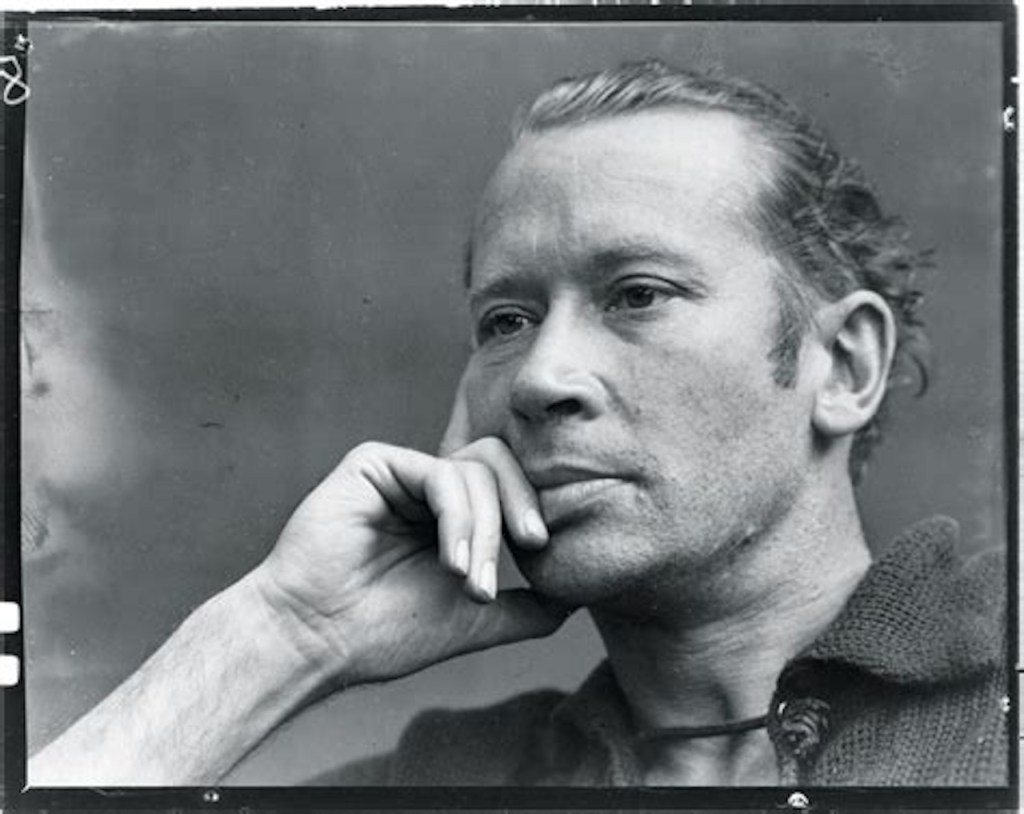
The poetry of E. E. Cummings holds a special place in the literary world. His unique style remains a recognizable and delightful experience for poetry readers. Although he remained quite traditional in his theme and subject choices, his creations on the page virtually always stun and surprise.
Introduction: Non-Traditional Use of Language
About the poetic style of E. E. Cummings, poet Randall Jarrell has averred [1], “No one else has ever made avant-garde, experimental poems so attractive to the general and the special reader.”
E. E. Cummings’ experimentation with language led to a distinct style through his invention of new words and new ways to use words. He even employed novel organizational placings of terms that violated the traditional grammar rules as well as linguistic ordinary sense.
Despite Cummings’ non-traditional use of language, his poems attracted a wide following. Many of his poems became quite popular with readers of all stripes. John Logan, writing about Cummings in Modern American Poetry: Essays in Criticism, declared Cummings as “one of the greatest lyric poets in our language.”
In Standards: A Chronicle of Books for Our Time, Stanley Hyman claimed, “Cummings has written at least a dozen poems that seem to me matchless. Three are among the great love poems of our time or any time.”
Early Life
Edward Estlin Cummings was born [2] in Cambridge, Massachusetts, on October 14, 1894, to Edward Cummings and Rebecca Haswell Clarke. At the Cambridge Latin High School, the future poet studied Greek and Latin. After high school, he attended Harvard, where he earned both the BA and MA degrees. Several of his early poems were published in 1917 in Eight Harvard Poets.
While still a child, Cummings set his sights on becoming a poet, and he instituted for himself the task of composing one poem each day. Thus, between the ages of eight and 22, he explored the many forms and aspects of poetry composition, mostly the traditional poetic forms that had been employed for centuries.
Around 1916 as modernism was taking its place among the literary movements, Cummings began experimenting with forms that ultimately led to his unique language use that has captured the imagination of the generations of poetry readers who followed his own.
War and Marriage
After World War I broke out in Europe in April 1917, Cummings offered his services by volunteering in the Norton-Harjes Ambulance Service in France. This type of service became a common option for many pacifists during the war. Stationed near the border of France and Germany, Cummings met and became fast friends with William Slater Brown, a fellow American.
After inserting veiled comments into letters back home and befriending other soldiers in other units, the pair of friends became suspicious in the eyes the authority and were arrested, charged with treason, and placed in an internment camp in Normandy.
Cummings’ father was able to secure his son’s release from the camp in December 1917, but his friend did not secure release until April 1918. The U.S. Army drafted Cummings into service in July 1918. He went through basic training for six months in Massachusetts.
After his military experience ended, Cummings began an affair with Elaine Thayer, who was married to Schofield Thayer, a friend of Cummings. An enthusiast for open-marriage, Thayer did not object to that relationship. Elaine became pregnant with Cummings’ child, a daughter named Nancy.
Cummings and Elaine married in 1924 after her divorce from Schofield Thayer. Cummings adopted Nancy, who did not find out that Cummings was her biological father until 1948. The Cummings-Thayer marriage lasted only a short time.
Only two months after the wedding, Elaine left America for Europe to settle her sister’s estate. On the ship traveling to Europe, Elaine met and fell in love with another man. She and Cummings divorced in 1925.
In 1929, Cummings married a second time to Anne Minnerly [3], but that marriage lasted only three years with Minnerly seeking a Mexican divorce in 1932. The US did not recognize Mexican divorces until August 1934.
After separation from his second wife, Cummings began a relationship with Marion Morehouse. It remains unclear if the pair ever legally married, but the two lived together until his death in 1962.
Journey to the USSR
Like a number of artists practicing during the 1930s, Cummings had a brief flirtation with communism, thinking the system might offer a better, freer world. He traveled to the USSR in 1931 [4], and it did not take long for the poet to realize that the USSR was governed by the strong arm tactics of a dictatorship. Instead of more freedom, the individual was fiercely ruled by state dictates.
Cummings published his observations of the machinations of dictatorship in his Eimi, a compilation of his journal entries. In that volume, he accused the Soviets of dehumanizing policies. The term, “eimi,” is Greek for “I am.” In this work, he labels the USSR a “uncircus of noncreatures.”
Cummings became especially disgusted after the body of the dictator Vladimir Lenin was laid to rest in its elaborate tomb. This event inspired some of Cummings’ most forceful, impassioned pieces that appear in that work. According to John Peale Bishop, Cummings’ style “reaches its most complete development in the prose of Eimi.” Bishop continues,
Indeed, one might almost say that, without knowing it, Cummings had been acquiring a certain skill over the years, in order that, when occasion arose, he might set down in words the full horror of Lenin’s tomb.
As Cummings kept track of his 35-day journey through the USSR, he employed various allusions to Dante’s Inferno, equating his Soviet experience to a descent into Hell. Only after leaving the USSR and entering the free world was it possible for the poet “to feel like a man” again.
Bishop claims that Cummings’ Soviet experience had led the poet to understand the true nature of freedom: that the quality exists inside the individual. It is the free will with which man is endowed that makes all freedoms possible. According to Rushworth M. Kidder, Eimi is “a report of the grim inhumanities of the Soviet system, of repression, apathy, priggishness, kitsch, and enervating suspicion.”
After the publication of Eimi, Cummings came up against the ignorance of heavily statist-leaning publishers, who refused to publish the already widely noted poet’s works. Thus, Cummings had to self-publish a number of his collections in the late 1930s. Cummings’ experience with censorship demonstrates that one pays a price for disagreeing with statist mind-sets.
The Writing Life
The 1920s proved to be a highly creative period for Cummings. He began his publishing career in 1922 bringing out his first book, The Enormous Room. This fictional account of his experience in the French internment camp is offered in a humorous style, somewhat at odds with the reality of the experience.
Cummings’ free-wheeling style nevertheless demonstrates that his experience in the camp contributed to his growth as an artist. Critics such as David E. Smith, John Dos Passos, and John Peale Bishop have all written glowing reviews of Cummings’ The Enormous Room. As Smith has observed, the emphasis of that work is placed upon what “the initiate has learned from his journey.” Smith continues,
In this instance, the maimed hero can never again regard the outer world (i.e., ‘civilization’) without irony. But the spiritual lesson he learned from his sojourn with a community of brothers will be repeated in his subsequent writings both as an ironical dismissal of the values of his contemporary world, and as a sensitive, almost mystical celebration of the quality of Christian love.
Dos Passos has remarked that the book, “in a style infinitely swift and crisply flexible, an individual not ashamed of his loves and hates, great or trivial, has expressed a bit of the underside of History with indelible vividness.” Bishop added, “The Enormous Room has the effect of making all but a very few comparable books that came out of the War look shoddy and worn.”
Tulips and ChimneysvsTulips & Chimneys
In 1923, Cummings’ next publication, his first collection of poems titled Tulips and Chimneys, was brought out. In this collection, his unique language use is on display. He employed non-traditional spacing, unconventional combinations of terms, fractured grammatical expressions, and many varying combinations of punctuation.
Cummings originally wanted his first collection to be titled Tulips & Chimneys, but the publisher insisted upon employing the word not the ampersand. The publisher had also removed a number of offending poems from the collection. But in 1925, Cummings brought a collection of those excised poems and titled the collection &. In 1925, rather quickly upon the heals of his publication of &, he came out with XLI Poems.
Reviewing this collection in the magazine, The Nation, poet and critic Mark Van Doren averred that Cummings was a poet with “a richly sensuous mind; his verse is distinguished by fluidity and weight; he is equipped to range lustily and long among the major passions.”
By the end of year 1925, Cummings had garnered a prize of $2000 from Dial Magazine, which offered this annual award to an up-and-coming writer. At the time, the $2000 sum was equal to a full year’s income for a writer.
In 1926, in another collection of poems titled Is 5, Cummings for the first time offered an introduction to his philosophy of poetry. He believed that poetry was a “process” not merely a “product.” During this decade, Cummings established his reputation as an experimental artist in the avant-garde. Critics never failed to focus on his unique use of language. Writing in The Modern Poets: A Critical Introduction, M. L. Rosenthal opined,
The chief effect of Cummings’ jugglery with syntax, grammar, and diction was to blow open otherwise trite and bathetic motifs through a dynamic rediscovery of the energies sealed up in conventional usage…. He succeeded masterfully in splitting the atom of the cute commonplace.
Richard P. Blackmur, writing in The Double Agent: Essays in Craft and Elucidation, opines,
Cummings has a fine talent for using familiar, even almost dead words, in such a context as to make them suddenly impervious to every ordinary sense; they become unable to speak, but with a great air of being bursting with something very important and precise to say.
Literary luminaries such as Bethany K. Dumas, S. I. Hayakawa, Norman Friedman, Stephen E. Whicher, and many others have found Cummings a fit focus upon which to opine.
For example, Hayakawa has effused, “No modern poet, to my knowledge, has such a clear, childlike perception as E. E. Cummings—a way of coming smack against things with unaffected delight and wonder. This candor … results in breath-takingly clean vision.”
In 1952, Cummings was honored by being chosen to deliver the Charles Eliot Norton lectures in poetry at Harvard University. That lecture series was published as i: six nonlectures. They featured Cummings’ highly personal stories from his life, and Jenny Penberthy has called them “autobiographical rambles.”
Death of the Poet
On September 3, 1962, E. E. Cummings died [5] at Memorial Hospital in North Conway, New Hampshire, of a brain hemorrhage [6]. He was 67. He is interred at Forest Hills Cemetery in Boston, Massachusetts. At the time of the poet’s death, he was considered the second most widely anthologized, read, and studied American poet, following Robert Frost.
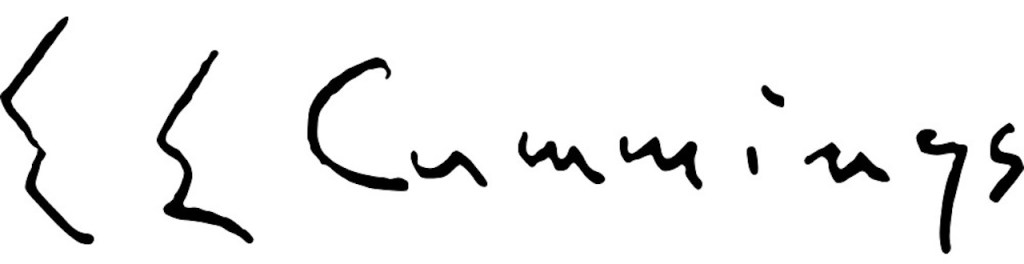
The poet’s name is often expressed in all lower-case letters [7], likely to mimic the poet’s unconventional style. The critic Henry T. Moore erroneously claimed that Cummings legally changed his name to sport all lower-case letter, and Norman Friedman allowed that inaccurate claim to be published in the preface of his book, E. E. Cummings: The Growth of a Writer.
Responding to Moore’s erroneous claim, Cummings’ widow [8] offered Friedman a correction: “You should not have allowed H. Moore to make such a stupid & childish statement about Cummings & his signature.”
Although Cummings did often write his signature in all lower-case letters, he more often used capital letters in the traditional fashion. The lie that needs to be put to rest is that Cummings legally changed his name. As his widow made clear, Cummings did not engage in that “stupid & childish” act.
Sources
[1] Editors. “E. E. Cummings.” Poetry Foundation. Accessed August 24, 2026.
Some dreams signal ghastly deeds In past lives; likely, we prefer Not to be reminded. The exorcism Of karmic fire offers the only cleansing.
Some dream ghosts you grasp: your mother’s Broken heart healed, your public nakedness, robbers Breaking down the door.
But this one recurs and baffles your equilibrium. It is an invasion corrupting your private heart: The one who baffles you
Is neither a father nor a God figure, Just a former acquaintance you never knew well And never touched (at least in this life).
Nor do you touch in the dream, except innocently, Informally, though some strong emotion seems to float Beneath the surface of dream skin.
In your society of thoughts, you flesh out reasons For this intrusion: a past life, too dim to remember, Gives the only succor, as you await enlightenment.
Trying to neutralize resentment, jealousy, or betrayal, Your subconscious may be accusing, judging, condemning, But for what you remain unaware.
Each visit of the form reshapes your conscience And the day crawls on its belly: You feel a sick-sweet love
Coiling and spurning itself until you forget again And get on with other details, but give it days or weeks And the phantom reappears.
It begs exorcism: Burning karmic seeds to release The ghost in smoke. You hope this specter is free of you— You prefer to think this aberration is yours alone.
Original poem appearing in my collection titled “Turtle Woman & Other Poems” under the title “Aberration”
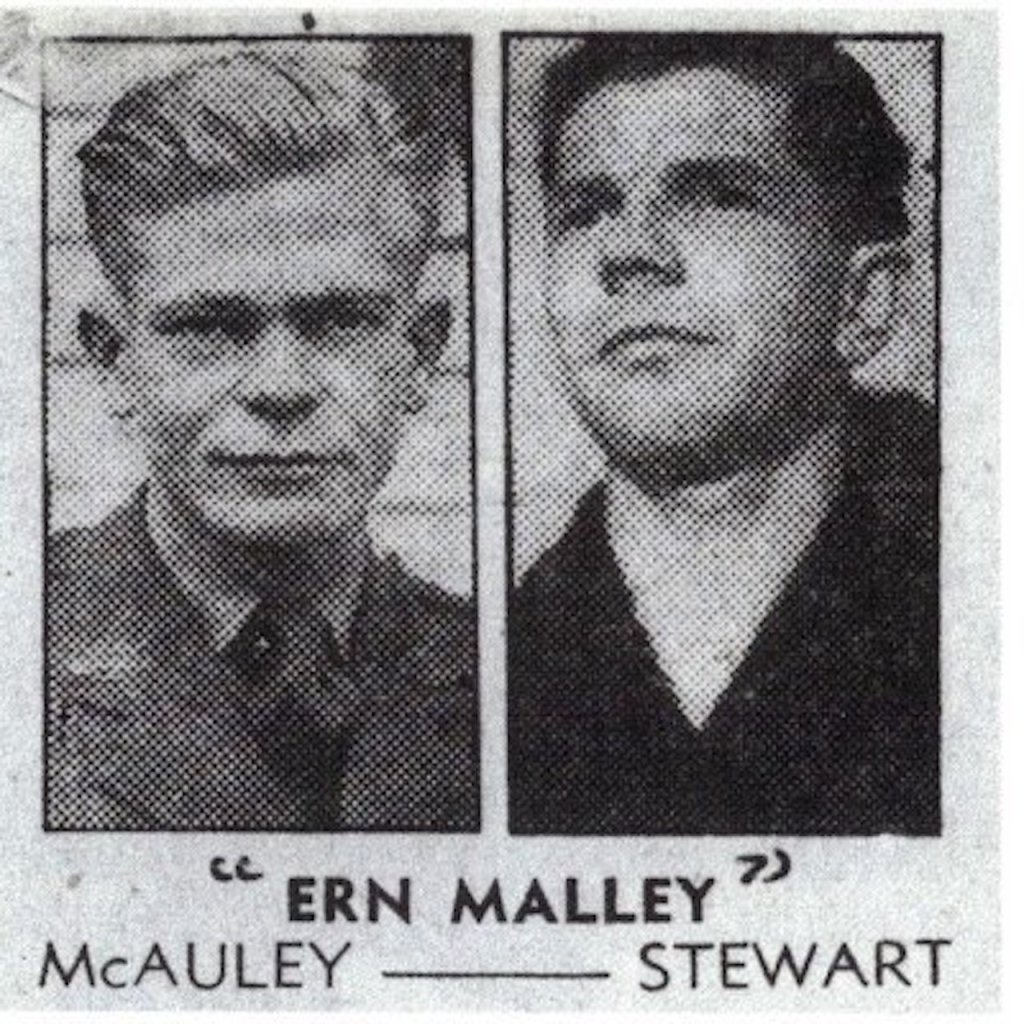
The Ern Malley poetry hoax was perpetrated by two poets who disdained the avant-garde style of modernism. They planned to debunk what they considered was fraudulent and demeaning to the art.
A Brief Overview of the Hoax
The Ern Malley affair is one the most interesting literary hoaxes of the 20th century. It grew out of a hatred of and the desire to debunk the avant-garde style of modernism.
In October 1943 on a Saturday, two traditional poets, Lieutenant James McAuley and Corporal Harold Stewart, in their offices at the Victoria Barracks of the Australian Army in Melbourne, Australia, hatched their plan.
They concocted a plan to expose the bankruptcy of the modernist avant-garde trend of literature in British, Australian, and world poetry. They chose the publication titled Angry Penguins and one of the editors Max Harris as their targets.
As the legend recounts it, within a few hours on that ordinary Saturday, the two young army men had slapped together sixteen poems by collecting strings of words from the books and magazines that lay on their desks [1]. The following example begins with the first three lines lifted verbatim from a US Army report on mosquito control:
Culture as Exhibit
“Swamps, marshes, borrow-pits and other Areas of stagnant water serve As breeding-grounds …” Now Have I found you, my Anopheles! (There is a meaning for the circumspect) Come, we will dance sedate quadrilles, A pallid polka or a yelping shimmy Over these sunken sodden breeding-grounds! We will be wraiths and wreaths of tissue-paper To clog the Town Council in their plans. Culture forsooth! Albert, get my gun.
After completing their first sixteen fake pieces, McAuley and Stewart then delivered a fictitious poet from the womb of mischief and named him “Ern Malley,” a take-off on the French word “mal” meaning bad.
Next, McAuley and Stewart invented a sister and called her Ethel, dreamed up a melancholy biography for the deceased auto mechanic turned insurance salesman poet, which Ethel would narrate, and they were all set. From the hands of Ethel, McAuley and Stewart posted ole Ern’s poems and biography to the magazine Angry Penguins.
Max Harris [2] flipped over the poems, as did the other editors, and a special edition of Angry Penguins carried the fake poems and the fake biography of the fake poet. The two disgruntled poets, Lieutenant James McAuley and Corporal Harold Stewart, had accomplished their mission.
They had demonstrated for the world that those editors, critics, and readers who are taken in by the avant-garde, surrealistic drivel flowing from the pens of literary poetasters under the guise of modernism could be easily exposed by a real fake.
The Nonsense of Modernist Poetry
As poets, Lieutenant James McAuley and Corporal Harold Stewart had come to despise the poetry of Dylan Thomas, Henry Treece, and other modernist poets. McAuley and Stewart, therefore, deemed the entire modernist movement “pretentious nonsense.”
Thus the pair then hatched their plan to expose the nonsense. They believed they could fool editors into publishing anything that smacked of the same “nonsense” they had been observing in literary mags. So, they would write fake poems and submit them. They concocted three rules that they would follow as they composed their deliberately fake works:
There must be no coherent theme, at most, only confused and inconsistent hints at a meaning held out as a bait to the reader.
No care was taken with verse technique, except occasionally to accentuate its general sloppiness by deliberate crudities.
In style, the poems were to imitate, not Mr. Harris in particular, but the whole literary fashion as we knew it from the works of Dylan Thomas, Henry Treece and others.
Based on these rules, the poems of Ern Malley were born.
Poor Max Harris, who was not a bad poet, and whose early poems were, in fact, quite traditional in form, faced a court trial for publishing the Ern Malley poems, which were considered obscene. Harris paid a fine, and his jail time was suspended.
Still Harris’ reputation was less sullied than that of the Malley creators. Actually, McAuley and Stewart simply suffered from anonymity, with their only claim to fame being the Ern Malley hoax.
Sample Pieces from the Collection
A fascinating and useful study might result from elucidating how each piece in the hoax collection demonstrates the three “rules” that the poets were constrained to follow in composing the fake works. The following “sonnets” offer a glimpse at the style and subject that the Ern Malley collection of hoax poems perpetrated upon the literary world:
Sonnets for the Novachord
(i.) Rise from the wrist, o kestrel Mind, to a clear expanse. Perform your high dance On the clouds of ancestral Duty. Hawk at the wraith Of remembered emotions. Vindicate our high notions Of a new and pitiless faith. It is not without risk! In a lofty attempt The fool makes a brisk Tumble. Rightly contempt Rewards the cloud-foot unwary Who falls to the prairie.
(ii.) Poetry: the loaves and fishes, Or no less miracle; For in this deft pentacle We imprison our wishes.
Though stilled to alabaster This Ichthys shall swim From the mind’s disaster On the volatile hymn.
If this be the norm Of our serious frolic There’s no remorse:
Our magical force Cleaves the ignorant storm On the hyperbolic.
There is much more to this convoluted caper, including intriguing biographical information about all the parties involved—especially McAuley, Steward, and Harris. The following is a list of titles contained in the Ern Malley poems, composed by McAuley and Stewart and sent to Angry Penguins:
Dürer: Innsbruck, 1495
Sonnets for the Novachord
Sweet William
Boult to Marina
Sybilline
Night Piece
Documentary Film
Palinode
Night-piece (Alternate Version)
Baroque Exterior
Perspective Lovesong
Culture as Exhibit
Egyptian Register
Young Prince of Tyre
Colloquy with John Keats (and Coda)
Petit Testament
An additional publication is Michael Heyward’s The Ern Malley Affair, which sheds light on the entire caper [4].








 Linda's Literary Home