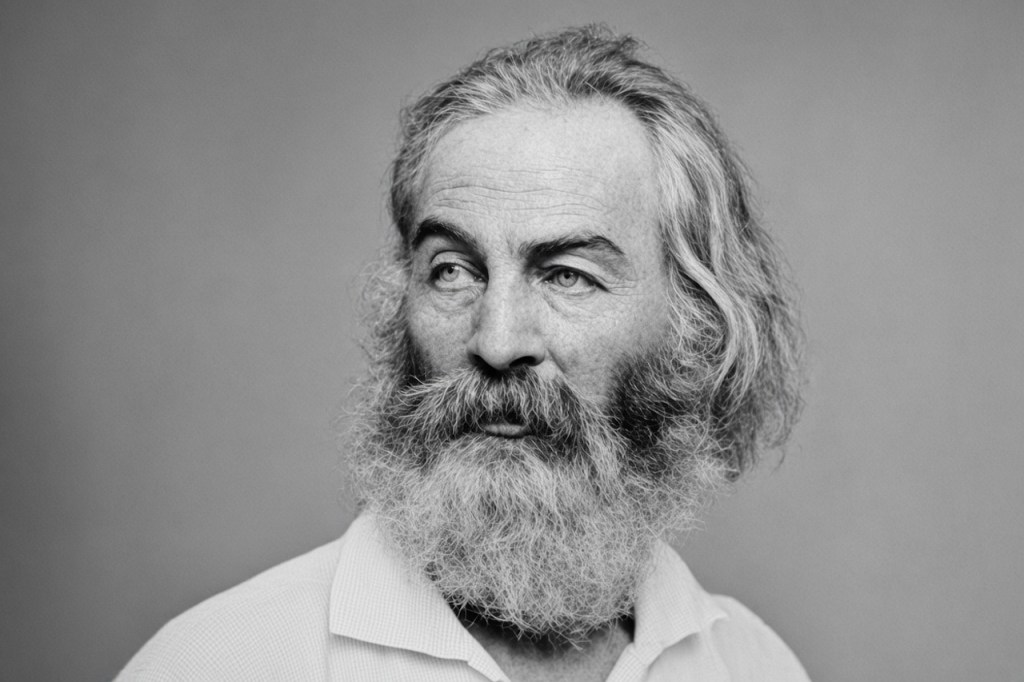
Walt Whitman’s “Reconciliation”
Walt Whitman served in field hospitals during the American Civil War (1861-1865), and he wrote extensively about his experience in both poems and essays. His much anthologized poem “Reconciliation” resulted from the poet’s first-hand observation of the ravages of war.
Introduction and Text of “Reconciliation”
Walt Whitman’s “Reconciliation” consists of only six sprawling lines. The lines are long and unwieldy—the third line has to be broken for almost any page. While one might contend that for such a subject, a cosmic voice is needed, Whitman has his speaker make his remarkable claims in a very personal, individual voice, revealed in the penultimate and final lines.
Far from ever professing a morose or melancholy view, Whitman was able to see in the overall scheme of things that death is an integral part of life, and he allows his speaker to profess his heartfelt observations.
Reconciliation
Word over all, beautiful as the sky!
Beautiful that war, and all its deeds of carnage, must in time be utterly lost;
That the hands of the sisters Death and Night, incessantly softly wash again, and ever again, this soil’d world:
… For my enemy is dead—a man divine as myself is dead;
I look where he lies, white-faced and still, in the coffin—I draw near;
I bend down, and touch lightly with my lips the white face in the coffin.
Commentary on “Reconciliation”
What does the speaker in Whitman’s poem titled “Reconciliation” attempt to reconcile? Two concrete entities—friend and foe, and two abstract—life and death. His sprawling lines are immediately recognizable as the Whitman style that has captivated readers for many decades.
First Movement: Cosmic Claim
Word over all, beautiful as the sky!
Beautiful that war, and all its deeds of carnage, must in time be utterly lost;
“Reconciliation” makes a cosmic claim in the first line, “Word over all, beautiful as the sky.” “Word” alludes to “the Word” as it is used in the beginning of the Gospel of St. John: “In the beginning was the Word, and the Word was with God, and the Word was God” (KJV John 1:1).
The speaker thus avers that God is “over all.” He then focuses on the limited space of humanity, claiming that something is “as beautiful as the sky.” And then he addresses his specific subject: the reconciliation of the entities he has chosen to feature. Influenced by the carnage he has witnessed, he comes to realize certain universal attributes that prevail and perplex humanity.
Despite the death and destruction that war engenders, it is a beautiful fact that eventually those evil “deeds of carnage” will disappear. The sky implies the beauty that is “the Word” (or vibration) of God, and the beauty that is lost in war will return because war “in time” loses its hold completely.
Second Movement: Death a Cleanser
That the hands of the sisters Death and Night, incessantly softly wash again, and ever again, this soil’d world:
Line three continues the claim, stating that it is also beautiful that both “Death and Night” behaving as “sisters” employ their “hands” to continue to cleanse the world’s soil repeatedly. By personifying “Death and Night” as sisters who cleanse the dirt from the world, the speaker offers further evidence of deliverance from the “deeds of carnage.”
That bad things happen on this physical plane is undeniable, but that the bad things are corrected is beautiful. “Death” gives the tired soul a respite from the torment of earth life as “night” gives rest to the body.
Third Movement: On Loving One’s Enemies
… For my enemy is dead—a man divine as myself is dead;
I look where he lies, white-faced and still, in the coffin—I draw near;
I bend down, and touch lightly with my lips the white face in the coffin.
In line four, the speaker makes a startling statement: he simply affirms that his enemy is now deceased, but further he avers that this vanquished enemy is a “child of God” every bit as much as he the speaker is.
It is customarily difficult for the ordinary mind to grasp that an enemy is, like one’s self, a child of God. But Whitman’s speaker does comprehend this truth, and thus he does as Jesus the Christ commands, “But I say unto you, Love your enemies, bless them that curse you, do good to them that hate you, and pray for them which despitefully use you, and persecute you” (KJV Matthew 5:44).
The speaker views the dead enemy in his casket, but instead of denigrating the enemy or experiencing gladness at the man’s death as is usually expected, this speaker does the unthinkable: He “[b]end[s] down” to “touch lightly with [his] lips the white face in the coffin.” He blesses the face of the enemy by offering a consoling touch of the lips to the enemy’s pale countenance.
Sound and Meaning
Whitman’s short lyric relies on few poetic devices. Apart of the opening allusion and personification of Death and Night as sisters, the poem is fairly literal. It does employ alliteration in the same line as the personification: “the hands of the sisters . . . incessantly softly wash . . . the soil’d world.”
The many alliterative sibilant sounds enforce the meaning of the claim that the hands wash the “soil’d world.” The sounds seem to inundate the sentence as water would inundate as it cleanses.
Repetition of the “–ld” sound in “soil’d world” emphasizes the physical plane’s uncleanliness because the words are a near rime. Also, repetition of “is dead” in line four reinforces the finality that death has brought to the victim.


Good faith questions and comments welcome!