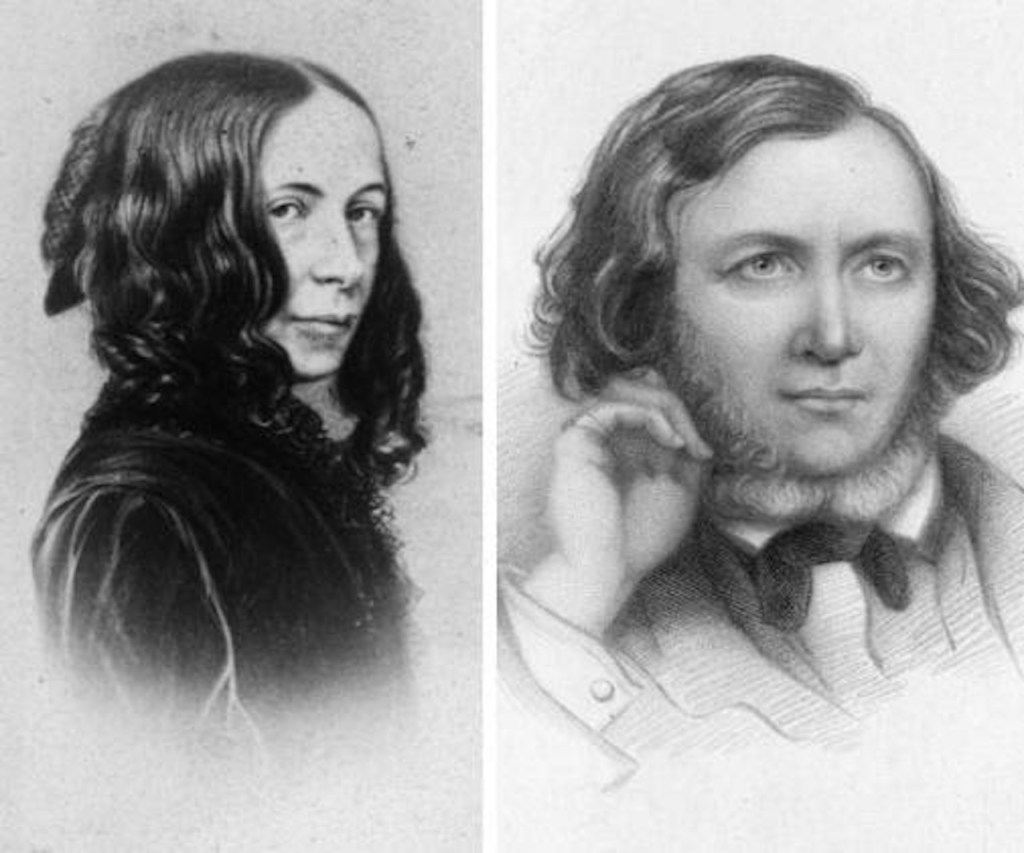
Elizabeth Barrett Browning’s Sonnet 19 “The soul’s Rialto hath its merchandise”
The two lovers exchange locks of hair, and the speaker makes a ceremony of the exchange as she again emphasizes the royalty of her lover’s station and talent.
Introduction with Text of Sonnet 19 “The soul’s Rialto hath its merchandise”
In sonnet 18 “I never gave a lock of hair away” from Elizabeth Barrett Browning’s Sonnets from the Portuguese, the speaker dramatically celebrates giving a lock of her hair to her belovèd.
The little drama continues with sonnet 19 “The soul’s Rialto hath its merchandise,” as she receives a lock from him. The two lovers exchange their locks of hair, and the speaker dramatizes a ceremony of the exchange, as she again celebrates the royalty of her lover’s station and talent.
Sonnet 19 “The soul’s Rialto hath its merchandise”
The soul’s Rialto hath its merchandise;
I barter curl for curl upon that mart,
And from my poet’s forehead to my heart
Receive this lock which outweighs argosies,—
As purply black, as erst to Pindar’s eyes
The dim purpureal tresses gloomed athwart
The nine white Muse-brows. For this counterpart,
The bay-crown’s shade, Belovèd, I surmise,
Still lingers on thy curl, it is so black!
Thus, with a fillet of smooth-kissing breath,
I tie the shadows safe from gliding back,
And lay the gift where nothing hindereth;
Here on my heart, as on thy brow, to lack
No natural heat till mine grows cold in death.
Commentary on Sonnet 19 “The soul’s Rialto hath its merchandise”
The two lovers exchange locks of hair, and the speaker makes a ceremony of the exchange as she again emphasizes the royalty of her lover’s station and talent.
First Quatrain: Oration and Commemoration
The soul’s Rialto hath its merchandise;
I barter curl for curl upon that mart,
And from my poet’s forehead to my heart
Receive this lock which outweighs argosies,—
As in sonnet 18 “I never gave a lock of hair away,” the speaker offers a bit of an oration, commemorating the exchange of locks of hair between the two lovers. She metaphorically compares the soul to a marketplace, the Rialto, an important commercial district in Venice. The speaker employs a commercial metaphor because of the trading of items that the two lovers are engaging in.
The speaker then reveals that she is accepting the lock of hair from the head of her beloved with all the enthusiasm that an individual might express if she were presented with large loads of valuable cargoes from vast commercial sailing ships.
The speaker enhances the value of that lock of hair by stating that it weighs even more than “argosies.” It is even more valuable than all the cargo arriving in vast commercial vessels that travel the seas.
Second Quatrain: Purple Black
As purply black, as erst to Pindar’s eyes
The dim purpureal tresses gloomed athwart
The nine white Muse-brows. For this counterpart,
The bay-crown’s shade, Belovèd, I surmise,
In the second quatrain, the speaker emphasizes the blackness of her lover’s lock. The “curl,” she claims, is so black that it is “purply black.” Again, she employs the color of royalty to distinguish the high station of her talented, handsome, accomplished lover.
The speaker alludes to the ancient Greek poet Pindar, who is considered the greatest of the nine most famous ancient Greek poets, whom she references as “the nine white Muse-brows.” The speaker’s lover’s lock is as significant because he is as important to the poetry world as those Greek poets are.
First Tercet: Pindar Allusion
Still lingers on thy curl, it is so black!
Thus, with a fillet of smooth-kissing breath,
I tie the shadows safe from gliding back,
The speaker voices her assumption that “the bay-crown’s shade, Beloved / / Still lingers on the curl.” The “bay-crown” refers to that most famous poet, Pindar, whose shadow-presence influences her lover’s talent through his “purpureal tresses.”
The speaker insists that because of the high value she places on that black lock of hair, she will keep the lock close to her heart to keep it warm. Likely, the speaker will place it in a locket, but she exaggerates her drama by saying she is binding it with her “smooth-kissing breath” and tying “the shadows safe from gliding back.”
Second Tercet: Ceremony of the Lock
And lay the gift where nothing hindereth;
Here on my heart, as on thy brow, to lack
No natural heat till mine grows cold in death.
In placing the lock next to her heart, the speaker is safe-guarding the “gift where nothing” can disturb it. Close to the speaker’s heart, the lock will “lack / No natural heat” until, of course, the speaker “grows cold in death.” The ceremony of the lock exchange is complete, and the love relationship will then progress to the next important stage.
 Linda's Literary Home
Good faith questions and comments welcome!