Linda's Literary Home

Author: Linda Sue Grimes

  • Thy Divine Effulgence 

    Thy Divine Effulgence 

    —after “O God Beautiful”

    The world is blessed with Thy divine effulgence:

    Forests whisper Thy lush leafiness.
    Mountains testify to Thy majesty.
    Restless rivers rush to Thy unguarded sea
    Where Thy grave hand marks their madness.

    O Divine Effulgence,
    We bow before Thy Beauty!
    O Divine Effulgence,
    We humbly bow to Thy Bounty!

    Servers serve for Thy pleasure!
    Lovers love only through Thy treasure!
    Mourners mourn for Thee alone, Thee alone!
    Only Thy pure-hearted ones know Thy bliss!

    Only Thy saints and yogis approach Thy bliss!

    O Divine Effulgence,
    We bow before Thy Beauty!
    O Divine Effulgence,
    We humbly bow to Thy Bounty!

  • Emily Dickinson’s “Adrift!  A little boat adrift!”

    Image: Emily Dickinson – Amherst College – Daguerrotype of the poet at age 17, circa 1847 – likely the only authentic, extant likeness of the poet

    Emily Dickinson’s “Adrift!  A little boat adrift!”

    In Emily Dickinson’s skilled employment of paradox and metaphor in her poem “Adrift!  A little boat adrift!,” the speaker offers a complex drama played out seemingly on an earthly ocean but actually performed on the mystical sea, where life remains immortal and eternal.

    Introduction and Text of “Adrift! A little boat adrift!”

    Emily Dickinson enjoyed the riddle essence of poetry.  She often employed that riddle essence in which she implies or directly asks a question.  Other times, she simply offers her rather detailed description and allows the reader to answer.  In this little drama, she elides the physical universe with the spiritual universe.  

    Metaphorically comparing the human being to a “little boat” floating without a guide on the sea of life, she deliberately sinks that boat before resurrecting that drowned life through the agency of the human soul, which cannot be drowned but which possesses all the power of its Creator to demolish all human suffering.

    Adrift! A little boat adrift!

    Adrift! A little boat adrift!
    And night is coming down!
    Will no one guide a little boat
    Unto the nearest town?

    So Sailors say – on yesterday –
    Just as the dusk was brown
    One little boat gave up its strife
    And gurgled down and down.

    So angels say – on yesterday –
    Just as the dawn was red
    One little boat – o’erspent with gales –
    Retrimmed its masts – redecked its sails –
    And shot – exultant on!

    Commentary on “Adrift! A little boat adrift!”

    This little drama offers a useful example of Dickinson’s most intense style, featuring her use of the riddle and her mystic appraisal of the human mind and heart, influenced by the human soul, whose guidance may seem rudderless, until that guidance becomes crucial.

    First Stanza:  Report of Danger

    Adrift! A little boat adrift!
    And night is coming down!
    Will no one guide a little boat
    Unto the nearest town?

    The speaker begins with an exclamation revealing that danger is on the horizon in the form of a small watercraft floating about unguided by a knowing pilot.  Such a situation alerts the reader/listener that all sorts of calamity could ensue. 

    To make matters worse, nightfall is fast approaching.  An unguided vessel drifting into the nighttime brings down a veil of fright and concern.  Again the speaker is exclaiming for again she places the exclamation mark at the end of her brief outcry!

    The speaker then cries for assistance for the little drifting sea craft, but instead of a command, she frames the cry as a question with a negative emphasis, “[w]ill no one . . . ?”  She demonstrates that she suspects there is no one who will chaperone and usher this little vessel to a safe harbor, such as to “the nearest town.”

    The painful negativity suggested by the speaker early on in her little drama foreshadows the ultimate outcome in her conclusion.  She alerts her listeners that a likely catastrophe is on the horizon.  

    But truly alert readers/listeners will suspend judgment until the conclusion is revealed, for Emily Dickinson can be as tricky as any poet writing.  She can out-trick Robert Frost by miles and miles

    Second Stanza:  Disaster

    So Sailors say – on yesterday –
    Just as the dusk was brown
    One little boat gave up its strife
    And gurgled down and down.

    The speaker continues her report of the disastrous fate of this “little boat.”  It has been reported by “Sailors,” those who would know, that this little sea vessel that so valiantly struggled nevertheless gave up the ghost and let the sea take it down into its depths.

    The time of this sinking was dusk when the color of sunset spread its brown, saddening haze upon the land and sea.  The sailors have reported that the vessel simply “gave up” because it could not overcome its “strife.”  

    It gave up its life, its cargo, all that was precious within it.  It gave up and then went down with gurgling sounds–the sound of a living throat taking on water that will ultimately drown it.

    The speaker has created a scenario of such pain and suffering that can only be assuaged with extraordinary finesse.  The sinking of a little boat remains a sorrowful image, and the speaker has seared that painful image into the inner sight of her listeners/readers.  She has dramatized the events surrounding that image in such a way as to heighten the pain and anguish experienced by her audience.

    Third Stanza:  Safety at Last

    So angels say – on yesterday –
    Just as the dawn was red
    One little boat – o’erspent with gales –
    Retrimmed its masts – redecked its sails –
    And shot – exultant on!

    Finally, the speaker quickly pulls the readers/listeners minds from the earthly tragedy on the physical level of existence on which the sinking of a sea craft causes pain and suffering.  Despite what the “Sailors” have reported, there is another report by higher beings that will impart a different engagement, a different outcome of this earthly event.

    Now, the report is brought by “angels.”  The higher, mystical beings are reporting that this event happened the same day as the earthly report “yesterday.”  But the time was early morning when “dawn was red,” setting up a dichotomy from yesterday when “dusk was brown.”

    Instead of merely going down “gurgl[ing],” this little vessel when faced with ferocious “gales,” fought valiantly:  it transformed itself by reshaping it “masts” and reinstalling stronger and better sea-worthy “sails.”  

    And after it completed those repairs, it sped past all earthy danger and triumphantly entered into the realm of mystic life (Christians call it “Heaven”) where no water can drown, no storm can toss, and no pain and suffering can stifle.

    Paradox and Metaphor

    Upon first encounter, the reader will detect what seems to be a contradiction or impossibility because of a reversal of two time periods.  In the second stanza, it is reported that the little boat sank yesterday at “dusk.”  But then in the third stanza, it is reported that the little boat encountered its difficulty yesterday at “dawn.”  

    The resolution of this paradox is accomplished through the realization that on the spiritual, mystical level of being, time remains eminently malleable.  At the time the “little boat” experienced it difficulty, it realized its immortal, eternal aspect.

    It became aware that it is, in fact, a spark of the Eternal, and therefore nothing can harm it.  It realized that stature at dawn, thus by the time dusk had arrived to take its physical form, its mystic/spiritual form–or soul–had moved on.

    This poem may be considered one of Emily Dickinson’s riddle poems. Although it does not seem to call for answering a riddle question, readers cannot fail to grasp that the “little boat” is a metaphor for a human being. 

    This metaphor becomes obvious, however, only after the angels offer their report.  The “little boat” then is revealed to possess the human ability to realize its special power, its mystical spark, and its ability to transcend earthly trials and tribulations.

  • All Tinsel and Tinker  

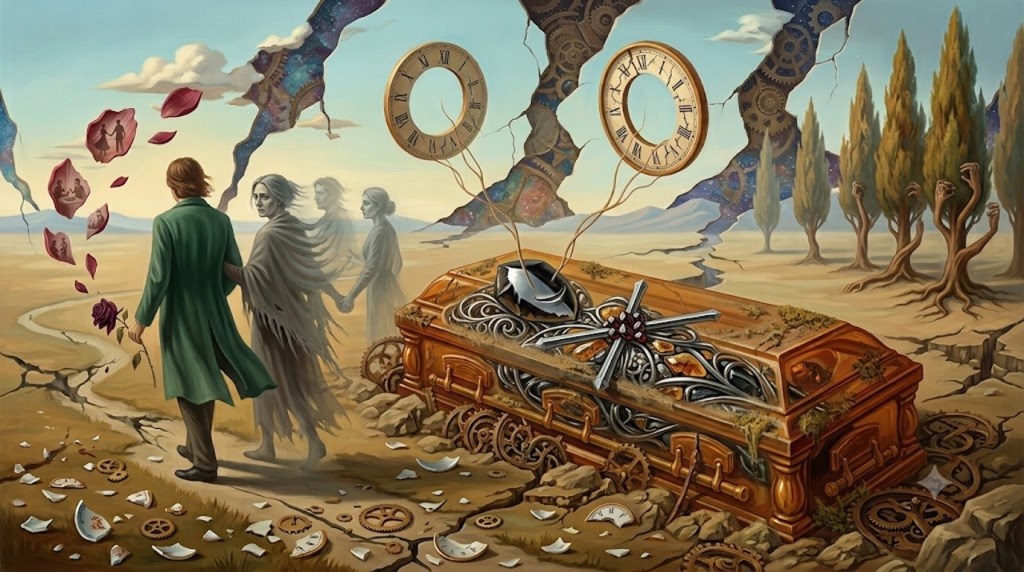
    Image:  Created by ChatGPT inspired by the poem
    Image: Created by ChatGPT inspired by the poem

    All Tinsel and Tinker  

    —after “In the Valley of Sorrow”

    I will wait for Thee, for no other
    Choice have I.  There is nowhere
    Else to go, but to Thee.

    Deceitfully, this land of sorrow
    Offers joy as well, but back to sorrow
    It always again returns.

    This land of sorrow offers honey
    That often hides a little poison
    And too often too much poison.

    Knowing the pessimist, I have chosen
    The optimist only the learn the truth
    Was with the pessimist.

    In this land of sorrow, only the love
     Of God and Guru is worth pursuing.
    All else is tinsel and tinker.

    All else is but a prod to remembrance
    Of the flameless flame, the soundless song—
    Where thirst is quenched by the soul’s living waters.

  • Emily Dickinson’s “If those I loved were lost”

    Image: Emily Dickinson – Amherst College – Daguerrotype of the poet at age 17, circa 1847 – likely the only authentic, extant likeness of the poet

    Emily Dickinson’s “If those I loved were lost”

    The speaker in Emily Dickinson’s “If those I loved were lost” is emphasizing the value she places on her loved ones.  She likens their importance to significant events from the community level to the world stage, where bells ring to announce important happenings.

    Introduction and Text of “If those I loved were lost” 

    Emily Dickinson’s “If those I loved were lost” features two stanzas, each with two movements.  The speaker’s musing targets how the speaker would react to both losing and finding loved ones.  Her emotions and behaviors signal the importance of those loved ones to her.  The value she places on these individuals can only be suggested and not directly stated.

    If those I loved were lost 

    If those I loved were lost
    The Crier’s voice would tell me –
    If those I loved were found
    The bells of Ghent would ring –

    Did those I loved repose
    The Daisy would impel me.
    Philip – when bewildered
    Bore his riddle in!

    Commentary on “If those I loved were lost” 

    This highly allusive poem takes readers from life in a small village to the world stage, on which famous bells herald momentous events.  The allusions emphasize the significance the speaker places on those to whom she refers. 

    First Movement:   An Important Announcement 

    If those I loved were lost
    The Crier’s voice would tell me –

    The speaker is speculating about her emotions and behaviors after having lost a loved one, and then she adds a speculative note about those emotions and behavior as she suddenly has found a beloved. 

    The first movement finds the speaker claiming that the loss of a loved one would herald a “Crier” to announce the event.  In earlier times, a “town crier” was employed to spread local news events on the streets of small villages.   

    The town crier’s position was noticeable because of his manner and elaborate dress:  such a crier might be adorned in bright colors, a coat of red and gold with white pants, a three-cornered hat (tricon), and black boots.  He usually carried a bell that he would ring to attract attention of the citizens.  He often would begin his announcement with the cry, “Oyez!  Oyez!  Oyez!” 

    By making this simple claim that a “crier” would be letting her know about the loss of a loved one, the speaker is elevating the importance of everyone she loves to the status of a noted official or famous name in the community.  

    Second Movement:  The Significance of Loss 

    If those I loved were found
    The bells of Ghent would ring – 

    The speaker then alludes to the famous Ghent Belfry, whose construction began in 1313 with ringing bells to announce religious events, later employed to signal other important occurrences.    

    The inscription on the belfry tower indicates the historical and legendary important of the construction:   “My name is Roland. When I toll there is fire. /  When I ring there is victory in the land.” 

    Dickinson was likely aware of Henry Wadsworth Longfellow’s lines, “Till the bell of Ghent responded o’er lagoon and dike of sand, I am Roland! I am Roland! there is victory in the land!”   

    Because the famous bells ring to herald important events, the speaker assigns great importance to the fact that she has found a loved one.  Thus the speaker has molded her losing and finding those she loves into great and momentous events. 

    Third Movement:  Daisy and Death 

    Did those I loved repose
    The Daisy would impel me.

    The speaker then speculates about her reaction to the death of her loved ones.  She refers to the flower, the “Daisy,” stating that it would “impel her.”  The employment of the Daisy is likely prompted by the flower’s association with growing on graves as in Keats’ reference in the following excerpt from one of his letter to a friend:  

    I shall soon be laid in the quiet grave – thank God for the quiet grave – O! I can feel the cold earth upon me – the daisies growing over me – O for this quiet – it will be my first. 

    And, too, there is the old expression, “pushing up daisies,” of which Dickinson was, no doubt, aware.  The flower would drive her to some of kind reaction which she fails to describe but only hints at.  Although she simply suggests her reaction, she leaves a significant clue in the next movement, as she alludes again to Ghent, this time the leader named Philip.

    Fourth Movement:  The Riddle of Loss

    Philip – when bewildered
    Bore his riddle in!

    The speaker is then alluding to Philip van Artevelde (1340–82), who was a popular Flemish leader. He led a successful battle against the count of Flanders, but later met defeat and death.  The Dickinson household library contained a book with a play that featured Philip’s last words before dying, “What have I done?  Why such a death?  Why thus?”

    Thus the speaker makes it known that she would have many questions as she struggles with the death of a loved one.  She would, like Philip, be overcome, having to bear such a “riddle.” 

    The speaker has shown how important and necessary her loved ones are to her, and she has also demonstrated that their loss would be devastating, and she has done all this through suggestions and hints, without any direct statement of pain and anguish.  All of the sorrow is merely suggested by the high level of importance she is assigning to her loved ones.  

  • In This Dream of Dreams

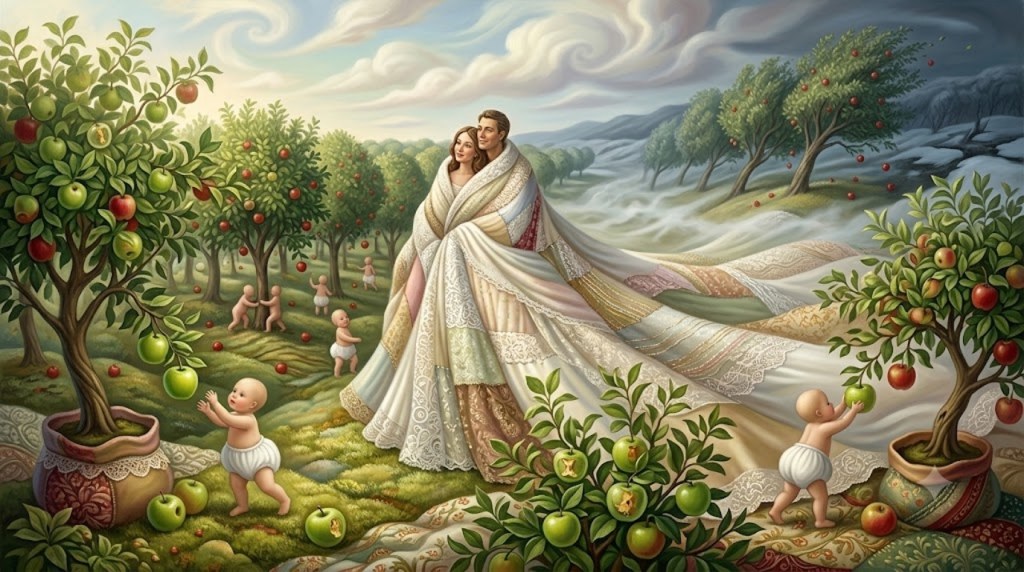
    Image - Created by Grok, inspired by the poem
    Image – Created by Grok, inspired by the poem

    In This Dream of Dreams

    —after “In the Land beyond My Dreams”

    I cannot imagine the land beyond my dreams.
    I can only create from the materials
    Here in this dream of dreams.

    But I will keep on fathoming, diving, delving into this brain
    This treasure house of myriad things that move and change.

    Moment by moment each earthly thing is changing
    As atoms, molecules, germ cells vibrate to the moon and sun.

    The seas clamor against the land, the land climbs and dips
    And humankind is baffled by the enormity
    Of its own ignorant obsequiousness.

    Humankind that cannot kindle a flame against its own lack.
    Humankind that cannot fathom the vastness of one planet.

    Humankind that cannot guess itself into wisdom.
    Humankind that cannot create one necessity from scratch.

    This dreamland is littered with the useless dreck of human
    Arrogance—All that is left is to pray and seek the soul
    In stillness beyond closed eyes.  

  • Emily Dickinson’s “So has a Daisy vanished”

    Image: Emily Dickinson – Amherst College – Daguerrotype of the poet at age 17, circa 1847 – likely the only authentic, extant likeness of the poet

    Emily Dickinson’s “So has a Daisy vanished”

    The speaker in Emily Dickinson’s “So has a Daisy vanished” wonders if the dead Daisy and other departing plant creatures of the field have gone off to be “with God.” 

    Introduction and Text of “So has a Daisy vanished”

    The speaker of Emily Dickinson’s “So has a Daisy vanished,” who has a keen ability to observe her natural surroundings, has been moved to wonder about the soul of “a Daisy” and many other “slipper[s]” who have given up their physical encasements of beautiful blooms and glorious green stems and simply vanished.  She wonders where they went, as she dramatizes their final days of earthly glory.

    So has a Daisy vanished

    So has a Daisy vanished
    From the fields today –
    So tiptoed many a slipper
    To Paradise away –

    Oozed so in crimson bubbles
    Day’s departing tide –
    Blooming – tripping – flowing
    Are ye then with God?

    Commentary on “So has a Daisy vanished”

    The speaker in this brief drama wonders if the dead Daisy and other departing plant creatures of the field have gone off to be “with God.”

    First Stanza:  A Flower in Heaven

    So has a Daisy vanished
    From the fields today –
    So tiptoed many a slipper
    To Paradise away –

    The speaker begins with a statement informing her readers and listeners that a lovely flower has gone, disappeared “from the fields today.”  She begins with the conjunctive adverb “so,” seeming to indicate that she is merely taking up a thought that began somewhere else and at an earlier interval.   

    Then again employing the telling “so,” the speaker adds that many other flowers have also tripped off to “Paradise.”  Along with the lovely “Daisy,” the other “slipper[s]” have all gone missing, but the speaker suggests that they have metaphorically died and gone to Heaven.  While the “Daisy” has rather generically “vanished,” the others have “tiptoed” off “to Paradise.”

    The speaker is playing with the language of loss, which almost always produces a melancholy in the very sensitive hearts of keen observers.  Instead of merely dying, the flowers vanish from the fields and tiptoe away.  

    That they all have metaphorically gone on to “Paradise” demonstrates that the faith and courage of the sensitive heart of this deep observer are fully operational.  That the speaker allows that these creatures of nature have gone to Heaven or Paradise shows that she has a firm grasp on the existence of the soul as a permanent life force that plants as well as animals possess. 

    This speaker understands that all life is divinely endowed.  The flowers leave behind their physical encasements, but they take their soul encasement and then scurry off to the astral world, from where they will likely return to the Earth or some other planet to continue working out their karma–an eventuality that informs the procedure for the animal kingdom as well.

    Second Stanza:  To Be with the Divine Creator

    Oozed so in crimson bubbles
    Day’s departing tide –
    Blooming – tripping – flowing
    Are ye then with God?

    While the speaker remains aware that plant life force is as eternal as that of the animal kingdom, she is not so sure about where each individual plant goes after its demise.  Thus she wonders if they are “with God.”  

    Likely influenced by the Christian concepts of Heaven and Hell, the speaker no doubt wonders if plant behavior while on Earth may require a reckoning that leads to Heaven or Hell.  That she asks in the more affirmative mood demonstrates her optimistic sensitivity.

    Paramahansa Yogananda has likened life on Earth to vanishing bubbles.  He has explained that many deep thinking philosophers, sages, and poets have realized that the things of this world are like bubbles in the ocean; those individual things such as stars, flowers, animals, and people suddenly appear, experience a life only for a brief period of time, and then they disappear as swiftly as they appeared.

    In his poem, “Vanishing Bubbles,” the great yogi dramatizes that brief earthly sojourn of the myriad life forms, as he unearths the solution for those sensitive minds and hearts that grieve after the loss of those individuals whom they had loved and who yet must vanish like bubbles. 

    And that solution is the simple knowledge that although the physical encasement of each individual has indeed vanished, the soul of each individual continues to exist; therefore, there is no actual vanishing or death.

    The speaker in Dickinson’s poem is suggesting that she is aware of the eternal, everlasting nature of the soul.  After the lovely bloom has been maneuvered into the world on “crimson bubbles,” it will live its brief life, prancing about with the breeze, and then with the “departing tide,” its day will come to an end,  but only for its physical encasement, which it will leave behind.  

    The speaker knows that its soul–its life force–will continue, and she wonders if those souls of all those lovely flowers she has been enjoying will then be “with God.”  That she would ask hints that she believes the answer is yes.

  • The Naughty Child 

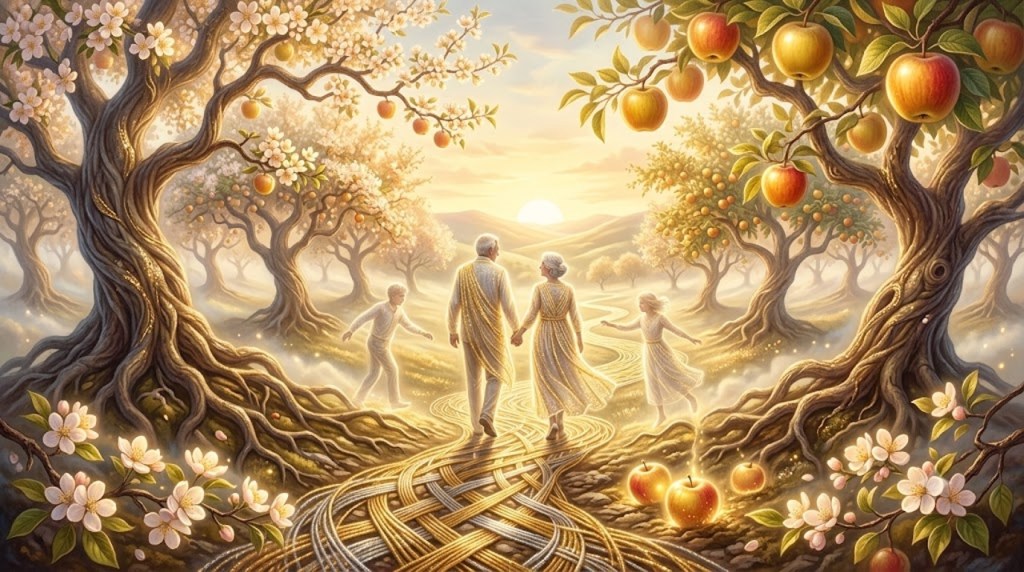
    Image created by ChatGPT inspired by "Naughty Child"
    Image: Created by ChatGPT inspired by “Naughty Child”

    The Naughty Child 

    —after “Divine Mother’s Song to the Devotee”

    Divine Mother:  O my child, what do you want now?

    Naughty Child:  O dear Mother Divine, I want nothing but Thy love and care!

    Divine Mother:   But dear child of mine, I cannot give those to you; I would lose myself in your little ways.

    Naughty Child:  O Mother Divine, what may I ask from Thee, then?

    Divine Mother:   Ask me to save you from your little cares.  Ask me for salvation, but don’t ask me for my love and devotion.  I would become poor without them.

    Naughty Child:  O Mother Divine!  I already have your salvation!  Do not play Thy games of tit for tat, this for that.  Thou canst not save me lest Thou lovest me.

    Divine Mother:   Funny little child of mine.  You are beginning to understand.  Let’s sit and watch the Eternal Sun in the East, and you will know and feel all you wish, all your little heart’s desires will be fulfilled.

    Naughty Child:  O Mother Divine!  I bow at Thy feet again and again.  Set Thy blue lotus feet upon my brow as Thou wilt.  Aum!  Peace!  Amen!

  • Emily Dickinson’s “Morns like these – we parted”

    Image: Emily Dickinson – Amherst College – Daguerrotype of the poet at age 17, circa 1847 – likely the only authentic, extant likeness of the poet

    Emily Dickinson’s “Morns like these – we parted”

    Emily Dickinson loved nature, and birds appear often in her poems, her spiritual garden. She also was quite fond of mystery and riddles. This poem offers an accumulation of evidence that she has observed a bird and then poof! one human act and the bird takes wing!

    Introduction and Text of “Morns like these – we parted”

    Emily Dickinson’s speaker in her riddle-poem, “Morns like these – we parted,” is creating a drama from the act of bird-watching, as the act covers a single day from the time of morning when one bird and she parted company to the act of evening drawing the curtains, simultaneously hearing the bird fly off to its own abode or to wherever it may be taking for its destination.

    The mental gymnastics of the speaker reveals a special gift of qualifying the experience of the human mind, intrigued by the bird’s ability to fly in the freedom of the open skies, indicating that this drama has often played out in the speaker’s mind. 

    Morns like these – we parted

    Morns like these – we parted –
    Noons like these – she rose –
    Fluttering first – then firmer
    To her fair repose.

    Never did she lisp it –
    It was not for me–
    She – was mute from transport –
    I – from agony –

    Till – the evening nearing
    One the curtains drew –
    Quick! A sharper rustling!
    And this linnet flew!


    Commentary on “Morns like these – we parted”

    Emily Dickinson’s “Morns like these – we parted” offers an accumulation of evidence that the speaker has observed a bird and then poof! one human act and the bird takes wing!

    First Stanza:  Observing a Bird

    Morns like these – we parted –
    Noons like these – she rose –
    Fluttering first – then firmer
    To her fair repose.

    Observing the behavior of feathered friends, the speaker reports that on certain mornings she has watched as a bird makes its way heavenward, leaving her earthbound but astounded by the ability of an earth creature to fly through the sky. 

    In addition to morning flights, she has experienced the magic also around noontime.  The creature with wings first may seem to merely “flutter[ ],” but then suddenly with more determined gait glided to its chosen destination.

    Second Stanza:  Experiencing Awe

    Never did she lisp it –
    It was not for me–
    She – was mute from transport –
    I – from agony –

    As the bird begins its magical journey, it does not communicate vocally in song or chirp to the speaker’s presence.  Having nothing to impart to its observer, it merely begins its flight.  The speaker assumes that the bird’s silence is caused merely by her “transport” of the felicity of light.  

    The speaker remains “mute” merely from “agony”—the sudden awareness that one will remain earthbound while this marvelous creature will ascend and vanish skyward.  The earth-bound creatures can only watch, think, muse, and then attempt to recreate the feathered, flying creatures actions in a written composition. 

    Third Stanza:  The Close of a Drama

    Till – the evening nearing
    One the curtains drew –
    Quick! A sharper rustling!
    And this linnet flew!

    All of this drama of observation and bird flight goes on from morning to evening, nigh to which someone in the home closes the curtains at the window.  From without comes the “rustling” sound, which is quick and sharp, as the bird—now identified as a “linnet” flies off to parts unknown to the speaker/observer, but likely known well to the bird.  

    The speaker’s attention has been suddenly snipped by this final sudden movement of the flying creature which she has so patiently watched in wonder.  The speaker’s mind has flown with the bird, waited as the bird waited, now drops its object as the bird has rustled its feathers for the last time that day and flown off to God only knows whither.

  • Sipping Dew-Drops of Celestial Wine

    Image accompanying the poem “Sipping Dew-Drops of Celestial Wine”
    Image: Creataed by ChatGPT inspired by the poem

    Sipping Dew-Drops of Celestial Wine

    —after “I Am the Sky”

    My soul goes on spreading across this land.
    Across the sea, my boundless soul goes on
    Expanding beyond this earth,
    Beyond the moon and sun—
    Frolicking from planet to planet
    Nipping off rays from heavenly bodies,
    Sipping dew-drops of celestial wine
    From the myriad goblet-stars.

    Across the sky, my soul melts and stretches,
    Frozen no more in this little body,
    Frozen no more in this caged mind,
    Frozen no more, this soul expands
    Throughout Infinity, throughout Eternity
    In Bliss! Bliss! Ever more Bliss!

    A slightly different version of this poem appears in my collection Singing in Soul Silence: Voices of FaithThe original last line was “In joy, joy, ever more joy!”