Fiction Alert! This story is fiction. It does not depict any real person or actual event.
Introducing Sharm Wilson
What will happen to Sharm? Is she doomed? Where is she going, walking these dark hallways?
In this bizarre tale, Sharm Wilson takes you on a bizarre journey, a slice of her life. She speaks her mind but seems to be trying to tell it like it is. Her off-the-wall language about her off-the-wall experience fosters the questions: What will happen to Sharm? Is she doomed? Where is she going, walking these dark hallways?
The story, like most pieces of fiction that writers write, stems from an incident in my own life, but it is greatly—and I emphasize “greatly”—embellished. And I am eternally grateful for that. Now just read the story and see what I mean!
Walking down Dark Hallways
Sharm was sleepwalking again. Oh, forget about it, I’m Sharm, and I’m not going to pretend again. I’m going to tell this story as myself. So if you don’t like it, that’s ok by me. Just don’t read it.
But ask yourself this, would a fakity fake bother to write all those words without some meaning. Hecky darn, don’t we all yearn for meaning? I just want to tell a little story here: so read or don’t. It’s totally up to you. I’ll try to keep it as clean as possible. I never intended for this to happen, but it did, and I wish so much that I could go back and make all the bad stuff go away, but then who don’t? Right?
At the Y
I was walking to my room at the Y, down the dark hallway. I shoved my key into the lock, opened the door, and went inside. I was so tired after a full day’s work at the salmon factory. (Oh please don’t expect me to tell you which salmon factory. If they knew that someone like me had been working there, they would probably arrest me.)
Anyway, I sat down on my bed and began to think about what I should do the rest of the evening. I decided to light up a joint to get me all relaxed. I knew pot was not allowed in this fine establishment, so I also lit an incense and a tobacco ciggy and went on with my tokes. Just as I was getting a good buzz, a knock comes at the door.
I moved the incense closer to the door, picked up my tobacco ciggy, tried to look as straight—meaning non-stoned—as I could, and then opened the door.
“Hello, Ms Wilson,” a matronly looking gal addressed me. “How are you this evening?”
“I’m ok,” I managed to spout out and then she laid it on me. “There have been complaints from other residents. Are you smoking marijuana in your room?” Feeling a little strained, I took a big puff off the ciggy and then announced, “Oh, no! I’m just smoking my regular Marlboros. I burn incense when I smoke because I like the smell of sandalwood better than tobacco. Is that a problem, ma’am?”
“Oh, no! You’re allowed to smoke in your room, for now. After September, I’m afraid even smoking cigarettes will not be allowed. So you might want to find a new residence, if you continue to smoke after September,” she explained, all the while seeming to buy that I was only smoking tobacco and not wacky tobacky.
“Well, thanks for letting me know. You know, I’ve been meaning to quit anyway. So maybe this is just another reason to do that.” She gave me a knowing look, an understanding look, and left.
It wasn’t five minutes later that another knock came at my door, and it was the cops, who pushed their way inside, found the four pounds of pot, and arrested me for drug dealing.
Tarnation, I had never dealt in drugs. Sometimes I had a lot of pot for personal use. They could never prove that I was a dealer so they had to let me go. But by that time, I had no job, no place to live, and so here I was walking down another dark hallway to another room in a dump called the Cozy Inn.
But I considered myself lucky. I had my freedom. I had the opportunity to look for work. And so when I found a job at the Cozy Dinner, I decided to turn over a new leaf, keep on the straight and narrow (I know that’s a cliché), and keep out of trouble.
Then Bruce came along. He was kind of cute, seemed to have lots of dough, and he started telling me stories about Vietnam. One time he and couple of buddies were captured and taken to a place where they were interrogated.
He thought they were going to become POWs, but that night he and the other two guys decided to break out of the little hut they are held in. They succeeded, made it back to their unit, and lived happily every after—they lived to be discharged from the Army with all their body parts in tact.
One night Bruce and I had just made out in the back seat of his station wagon down on River Road. He was a great lover—oh the stories I could make up, I mean tell, about his loving making! But then as we were getting our clothes back on, a big bang came down hard on the top of the car.
“Get out of there! You creeps! Step out of the vehicle!” a voice rang out loud and stern.
We could see the shape of a very large man, banging on the top of the vehicle, while he seemed to be encircling it, running fast.
Bruce opened the back hatch and yelled, “What the hell do you want? Who are you?”
The man suddenly was upon Bruce beating him with a huge flashlight. He kept beating and beating until Bruce lay a crumbled mass of flesh and bone, unrecognizable. Then the man spotted me.
He grabbed me like I was a sack of flour and headed for his own vehicle, where he dumped me inside on the passenger side and then entered the driver’s side.
I was so scared. I knew this was it. The day I would leave this world. The day I would be killed like an insect. I was shaking but suddenly I became very calm because I knew nothing mattered anymore. I was dead. And nothing mattered anymore.
What happened next is nothing short of bizarre, miraculous, out of this world,—oh crap, you decide!
Along Came Gerrod
“My name is Gerrod Slater,” Bruce’s killer started telling me about himself. “I’ve been looking for that sum-bitch for thirteen years. He killed my mother and sister while my father was serving in Vietnam. His name is not Bruce Slater; his name is Anton Norman. He would have killed you too, I’m damned sure of it.”
“How do you know all this?” I asked this new acquaintance.
“Like I said, I’ve been on his trail for 13 long, goddam years. I need to thank you for slowing him down. When he started making the moves on you, he kind of slipped. He stayed in the town a little too long. And I was able to follow him, check out his history, and then when I saw him on you pretty regular, I was able to catch him.”
Gerrod started his car and peeled out, leaving Bruce/Anton, leaving the night behind. The last night I would spend with Bruce. My mind was a chaos of images: but maybe I won’t die, but what do I do next?
Gerrod drove for several miles and then asked me, “Where do you want to go?”
“Oh, I’m staying at the Cozy Inn, next to the Cozy Dinner, where I work,” I said.
“Yeah, I knew where you worked, wasn’t sure where you stayed, though, but I know Anton lives in Darrtown with his wife and three kids. Wait, did I say, lives — I mean lived,” chuckled Gerrod.
“What are you going to do? How do you plan to get away with murdering Bruce?” I asked Gerrod.
“Well, you know, I hadn’t planned that far,” he said. “My only plan for the past 13 years has been to catch him and kill him. I guess all that planning took up my mind and I have no clue what to do next.”
“Won’t the cops be coming for you?” I asked. “If they come for me, what do you want me to tell them?”
“Look,” he said, giving a look that scared the crap out of me, “I don’t care what you tell anybody. I don’t care if the cops come for me. That’s just another story, another day. You get it. I reached a goal tonight that nobody can ever take away. Look, I’m free. You see, I could kill you too, and by all rights, I should, you are the only person on the planet who can put me at the scene of that scumbag’s death.”
I Ain’t No Rat
“Oh, yes, I see your point,” I said, as I started to exist the car. “I see I’ve asked too many questions. I hope you have a good life, whatever happens. Glad I could help you catch Bruce. Good-bye,” I said as I started to leave.
“Hey, wait!” Oh, God, he’s finally come to his senses, he’s going to kill me too.
“What?” I asked.
“Look, you seem like a nice young lady. Don’t go messing with the likes of Anton Norman again. You got your whole life ahead of you. Make something out of yourself,” advice from a guy who just slaughtered a fellow human being; still it made of lot of sense.
And Now?
That all happened five or so years ago. What have I done since? I’ve made up my mind to do as little as possible. All I really want is to live a life that doesn’t have my heart in my throat from time to time. Can you dig it?
I didn’t rat Gerrod out. Why should I? Just more crap that I’d have to suffer. I want to be as far away from law enforcement as possible, unless I’m being assaulted, robbed, or something.
But then that’s why I keep a very low profile now—just try to keep my waitress job and small apartment maintained. Took Gerrod’s advice about getting too close to handsome strangers.
Haven’t found the perfect answer though, and if you have a suggestion, I’d like to hear it.
Fiction Alert! This story is fiction. It does not depict any real person or actual event.
Tipi for the Twenty-First Century
Lucinda Robertson returns to school to complete a master’s degree. She encounters a fellow student who seemed so interesting and sensually attractive but turns out to be full of a bizarre kind of deceit.
I think I should explain here, that the flesh represents ignorance and, thus, as we dance and break the thong loose, it is as if we were being freed from the bonds of the flesh. —Black Elk, “Wiwanyag Wachipi: The Sun Dance,” The Sacred Pipe: Black Elk’s Account of the SevenRites ofthe Oglala Sioux
After fifteen years, three children, a failed marriage, and five years of moping around a tiny apartment on the south side of Muncie, I decided to return to school at Ball State University to finish my master’s degree in architecture.
I needed only six graduate credits, but my advisor suggested I take some undergraduate courses in English composition and math. He also advised me to audit some architecture courses, claiming that a lot of new material had been added to the curriculum, since I had studied here twenty years ago.
So as advised, I enrolled in English Composition 111. During the first meeting the professor put us in groups of four or five students. Our assignment was to interview each other and write a short essay based on the interview. I was grouped with two freshmen and a senior. The senior began the conversation.
“I guess the first thing is to find out each other’s names. I’m Sled Wheat.” He turned to me, and in his leadership tone asked, “What’s your name, ma’am?”
“I’m Lucinda Robertson. And I know I’m the oldest student in the room, but you don’t have to call me ‘ma’am’, do you?” I responded.
“Oh, I’m sorry; I didn’t mean to make you feel uncomfortable. There are a number of non-traditional students on campus now, and I’ve met many of them in my classes, but I didn’t even think you were a non-traditional, you look so young,” he schmoozed.
“Well, thank you, I think . . . I mean, well, are you a non-traditional?” I queried.
“Oh, no, that is, not in the ordinary meaning of the term. I’m somewhat non-traditional in that I’m a year younger than most seniors,” he said.
After the girls had introduced themselves, we paired off and began the interviewing. Sled Wheat was my partner, and he soon got into fairly personal matters.
“Do you think your ex-husband missed you that much and moped around those five years?” he inquired.
“I doubt it, since he was the one who left. I do have to admit I was lucky he helped me financially. My job at the bookstore couldn’t support me and our three children. But then Harold wasn’t stingy with money, just his love. And I wanted his love, not just his money. I’m sorry I babbled on about that. That can’t interest you. I always get down in the dumps when I talk about love. Let’s talk about our majors. What’s yours?” I replied.
“Psychology with a minor in classical studies,” he said.
“That sounds deep. And like a lot of work. Do you graduate this year?” I asked.
“Actually, I finish all my course work this quarter. But I’m hanging around for winter and spring to catch up on some courses I wanted to take but never had time for. How did you ever get into architecture?” he continued.
“I just always design stuff, kind of, in my head—mostly buildings, and usually buildings that look like tipis—and then I draw them as close as I can to my vision. My art teacher in high school was impressed with my drawings and suggested architecture as a major in college. I’ve always felt that was the right choice, even though I didn’t finish my master’s. I only have about 6 hours to finish. I didn’t expect to have to take undergraduate courses in English and math, but it’s kind of fun being in classes with all these young students,” I explained.
“Are you seeing anyone special right now?” he asked.
“You mean dating-seeing, like a boyfriend?”
“Well, yeah.”
“No, I haven’t had any relationships since Harold—well, one, but it didn’t go anywhere. I don’t know—I guess I’ve been hurt too much. I know that must sound sappy and like I’m sorry for myself, but in high school I got my heart broken really bad; I had a steady, Ed Jackson. He’s part Oglala Sioux, like me, and we studied our heritage together, we read everything we could find about our Lakota people; after we graduated we spent the summer on the Pine Ridge Reservation in South Dakota; we both have relatives there. He wanted to take part in the Sun Dance, but for some reason they wouldn’t let him, but we did participate in some other religious rituals. Anyway, I thought he loved me as much as I loved him, but then he dumps me and starts going with Kate Sooner. Kate had a reputation . . . you know, like she was kinda loose. I’d hear guys sniggering about her, saying stuff like, ‘see Sooner for a nooner’ and ‘I’d rather Sooner than later’ or something like that. Anyway, I freaked out, when Ed dumped me for her. I didn’t trust any guys for a long time. And by the time I met Harold, I had avoided relationships until I made it almost impossible for Harold to begin one with me. I think I must have something in my nature that makes men have difficulty committing to me permanently,” I explained, likely imparting too much information.
“Well, it’s probably not you. It must be them. Harold was probably intimidated by your strength, and Ed, well, if you were both in high school, you could probably blame that on youth. It seems that women are usually more stable earlier than men in relationships. That’s true I believe, and they disconcern [He actually used that “word” a lot. Later I found out it wasn’t really a word. I should have told him, I guess. Oh, well, surely someone in graduate school would set him straight.] the compatibility of psychological and physical make up which is highly ambiguous at best. But that provides the motive for devising a philosophical code of life. What do you feel is your own personal code of life?” he rambled on.
“I just want to live and let live,” I, becoming a bit uncomfortable, replied.
“Yeah, but that’s not always possible. You can’t always find that you can disconcern every detail of your existence. You have to take a stance, like with your son. Why don’t you suggest to him that he get his own apartment or live on campus in a dorm? That way your daughters couldn’t hassle you all the time about coddling him,” he now was becoming my advisor.
“But I don’t want him to do that. He has no money, no job. He’s just a freshman. If it weren’t for his scholarship, he wouldn’t be in school at all, and his scholarship only pays tuition. You said yourself that you still live at home with your parents, and look at you, you’re 21. My son has plenty pressure on him just being a student. You know that. And I don’t coddle him. He does a lot for me—he helps clean the apartment, and he usually does the grocery shopping. The girls are just too eager to be mothers. They’re practicing by bossing me around. Besides, what’s this got to do with a life code?” I was becoming a bit annoyed.
“It shows what your life code is. You are obviously over-influenced a great deal by your son—well, your children. Here you are at school primarily to upgrade your employment in order so you can buy a house because your daughters want a nice place to bring their children—children that they don’t even have as of yet. And your son does a little cleaning and grocery shopping for you, and you think that’s enough to warrant your still supporting him,” he pontificated again.
“Don’t your parents support you—didn’t you say you still live at home?” His impertinence was becoming annoying.
“I do, but I do have a job that covers the expenses for my recreational activities. I think there is a significant difference in the dynamic of my situation,” he rebutted.
“Well, I think I have enough to write my essay now. Thanks for the information,” I said, trying not to sound as disgusted as I really was.
Annoyed by this young man’s arrogance, I took my notes, turned away to begin writing. Sled turned his attention to the two freshmen girls in our group and talked with them the rest of the time. After about twenty minutes, the professor ended interview time and instructed us write our essays.
Since I had already been writing for that twenty minutes, I decided to revise what I had. As I read through my paper, I realized that the tone was bitter. I decided that I should not judge this Sled Wheat so harshly; after all, I hardly knew him.
So I filtered out the bitterness as much as I could. I could tell my writing needed some fine tuning. I decided it was a good thing I was taking a composition course.
By the end of the class period, I felt tense and tired; it had been a long day, and I couldn’t wait to get home to relax. Out in the parking lot, as I was unlocking my car, I heard a voice call out, “Lucinda.” I looked around, not many people have that name, and the voice sounded vaguely familiar.
“I wanted to tell you I enjoyed talking with you, and well, if you don’t have to get home right away, maybe we could continue our conversation; how about walking over to the Dug-Out, have come Cokes or something?” I will never know why I said yes to this suggestion.
We went for Cokes. And every Tuesday and Thursday night after class Sled suggested we continue our conversation. Usually we’d walk to the Student Center, or we’d go to the Dill Street Bar and Grill. We found we had a lot in common.
He told me that his mother’s father was part Hopi, and he had started studying the Hopi religion. He believed that the Native American religions were more natural and compatible with human life than the religion of preachers like Billy Graham.
I told him that I had been scared silly listening to preachers who promised sinners hell-fire and damnation. I could never figure out if I was a sinner or not. So I had just stopped listening to anything religious until I had started researching my Lakota background. We liked Mexican food—the hotter the better.
Sled had broken up with his girlfriend recently, and he, therefore, felt he understood how I felt about my marriage break up. He seemed so mature and intelligent and at the same time awkward and naive, and I think that combination of qualities endeared him to me.
I began to enjoy these conversations and looked forward to them, and when he didn’t appear in class one Tuesday night, I was disappointed and worried. But at Thursday’s class he told me he had to take his mother to the airport; her sister in Arizona had suddenly fallen ill.
He usually insisted on driving his mother places, because he didn’t trust his father’s driving. But he said he had really missed talking with me Tuesday night and asked if I was busy Saturday. He invited me to take a drive with him to Brookville Lake where his parents own a cabin.
The lake was beautiful. The cabin was more like a mansion than a cabin, I thought. Sled pulled out two beers from the refrigerator and said, “Let’s go sit on the deck. We can watch the boats. And maybe see some fish jump up out of the water.”
“So you and your family spend a lot of time here?” I asked.
“Mom and Dad come down almost every weekend. I come when I can. Especially when I think Dad isn’t really up to that long drive. I do worry about them driving. It’s certainly an irrational primal fear. I know Dad is healthy enough and a capable driver, but I almost lost my mother once in a car accident, and that latent fear motivates me to try to protect her,” the little psychiatrist offered his self-analysis.
“You care a great deal about your mother, don’t you? I admire that in a son. Daniel and I are close, but he doesn’t worry about me, which is good, because I couldn’t stand the thought of my child trying to protect me. I hated it when my parents tried to protect me,” I said.
“Well, my mother is the most important person in my life. Everything I do I try to think about the effect it could bring to bear on her. Of course, I don’t live the life of a celibate monk, and she knows it, but I do try to consider everything carefully. That’s part of my code of life.” Sled stopped talking and took a long drink of beer.
I stood up, walked to the railing of the deck, took a sip of my beer, and looked out over the lake. A warm breeze flustered the water into tiny ripples, and I enjoyed the feel of it on my face. I hadn’t been out of Muncie for several months, and this was turning out to be the most pleasant trip I had had in many years.
I took a deep breath, and felt Sled standing close behind me. He leaned against me, put his hands on my arms, and rubbed up and down. I leaned back against him. I felt nervous. All the time we had spent together was time spent talking. Now we were touching.
Sled lifted my hair and kissed my neck. I moved against him. He moved up to my face, and he took my mouth with his. Our tongues searched each other for a long moment.
“I’ve wanted to do that for a long time now. I hope you don’t mind too much,” he said.
“No, I don’t mind at all.” I wanted to be composed and cool, but inside I was trembling, and as I looked into his deep blue eyes, I fell in love. Some little voice kept taunting me, “you foolish woman, you foolish woman”—like a chant, but I ignored it; I ignored it because it was so warm and wet, swimming in those eyes.
“I want to make love to you, but I guess I’ve been a little bit afraid that you’d reject me, and that would crush my masculine ego. But I don’t want you to feel pressured. You know? Like I got you down here to trap you? I’d still enjoy being with you even if you don’t want sex with me. I wanted you to know that. I think about you a lot when we are apart, and I do really care about you,” he confessed, and I was captivated.
“Thank you for saying that. It makes me feel better. I think one of the worst things a woman can feel is that a man is interested in her only for sex. It’s not that we don’t want a man to be interested in the sex; it’s just that when sex is the only thing, it destroys even the sex. I’m babbling, I must sound idiotic—does that make sense?” I was becoming flustered.
“Perfect sense and I’d say men feel that way too. And I would assert that sex is only good between really good friends, and we have become the best of friends, wouldn’t you say so?” he inquired.
“Oh, yes, I would definitely say so,” I brazenly lied.
Then Sled leaned in close to me again. I felt his body against mine. I felt his hair, let it stream through my fingers. We kissed again, a long kiss, soft and sweet and warm; then he led me to the giant bed in the master bedroom.
“Oh mother, oh God, oh mother, oh sweet Jesus!” Abruptly, he pulled out, stood over me, just stood for a moment, dripping cum on my belly; he rubbed his eyes and looked at me as if he was seeing me for the first time, and said in a strange tone, “That was a real trip, lady.” And he went to the refrigerator and brought us two beers.
Sunday I worked on my architecture project. The assignment was to design a living space for the twenty-first century. I got out my old designs to search for ideas.
I had come to the conclusion that the only real way to move into the twenty-first century and be environmentally correct was to look back to the American Indian way of living and incorporate some of the features of the tipi.
I hoped it wasn’t racial pride that led me to believe that, and when I read about the feasibility of many Native American customs in my textbook, I felt I must be right.
So as I thought about the project, I knew I would have to do something with the idea of a tipi as living space.
I had thought a lot about Sled’s idea about a “code of life,” and I figured that mine was to love and be of service to those I love. I had long thought that the isolated nuclear family caused tension and stress that could be alleviated with an extended family concept.
Not only could children remain part of the family unit, but others could be brought in to form a family of friends who love one another.
It seemed to me that with such a change in attitude there would be no homeless, no abused children. Vast communities of loving extended families would cover the globe, and peace would finally arrive on earth.
What an idealist! Or was I just naive? No matter. I liked the idea. I guess my ideas were just throw-backs to the sixties, but after all I was influenced by hippies and civil rights activists.
It occurred to me as I worked on my “tipi for the 21st century” that maybe I could conduct an experiment to test my idealism; maybe Sled could be part of it.
My tipi project included a main building, with surrounding compartments, and each compartment as well as the main central building would have a central area that contained a huge fireplace ventilating upward like a tipi opening; the fireplace would serve as a gathering place for all the family members.
It would also serve as the place to cook meals as well as to keep each compartment warm. I wasn’t yet sure about other details such as sleeping arrangements and building materials; I had to research that. But by Sunday night I was truly excited with my ideas and plans, and I couldn’t wait to tell Sled about them and get his ideas.
I arrived at class a little early on Tuesday hoping to talk to Sled before class. I had tried to call him a couple of times Monday, but I never found him home. So I was doubly excited and terribly eager to see him.
But class had started by the time he arrived, so I couldn’t talk to him. When class finally ended, I got up and looked around, but Sled had left. He hadn’t even waited to speak to me at all. I was shocked, so I ran out to see if I could catch him. He had vanished. Wednesday I tried calling and could never find him home.
By Thursday I had begun to panic. I could not understand why he would deliberately avoid me. What had I done? I thought we were friends, lovers; what was going on? Instead of going into class, I waited at the door for Sled. He arrived ten minutes late.
“Sled, can we talk?” I said.
“Oh, hi, how’s it going?” he replied listlessly.
“Well, I’m a little confused. I haven’t heard from you. You bolted from the classroom Tuesday before I could even say hi. Is something wrong?” I asked.
“No, nothing. I’ve been pretty busy, but nothing’s wrong,” he said.
“I have some things to tell you about my tipi project. Remember? I told you a little about it on the way to Brookville Lake,” I said.
“Oh, yeah. I’d love to hear it, but I really have to run. I don’t have time right now. Maybe next week. It was nice talking to you. Really gotta run,” he said, bolting from me, again leaving me confused.
And that’s what he did. And that’s what he did every class night. He arrived late to class and ran as soon as class was over. I felt so confused. Just totally baffled. Everything he had said to me since that first night he asked me to go for Cokes had indicated to me that we were close friends. We had shared so many details of our lives.
I thought he was a fascinating individual, full of spirit and courage. And I thought he felt the same way about me. Once in a while the nasty thought occurred to me that all this young man had wanted was a sexual encounter with me, and every time I thought that I dismissed it as a silly idea.
That just didn’t make any sense. Why would a young man pursue a woman twice his age only for a sexual encounter? I reasoned that our relationship had to be based on more than sex; it had to include friendship—hadn’t he said so?—and I wanted his friendship back. I thought that if he would just tell me what I had done wrong, I could make amends and we could continue.
So I kept calling and finally reached him the day before our last Thursday class meeting; I asked him if we could just talk for a few minutes. He said he would have some time right after class on Thursday. So after class we went for coffee at the Student Center.
“Sled, I really miss you. I know you’ve been busy, but I feel like I’ve done something wrong. And I wish you’d tell me what it is, so I can fix it. I thought we were good friends, and even good lovers, I just don’t understand what’s happened.” I didn’t want to do it, but I started to cry. I tried to catch the tears before they ran down my cheeks.
“It’s not you. It’s . . . well, it’s something I realized about our relationship and quite frankly it made me sick. And it’s really me as much as it is you. I think it affects us both. But I am willing to accept my part of the perversity,” he began his confession.
“Perversity? What do you mean? Do you think there is something perverse about our relationship?” I responded, incredulous.
“Well, I’ve thought about it a lot, and I realize now exactly what our attraction was. At first I tried to disconcern myself to it but now I am facing it . . . it’s Oedipal. You see, you love your son a great deal and feel very close to him, and I love my mother and feel extraordinarily close to her. So it’s your latent sexual attraction to your son that attracts you to me, and the same for me.”
“You mean . . . you would like . . . to have sex with your mother? And so you think . . . having sex with me has something to do with that?” totally incredulous, I stammered.
“And the same for you, even though you try to disconcern yourself to it, you have a latent . . .” Before he could finish, I stood up, and for a long moment, I gazed at his beautiful, deceptive face. Then stunned and amazed, I turned and walked away.
Lady Susanne took her tea after Oliver had swept off the veranda. While sitting in her favorite old Victorian chair, sipping delicately from her favorite old Victorian tea cup . . .
Fiction Alert! This story is fiction. It does not depict any real person or actual event.
The Outset
“Let my soul smile through my heart and my heart smile through my eyes, that I may scatter rich smiles in sad hearts.” —Paramahansa Yogananda
Oliver stood by the zinnias holding an umbrella, hoping the rain did not begin before he had completed his pruning off all browned blooms. Mrs. Bronsly stepped out of the house, spied Oliver and went back inside to fetch a broom.
“Oliver, here, sweep off the veranda! Lady Susanne will be taking her tea out there momentarily,” barked Mrs. Bronsly.
“I thought Callie had already broomed off the veranda and the kitchen pantries as well,” retorted Oliver.
“No, she has not! Now skip to it. Time is getting short!” Mrs. Bronsly, the head house matron, was never shy in shouting orders to her whopping team of three: Oliver, butler and footman, Callie, kitchen maid, and Mrs. Donwell, lady’s maid to Lady Susanne.
On a Shoestring
The little household was held together on a shoestring. But Lady Susanne, last living member of the Frawling earldom, was determined to finish out her days as her ancestors has done.
When offered three times more than what her 1500 measly acres were worth, she literally spit and cried, “I’ll never sell my inheritance for a pittance.” Thus, she pushed on with a pension that somehow still managed to support her acreage and small house staff, if only barely.
After being ceremoniously dressed in her finest tea frock by Mrs. Donwell, Lady Susanne took her tea after Oliver had swept off the veranda.
While sitting in her favorite old Victorian chair, sipping delicately from her favorite old Victorian tea cup, she spied off into the distance a motorcar crossing the bridge onto her estate.
Startled at first, she searched her memory: “Was I expecting guests today? I do not seem to recall arranging for visitors on this fine afternoon. Who, on earth, could that be? Likely another relative! Ha, relative, indeed!”
Mrs. Bronsly also had seen the motorcar and immediately called for Oliver. It had been foreordained that Oliver would greet any visitor to the estate.
Being the only man on the premises, the other women deemed it right that Oliver should be the first to inspect whoever might be accosting the serenity of Frawling Manor.
Oliver in Charge
Oliver stepped out of the front door and approached the vehicle. Out from the vehicle alighted a very young woman, and it appeared that no one else was accompanying her.
“Hello there!” said the young woman. “You must be the butler. I’m Estelle Frawling, and I’ve come for a visit with my Aunt Susanne.”
“Oh, really? I was not aware that anyone had arranged a visit with Lady Susanne for today,” replied Oliver.
“Well, I didn’t arrange anything. I’m here from America, and I did an ancestry search and discovered that I am related to the Frawlings of Devonshire. That’s this place, right?’
“Yes, ma’am, this is Frawling Manor of Devonshire, but . . . ” replied Oliver.
“Oh, I’m so sorry if I’ve made a faux pas,” said Estelle. “I don’t know anything about the ways of the British, and I was just flabbergasted to learn I was related to them. But, dude, here I am, warts and all. And I’d really like to see my aunt. Can you take me to her?”
“I’ll see what I can do, Miss! Please wait here!” As usual, Oliver went into a lather about this development.
So he sped off to find out what happens next. He had encountered such inquiries before, and they all seemed to end similarly—with a call to the local magistrate.
Only Lady Susanne could get to the bottom of things, and Oliver suspected she would do so again with dispatch.
“Mrs. Bronsly, there is a young lady outside who claims that she is Lady Susanne’s cousin or something. What am I to do with her?” a flustered Oliver sputtered.
The Usual Relative from America
“A relative of Lady Susanne? Oh, well, let her in. We’ll see how this goes. As usual, I suppose,” responded Mrs. Bronsly.
“Yes, ma’am, right away, ma’am!” said Oliver, speeding off the fetch the new arrival.
Oliver bounded outside to fetch Estelle, only to find her picking daisies from the front garden. He was unsure how to approach, but he decided to let drop the impropriety of such a move.
“Miss Estelle, please do come inside,” said Oliver.
“Thank you! Thank you so much!” responded Estelle.
Once inside, Mrs. Bronsly welcomed Estelle and asked her to wait in the library while she went to inform Lady Susanne of the guest’s arrival.
Estelle entered the library, which was very small, she thought, having been influenced by the libraries she had seen in British films and the TV series Downton Abbey.
Interestingly Eclectic Library
Nevertheless, the library was interestingly eclectic, with titles such as Jiggery-Jee’s Eden Valley Stories and Turtle Woman and Other Poems, both American independently published tomes, standing along side such classics as Autobiography of a Yogi, the Complete Works of William Shakespeare, and Sonnets from the Portuguese.
Estelle had never read such works, but she knew of some American published works and recognized that paperbacks were an oddity in these British libraries.
“My dear, may I welcome you to Frawling Estate Manor,” Lady Susanne announced, making her grand entrance into the library.
“Oh, hello, Aunt Susanne, I am Estelle Frawling,” said Estelle. “It is so good to meet you. I’ve come from America. I’ve been researching my ancestry which has led me to you. I do hope I am not intruding.”
Tea and Biscuits for the Guest
“Sit, sit with me a spell, and we shall see how intrusive you have been,” said Lady Susanne, who rang for Mrs. Bronsly and requested Callie prepare tea and biscuits for the guest.
“So, now tell me all about it. Why you believe us be related?” Lady Susanne cut to the quick.
“Well, I did a search on my ancestry and that’s what I found. My mother’s father’s brother had twelve children. One of those children is you. That makes you my aunt—actually grandaunt.”
“Oh, I see. But there we have slight problem. I have only one sibling, who died in infancy. I am not one of thirteen. How would you explain that?” queried Lady Susanne.
“Easily! My father’s brother had a number of illegitimate children. You are the only one who is legitimate. That’s why you don’t know about the others, but an ancestry search will reveal all that,” returned Estelle.
“The only difficulty with that is that my father also was an only child. He had no brother!” responded Lady Susanne.
Illegitimacy Galore
“Again, your father was the only legitimate child of his father. The brother was illegitimate, that is legally. I’m not interested in legal shit, I’m interested only in blood! You are my blood. Don’t you see that?” responded Estelle.
“What I see before me, young lady, is what the Americans call a ‘gold digger’. You think you can come in here and convince me of a relationship that does not exist in order to acquire some of what you think you might inherit. Miss Estelle Frawling, if that is your name, I entertain guests like you in abundance. And I have yet to find one who is even minimally credible. I know my own ancestry like the back of my hand. We British estate owners learned very early on the necessity of such knowledge.”
“But surely you can see that we could be related?” offered Estelle.
“Sorry, Miss Estelle, I have my entire family tree on file at the Records Office in Devonshire. And that is the only legal, official record for purposes of inheritance. If you’d care to travel there to inspect it, I’d be happy to accompany you,” responded Lady Susanne.
“Oh, I see! Well, I wonder if I can get my money back from the ancestry research company!” said Estelle, stabbing at one last chance.
“That you will have to find out for yourself, Miss Estelle,” said Lady Susanne.
The tea and biscuits arrived as Estelle Frawling was departing. Mrs. Bronsly was not surprised; she inquired, “Another grifter?”
“Yes. This time we were all descended from illegitimacy. Americans seem to love illegitimacy nowadays. It’s the new missing at sea or war. What will they think of next?” said Lady Susanne.
Lady Susanne continued to receive such guests, claiming relationship with her. She decided that Americans, Albanians, the French, the Italian, and even the Zimbabweans would continue to try to feed off the British Empire, though that Empire had long ceased to exist.
Lady Susanne did finally sell her estate and to an American, who planned to build a Disney World. Her life closed with her still wondering what a Disney World was, never condescending to visit one—or even ask about it.
“I loathed my mother with a furious passion for her incessant buzzing over the trivial details of a stupid, little dance. I despised the dress of putrid pink, and the asinine dance steps that made no sense, and I could never remember them.“
Fiction Alert! This story is fiction. It does not depict any real persons or actual events.
The Prom of Absolute Perfection
Rob Morris had annoyed me by asking me to the senior prom. He was always acting out as the class clown. But he was still very popular; he was liked by not only the “in-crowd” but was well tolerated by the “jocks,” and he seemed to have the admiration of almost everyone else. I despised him, but since no one else had asked me to the stupid dance, I gave it some thought.
It was like on the first day of spring that my mother, Merrywether—yes, that’s my full name too—started needling me, asking me if any young man had asked me to the prom yet. She literally kept buzzing with ideas for the perfect dress, the perfect hair-do, the perfect make-up, the perfect blah, blah, blah.
It made me wanna puke every time she had some perfect piece of crap to talk about. Every day before school and after school, she would bust into my room and offer me perfect prom advice. She never failed to mention that her senior prom had been the high point of her entire life; she simply cherished and adored every moment of it.
My perfect mother had attended her perfect senior year high school prom with the perfect man she would marry, my father—Garland Whitfield, III. My father did not remember anything about that perfect prom except that it provided the occasion for his first kiss with the perfect girl of his dreams.
After being raised by Garland and Merrywether Whitfield, the perfect couple, as their yearbook had labeled them, I was not the perfect daughter. I was morose, melancholy, moody for most of what I can remember of my childhood.
I’m sure I caused my happy, perfect parents untold agony, except for the fact that they were incapable of recognizing agony. I had two brothers and three sisters. All I can remember about them is that they were all perfect.
Every transgression of mine—from skipping school to cussing out teachers to shoplifting—received that same hopeful prediction that that I would grow out of my misbehavior after I met a fine, young man to settle down with, and then start giving them those perfect, beautiful grandchildren.
So, my parents were perfect; did I mention that? I was not. But I am telling this story primarily about the prom because it happened. The prom is the reason I am here today—serving life in prison without the possibility of parole.
Well, of course, that is not exactly true. It’s what I did at the prom that stuffed me into this fine institution. But I have begun to digress, I guess. Or jump too far ahead of this tale.
That Special Kiss
Okay. Now, readers, you must be bummed! No doubt you were waiting for me to report how wonderfully romantic the prom was, how gracious and manly that certain prom date was, and how I fell head over heals in love with that Rob and am now living the good life, after that special kiss that convinced me life was for marrying that special guy and giving your perfect parents perfect, beautiful grandchildren.
No, sorry! That’s not what happened. This is:
After much stewing over it, I decided I would go to the prom with that Rob. My mother had made sure I had the perfect dress and that I knew how to dance all the right dances. Day by day, I grew more and more angry.
I loathed everything I was doing. The dress made me cringe. The dancing made me want to puke my guts out. All the blathering bilge about female duty, female honor, female position in the community had dumped me into a deep rotting stupor of blind and utter hatred.
I loathed my mother with a furious passion for her incessant buzzing over the trivial details of a stupid, little dance. I despised the dress of putrid pink, and the asinine dance steps that made no sense, and I could never remember them.
Every night I had vivid nightmares about marrying that Rob Morris, spawning off a dozen little snot-nosed bratty monsters scampering around the house, all the while my perfect parents gushing and cooing in happiness over all the things that were making me wish I were dead.
That dreaded day finally arrived, and by God, I was ready for it. But not in the way my perfect parents, my perfect prom date, my perfect school had thought. My hatred had exploded in my head so many times I had no idea what I was doing, thinking, or going to do—well, no, not exactly!
Control Nuts!
Before I lay it out for you exactly what I did, I have to say this! All you gun control nuts can go straight to hell! I did what I did because of who I was/am, not because I could get my hands on a gun and do it or because my friend’s parents owned a gun to protect their family.
If I had not been able to get a hold of a gun, I would have probably driven my car into the prom dance hall and probably have done more damage than I did. So, go fuck off! for blaming the goddam gun! blame me! the one who committed the goddam crime!
Sorry for the spoiler, but here’s what I did: I stole the revolver from the desk of my friend’s father. I had often studied with her, and I knew her father kept a gun in his desk drawer. I guess she just enjoyed knowing that she was sharing a secret with me. I had no idea I would consider such a theft at the time she showed me the gun.
Unbeknownst to me at the time, the image of that weapon lying there in the drawer deeply engraved itself in my mind’s eye, and four years later, I spirited that gun away after my friend and I had studied for our senior year finals.
My mother had assembled the perfect evening bag, filled with everything the perfect female prom date would need, including my wallet with a few bucks and my identification, perfume, lipstick, compact, and comb.
She instructed me that at least twice I should excuse myself to the ladies room and freshen up with those make-up items: she’d always add, “be sure to comb your hair real nice after a few dances.”
I emptied out all that crap and I tucked the gun away in that evening bag. Back then they did not check bags when people went into buildings.
Popping Off at the Perfect Prom
“So, Merry, you look great tonight, could you go for a glass of punch?” my prom date Rob Morris put this inane question to me.
“Hell, no!” I snapped, pulled out the gun, and popped him in the head. He fell. I stepped over him and moved on to the punch table and popped everyone around it. People started scurrying for cover.
There was much screaming, everyone was screaming—but the music kept blaring, and a couple was still dancing cheek to cheek until I popped them.
I stopped, reloaded, and then I started popping anyone in sight. I felt so calm. I was starting to feel even calmer. But the screaming grew louder, the dancers kept on scattering out. I kept on popping people—here, there, everywhere—until finally I began to hear the sound of sirens.
Like kernels of corn staring to pop, cops popped through the door, into the hall, and I popped a couple cops before one cop popped me. I guess I fell . . . but I don’t remember anything after that, until I woke up in the hospital, shackled to the bed, restraints on my hands and feet.
I had killed a total of 81 people: 74 students, 5 teachers, and 2 cops. I did remember popping people with the gun, but at the time I did not recognize who any of them were. Only later, however, I found out that I did know them all, except for the cops.
My perfect parents got me the best public defender they could find, or so I have heard. And then they vanished from my life—which was certainly okay by me. I never really knew them, never had any idea what made them tick, and I never had any desire or reason to find out.
I avoided the death penalty just in time by a last minute confession. I had begged that stupid ass lawyer all along to let me confess, but the idiot wanted to claim something was wrong with me: “diminished capacity,” “mental illness causing inability to be responsible,” or some crap to that effect.
She just wanted to make a name for herself with a big fancy trial. All I wanted was what was coming to me.
Here I Sit, Paying
Hells bells, I knew I was the only one responsible. I couldn’t blame it on anyone or anything, because I was the one who committed the goddam crime. I knew exactly what I had done, and I thought I knew exactly why.
However, that “why” has become more screwed up confused in my mind as time moves along. I have been here in federal prison for twelve years. As I said earlier, I will be here until I die; I have no possibility of parole, unless, of course, some goody-two-shoes shit- for-brains politician smelling a passel of votes takes up the cause of people like me.
I have and will continue to have a big bunch of time to think, to ponder, to consider, to wonder, and to try to connect the many unconnected dots in my mind, and just generally to wallow in sorrow. I do spend a lot time reading. The prison library has become my best friend.
I hate what I did. I hate, loathe, and despise myself for killing all those innocent people. And for what did I do it? Because I chafed at trying to live up to the standards of perfect parents? That’s bullshit! Hell! Garland and Merrywether were not perfect. I now give them kudos because they never ever claimed to be perfect.
I now know that I just imagined that they thought they were perfect. Maybe it was because of my own personal failures that I imagined other people thought they were perfect, and that they thought I was just a screw-up. I can see now that it’s likely that only I thought I was a screw-up.
I still don’t know why I committed that crime. But I do regret what I did—deeply regret it! And most of the time, I keep thinking that is the one and only thing I have learned in this life: that I did a bad wrong and I now deeply regret it. I don’t even know what I might be thinking next.
I guess it just depends on what I can learn about how to live. And this might sound odd, even unbelievable, but I really do take some comfort just knowing that I am paying for my god-awful crime spree . . . but then I’ll turn gloomy again, when I realize that my “paying” will never bring back those poor souls that I with so much malice popped at the prom that awful night, that awful prom night.
Her eyes would shine as she told me them stories. That big old grin she had with just one tooth hanging on for dear life as she laughed and giggled made me laugh and giggle right back at her. She was so good at telling about it those sugar cookies and those Sunday dinners, it made my mouth water.
Fiction Alert! This story is fiction. It does not depict any real person or actual event.
A Woods Colt
I can’t recall how old me and Iris was, I just remember that we was younguns living there with a bunch of other kids. We all seemed happy enough, I guess. We didn’t have much, but didn’t know any better for it.
We just never thought in those terms of having stuff or not having it. We just took every day as it come at us. I recall that Iris loved talking about her momma and daddy and how they all lived in a big house together and they was always laughing and loving each other.
Iris would tell me about how she would help her momma cook and clean that big house, and how they would bake sugar cookies almost every afternoon. Her neighbor friends would come around to play and she would hand out them cookies saying the Lord loves a happy child or some such.
I never took no stock in praying myself, it never did me any good. I prayed hardest when I knew Sister Jean Little Flower of Jesus was going to tan me for something. No matter how hard I prayed, she’d come around that evening and dust me good.
Anyway, my sweet Iris just loved to tell me about how her momma would tuck her in with a kiss and a hug every night and then a little later her daddy would stick his head in to check on her. She had a cat named Friday, she called it Friday because it was black, that never made much sense to me, but I never said nothing. That cat would curl up in a ball and not move all night as Iris slept, kind of like a watch dog, I guess.
Her eyes would just shine as she told me those stories. That big old grin she had with just one tooth hanging on for dear life as she laughed and giggled made me laugh and giggle right back at her. She was so good at telling me about it, my mouth would water just thinking about those sugar cookies and those Sunday dinners.
I never said nothing, I just kept my trap shut as she told me them stories. She knew, and I knew, none of it was true. She ain’t never lived nowhere except here at the orphanage. Sister Jean said once, just to be mean, called Iris a woods colt. I didn’t know exactly what it meant back then, but later on I learned the meaning, and I hate Sister Jean for it even to this day. Iris didn’t know neither, but I could tell it cut her deep.
That Story I Started
I started to write that story some twenty years ago. Don’t know why I didn’t finish it then. Maybe I just ran out things to say. Anyway, I think I had big dreams of becoming a writer back then, but then since I just became waitress instead, I didn’t write anymore until now.
I started taking some classes at the Big Rapids State Community College after I saved up some money. I also found out that if I had graduated from high school, I could take two years of community college free. The governor of the state had promised some such program to get elected and it worked and it kept his promise.
Not much ever come of my college education. After the two years, I got a thing called an associates degree which ain’t worth much without the other years getting me bachelors degree, but I never had enough money keep going to school. So I’m still in the waitress business.
Back to Iris
I don’t know why I even bothered to write that stuff about me going to junior college. All I really wanted to do was finish the story about poor little old Iris. So here goes. After we turned 18, we were turned out the orphanage. Iris was invited to live with a cousin of hers that the orphanage had contacted. They couldn’t find any of my relatives, so they arranged it so I could live temporarily with Iris and her cousin’s family.
I could only live there until I found my own place. I was a lucky enough to find a place to work, The Glass House Diner, and it had an empty apartment in the back of it. So I got the job at the diner and a place to live.
Iris and me stayed friends, and she’d come stay with me at my apartment when she got tired of her cousin. I tried to get Iris a job at the diner but for some reason the manager kept putting off hiring her. She finally got a job at the Buy-Rite supermarket as a cashier.
We were both doing ok for two ignorant little orphan girls. We’d eat at the other diner in town, the Made-Rite. And we’d get to talking about the orphanage and then we’d talk about the future. Iris got it in her head that she’d like to get married and have kids that didn’t have to live in an orphanage.
“LuAnn, a new guy started working at the store yesterday, and he’s a real dreamboat. I think I’ll marry him,” Iris popped out with this bombshell one day.
“Have you even talked to him yet?” I asked Iris.
“Yeah, he’s from somewhere up north, and he’s taking some classes at Big Rapids. After that he’s going to Alabama State U. He’s going to major in business. He wants to own his own grocery store in a few years,” explained Iris.
“So, y’all been on a date yet?” I asked, getting rather nosey.
“No, but I think he’s going to ask me soon,” said Iris.
To make a long story short, much to my shock, it happened Iris and that guy, Willie Martin, did start going out and they got engaged. So not to make the story too much shorter, I’ll tell you a little about the engagement.
The Engagement
Willie gave Iris a ring, took her home to his parents, the whole nine yards. She was out of her mind happy. Willie’s folks were what to Iris and me would be consider filthy rich, and turns out they were none to happy that Willie wanted to marry an ignorant little orphan girl.
Iris went on planning the wedding, even though Willie kept telling her they would have to elope. Willie told Iris his parents would disown him if he married Iris. But she kept up the charade as long as she could, acting like they were going to have big beautiful wedding.
Then all hell broke loose! Iris came into the diner as I was serving a family its Sunday dinner. She had been crying and she said she had to talk to me. She sat by the door waiting for me to get a break.
“Willie dumped me, LuAnn!” she stuck out her hand and said, “See, he took back the ring and everything. He took back all the gifts he gave me, the stereo, the charm bracelet, the electric coffee pot. He said he really loved me but he couldn’t be poor and if his parents disowned him he’d be poor. LuAnn, I think I’m going to die. I love him so much. I can’t live without him.”
“Iris, of course, you can live without him. You lived without him until you met him, didn’t you?” I said to Iris.
Iris just looked stunned, didn’t say anything, and my break was over. So I told her to come to my apartment after work so we could talk some more about this. She said she would.
Ten Years Ago: The Philosophy of “Something Better”
Can you believe it? Iris’ engagement was ten years ago. For some reason I didn’t finish the story back then, and I just ran across this story, and thought hey, there’s not that much to tell to finish this story. So I might as will finish it.
Anyway, I told Iris that day after I finished work that because Willie was dumping her just meant somebody better was coming along for her. I had a funny way of thinking that not most folks would cotton to. But I thought that way. It had always happened to me like that. I lost a kitten once, and then found two kittens. I lost a set of earrings once, and then saw a better pair in the jewelry store window, and the store owner gave them to me because she liked the way I kept her coffee warm at the diner.
I had a boyfriend once a little while after I started to diner waitressing job, and I didn’t really like having a boyfriend and was stewing over how to break up with him. But I didn’t have to break up with him; he moved to Florida to be with his kids. Funny thing is, he asked me to go with him, but I said I just couldn’t leave my job and I didn’t care much for Florida.
Even how I ended up being an orphan shows that this “something better” deal works. My parents were drug dealers and even though I don’t remember it, Sister Mary Grace had told me about how I came to live at the orphanage. And it was because my parents had put me in danger, yeah, they were arrested, charged with child endangerment, and they went to prison and I went to St. Bartholomew’s Home for Abandoned Children.
I keep thinking I should look them up, but then I’m a little afraid them being ex-cons and all they might not take too well if I showed up for a visit. Anyway, that’s why I always think that when you lose something, it’s because something better is coming along. It always worked for me, and I made Iris believe that it would work for her.
And it did. After Iris was dumped by Willie, she found out that she had an aunt and uncle living up north, and they were looking for her. OK, to shorten the story again. After Iris and her aunt and uncle united, they helped her get into the University of Alabama. She majored in Spanish and became teacher at big high school in Montgomery. She met another Spanish teacher and they got married and lived happily ever after.
Well, that sounds little too much like a fairy tale ending but it’s close to the truth. Since I lived not far from where Iris lived and taught, we’ve stayed friends and we talk about every day. I went to her wedding which was the big beautiful one she had always dreamed of. She had three kids and they turned out to be great kids in every way.
My waitressing turned me into a business woman and even though I never finished any business degree, I did end up part owner of several diners in my little town and Montgomery. I have not married yet, and likely never will. I just like being alone, thinking about stuff, and now writing about stuff.
If I never end up being a writer that’s ok. Because I know I have been a good worker in the hospitality industry and I have been a good friend to Iris. We were just two little ignorant orphan girls who made it good. Iris is living a fairy tale life, and I’m happy with mine, and will stay that way until something better comes along.
This story narrates the strange events that occurred during the summer session of my final year of college. I was left with two emotional reactions that caused me to be stunned and confused. Even today years later, I remain amazed that I managed to graduate and continue living a fairly normal life.
Fiction Alert! This story is fiction. It does not depict any real person or actual event.
Laid Back Summer Sessions
During my senior year of college, I enrolled in a course in linguistics, “The Structure of American English.” It was summer session. I loved summer sessions; they were much more laid back than the academic year, and the big pay off was that I would graduate a whole year earlier by attending summer sessions. For some reason, I’ve always liked getting things done early.
The prof was a doofus but that wasn’t going to stop me from getting my three credits for the course. The class was really quite fun, and I learned a lot. Especially from one of the students. Her name was Rosaleigh Tompkins.
Rosaleigh was almost 6 feet tall and a little chunky, but she was brown-skinned beautiful. The prof was always referencing “Black English” and then asking Rosaleigh if she would substantiate his whitey take on that area of language.
One day just out of the blue, I decide to ask Rosaleigh what she thought when the doofus prof kept picking her out for Black English support. I must say here that such cheek was way out of character for me, but I was just so curious. I mean this jerk had no idea if Rosaleigh was an expert in Black English. He had no idea where she grew up, with whom she associated, or if she even spoke that nebulous language.
“Excuse me, Miss Tompkins, but could I ask you perhaps an impertinent question?”
“Wow, that sounds ominous, Miss Grace!” said Rosaleigh. Then she quickly added, “Dat be da right name, huh?”
I laughed so hard, and then Rosaleigh began to laugh. And I said, “Somehow I feel like you know what I’m going to ask you? I’ll bet others have asked the same thing.”
“No, but there is something in your face that tells me you might know something these others fools don’t,” she replied.
“Well, barring sounding redundant, let me just ask, here goes, how do you feel about being constantly asked about Black English by the prof?” I said.
“Do you have a couple of hours? I’d love the chance to unload about that. Seriously, my apartment is about four blocks from here. I make a mean cup of java. Would you care to join me?” she said.
We walked the four blocks to her apartment which was over the bookstore on High Street in the little town of Oxford, Ohio, home of our Miami University. I found out how she felt about the Black English thing, but because of what happened next during the visit to her apartment, the information fades into the background . . .
We talked for several hours sitting on her sofa. She plied me with wonderful snacks, her mean java, and several glasses of tasty wine. I never felt so comfortable, so warm, so involved as I did that day.
During one of our many effusive spells of laughter, we began to kiss deeply with such passion. We spontaneously stripped off our clothes; Rosaleigh led me to her shower where we lathered each other’s body, washed each other’s hair, then stood laughing like loons under cold water as it stripped off all the soap suds.
We dried off quickly with gigantic bath towels that were soft and comforting. She led me to her bed, and we spent what seemed like an eternity of pleasure exploring each other’s bodies. She did things with her vagina that I had no idea could be done.
I was not a virgin at this point in my life. I had experienced loss of that status with a man, a professor who was married and had no intention of changing his marital status. I was devastated when that affair ended and never considered falling in love again, especially with a woman.
But that one afternoon with Rosaleigh spoiled me for relationships with men. Or at least that’s what I felt until I had left Rosaleigh’s apartment, drove back home to my small town in Indiana, and my family.
Driving home, my mind seemed to break into two pieces. There is no way my father, mother, and younger sister would ever understand what I had just experienced. I had just made passionate love with a black lesbian. The race issue alone was enough that I could not possibly invite Rosaleigh to my parents’ home.
My family would never accept my just being friends with a black girl. And that she and I were lovers would not be possible for them to comprehend.
I kept envisioning my father and my sister pelting me with accusatory questions: my father says, what in the hell is the matter with you, Guilda? how could you do such a thing? how will you ever get a job as a teacher if you go around with those people? my sister sniffles and wants to know, how could you do this to Mommy and Daddy? how will I have any friends left if this gets out? All the while my mother is sitting off in a corner weeping her eyes out.
Almost home, I think I have returned to some kind of normalcy. Mommy wants to know why I am so late; that’s easy, I had to go to the library and look up some stuff for class. No problem.
Meldings: Minds and Bodies
Rosaleigh and I melded mind and body for two hours almost every day before our first class. Our love-making was the high point of my life the first four weeks of that fateful summer session. Then things started going a little haywire when Rosaleigh expressed to me that we would become a couple, get married, and live happily ever after.
“What do you mean, when we go back to Saint Louis?” I asked her about a week before the summer session’s end.
“After we graduate, we will go to Saint Louis, where I’m from. There’s an underground queer community there. I’m an activist for getting queers their rights,” she said.
We had been so busy with the pleasure of love-making and wild, general philosophical tenants that we had never talked about the real world. Now Rosaleigh was filling me in on what she had been concocting in her mind.
“I don’t think I can go to Saint Louis,” I said.
“Of course, you can, you can’t stay here, in this environment, nobody understands our way of life here. Eventually, we’ll have to go San Francisco. But first, I’ve got to do what I can to help out our people in Saint Louis.”
Lovers Yet Strangers
Rosaleigh seemed like a complete stranger to me at this point. I had no idea she was making such plans. My plans were pretty flabby, but I knew I could not do what she was planning. I could not leave my family this way. They would never understand, and they would never get over it. I could only imagine the pain and anguish they would experience.
At this point, I realized something important about my family: even though they were provincial bigots, they had feelings, and I could not be the culprit that would so deeply hurt and destroy these people I loved, who loved me, who raised me, cared for me, and made my very life possible.
In addition to my dad, mom, and sister, I had uncles, aunts, and cousins. Plus the many friends of the family who had shared in the glories of my many academic achievements. I couldn’t let all those people down.
At one point I considered telling them about my lovely black lesbian. But I just couldn’t imagine that they could wrap their minds around the situation. So I decided that I’d look for an occasion to make a joke that involved my situation and see what their reaction would be.
One night we were all gathered around the TV watching a comedy routine. Daddy loved comedy, Mommy tolerated it, and Pepper loved anything Daddy liked. The routine began with the words, “Two queer negroes walk into a wedding chapel in Las Vegas.”
I immediately piped up: “Hey, Pepper, would you attend my wedding if I was getting married to a big black dyke?”
“Eeww . . .” Pepper whined. “Daddy, what’s a dyke?” Pepper was only sixteen at the time. We can forgive her for not being acquainted with the term, “dyke”; after all “big black” were enough to turn her stomach.
“Pepper Jane, you’re better off not knowing that kind of shit!” my dad gruffly responded.
“Guilda Elane Grace, what the hell is the matter with you?” Daddy spit out the question he had so often addressed to me over the years.
“I was just joking. It’s a comedy routine, for Christ’s sake,” I tried to defend myself. “Can’t I offer my own take on a little joke?”
No Joke, It Would Kill Me Dead
“Guilda Elane, you shouldn’t joke about such things. It would kill me dead if you ever did such a thing,” Mommy added with her usual maudlin take on matters.
“Guilda, you’d better change your ways or you’ll never get a job as a teacher. You may be getting a college education, but you could take a lesson from your sister. She’s got more common sense in the tip of her little finger than you have in your whole body. You’d better do some changing in your head, young lady. I’d hate to think that all this money I’m spending to get you an education is going to waste. But goddamit, it looks like it is,” he shouted, his face turning red as he stormed out to seek his consolation somewhere I was not.
So, guess I had my answer. Rosaleigh and the queer life had to go . . . but how? Try as I might to convey these facts to Rosaleigh, I could not. She was adamant that we would be together always, and she based her belief on the fantastic love-making and incredible conversations we always experienced with each other.
Every time I left her apartment, she would say the same thing, “One day, my little Guilda, we will not have to part like this,” and she would give me kiss that made me almost believe her.
Still, I had never considered myself a lesbian. I knew that I still wanted to marry a man someday. Rosaleigh would always poo poo such an idea, and I would tell her over and over that I knew that was true. I would tell her how special she was and that I would never forget her, but I knew that someday I would want a man, a penis, a real marriage, and a traditional life.
I stewed and worried and thought and rethought how I could break off my affair with Rosaleigh. I had no idea how to do it. Partly, because I didn’t want to do it. My vagina was in love with her with all its heart, even while my brain said, you can’t keep doing this.
Which Hand?
I was not a praying person at the time, but my pleas to some invisible Being seemed real and continuous: I begged to be let loose from this conundrum. But over and over my mind keep saying, you just don’t have a clue what do you, do you?
But it turned out that I didn’t have to do anything.
The weekend before the last full week of classes, Rosaleigh flew back home to Saint Louis to attend one of her queer meetings. But then on Monday, Rosaleigh was not in class. We sat there waiting for class to begin. The prof was now late as well. The students began to fidget, and grumble, and some were preparing to leave, when in he ambles.
The prof looked quite serious as he announced, “I’m so sorry to have to announce this, but one of our class members was killed over the weekend. Miss Rosaleigh Sasha Thompkins— you might remember her, she was our expert in Black English—was killed in a riot on Saturday in Saint Louis. Sorry I don’t have more information about that. She offered such an important contribution to this class. And I’m so sorry to announce this. So let’s have a moment of silence in respect and memory of this student.”
I was stunned! I sat there during the moment of silence and wondered, “What the hell is this?”
On the one hand, I was devastated; I had thought I would have at least until the end of senior year to figure this out, while enjoying my love affair with Rosaleigh; now she was gone. What would I do? On the other hand, I was relieved that I did not have to face the eventual break up.
Saint Francis of Assisi referred to his physical body as “brother donkey”: the physical body is stubborn often failing to heed the commands of the soul. Sylvia Branch had a body image problem which was likely the least of her issues—then a strange book arrived at the bookstore where she worked.
Fiction Alert! This story is fiction. It does not depict any real person or actual event.
You Terrible, Plathian Fish
Each morning it is her face that replaces the darkness. In me she has drowned a young girl, and in me an old woman Rises toward her day after day, like a terrible fish. —Sylvia Plath’s “Mirror“
Sylvia Branch washed her face, looked up at the mirror, as was her custom every morning, and noted, “Yes, there you are, you terrible Plathian fish, rising and rising.” Next, she dressed, had her breakfast and ventured forth to work.
“Hey, Suzette, any new arrivals?” Sylvia asked her boss and owner as she removed her gloves, coat and scarf, preparing for her day at Ye Old Book Shack, where she had spent the last ten years of her life.
After leaving graduate school at Ball State University, where she had attempted to acquire a PhD in English, Sylvia found herself adrift.
But then she became securely anchored in acquiring and selling used books to the other college students who frequented the local bookstores looking for the best deal on the material that would eventually lead to their own BAs, MAs, and PhDs from the fastidious English Department.
“Oh, yes, today was quite a haul!” responded Suzette, with her usual spiritedness when at least seven students had dropped off books that Suzette could acquire for less than a dollar, or three at the most, a piece. “You’ll be inspired to find that there is an edition of Yeats’ poetry. You’ll have to tell me how valuable it is. “Can we sell it for five or six dollars?”
Suzette relied on Sylvia’s expertise in poetry, especially Yeats, for determining how useful the books might be for the illustrious students who sat for the equally illustrious classes at Ball State.
This scene played out every day at the bookstore. Sylvia determined the price they could ask for poetry books, in addition to shelving books and running the cash register.
But Sylvia was on an adventure and she knew it.
During her lunch period, which had increased from a mere 20 minutes to a whole hour, thanks to the recent employment of a second and third cashier and bookshelver, Sylvia with her ten years seniority, not to mention her friendship with Suzette, now was afforded a whole hour for lunch.
In fact, she was free to expand or shrink that hour in either direction she found fit. So if she felt she wanted to go back to work after only half an hour, she could, and sometimes two hours of lunch leisure would work out quite nicely.
On an especially inauspicious day, Sylvia was looking through a “haul” of books supplied by the university students and found one that looked totally out of place. It had a picture of a long haired man with piercing eyes. The book was orange and the publisher was Self-Realization Fellowship.
This Self-Realization Fellowship was founded in 1920 in Los Angeles. At first Sylvia’s inclination was to toss the book as a self-published piece with no hope of resale.
But for some vague strange reason, she decided to place it in the spirituality section and price it at three dollars—the lowest price of books deemed unsalable. Sylvia then returned to her work for the day.
The next day, Sylvia, out of a strange unexplainable curiosity went looking for the book. It was still there.
Also unexplainably, she looked for that book for the next month. It was always there, predictably and assuring Sylvia of her first impression that the book was unsalable. What Sylvia could not understand was why she cared.
Hundreds of books sat on the shelves of Ye Old Book Shack never selling. And Sylvia never checked on any of them, even the Yeats books that sat longer then expected.
But for some vague reason, day after day, she was drawn to check to see if Autobiography of a Yogi by Paramahansa Yogananda had sold. The title of the book and its author’s name had become almost a mantra in her brain.
So Sylvia found herself repeating the title and its author’s name, between working with other books.
And like clockwork, every morning as she trotted into the spirituality section, she would be chanting, “So, Autobiography of a Yogi by Paramahansa Yogananda, have you sold yet?”
And invariably it was there. And Sylvia found a strange sense of relief always finding it there.
Then one day the unthinkable happened. Happily chanting, “Autobiography of a Yogi by Paramahansa Yogananda,” Sylvia bursts into the spirituality section to assure herself of the non-salability of the book and discovers to her horror that it is not there.
Where Is Autobiography of a Yogi by Paramahansa Yogananda?
“I looked at the cover and Yogananda just zapped me with his eyes, and that was it–it was all over!” —George Harrison
“Suzette! Where is Autobiography of a Yogi by Paramahansa Yogananda?” Sylvia seemed flustered as she queried her boss about her loss.
“What are you talking about?” Suzette asked.
“That orange book with the cleared-eye master on the cover, in the spirituality section! What happened to it? Did you sell it? It’s been there for at least a month. I didn’t think it was possible to sell a book like that here! What’s going on?”
Sylvia seemed to be losing her composure, and Suzette was shocked that Sylvia would care so much about a book not poetry or English literature.
“I don’t know, Sylvia. I didn’t see any book by that name, but let me look at the book log.” Suzette found that Nancy Forman has sold that book last night just before closing.
All that day, Sylvia seemed off her stride.
Between books, as she chanted the name of the lost book in her mind, she realized that she would no longer be seeing it standing there loyally every morning as she lovingly approached it chanting, “Autobiography of a Yogi by Paramahansa Yogananda.”
After three days of missing that book that had become her morning inspiration by just standing there on the shelf, Sylvia decides she had to have that book.
Then after three nights of dreaming about the book, she decided to search out a copy for herself. She found it at Amazon on line and purchased her own copy.
When the book finally arrived after what seemed a century, Sylvia asked Suzette if she could take two weeks off.
She told Suzette that she needed to do some thinking about whether to return to graduate school; she needed some time to make up her mind. Suzette agreed, and Sylvia was free to read her cherished book without interruption.
After the two weeks of immersion in the book, Sylvia returned to work with what can be described only as a whole new world view.
Her failed marriage, her inability to finish graduate degrees, her total lack of self-confidence, and nagging negative body image had shrunk in importance. She had something that was quite new to her; she had faith.
From that strange, orange book that stood on the shelf for a month without interest to anyone but Sylvia, Sylvia learned that she was responsible for everything that had happened to her. Her husband, who had mercilessly beaten her physically and mentally, had done so because the experience taught her a lesson.
Strange but alluring thoughts kept running through Sylvia’s mind as she tried to continue conducting her life, doing her job, and trying to plan for the future.
Every lousy experience she had formerly suffered had pointed her toward this book. This amazing book that taught her to understand that life is a play and human beings are only players here to play roles.
A great Divine Spirit has concocted this playhouse for entertainment, and thus it is necessary to have good guys and bad guys to fight it out. Does that make Divine Reality evil? Hardly. That Great Spirit created the evil as well as the good.
The point is that each individual has the responsibility as well as the opportunity of making his/her own heaven: that is, finding that Ultimate Reality through uniting his/her own soul with It.
That Divine Reality (God) is like the ocean and His human children are like the waves of the ocean. Sylvia was astonished that the twin concepts of reincarnation and karma rendered what seemed unfair in human affairs quite “fair” indeed.
Sylvia’s Musing
Sylvia’s birthday was approaching. January 1, the first day of the year. Suzette planned an elaborate dinner for Sylvia’s fortieth birthday and her 10th year at Ye Old Book Shack.
Suzette planned to hold the dinner on the Ball State campus in the ballroom of the Pittenger Student Center. Sylvia had been musing what to do with the rest of her life.
At forty, she had finally found a spirituality that she could follow, that answered many of her questions about life, and that even offered lessons with techniques for meditation and prayer.
This new set of thoughts and tenets was slowly but surely leading Sylvia to a calm place within herself where she knew she could live.
But still the physical world is real—even if a delusion—and has to be dealt with. Sylvia decided that, indeed, she should return to graduate school and finish her PhD.
Still she was quite comfortable in her job at the bookstore, but through an arrangement with Suzette, she realized that she could do both—work at the bookstore, while pursuing her PhD in English literature.
Still the most important part of Sylvia’s life whirled around her lessons from Self-Realization Fellowship. Learning about reincarnation and karma gave Sylvia a freedom she didn’t know was possible.
Blaming others for her own predicament had become a staple in her life in the form of a heavy burden.
After all, if someone else is to blame for your problems, there is little you can do to change the other person; however, if you alone are responsible for your situation, you are free to change it.
These thoughts freed Sylvia from victim status to potential victor, and she breathed easier for that knowledge.
Sister Mule
Saint Francis of Assisi used to call his body brother donkey because the body is very stubborn but also to distinguish the physical body from the soul.
Sylvia had always hated her body. She chafed when people would make jokes about her looking like a skeleton.
So many of her friends had complained about their inability to lose weight, but Sylvia had the opposite problem; no matter what she ate, she could not seem to put on enough flesh.
She had begun to wear two or three layers of clothing to try to hide her physical sparseness.
Now, through the SRF lessons and the wise words of her Guru Paramahansa Yogananda she finally realized that the physical body is just vehicle for the soul. Ceasing to obsess about her physical appearance, Sylvia could concentrate on higher endeavors.
Besides, Saint Francis had called his own body, “Brother Donkey.” Sylvia decided that she would call her body, “Sister Mule.” The body is stubborn; it likes to have its own way. Like a mule, it will not budge if it chooses not to budge.
She decided that no matter how thin she had to be, it was only the body, “Sister Mule,” who was thin; her soul was wider as the sky and deeper than any ocean.
She knew that way of looking at her thin body gave freedom from striving to increase her body flesh. Instead she would seek her immortal, eternal, vast soul.
Sylvia settled into the routine of grad school and work and after two years found herself a newly minted PhD in English. Now, what do do with such an illustrious degree.
Suzette encouraged Sylvia to apply for tenure track teaching positions at colleges near and far, but Sylvia balked at the idea of teaching.
“You might like it, Sylvia. Think of it, talking about poetry and literature all day, everyday with students, and helping them understand literary concepts,” persuaded Suzette. “Not that I want to lose you, but you’re a PhD now, and surely you’d like to make more money.”
“I’m just not sure. I’ve never done any teaching. I’ve never even served as a grad assistant or doctoral fellow. I still worked here while I got my degree. And I’m not sure I want to move away from Muncie and my friends here,” said Sylvia.
“I have an idea. Why don’t you just apply to teach a couple of classes at Ball State just to see if you’d like it; they always need people to teach their comp courses, and you could do that easily,” suggested Suzette.
“Ummm, I guess I could give it try, and I could still work here probably, just teach a couple of night courses,” responded Sylvia.
Epiphany
“Seeds of past karma cannot germinate if they are roasted in the fires of divine wisdom.” ―Paramahansa Yogananda, Autobiography of a Yogi
Two years later, after her teaching experiment, Sylvia had another epiphany. The teaching experience had shown Sylvia that she was right: she did not want to spend her life in that profession.
Suzette then tried to persuade Sylvia that she really needed a real, tenure line job that would require more of her. Sylvia was doubtful. She cried. She prayed. She meditated. And then decided to attend a Self-Realization Fellowship World Convocation.
Ever since she joined SRF as a student member, she had been receiving announcements about the yearly convocation the organization held in Los Angeles. She had never thought of attending until now. She needed something in her life, but she didn’t know what it was.
She kept kicking Sister Mule for being such a stubborn vessel, and Sister Mule of the mind that seemed to be keeping her in chaos. She studied her SRF lessons, she meditated regularly, but she felt that something was missing. Maybe convocation could help her.
At convocation, Sylvia met with a nun to discuss her situation. The nun exhibited such an aura of peace. Sylvia decided she wanted that more than anything she had ever wanted, so she decided to apply to become a nun of the SRF order.
Suzette’s Question
“If you don’t invite God to be your summer Guest, He won’t come in the winter of your life.” ―Paramahansa Yogananda, Autobiography of a Yogi
After five years of living and serving as a nun at SRF’s Encinitas ashram, Sylvia makes a trip back to Muncie to visit friends and attend a reunion of Ye Old Book Shack workers.
Her friends were astonished that Sylvia looked years younger, more robust, and decidedly calmer than they had ever seen her. Sylvia was not shy in explaining her outer and inn glow.
“Suzette, from the moment I applied to the moment took my first vows, I have never looked back,” Sylvia explained to Suzette. “I love every minute of every day. I know I am heading in the right direction. I never felt that way doing anything else I’ve ever done in my life.”
“I’m just so happy for you, Sylvia,” replied Suzette. “Maybe I should read that book?”
Lenore’s most dreaded chore was picking up pop bottles. She had to tote a heavy pop crate while collecting the pop bottles from around the ponds. She trembled in fear while negotiating the sloping side of the pond because she could not swim . . .
Fiction Alert! This story is fiction. It does not depict any real person or actual event.
Lenore’s Dreaded Chore
Lenore Ellen Thompson spent her childhood at end of a long dirt road, where her family owned and operated pay fishing lakes—Thompson’s Ponds, later renamed Heavenly Lakes. The fellows who came fishing would get mighty thirsty, so the Thompson’s sold soda pop and other snacks in their concession stand that they nicknamed “The Shanty.”
Back then in the late 1950s and early 1960s, the pop was sold in 12 ounce returnable bottles, but the fishers would not bring back their bottles to “The Shanty.” Instead they simply threw them on the ground around the ponds, and Lenore would have to go out and gather them up, so they could return them to the Pop Man, who came every Saturday to deliver fresh bottles of pop from his big pop truck.
To gather up the pop bottles, Lenore would carry a pop crate that held about 20 or so bottles. She was always fearful when negotiating the sloping side of the ponds because she could not swim, and her inability to swim accounted for the reason that she feared picking up bottles on the sloping sides of the lakes. Sometimes she would pick them up around the level sides and just not bother with the sloping side.
But when she did that, her father would tell her she was lazy for not finishing her task, so to avoid being upbraided by her father, she determined to finish her task regardless of her safety. After a weekend of fairly heavy business, the Monday, June 17, 1957, at approximately 9 a.m., Lenore was hauling the pop crate along the sloping side of the Big Pond, as the family referred to the bigger pond back then. The other one was the Little Pond, naturally.
It had rained the night before and the ground was slippery with mud. There was only one person fishing in the lake, a very thin woman who was casting her line out and reeling in and casting out and reeling in, more as if she were practicing than fishing. As Lenore stepped down and reached out to retrieve a bottle from near the edge of the water, she slipped and went tumbling into the water. The pop crate tumbled in after her hitting her on the leg. She panicked, she could not feel the bottom of the lake under her feet, so she panicked some more.
Suddenly, her lungs felt as though they were going to burst. All at once, she realized that she was breathing under water, and she was shocked! She wondered how she would tell her mom and dad that she could breathe under water.
A Bizarre Thing Happened
But then a most bizarre thing happened. She lunged up out of the water, hovered over it, and then looked around for what to do next. She saw the woman, who was sitting in an odd position, cross-legged, on the hard ground, not moving, just staring off into space. It seemed that Lenore saw the woman open her brain and ask Lenore to enter it.
She did what the thin woman requested, and then after what must have been only seconds, Lenore realized that she no longer had the body of an eleven-year-old, but that of a woman who must have been in her thirties. Lenore got up and walked into a clump of trees up the sloping side of the pond. She sat down to decide what to do. She closed her eyes and began to pray.
Although she had never really prayed before, she couldn’t think of anything else to do, so she prayed for God or Someone or Something to tell her what to do. She knew she could not live as this woman—Lenore was still only eleven-years-old. What could she do? Lenore was guided to think hard about what she used to look like, and so she did that thinking for several minutes as hard as she could. Slowly, she could feel her body changing. She looked down at the hands; they were her hands.
The legs were her legs, and the arms her arms. She wondered if the face was her face, so she went down to the water’s edge and looked in and saw that, indeed, it was the face of eleven-year-old Lenore Ellen Thompson.
And she saw something that stunned her more than she had ever been stunned before: she saw her former body in the water. She was starting to panic again—this time not because of not being able to swim, because she knew that if she fell into the water now, she would be able to swim.
What if They Find the Body?
Lenore tried to figure what she would do when people find that body. Everybody knows that she is not twins. She searched for a long tree branch and shoved the body deeper into the water. Luckily, it finally disappeared so no one could see it from the bank, and she reasoned that because she was very much alive, no one would ever bother to look. She sat for a few moments trying to calm herself and figure what to do next.
She had been gone for what seemed a long time, and she knew her mother would begin to worry if she didn’t get back to the house soon. Then it hit her that she had that woman’s clothes on. They were so tight that she could barely breathe.
The woman, whose body she now inhabited, had been a very thin woman, and Lenore was a rather chubby girl. And she realized that her mother would know that those clothes were not Lenore’s shorts and top. She had to get into the house without her mother seeing her and get some of her own clothes.
So she sneaked up the hillside and waited until her mother came outside. Fortunately, her mother came out and went to the garden to pull weeds. Lenore ran as fast as she could, bounded into the house, changed her clothes, bundled up the thin woman’s clothes and then started to panic again.
What could she do with those clothes? Her mother would know that these were not hers. She looked out the window and saw that her mother had moved to the very far end of the garden, and thus could not see Lenore if she went outside.
Lenore thought at first that she could burn the clothes in a trash barrel drum that they were using to burn trash. But then she would have to account for the fire. The trash barrel was just a few yards away from their outdoor john, (they still had no indoor plumbing back then), and she got the idea to just toss them in the john, and that’s what she did.
It didn’t occur to her that anyone would look down into the excrement hard enough to recognize a pair of shorts and a blouse. But later that night, her father started complaining about the fishermen using their private toilet. He said somebody had put some clothes down in it. That’s all though. He and Lenore’s mother just thought that some fisherman had tossed those clothes down there. Luck was on Lenore’s side again.
Who Was That Woman?
Things settled down for Lenore Ellen Thompson over the next few days, months, years—at times, she wondered if that body would ever be discovered. But what bothered her most was, who was that woman who gave up her body for Lenore? Every time Lenore would hear of a woman missing, she wondered if it were that thin woman until she’d find out some fact that made it impossible.
For example, a woman in Eaton, Ohio, went missing, but they found her body later in Dayton in a hotel room, where she had committed suicide. Over the years, this fear finally faded. After earning her culinary certificate in Cooking Arts at the Culinary Institute in Rhode Island, Lenore married the chef Christopher Evanston.
They worked together in vegetarian restaurants in Chicago, Miami, and finally Encinitas, where they settled down to raise their two sons, Eliot and William. In her early thirties, Lenore encountered the teachings of Vedanta from which she learned some astounding concepts which gave her great comfort—like reincarnation and karma and how each human being is responsible for his/her own salvation.
According to those teachings, if we have led a life that has caused us great pain, we can change it, and follow a pathway that leads us to happiness in the future. And the heart of these teaching is meditation, which calms the body and mind, allowing the soul to find itself.
Discovering that each human body has a soul was a defining moment in the life of Lenore Ellen Thompson because she could now understand that it was her soul that left that body that day and entered the body of the thin woman. Who was the thin woman? Lenore still did not know.
But she thought that the woman was just an astral being used by the Divine Creator to allow Lenore to continue to live out her life. Also what the woman did for Lenore give her an experience base that would allow her to identify with the teachings of Vedanta—no one else in her family ever had such an experience base.
No one ever turned up missing who fit the thin woman’s description. And no one had bought a ticket to fish that morning that Lenore drowned while picking up pop bottles. No one saw the thin woman except Lenore.
Strange Teachings
Vedanta explains that vagrant souls exist and try to enter bodies of people who allow their minds to remain blank. At some point during Lenore’s death state, she became something like a vagrant soul. And the thin woman was waiting for Lenore to take over her body. Lenore comforted herself knowing that the thin woman invited her to do that; Lenore did not merely abscond with the woman’s physical encasement.
Lenore didn’t even know how she did it. It was as if forces were moving her and connecting her without much of her awareness. Lenore was guided to place her attention between her eyes and let the forces do the rest. Vedanta also explains that intense prayer can change the physical body. And at the time of her death and entry into that woman’s body, Lenore prayed with an intensity that she had never before or after experienced.
The Thin Woman Revisits
Despite her bizarre drowning death and rebirth, Lenore lived a fairly ordinary life. She was content in her marriage, motherhood, and loved working with her husband cooking in vegetarian restaurants. Both sons entered monastic life in the ashrams of Paramahansa Yogananda, and Lenore whole-heartedly approved of her sons’ life choices.
Lenore’s soul left its body with finality June 17, 2057, at 9:00 a.m.—exactly one hundred years after the bizarre drowning. Both sons were at her side as she slipped out of her physical encasement. Her belovèd husband had passed only days before. As she was entering the astral realm, Lenore was permitted a brief visitation with her belovèd husband and with several friends from her meditation group.
Then she saw a brilliant light that slowly formed itself into the image of the thin woman, who had offered Lenore her body that day by the Big Pond. The thin woman then welcomed Lenore’s soul to the astral world, where she continues on her journey back to the Infinite.
The story of Sylvin is older than time, flowing more surely than the rapid river of the mind. It is a story of longing and waiting, and then waiting and enduring, and then lingering long enough to reach a cherished Love that beckons from all corners of the heart, mind, and soul.
Fiction Alert! This story is fiction. It does not depict any real person or actual event.
Sylvin Is Waiting
Everyone wishes to view all the stars on Glory Hill. They follow their hearts to the place where the wind whispers secrets.
They let their own will go but do not go alone. There are trees and bushes and flowers and all kinds of spritely doves that warm Sylvin’s heart and she loves them all. Then she is free, and no one can ever know where she has gone.
Sylvin waited for her Belovèd but He failed to arrive, as usual. She watched her watch. He kept on not arriving. She started walking back to the earth farm.
Her heart was full and her mind was calm. She had spent the coin of the divine realm which is time, precious time, in Glorified Expectation. She will wait again and again until His arrival sets her free.
Sylvin’s Mother Saw Her
Sylvin did not see her mother, but her mother saw Sylvin.
“Syl, where were you, all this time?” her mother implored.
“I just went for a walk,” Sylvin replied.
“No, you didn’t! Gotcha this time, missy! I had your brother follow you, and he saw you at the Knob Hill,” screamed the mother. “Everybody knows what the Knob Hill is all about.”
“I don’t know what you are talking about. I did not go to the Knob Hill. I don’t even know where that is,” insisted Sylvin. “I just went for a walk. I waited by the stars on Glory Hill, I waited for my Belovèd, but He did not come. I will go again as many times as it takes. He will in time come to me,” responded Sylvin.
“You always talk such nonsense! Why can’t you be a problem like other girls? I don’t even know what you are talking about! You might as well be speaking Pomeranian,” cried the mother.
Following the Flow of Time
Sylvin follows her heart and soul and waits by the river where time seems to flow with the water. She hears footsteps. They gain speed. She does not look. She waits. And then waits again.
This time Sylvin is not anxious, and she left her watch at home. She listens, she waits, and she listens and waits again.
Again, Sylvin will be accosted by her mother, maybe too by her brother, maybe too by a townie whose mind has been filtered through the rhetoric of Sylvin’s mother and brother.
“Where did you go this time, you silly girl?” the mother will ask.
“Where did you go this time, you silly sister?” the brother will ask.
“Where did you go this time, Miss Sylvin?” the townie will ask.
And Sylvin will smile and respond, “Oh, I just went walking by the stream, listening to the bubbling waters pouring down from the glacial waters of Mount Bounty. I listened to the cooing of the doves and the music of the stars until they shut up their voices in glad atonement. Oh, I just went for a walk!”
And again, they all will just shrug, scratch their heads, and move on for they have work to work, books to read, dinners to cook, children to tend, and a myriad other important dates with daylight occurrences.
Sylvin walks on.
Mother, Did You Ever?
“Mother, did you ever love anyone before father?” Sylvin asks her mother this question on the eve of a day that would turn out to be very important to Sylvin.
“Of course not. I only loved your father up to the day he died,” lied the mother. “I loved only him and he only me.”
“That is so wonderful, Mother,” responded Sylvin. “Mother, I have to go away now. I am too old to be living with my mother and brother. I love you both, but I have to go away. Do you understand?”
Silly Girl
“You can’t go away. You have nowhere to go. You can’t do anything to get money and you have to have money to live, you silly girl?” said the mother.
“Oh, well, never mind, Mother,” said Sylvin. “I’ll stay as long as I can.”
Not mother, not brother, no one in the town or field was ever able to look and see Sylvin.
Where she went, what she did, what she said, no one knows. Maybe she lived like the sprites in the Atmosphere, or the spirits in Fork River Valley.
Sylvin must have moved with lightning or waited by whole meadows of golden minded angels. Did angels fill her days, did little people with courage and fortitude offer her succor?
The dark world remains a dark place, but not for Sylvin, not for where she lived—in the mind of her Spirit Soul Belovèd.
Sylvin will stay as long as she can with her mother, with her brother, with her father’s grave in Fork River Valley.
Her bed will contain her body but the glories of expanded skyways will contain her mind. And she will stay as long as the molecules of her physical encasement remain in tact.
Though the winds of skyey glories threaten to rend her very atoms, Sylvin will remain as long as she can. She will not speak in harsh tones, for she has long since left recrimination behind her.
Her mother may still rebuke her. Her brother may still follow her and report what he cannot understand: what can the blind report about a meteor shower? Her demeanor will remain calm and her tongue at rest.
Sylvin will stay the silly girl, walking in the sunless sunshine, feeling the wetless rain on her shadow skin, and fleeing down the corridors of lost pathways that lead only the silly to their journey’s end in Perfection.
Love on the Wind
Love is on the wind. Love is in the deep blue sea. Love lifts all boats. Love brings in the crops and lets out the dogs. Love never fails.
Love is work and play. Love leaves fall and springs spring. Love heats up summer. Love cools down winter.
Sylvin waited by the brook flowing through green pastures. She took nothing. She sat alone. She did not think. She did not feel. She did not watch. She did not listen. She did not think. She did not feel. She did not notice. She did not worry.
All she did was be.
Sylvin moved into the place where money is not needed, where the love of a mate is not even considered—a genuine Sylvin Sprite.
Sylvin moved slowly but deliberately into the arrival of her Belovèd. She thus found her Origin. She was then Free.
Fiction Alert This story is fiction. It does not depict any real person or actual event.
Krystal’s Dark Nights
The nightmares had started attacking Krystal Dickson again, robbing her of sleep, rendering her so listless, so confused that she had mislaid the files for the divorce proceedings of an important client.
My short story, “Krystal’s Dark Nights,” is based loosely on my original poem, “A Terrible Fish.”
A Terrible Fish
“In me she has drowned a young girl, and in me an old woman Rises toward her day after day, like a terrible fish.” —Sylvia Plath’s “Mirror“
The nightmare repeats itself: A daughter clamped tight to each foot Pulling her down under The brute waters of the dark, deep lake — She gasps — imagines she’s drowning While her husband watching on the levy Wrings his hands, faints in the heavy fog. A terrible fish looms under her nose; She smells blood dripping From a dozen hooks dangling From his mouth. His eyeballs slide out easy As the drawer of a cash register. Each eye-socket a window To her own soul — $ bills With little jackpots on them Jump up and dance like clowns Poking out their tongues, Flapping campaign signs With hammers, sickles, swastikas — She believes – ¡Sí se puede! Morning shivers her awake again, Stumbling to the bathroom Where the mirror flashes In her face that same terrible fish That has been catching her dreams And throwing them back As she chases each $, Never quite able to grasp enough.
The nightmares had started attacking Krystal Dickson again, robbing her of sleep, rendering her so listless, so scatter-brained that she had mislaid the files for the divorce proceedings of an important client. Now she had to call that client and ask her to reschedule an appointment to recapture the information. Her associates in the firm of Stegall, Porter, Marsch, Rictoff, and Davis, the most prominent law firm in Richmond, Indiana, were like family to Krystal so they once again cut the blundering legal eagle some slack, as she so often seemed distracted.
Everyone surmised that Krystal was out her element as a lawyer, but they felt sorry for her, and once in a blue moon Krystal actually pulled her weight for a few months, and more importantly Krystal provided the face of diversity. Krystal couldn’t count the times she feared she would lose her job, yet every pay check seemed to evaporate before she could register that she actually was paid.
Krystal’s husband, Dr. Jamal Kreedmont, had nightmares of his own. His own heart was failing, but he somehow managed to keep his practice a float. Kreedmont had given up on his family business, The Wilderness Trail Campground, just south of town in favor of doctoring; although he still lived on the land in the sprawling old ranch-style house he grew up in, kept his five ponds well manicured and stocked with fish, his loss of income from the campground caused Krystal to fret over losing those dollars. And Krystal made sure Jamal knew how she felt about losing dollars.
Many times Krystal and her sister Bethany would gang up on the good doctor, castigating him for not making the most of his property. But Jamal would remind Bethany that perhaps if she had stayed in Indiana instead of traipsing off to Florida with Jamal’s brother Florence, they could have kept the business running. Jamal would trust only family to run his business, and since both of his brothers and three sisters had left the state, he closed it instead of trying to manage employees.
Jamal never worried about money; Krystal was the center of his life, and it did pang him that she was so insecure about their financial situation. He promised her repeatedly that he would always take care of her, and she would never have to suffer.
Shasta and Keishlan, the couple’s two daughters, dropped out of high school to pursue a career in early retirement, fleshed out with adventures in crime. Despite their job hopping, the girls were perennially broke and ended up living in a make-shift, loft apartment above the barn, a cornfield away from their parents’ house. They were bleeding the parents dry in daily hundred $ increments. Jamal and Krystal had enjoyed stellar reputations in town until Shasta and Keishlan started their reign of terror: shop-lifting, brawling in restaurants, bullying fire fighters, wrecking a car they had stolen for a joy ride and then assaulting the police officers who rescued them from the burning vehicle; then one night they were caught sexually gratifying each other in a restroom in Glen Miller Park. At ages 28 and 30, the Dickson girls—they both were assigned their mother’s last name—had trashed their own reputations and nearly ruined that of their parents.
Lucky for the lawyer and doctor, most people were aware that sometimes kids just don’t reflect the values of their parents and would sympathize when someone would say to Krystal, “I overheard your daughters the other day, trying to open a saving account at the Second National Bank; they said they were from Canada and apparently had some Canadian IDs.” To which Krystal would apologize profusely, explain a bit about her plight, thus gaining the empathy and sympathy of another Richmondite. Continually, the behavior of those girls caused a lot of grief for Krystal and Jamal.
Krystal experienced nightmares, and Jamal developed a heart condition. But things hummed along for a few years, and then Shasta and Keishlan started hatching a plan: they reasoned that if they could get that 350 acres of land on which the former Wilderness Trail Campground once flourished, they could sell it and live big time. They knew that the property would go to their mom if their dad died first. They also knew that it was likely he would die first, being twenty years older and suffering a heart condition. They also knew that they could manipulate Krystal and ultimately get anything they wanted from her. So the first part of the plan: Dad has to go.
The Dickson girls knew that their dad was crazy about their mom, so they reasoned the best way to kill off Dad is to stick it to Mom somehow. They put their heads together and came up with love letters written to Mom from one of her associates at the law firm. They told Dad that they had something to talk to him about, and they showed him the letters. He read them and knew immediately that the girls had written them. He said to them, “You two must be the sickest, dumbest creatures to ever live,” then turned and walked away. “Goddam him!” they screeched and proceeded to plan B.
They would hire Ziggy, a druggy friend who would do anything for a brick or two of crack, to break into the house, hold Mom at gunpoint and then pistol whip Dad. Dad’s bum ticker would do the rest. So the plan went down, but Pop didn’t. Krystal and Jamal huddled closer than ever, started revealing old secrets to each other in order to cleanse their souls, so they could fuse even closer. They realized while staring down the barrel of Ziggy’s gun and his crack-crazed buddy Toody, that life is precarious, better cling to the good and true while you can.
Then Krystal admitted that she had been “seeing” Mel Frenchman, a lawyer who practiced in Washington, D. C. She would “see” him only two or three times a year when she had a conference in the capital to learn about all the new regulations affecting law firms. Jamal stood opened mouthed for a long moment; his blood began to boil, he remembered the “love letters” he accused his daughters of writing—no, he still knew they had written them; they weren’t intelligent enough to have suspected Krystal’s real “affair.” In an instant, all the closeness, all the love Jamal had nourished in his heart for Krystal turned to a bitter bile of hatred. He grabbed his 15 pound bowling trophy, raised it high and came down hard on Krystal’s head; she fell dead—her back had been turned to Jamal; thus she did not know what hit her.
Stuttering, jabbering, wildly flinging his arms about, Jamal finally calmed enough to ask himself, what do I do now? Well, the only thing possible: bury the body. He dragged the corpse out beyond his vegetable garden into the middle of his big cornfield, retrieved a shovel from the shed and dug as deep as he could.
After shoving Krystal’s lifeless form into the hole, he began to refill it. Now all is good, he kept thinking: yes, he had fixed it. He would simply tell whoever might ask that Krystal had run away. Sure, she couldn’t take living with those two black holes of daughters, so she just ran away. But on his way back to the shed carrying the shovel, Jamal keeled over and died.
Now lest gentle reader think those black holes had finally triumphed, not so fast. When Dr. Kreedmont didn’t show up for work, his office assistant sent the authorities out to his estate. Of course, they figured out in record time what had gone down. And after proper funerals, the Dickson girls seemed to be in the catbird seat, until the wills were read. With Krystal preceding him in death, Jamal’s property went to a large recreational corporation that promptly evicted the Dickson girls.
After several failed attempts to sue, they gave up. Last anyone around Richmond ever saw of them, they were hitchhiking to San Francisco. But a newspaper report in Wyoming might have offered the last bit of information on the whereabouts of the girls: the headline read, “Two Nude Female Bodies Found Near Jackson Hole.” The report read in part: “Gunshot wounds to the back of each head seem to suggest an execution style killing. Thus far the bodies remain unidentified.” Maybe it was Shasta and Keishlan, or maybe not. As some wise philosopher has said, karma is a bitch. So whatever they deserve . . . .







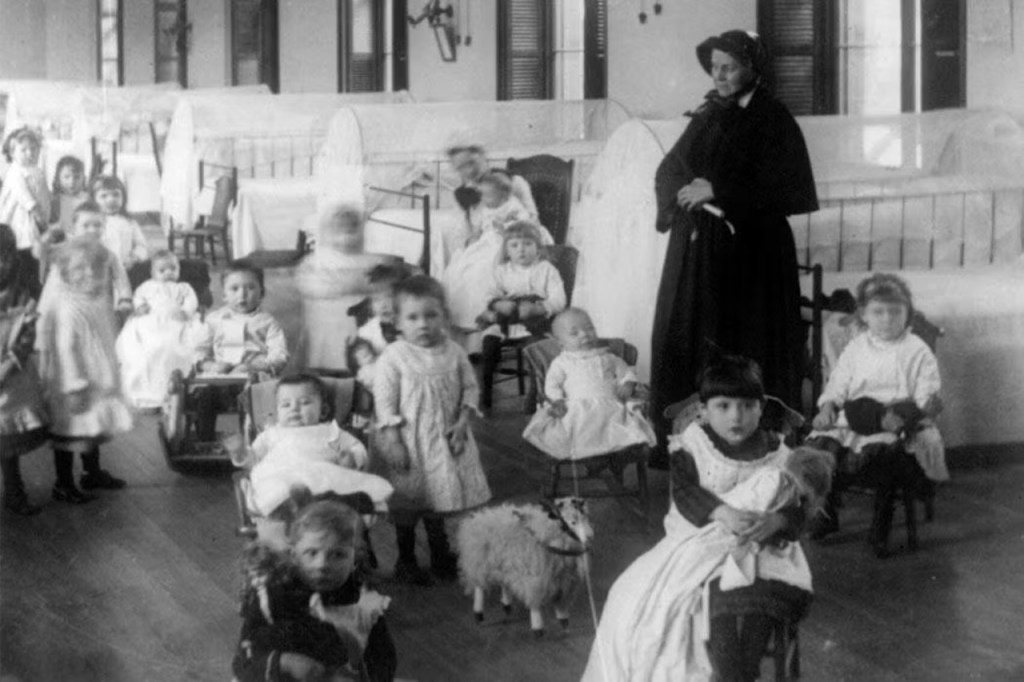

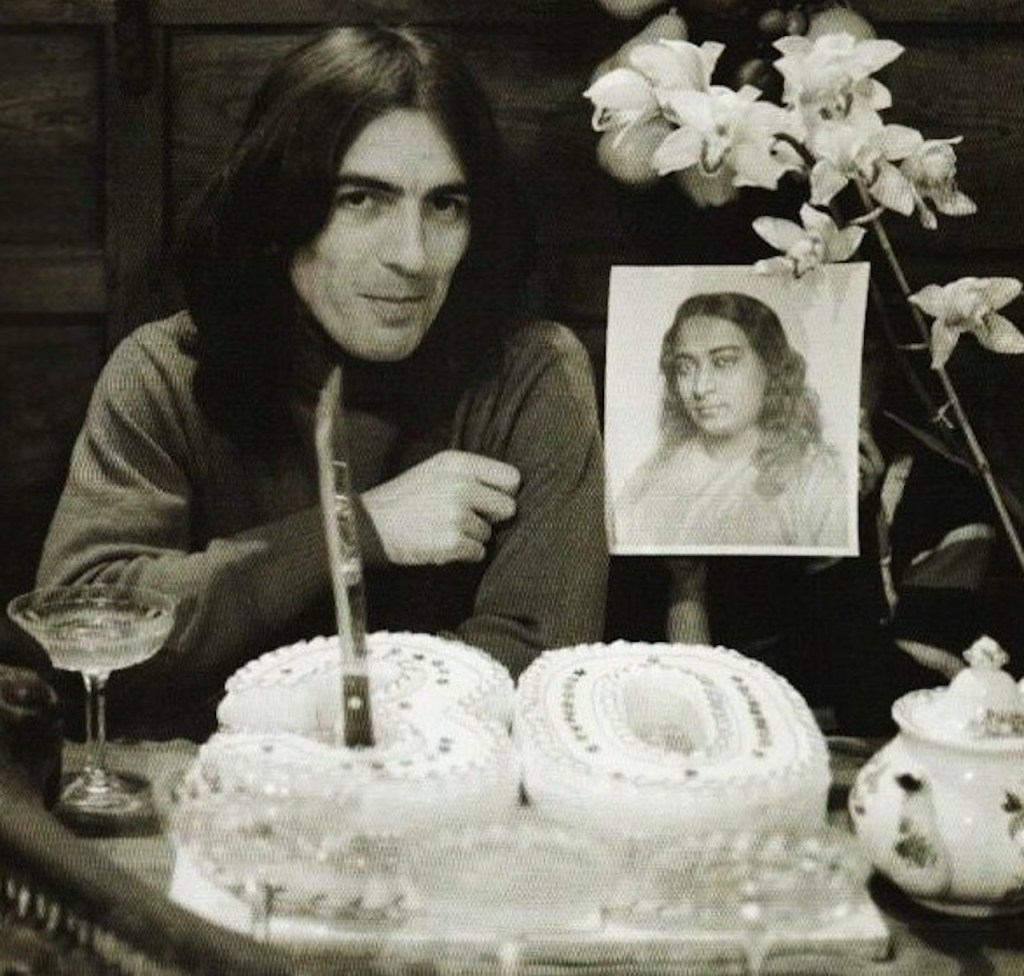




 Linda's Literary Home
