Linda's Literary Home

Tag: epitaphs

  • Edgar Lee Masters’ “Charlie French”

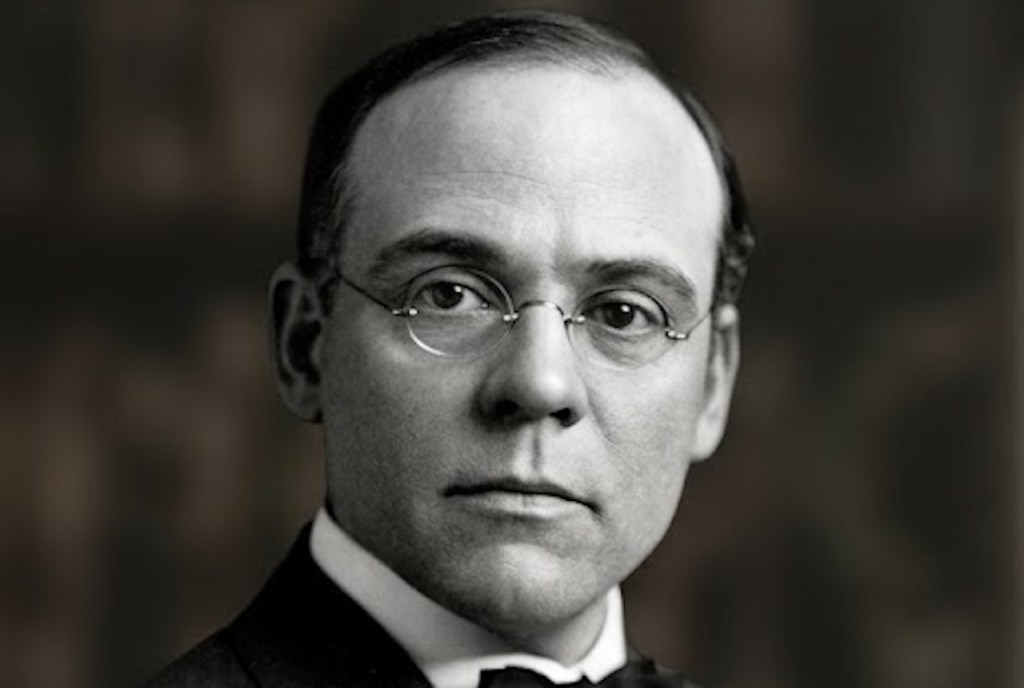
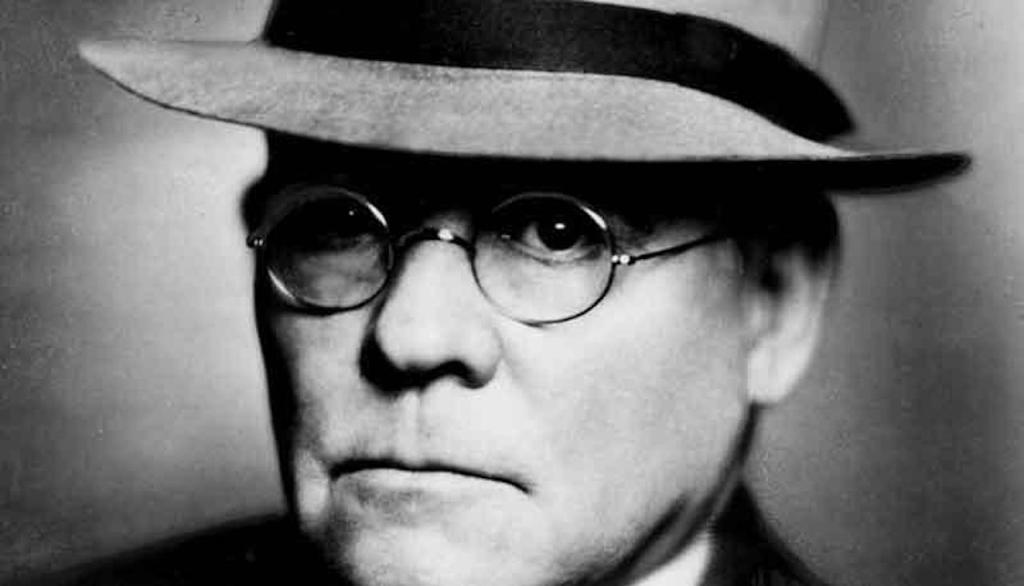
    005a Image/Edgar-Lee-Masters-Portrait.jpg
    Image: Edgar Lee Masters

    Edgar Lee Masters’ “Charlie French”

    Charlie French died of lockjaw, wondering which of his friends had shot off the cap pistol that delivered the fatal blow. 

    Introduction and Text of “Charlie French”

    Edgar Lee Masters’ “Charlie French” from Spoon River Anthology features its character musing about who might have been responsible for his contracting lockjaw which lead to his death.  

    The little drama creates a speaker in Charlie who finds himself obsessed with a specific detail.   After dying from this dreadful disease, he has his mind fixed upon who did it, who “snapped the toy pistol against” his hand.

    Charlie French

    Did you ever find out
    Which one of the O’Brien boys it was
    Who snapped the toy pistol against my hand?  
    There when the flags were red and white  
    In the breeze and “Bucky” Estil
    Was firing the cannon brought to Spoon River  
    From Vicksburg by Captain Harris;
    And the lemonade stands were running  
    And the band was playing,  
    To have it all spoiled
    By a piece of a cap shot under the skin of my hand,
    And the boys all crowding about me saying:
    “You’ll die of lock-jaw, Charlie, sure.”
    Oh, dear! oh, dear!
    What chum of mine could have done it?

    Commentary on “Charlie French”

    After dying of lockjaw, Charlie French has continued to wonder and obsess about which of his friends had shot off the cap pistol that delivered the fatal blow.

    First Movement:  Unidentified Listener

    Did you ever find out
    Which one of the O’Brien boys it was
    Who snapped the toy pistol against my hand?  

    Charlie is addressing an eclipsed listener, that is, a listener who cannot be identified.  Traditionally, when a poet’s speaker seems to be addressing no one, the context usually reveals that the speaker is, in fact, musing to him/herself.  But this is not the case with Charlie.   

    Charlie French wants to know who the culprit is who shot off a cap gun against his hand.  He asks the question at the beginning of his discourse and then concludes the discourse with the same question.  After his musing, he remains in the dark about who the cap-gun shooter was; thus he repeats the question.

    Second Movement:   A Civil War Enactment

    There when the flags were red and white  
    In the breeze and “Bucky” Estil
    Was firing the cannon brought to Spoon River  
    From Vicksburg by Captain Harris;

    Charlie describes the event at which his fatality occurred.  The description reveals a Civil War enactment or some other military observance.  There were “red and white” flags flapping in the breeze, while “Bucky” Estil was firing up the cannon.  

    The cannon had been transported to Spoon River by “Captain Harris,” who brought it all the way from Vicksburg. The Civil War era relic suggests that the celebration might have been a commemoration of that war, the American Civil War 1861–1865.

    Third Movement:  The Cap-Gun Mishap

    And the lemonade stands were running  
    And the band was playing,  
    To have it all spoiled
    By a piece of a cap shot under the skin of my hand,

    In addition to the cannon fire and flags, there were lemonade stands and a “band was playing.”  Then upon this jubilant scene intrudes Charlie’s unfortunate and ultimately fatal cap-gun shooting.  The day was moving along splendidly, “To have it all spoiled / By a piece of a cap shot under the skin of my hand.”

    Fourth Movement:   Strong Suggestibility

    And the boys all crowding about me saying:
    “You’ll die of lock-jaw, Charlie, sure.”

    Seeing the cap-shot stain under Charlie’s skin, the other boys gathered around him and started making comments:  “You’ll die of lock-jaw, Charlie, sure.”   The suggestion frightened Charlie so severely that he actually did contract the disease, and then he expired, leaving the reader little knowledge about this character other than his strong suggestibility.

    Fifth Movement:   It’s a Who Dunnit

    Oh, dear! oh, dear!
    What chum of mine could have done it?

    The exclamation, “Oh, dear! oh, dear!,” connects two strands of thought and activity:   First, the boys who were observing Charlie’s cap-gun shot hand are thinking thus, if, in fact they are not the ones projecting this utterance.

    And second, Charlie himself definitely engages this “oh dear” sentiment about his own health’s prospects; therefore, the implication is that Charlie let out this cry.    Charlie’s main reason for carrying on this discourse is further emphasized as he continues to wonder, “What chum of mine could have done it?”

  • Edgar Lee Masters’ “Johnnie Sayre”

    Image:  Edgar Lee Masters - Portrait by Francis J. Quirk https://francisquirk.blogspot.com/2017/03/visit-to-national-portrait-gallery.html
    Image:  Edgar Lee Masters – Portrait by Francis J. Quirk https://francisquirk.blogspot.com/2017/03/visit-to-national-portrait-gallery.html

    Edgar Lee Masters’ “Johnnie Sayre”

    Edgar Lee Masters’ character Johnnie Sayre speaks to the Divine Belovèd (God), remembering the excruciating pain that resulted in his death, finding grace in his early demise.

    Introduction and Text of “Johnnie Sayre”

    In Edgar Lee Masters’ “Johnnie Sayre” from his American classic Spoon River Anthology, the speaker is talking to the Divine Creator, while most of the characters address their remarks to the citizens of Spoon River or one of their relatives.

    Some of the characters who speak in this remarkable sequence become admirable in the eyes of their readers/listeners, while others invite further disdain, just as they obviously did in their miserable lifetimes. 

    Johnnie Sayre is one the more admirable characters.  He accepts responsibility for his own transgressions in life, and he humbly offers his love and appreciation to the Divine Reality (God) for the soul guidance he understands he is being given.

    Johnnie Sayre

    Father, thou canst never know
    The anguish that smote my heart  
    For my disobedience, the moment I felt
    The remorseless wheel of the engine
    Sink into the crying flesh of my leg.
    As they carried me to the home of widow Morris
    I could see the school-house in the valley  
    To which I played truant to steal rides upon the trains.  
    I prayed to live until I could ask your forgiveness—
    And then your tears, your broken words of comfort!
    From the solace of that hour I have gained infinite happiness.
    Thou wert wise to chisel for me:  
    “Taken from the evil to come.”

    Commentary of “Johnnie Sayre”

    Masters’ character Johnnie Sayre speaks to the Divine Belovèd, remembering the excruciating pain that resulted in his death, finding grace in his early demise.

    First Movement:  Addressing His Creator

    Father, thou canst never know
    The anguish that smote my heart  
    For my disobedience, the moment I felt
    The remorseless wheel of the engine
    Sink into the crying flesh of my leg.

    In a prayerful mode, Johnnie Sayre addresses his Maker, exaggerating that the Creator, Who is both omnipresent and omniscient, cannot know how much Johnnie suffered.   Of course, God knows such, but by exclaiming that He cannot, Johnnie implies that the depth is well beyond human comprehension.

    Johnnie was stealing a ride on a train, when he finds himself losing his leg to “[t]he remorseless wheel of the engine” that “[sank] into the crying flesh of [his] leg.”  Johnnie’s anguish, however, is not that his leg was being crushed.

    That unhappy accident merely triggers his guilt over the act of theft.  He suddenly becomes aware that he is paying a karmic debt, and his capability to understand and accept that debt causes him great “anguish.”

    Second Movement:  Remembering His Transgressions

    As they carried me to the home of widow Morris
    I could see the school-house in the valley  
    To which I played truant to steal rides upon the trains.

    Johnnie is reminded of his transgression against one of the commandments as he is being transported to the nearby home of the widow Morris.   As the rescuers move Johnnie to the woman’s home, he could see his “school-house in the valley.”  He admits that he played hooky from school “to steal rides upon the trains.”

    Third Movement:   Desirous of God’s Forgiveness

    I prayed to live until I could ask your forgiveness—
    And then your tears, your broken words of comfort!

    Johnnie confesses that he wanted to live until he could beg God for His forgiveness.  He talks to God as he would his human father.   Johnnie expects to see God shed tears for His son’s transgression, and he awaits God’s “broken words of comfort!”  At this point, Johnnie shows a touching sweetness in his relationship with the Divine.

    Johnnie accepts his responsibility for his own behavior; he does not blame God or the Spoon River citizens as so many others in the cemetery do, for example “Minerva Jones” and “Daisy Fraser.”  

    Fourth Movement: Crediting the Divine Creator

    From the solace of that hour I have gained infinite happiness. Thou wert wise to chisel for me:  
    “Taken from the evil to come.”

    Johnnie is amply rewarded because of his attitude.  He finds “solace” and furthermore “gain[s] infinite happiness.”  He credits the Divine Creator for “chisel[ing] for me” a life that he would probably have been too weak to have chosen for himself.

    Johnnie realizes that God has rescued him from all the “evil to come”; he knows that the way he was living could have only brought more evil into his life, and through God’s grace, he has been spared that evil, and at the same time given succor.  

    The metaphorical chiseling also implies that perhaps upon Johnnie’s tombstone is chiseled the phrase, “Taken from the evil to come.”  In that case, it becomes clear that Johnnie’s exploits were well known by those close to him, which makes Johnnie’s attitude even more admirable.    

    Instead of cursing those who knew of his “evil,” he accepts their admonitions and rightly credits Divine Intervention that finally liberates him from further wrongs.  Johnnie remains one of the more admirable characters residing in the Spoon River after-life menagerie of characters.

  • Edgar Lee Masters’ “Knowlt Hoheimer”

    005a Image/Edgar-Lee-Masters-Portrait.jpg
    Image: Edgar Lee Masters

    Edgar Lee Masters’ “Knowlt Hoheimer”

    Edgar Lee Masters’ “Knowlt Hoheimer” features a 10-line poem (epitaph) with two movements.  As usual, this epitaph reveals the character of the speaker, even as he tries to castigate others.

    Introduction and Text of “Knowlt Hoheimer”

    In Edgar Lee Masters’ Spoon River Anthology, the short poem, or epitaph as Masters called them, “Knowlt Hoheimer” features a man who regrets among other things that he had the misfortune of dying in battle.

    Knowlt Hoheimer

    I was the first fruits of the battle of Missionary Ridge.  
    When I felt the bullet enter my heart
    I wished I had staid at home and gone to jail
    For stealing the hogs of Curl Trenary,
    Instead of running away and joining the army.
    Rather a thousand times the country jail  
    Than to lie under this marble figure with wings,  
    And this granite pedestal  
    Bearing the words, “Pro Patria.”  
    What do they mean, anyway?

    Commentary on “Knowlt Hoheimer”

    According to Knowlt, he simply joined the army to avoid jail.  He stole some livestock belonging to another man, and thus faced serving time for the crime.

    First Movement:  The Costs of Avoiding Jail 

    I was the first fruits of the battle of Missionary Ridge.  
    When I felt the bullet enter my heart
    I wished I had staid at home and gone to jail
    For stealing the hogs of Curl Trenary,
    Instead of running away and joining the army.

    Knowlt is claiming to have been the first casualty of “the battle of Missionary Ridge.”  He died after “the bullet enter[ed his] heart.”  Knowlt had signed up with the army and went off to war to avoid being incarcerated.  After stealing some farm animals belonging to Curl Trenary, Knowlt simply  ran off to join the army.  

    Because he is now dead, having become the first to die in the battle in which his infantry was engaged, he deeply regrets his choice.  He discovers that serving some jail time would be preferable to dying in war.

    Second Movement:  Regretting a Decision

    Rather a thousand times the country jail  
    Than to lie under this marble figure with wings,  
    And this granite pedestal  
    Bearing the words, “Pro Patria.”  
    What do they mean, anyway?

    Knowlt now professes great regret over his deadly decision.  He now figures that being jailed a thousand times would be better than dying and now lying under a slab of concrete with an inappropriate angelic symbol marking his grave.   Knowlt supposes that he would still be living, had he served his time in jail.  He imagines that serving a thousand jail terms would beat dying.

    Apparently, Knowlt has been recognized as a war hero. He rests beneath a majestic monument which he describes: “this marble figure with wings, / And this granite pedestal / Bearing the words, “Pro Patria.”  Knowlt reveals that he does not even comprehend that “Pro Patria” means “for country.”  He asks rather sarcastically, “What do they mean, anyway?”

    That he does not even know the Latin phrase suggests that he would not believe the sentiment even if he understood the words in translation.  He likely believes along with the speaker in “Dulce et Decorum Est” that Horace’s old adage was a lie.  Knowlt, by revealing what he does not know, further reveals his ignorant narcissism.

  • Edgar Lee Masters’ “Daisy Fraser” 

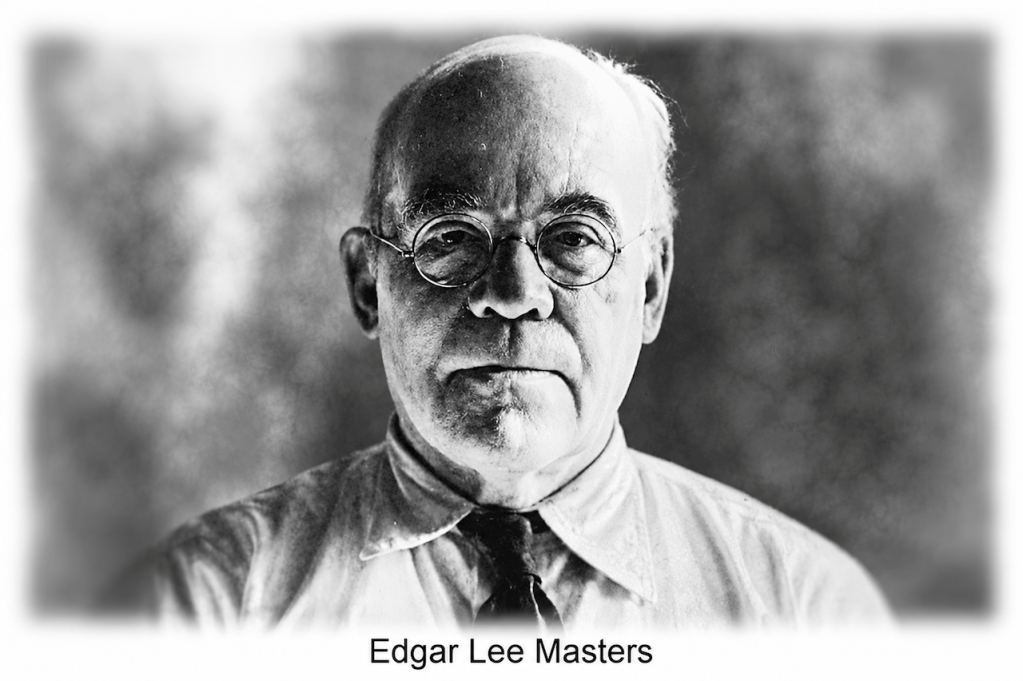
    Image: Edgar Lee Masters https://chicagoliteraryhof.org/inductees/profile/edgar-lee-masters
    Image: Edgar Lee Masters – Chicago Literary Hall of Fame

    Edgar Lee Masters’ “Daisy Fraser” 

    In Edgar Lee Masters’  epitaph “Daisy Fraser,” the villainous character of “Daisy Fraser” is revealed as she tries to destroy the reputations of other residents of Spoon River.

    Introduction and Text of “Daisy Fraser”

    The character “Daisy Fraser” from Edgar Lee Masters’ American classic work Spoon River Anthology reports the immoral and illegal acts of her fellow Spoon River citizens solely for the purpose of rehabilitating her own reputation for villainy.  Readers will note her scheme of employing gossipy questions to unleash her venom.

    Daisy Fraser

    Did you ever hear of Editor Whedon
    Giving to the public treasury any of the money he received
    For supporting candidates for office?
    Or for writing up the canning factory
    To get people to invest?
    Or for suppressing the facts about the bank, 
    When it was rotten and ready to break?
    Did you ever hear of the Circuit Judge
    Helping anyone except the “Q” railroad, 
    Or the bankers? Or did Rev. Peet or Rev. Sibley
    Give any part of their salary, earned by keeping still, 
    Or speaking out as the leaders wished them to do, 
    To the building of the water works? 
    But I—Daisy Fraser who always passed 
    Along the streets through rows of nods and smiles,
    And coughs and words such as “there she goes,”
    Never was taken before Justice Arnett 
    Without contributing ten dollars and costs 
    To the school fund of Spoon River!

    Commentary on “Daisy Fraser”

    Likely a prostitute, Daisy Fraser’s nasty character comes to light as she trashes the reputations of other residents of Spoon River.

    First Movement:  Political Improprieties

    Did you ever hear of Editor Whedon
    Giving to the public treasury any of the money he received
    For supporting candidates for office?

    The speaker begins with a question that implicates “Editor Whedon” in political improprieties, that is, taking money for “supporting candidates for office.”  But the speaker wants to know if the editor ever gave that money to the “public treasury.”

    Of course, her rhetorical question is implying that he, in fact, did not. And she continues her questioning filled with further implications of political shenanigans.  The fact that she is choosing easy targets should alert the reader early on regarding what is happening in Daisy’s mind.

    Second Movement:   Kickbacks

    Or for writing up the canning factory
    To get people to invest?
    Or for suppressing the facts about the bank, 
    When it was rotten and ready to break?

    In the second movement, Daisy continues her rhetorical queries, wondering if the illegal funds from the canning factory were given to the public treasury.  Again, she is suggesting that the money was used by the editor for lining his own pocket.  The editor also received kickbacks for hiding the financial condition of the bank, when it was on the verge of folding.

    The editor of the newspaper should have been revealing these unsavory facts about these institutions, but instead, he took money and kept quiet, if the reader believes as Daisy does.  Daisy wants to demonstrate that she is decrying that fact that freedom of the press can be abused.

    Third Movement:   A Judge on the Take

    Did you ever hear of the Circuit Judge
    Helping anyone except the “Q” railroad, 
    Or the bankers? Or did Rev. Peet or Rev. Sibley
    Give any part of their salary, earned by keeping still, 
    Or speaking out as the leaders wished them to do, 
    To the building of the water works? 

    The third movement contains two movements that are blended.  The first part features the rhetorical question, asking if her listeners ever knew of the “Circuit Judge” giving aid to ordinary citizens instead of the “Q” railroad and bankers. Daisy now focuses on a judicial officer who blinks when influential parties commit illegal acts.

    The accusation again includes the implication that like the editor, the judge is also on the take.  But then she immediately focuses on the religious establishment by again questioning whether the reverends Peet and Sibley had ever contributed to the public works, that is, “water works,” any of the money they received by keeping quiet about the graft.  

    Not only was the press corrupt but the legal and religious institutions were rife with corruption as well, and of course with a press acquiescing instead of revealing the face of that corruption, the corruption is likely not only to continue but to spread.

    Fourth Movement:   Unreliable Witness

    But I—Daisy Fraser who always passed 
    Along the streets through rows of nods and smiles,
    And coughs and words such as “there she goes,”
    Never was taken before Justice Arnett 
    Without contributing ten dollars and costs 
    To the school fund of Spoon River!

    In the final movement, all of Daisy’s implied accusations take a tumble.  When Daisy Fraser appeared before Justice Arnett, she always had to pay up, “contributing ten dollars and costs / To the school fund of Spoon River!”

    Daisy reveals, if only by implication, her own misdeeds.  She bristled under the “nods and smiles” and “coughs and words such as ‘there she goes’.”  She would observe people’s reaction to her as she walked down the streets, and she keenly resented them for those responses.  

    So she attempts to make herself seem better by blackening the reputations of others; therefore, whether all of that graft took place or not, the reader does not know, because Daisy has proven herself an unreliable witness.

  • Edgar Lee Masters’  “Trainor, the Druggist”

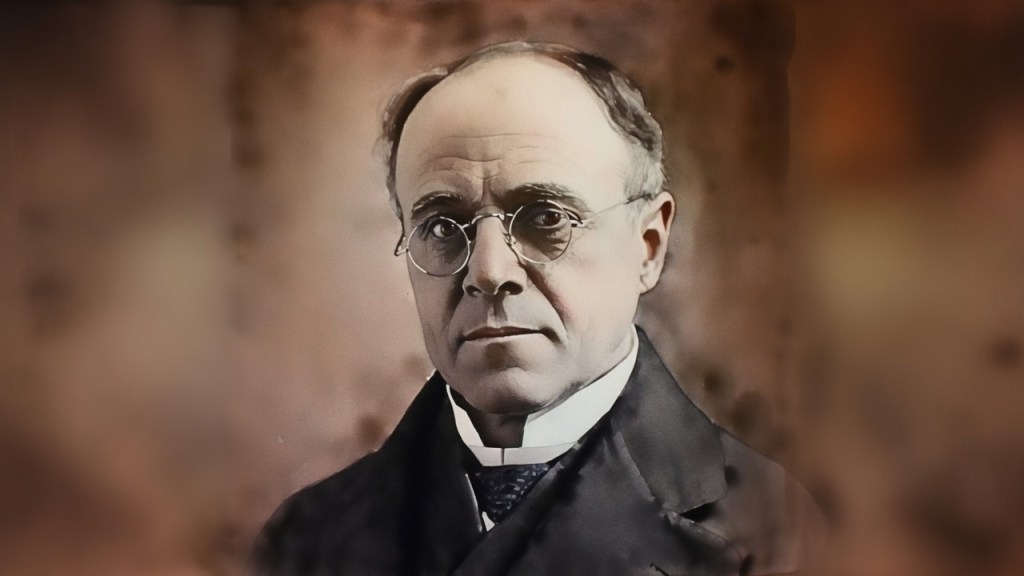
    Image:  Edgar Lee Masters -  Alchetron https://alchetron.com/Edgar-Lee-Masters
    Image:  Edgar Lee Masters –  Alchetron

    Edgar Lee Master’  “Trainor, the Druggist”

    Trainor, the Druggist, offers an additional perspective on the Pantier marriage.

    Introduction and Text of “Trainor, the Druggist”

    Edgar Lee Masters’ “Trainor, the Druggist” from Spoon River Anthology offers a final installment covering the pitiful story of the Pantiers:  Mr. and Mrs. Benjamin Pantier and their son, Reuben. 

    Trainor, the chemist/druggist, dramatizes his take on the Pantiers’ marriage as he philosophizes about how chemicals and personalities may combine to produce results unlike either of the components.

    Trainor, the Druggist

    Only the chemist can tell, and not always the chemist,
    What will result from compounding
    Fluids or solids.
    And who can tell
    How men and women will interact
    On each other, or what children will result?
    There were Benjamin Pantier and his wife,
    Good in themselves, but evil toward each other:
    He oxygen, she hydrogen,
    Their son, a devastating fire.
    I Trainor, the druggist, a mixer of chemicals,
    Killed while making an experiment,
    Lived unwedded.

    Interpretive Reading of “Trainor the Druggist” 

    Commentary on “Trainor, the Druggist”

    Edgar Lee Masters just could not let go of the Pantiers; in “Trainor, the Druggist,” yet another and final installment focusing on the couple is offered.

    First Movement:  Begins by Contradicting Himself

    Only the chemist can tell, and not always the chemist,
    What will result from compounding
    Fluids or solids.

    Trainor begins by remarking and somewhat contradicting himself about what a chemist can know.  He first states that “only” a chemist can know the results of combining certain substances, but he quickly adds that not even a chemist can “always” know the result of “compounding / Fluids and solids.”

    By using the substances “fluids and solids,” Trainor avoids sounding overly esoteric and confusing in his statement, although later he settles on the use of “oxygen” and “hydrogen” to express the natures of the Pantiers.

    Second Movement:  Who?  Indeed!

    And who can tell
    How men and women will interact
    On each other, or what children will result?

    Trainor then asks a rhetorical question, wondering who can ever predict how a certain man and a certain woman might react to their relationship.  He also wonders, “what children will result?”

    Of course, no one can know how any given couple will eventually grow in a relationship, and the possibilities are endless, as are the possibilities of the kinds of children that might spring from any given relationship.  The chemist can know how certain chemicals will react with each, but even the chemist will have to admit that many combinations have yet to be tried.

    Third Movement:  The Pantiers

    There were Benjamin Pantier and his wife,
    Good in themselves, but evil toward each other:
    He oxygen, she hydrogen,
    Their son, a devastating fire.

    In the third movement, Trainor focuses on the Pantiers, concluding that each was “good in themselves.”  But when they were bound in a relationship, they were “evil toward each other.”

    Trainor then likens Benjamin to “oxygen,” while Mrs. Benjamin was like “hydrogen.”  But the combination was, unfortunately, not in a useful proportion that would result, for example, in water; it was some combination that produces “fire.”  Trainor says, “Their son, a devastating fire.”

    Fourth Movement:  Trainor, Somewhat Ditzy

    I Trainor, the druggist, a mixer of chemicals,
    Killed while making an experiment,
    Lived unwedded.

    In the final movement, the reader learns that Trainor was killed while “making an experiment.”  As a “mixer of chemicals,” Trainor turns out to be incompetent, but he reports that he “lived unwedded,” which, to Trainor’s way of thinking, gives him at least a measure of pride of achievement.

    Of course, the reader will remember that Reuben Pantier turned his life around and was able to extinguish the “devastating fire” in himself—an eventuality that also underscores the incompetence of the druggist.

    The Pantier Sequence

    The five epigraphs that comprise the “Pantier Sequence”: 

    1.  Benjamin Pantier  A husband who appears to be weakling allowing himself to be cowed by his wife, an arrogant bully.
    2. Mrs. Benjamin Pantier  Unbridled arrogance, overweening vanity along with cowardly weakness have combined to bring about the destruction of the marriage of Mr. and Mrs. Benjamin Pantier.
    3. Reuben Pantier  Reuben Pantier’s colorful character helps dramatize the power of spiritual love for healing the mind, heart, and soul, even through the distance of miles and decades.  Reuben is the son of the dysfunctional couple Mr. and Mrs. Benjamin Pantier.
    4. Emily Sparks  The epitaph is the fourth entry in the sequence of five epitaphs featuring a dysfunctional couple, their son, and the latter’s influential mentor.
    5.  Trainor, the Druggist  This epitaph offers a final installment covering the pitiful story of the Pantiers:  Mr. and Mrs. Benjamin Pantier and their son Reuben.
  • Edgar Lee Masters’ “Judge Somers”

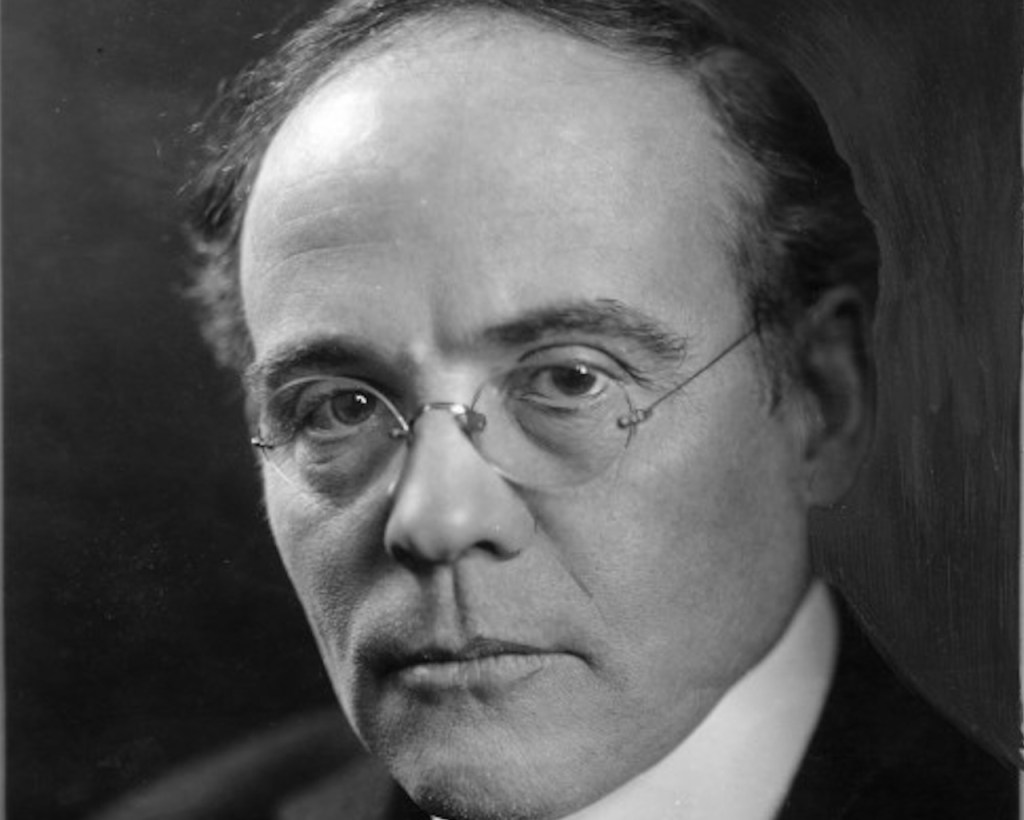
    Image:   Edgar Lee Masters http://www.jackmasters.net/mastelm.html Jack Masters
    Image: Edgar Lee Masters – Jack Masters

    Edgar Lee Masters’ “Judge Somers”

    Judge Somers’ complaint demonstrates that he is jealous of a man whom he deems to occupy a lower rung on the social status ladder than himself. 

    Introduction and Text of “Judge Somers”

    The class warfare that rages in the Spoon River reportage becomes evident as readers make their way through Edgar Lee Masters‘ American classic, Spoon River Anthology.  

    Businessmen, doctors, lawyers, judges, and politicians are the special targets of many of those whose employment ranges from simple shopkeepers, to farmers, to teachers, and householders whose outside job or career is never named.  Of course, preachers and other religious figures seldom come off well in these dramas either, likely owing to the atheist leanings of their creator.

    And the truly lowly dregs of society—murderers, prostitutes, adulterers, drunks, and thieves—are often given a bit too much of the benefit of doubt.  The good-hearted prostitute is often more credible than the banker despite the fact that his heart may be of equal goodness. 

    As in contemporary society where racism remains the primary cudgel of race-baiting hypocrites, back a century or so ago, the -ism du jour was classism, thus the emphasis on class warfare.

    While many of the epitaphs in Edgar Lee Masters’ American classic reveal issues motivated by class warfare, “Judge Somers” offers one of the most pronounced, as the judge deems himself better than his peers.

    The speaker in the epitaph “Judge Somers” is the judge himself, who wants to know why a man of importance, such as himself, has died unnoticed while the town drunk has been well noted.

    Judge Somers

    How does it happen, tell me,
    That I who was the most erudite of lawyers,
    Who knew Blackstone and Coke
    Almost by heart, who made the greatest speech
    The court-house ever heard, and wrote
    A brief that won the praise of Justice Breese—
    How does it happen, tell me,
    That I lie here unmarked, forgotten,
    While Chase Henry, the town drunkard,
    Has a marble block, topped by an urn,
    Wherein Nature, in a mood ironical,
    Has sown a flowering weed? 

    Commentary on “Judge Somers”

    Judge Somers’ complaint demonstrates that he is jealous of a man he deems to occupy a lower rung on the social status ladder than he does.

    First Movement:  Why Me?

    How does it happen, tell me,
    That I who was the most erudite of lawyers,
    Who knew Blackstone and Coke
    Almost by heart, who made the greatest speech
    The court-house ever heard, and wrote
    A brief that won the praise of Justice Breese— 

    This poem consists of two movements each beginning with a command embedded in a question.  The judge is demanding an answer to his question in both instances.  

    Judge Somers begins by asserting his demand/question, posited with “How does it happen, tell me.”  But in the first movement, he does not finish the question proper; he merely prefaces it by reporting all of his achievements.

    The judge feigns no modesty in his self-evaluation but flatly asserts that he was the most brilliant of attorneys.  Part of his erudition and brilliance was due to his having “almost by heart Blackstone and Coke.”  

    The judge is alluding to two British legal writers—Sir William Blackstone (1723-1780), who wrote the Commentaries, and Sir Edward Coke(1552-1634), who wrote and published treatises titled Institutes of the laws of England.

    The judge’s knowledge of these works sounds much more important than it is; a lawyer or judge practicing in a 19th century Illinois rural community would hardly be confronted with issues dealt with in these obscure legal works.

    Judge Somers then boasts that he “made the greatest speech / The court-house ever heard.”  In his own mind, not only was he a great orator, but he also “wrote / A brief that won the praise of Justice Breese.”  

    Again, the fictional speaker Somers alludes to a real-life justice, Justice Sidney Breese, who served on the Illinois Supreme Court as both a judge and as chief justice.  

    Second Movement:  How Does It Happen to Me?

    How does it happen, tell me,
    That I lie here unmarked, forgotten,
    While Chase Henry, the town drunkard,
    Has a marble block, topped by an urn,
    Wherein Nature, in a mood ironical,
    Has sown a flowering weed?

    So with such a shining reputation for accomplishment, the judge again poses his demand/question:  “How does it happen, tell me.”  He then completes the question for he wants to know why he is left to “lie here unmarked, forgotten.”  

    And to make matters worse, that “town drunkard” and scoundrel “Chase Henry” has been afforded “a marble block, topped by an urn.”  The judge adds that, “Nature,” with a splash of irony “has sown a flowering weed.”   

    The jealous judge then takes a bit of comfort from the ironic weed, but still he continues to chafe at the fact that he is forgotten while the town drunk seems to be celebrated.

    The reader knows a secret that the judge obviously does not know: that Henry’s memorial has nothing to do with Henry but can be laid at the door of rivalry between the Protestants and the Catholics.

  • Edgar Lee Masters’ “Robert Fulton Tanner”

    005a Image/Edgar-Lee-Masters-Portrait.jpg
    Image: Edgar Lee Masters

    Edgar Lee Masters’ “Robert Fulton Tanner”

    Representing the fifth epitaph in Masters’  Spoon River Anthology is the character named Robert Fulton Tanner, who compares his life to a rat caught in a trap.

    Introduction and Text of “Robert Fulton Tanner”

    Edgar Lee Masters’ “Robert Fulton Tanner” is the fifth epitaph in the American classic Spoon River Anthology.   Fulton is a pathetic character, who discovers that building a better mouse trap might only get up a cockeyed metaphor to fling at this thing vaguely called “Life.”

    Robert Fulton Tanner 

    If a man could bite the giant hand
    That catches and destroys him,  
    As I was bitten by a rat
    While demonstrating my patent trap,
    In my hardware store that day.
    But a man can never avenge himself  
    On the monstrous ogre Life.
    You enter the room—that’s being born;
    And then you must live—work out your soul,
    Aha! the bait that you crave is in view:
    A woman with money you want to marry,
    Prestige, place, or power in the world.
    But there’s work to do and things to conquer—  
    Oh, yes! the wires that screen the bait.
    At last you get in—but you hear a step:
    The ogre, Life, comes into the room,  
    (He was waiting and heard the clang of the spring)
    To watch you nibble the wondrous cheese,  
    And stare with his burning eyes at you,
    And scowl and laugh, and mock and curse you,
    Running up and down in the trap,
    Until your misery bores him.

    Commentary on “Robert Fulton Tanner”

    The fifth epitaph in Masters’  Spoon River Anthology features the character named Robert Fulton Tanner, who compares his life to a rat caught in a trap.

    First Movement:  Holding a Grudge

    “Robert Fulton Tanner” holds a grudge, and he holds it against “Life.””  He thus blames “Life” for his misery, and he muses on the notion of being able the bite that hand of Life that has bitten him.  If he could have bitten that “giant hand,” then what?  He does not say.  It appears he did not think beyond that luscious ability.  Or perhaps he thinks such biting would be enough to avenge his plight.

    Reader/listeners are free to imagine the consequence of such biting, and the only safe conclusion is that Tanner would feel better if he could have accomplished such a biting.  Likening that “giant hand” to God, as well as Life, Tanner reveals that he is a hardware store owner, who had determined that he had built a better mouse trap.

    But while demonstrating that “patent trap,” a rat bit his hand. And that bitter event unleashed in Tanner’s mind all that would go wrong in his life henceforth.  From that day forth, he would see himself as a victim of the giant hand, which caught him and destroyed him.

    Second Movement:  Biting God’s Hand

    If only one could bite that giant hand—of God, of Life, or of whatever—living would be improved for the man.  Unfortunately, that is never going to happen, and Tanner knows it.

    Tanner then goes on a philosophically tinged discourse, likening being born to entering a room.  He observes that one must “live” and “work out [one’s soul].”  He pities himself for having to do such work, but then transforming himself into the rat seeking bait, he admits that sought to marry a woman who had money.

    And then he marries her for “prestige, place, or power in the world.” The reader’s likely sympathy at this point turns to disgust at the incivility of this speaker.  Who seeks a woman to marry to achieve wealth and power?  Only scoundrels unworthy of the very wealth and power they seek.

    Third Movement:  Life Requires Effort

    Having discovered that all of life requires some kind of effort, he highlights his having to perform and struggle just to get to the woman in order to woo her.  But to him, she is just a piece of rat bait.  He must exert much effort just to get to her.  But like the rat who spies a piece of cheese, he does what it takes to grasp that morsel.

    After achieving his goal of marrying the woman he sought, he finds not the wealth, the power, the prestige he thought he was pursuing, but that that “ogre, Life,” is entering the room again, watching him munch at the bait, while scowling and laughing at him.  

    What has he achieved?  Only more of that monster Life eating at him.  Of course, the reader realizes that the only ogre in this lazy, evil opportunist’s life is Robert Fulton Tanner himself.  He has destroyed his own life because he failed to understand honesty, sincerity, and genuine affection while striving for self-improvement.

    Fourth Movement:  Self-Professed Victims

    Self-professed victims are all the same:  someone else is to blame for their misery.  They have no role in making themselves miserable.  They cannot see that it is exactly what they have done that has resulted in all the misery of their lives.  

    The final image of Robert Fulton “[r]unning up and down in the trap” is most appropriate. But his ignorance of how he got there is the real ogre in his life.   It is not God or “Life” that will become “bored” with his misery; it is his own self who will experience that boredom until he discovers a way out of it.  

  • Edgar Lee Masters’ “Ollie McGee”and “Fletcher McGee”

    Image: Edgar Lee Masters https://www.best-poems.net/edgar_lee_masters/index.html#google_vignette
    Image: Edgar Lee Masters

    Edgar Lee Masters’ “Ollie McGee”and “Fletcher McGee”

    “Ollie McGee” and her husband “Fletcher McGeereport their complaints in the third and fourth poems from Masters’ Spoon River Anthology.  The couple elucidates the status of their marriage.

    Ollie McGee Speaks

    Mrs. McGee begins by posing a question and then launches her accusation.

    Ollie McGee 

    Have you seen walking through the village
    A man with downcast eyes and haggard face?
    That is my husband who, by secret cruelty
    Never to be told, robbed me of my youth and my beauty;
    Till at last, wrinkled and with yellow teeth,
    And with broken pride and shameful humility,
    I sank into the grave.  
    But what think you gnaws at my husband’s heart?
    The face of what I was, the face of what he made me!
    These are driving him to the place where I lie.
    In death, therefore, I am avenged.

    Commentary on “Ollie McGee”

    Ollie McGee offers her take on her marriage with Fletcher McGee.

    First Movement:  Question and Accusation

    Have you seen walking through the village
    A man with downcast eyes and haggard face?  
    That is my husband who, by secret cruelty
    Never to be told, robbed me of my youth and my beauty;  
    Till at last, wrinkled and with yellow teeth,
    And with broken pride and shameful humility,
    I sank into the grave.  

    Mrs. “Ollie McGee” begins with a query, wondering if her listeners have observed, “a man with downcast eyes and haggard face,” ambling throughout the village from time to time.  She then admits that that haggard face belongs to the man who was her husband.  

    The speaker then begins to hurl accusations at the man.  The wife reveals that he is guilty of horrifying cruelty: the man took away his wife’s youth as well as her beauty.   This theft continued over the lifetime of their miserable marriage.   Mrs. McGee then died, “wrinkled and with yellow teeth.”  He stole her pride and made her suffer “shameful humility.”

    Second Movement:   Vengeance

    But what think you gnaws at my husband’s heart?
    The face of what I was, the face of what he made me!
    These are driving him to the place where I lie.
    In death, therefore, I am avenged.

    Ollie then offers a further inquiry, as she questions whether her listeners know what “gnaws at my husband’s heart.” She contends that two images likely unsettle her husband’s heart and mind: “the face of what I was”and “the face of what he made me.”    Mrs. McGee asserts that these images are taking his life, “driving him to the place where I lie.”  Thus she has convinced herself that she is getting her revenge in death.

    Fletcher McGee Speaks

    Fletcher McGee offers his own complaint but reveals himself to be a criminal in his own behavior.

    Fletcher McGee 

    She took my strength by minutes,
    She took my life by hours,  
    She drained me like a fevered moon
    That saps the spinning world.
    The days went by like shadows,
    The minutes wheeled like stars.
    She took the pity from my heart,
    And made it into smiles.
    She was a hunk of sculptor’s clay,
    My secret thoughts were fingers:
    They flew behind her pensive brow
    And lined it deep with pain.
    They set the lips, and sagged the cheeks,
    And drooped the eyes with sorrow.
    My soul had entered in the clay,
    Fighting like seven devils.
    It was not mine, it was not hers;
    She held it, but its struggles
    Modeled a face she hated,
    And a face I feared to see.
    I beat the windows, shook the bolts.
    I hid me in a corner—
    And then she died and haunted me,
    And hunted me for life.

    Commentary on “Fletcher McGee”

    Two miserable people made each other miserable, but who was the actual culprit in this dungheap of a marriage?

    First Movement:  Accusations Returned

    She took my strength by minutes,
    She took my life by hours,  
    She drained me like a fevered moon  
    That saps the spinning world.  
    The days went by like shadows,
    The minutes wheeled like stars.

    Mr. “Fletcher McGee” also begins his epitaph with appalling accusations against his wife.  Just as he had done, she had foisted on him unspeakable cruelty:  “she took my strength,””she took my life,” “she drained me.”

    This speaker also includes time measurements to each complaint, in order to increase and compound the pain he claims he suffered at the hands of this woman.   Mr. McGee then asserts, “the days went by like shadows, / the minutes wheeled like stars.”  His days were dark but time seemed to drag on in an other worldly fashion.  He seemed unable to concentrate on anything worthwhile.

    Second Movement:   Vengeance Returned

    She was a hunk of sculptor’s clay,
    My secret thoughts were fingers:
    They flew behind her pensive brow
    And lined it deep with pain.
    They set the lips, and sagged the cheeks,  
    And drooped the eyes with sorrow.
    My soul had entered in the clay,
    Fighting like seven devils.  
    It was not mine, it was not hers;
    She held it, but its struggles
    Modeled a face she hated,
    And a face I feared to see.
    I beat the windows, shook the bolts.  
    I hid me in a corner—
    And then she died and haunted me,
    And hunted me for life.

    After fiercely complaining that Mrs. McGee ruined his life, Mr. McGee freely and somewhat gleefully confesses that he, in fact quite deliberately, ruined hers.   Instead of pitying his wife for her unhappiness and shrewish behavior, he came to possess the ability to smile about her suffering.   His “smiles”grew out of the fact that he had power over her. 

    He came to see her only as “a hunk of sculptor’s clay.”  Thus Mr. McGee went about working to sculpt ugly features onto his wife’s face.  This despicable husband asserts that, “my secret thoughts were fingers.”  He continues with the sculptor metaphor, as he affirms what Ollie has earlier said about the man.   

    The miserable husband freely confesses and describes his fingers as sculptors, motivated by his “secret thoughts”which “lined” “her pensive brow” “deep with pain.”  Mr. McGee again freely admits that he, in fact, “set the lips, and sagged the cheeks, / And drooped the eyes with sorrow.” 

    He then bizarrely asserts that his “soul had entered in the clay.” Thus his soul became the force of evil, “fighting like seven devils.” He appears to have become so hooked on making her miserable that he just could not stop himself.  His evil served him like a dangerous drug.

    Mr. McGee then admits that he actually killed her:  “I beat the windows, shook the bolts.”  He vaguely claims that he hid “in a corner,” and “she died and haunted me / And hunted me for life.”

    He took advantage of his weak, depressed, sorrowful wife. He fully realized what he was doing. Therefore, it becomes clear that Ollie was correct about her lout of a husband, who was in fact a criminal.  

    At least, Mrs. McGee can feel somewhat avenged in death.   But a pathetic irony is laced within these pitiful confessions.  Readers are left to doubt that any vengeance or feeling “haunted”can, in fact, offer these tortured souls any meaningful rest.