Linda's Literary Home

Tag: poetry

  • Emily Dickinson’s “If I should die”

    Image: Emily Dickinson - Amherst College - Daguerrotype of the poet at age 17, circa 1847 - likely the only authentic, extant likeness of the poet
    Image: Emily Dickinson – Amherst College – Daguerrotype of the poet at age 17, circa 1847 – likely the only authentic, extant likeness of the poet

    Emily Dickinson’s “If I should die”

    The speaker in Emily Dickinson’s “If I should die” is contemplating the ongoing, indifferent progression of world enterprise following mortal departure. The speaker finds quiet comfort in the uninterrupted continuation of earthly life.

    Introduction and Text of “If I should die”

    Emily Dickinson’s “If I should die” focuses on human mortality. The poem consists of four movements, utilizing Dickinson’s customary short lines and characteristic slant rime. The speaker considers the inevitable continuation of nature and human activity  after individual physical presence ceases entirely.

    This short work presents a calm acceptance of death. The speaker reflects on the fact that daily routines proceed without pause: the morning sun, seasonal bird activity, and economic transactions continue unabated. However, instead of expressing grief or dread, this speaker takes solace in knowing that earthly affairs remain active, orderly, and bright.

    In my earlier essays on Dickinsonian poems, I have discussed the poet’s creation of speakers who view physical departure through calmness and detachment. By observing nature and business, the speaker comes to terms with personal transience while celebrating the enduring colorful vitality of the surrounding physical and social world.

    If I should die

    If I should die,
    And you should live –
    And time should gurgle on –
    And morn should beam  –
    And noon should burn  –
    As it has usual done  –
    If Birds should build as early
    And Bees as bustling go  –
    One might depart at option
    From enterprise below!
    ‘Tis sweet to know that stocks will stand
    When we with Daisies lie  –
    That Commerce will continue  –
    And Trades as briskly fly  –
    It makes the parting tranquil
    And keeps the soul serene  –
    That gentlemen so sprightly
    Conduct the pleasing scene!

    Commentary on “If I should die”

    The speaker in Emily Dickinson’s “If I should die” is exploring with tranquil acceptance the nature of mortality through the steady, ongoing operations of nature and society.

    First Movement: “If I should die”

    If I should die,
    And you should live –
    And time should gurgle on –
    And morn should beam  –
    And noon should burn  –
    As it has usual done  –

    In the opening lines, the speaker introduces a hypothetical situation involving personal death alongside the survival of others: time continues to flow without interruption, described with the word “gurgle.” Morning light shines and noon heat burns just as it always has on the earthly plane.

    The speaker emphasizes that natural cycles remain completely indifferent to individual mortality. Morning and noon retain their established routines. This consistency shows that the physical world does not stop or mourn. The universe keeps its steady pace regardless of human absence, maintaining its ongoing, familiar rhythms.

    Second Movement: “If Birds should build as early”

    If Birds should build as early
    And Bees as bustling go  –
    One might depart at option
    From enterprise below!

    Continuing the conditional thought, the speaker observes that birds will still construct nests early in the day. Bees will continue their energetic gathering tasks. Nature’s industrious activity persists without pause, demonstrating that life’s fundamental forces carry on seamlessly even after an individual’s physical life has ended.

    Because natural activity persists so reliably, departing from earthly work becomes a manageable choice. The word “enterprise” summarizes all human endeavor. The speaker recognizes that any one individual’s involvement is not required to sustain the world’s grand design, making personal departure feel far less disruptive or alarming.

    Third Movement: “’Tis sweet to know that stocks will stand”

    ‘Tis sweet to know that stocks will stand
    When we with Daisies lie  –
    That Commerce will continue  –
    And Trades as briskly fly  –

    Moving into the third movement, the speaker shifts focus from natural phenomena to human society. It is comforting to realize that financial institutions remain stable. While humans lie beneath the flowers, economic markets and business transactions proceed with their customary energy and speed across the world.

    The contrast between lying with flowers and active trade highlights human transience. Society’s institutions outlasts individual lives. The speaker gains comfort from this stability, recognizing that human civilization maintains its energetic flow and enterprise long after any single participant has departed from the physical world.

    Fourth Movement: “It makes the parting tranquil”

    It makes the parting tranquil
    And keeps the soul serene  –
    That gentlemen so sprightly
    Conduct the pleasing scene!

    In the final lines, the speaker highlights the soothing effect of this ongoing activity. Knowing that lively individuals continue to manage social and commercial affairs brings peace. The departure becomes quiet and smooth because the overall societal picture remains well-ordered, active, and thoroughly pleasing.

    This assurance helps maintain inner stillness during life’s final transition. As Paramahansa Yogananda explains, an individual grounded in inner peace remains radiantly serene regardless of life’s shifting circumstances. He has colorfully described that attitude as standing “unshaken midst the crash of breaking worlds.” This speaker maintains this calm state while recognizing that earthly existence will flourish continuously.  

  • Glass Hammers

    Image created by ChatGPT inspired by the poem
    Image created by ChatGPT inspired by the poem

    Glass Hammers

    You called your words glass hammers—
    When they became too “poetic.”
    You said you liked their shape 
    Because they were beautiful to look at,

    Yet you thought them transparent, 
    Fragile, ill-suited for the job—
    But to you, and your ilk, 
    All poetry is glass hammers.

    The poems—and you didn’t 
    even like the word “poem”—
    She wrote in the love she
    Harbored for you have become

    Her refuge against the silence you 
    Left her with.  Her glass hammers 
    Stake the heart of indifference. 
    They nail the coffin of loneliness.

    She has struck with glass hammers 
    And shattered the mask of your grand 
    Delusion:  Its eyeless plaster has fallen 
    And sharded the ground—but

    You are apt to sculpt another 
    And another until you run out of life force,
    Until you spill the last drop of life-juice
    In the mud of primal urges.

  • Blood Fire 

    Image created by ChatGPT inspired by the poem
    Image created by ChatGPT inspired by the poem

    Blood Fire     

    As it rushes the body,
    Fingers flame
    To inflame fingers.
    Heart bangs at the door
    To drum heart.

    They talk.

    And as eyes spark mouth,
    Mouth sears lips with lips
    In a blazing ethereal kiss.

    Arms engulf body
    And body seals to body

    Until like a ripe apple

    It drops off—

    To die.

  • Emily Dickinson’s “Taken from – men this morning”

    Image: Emily Dickinson - Amherst College - Daguerrotype of the poet at age 17, circa 1847 - likely the only authentic, extant likeness of the poet
    Image: Emily Dickinson – Amherst College – Daguerrotype of the poet at age 17, circa 1847 – likely the only authentic, extant likeness of the poet

    Emily Dickinson’s “Taken from – men this morning”

    Emily Dickinson’s “Taken from – men this morning” dramatizes the soul’s transition from earthly life to a metaphysical kingdom, where the departed assume exalted, courtly roles.

    Introduction and Text of “Taken from – men this morning”

    The speaker in Emily Dickinson’s “Taken from – men this morning” narrates the sudden removal of a young girl from the human realm, portraying death not as an end but as a grand procession escorted by divine beings. In my earlier essays on Dickinsonian poems, I have discussed the poet’s intuitive grasp of the soul’s immortality, a theme central to this work.

    Taken from – men this morning

    Taken from men – this morning –
    Carried by men today –
    Met by the Gods with banners –
    Who marshalled her away –

    One little maid – from playmates –
    One little mind from school –
    There must be guests in Eden –
    All the rooms are full –

    Far – as the East from Even –
    Dim – as the border star –
    Courtiers quaint, in Kingdoms
    Our departed are.

    Commentary on “Taken from – men this morning”

    The speaker presents death as a ceremonial transition, where mortal hands relinquish the body to divine escorts who lead the soul onward.

    First Stanza: “Taken from – men this morning”

    Taken from men – this morning –
    Carried by men today –
    Met by the Gods with banners –
    Who marshalled her away –

    In the first stanza, the speaker establishes a stark contrast between human agency and divine intervention. The repetition of “men” in the opening two lines emphasizes the physical, earthly handling of the deceased: taken and carried by human hands on the same morning. This literal action suggests the funeral procession, where mourners bear the body to its final resting place in the grave. 

    The phrase “this morning” imparts a sense of immediacy and suddenness, as if the transition occurred without warning, leaving the living to grapple with the swiftness of loss.

    However, the tone shifts dramatically in the third line with the introduction of “the Gods with banners.” Here, the speaker introduces a mythic or metaphysical dimension, where divine beings arrive to claim the soul. The image of “banners” evokes a triumphant procession, not a somber burial. 

    The “Gods” do not come in mourning but in celebration, as if welcoming an honored guest into a higher realm. This portrayal aligns with the teachings of Paramahansa Yogananda, who explains that death is “temporary emancipation,” given when karma determines that the present body has served its purpose.

    The verb “marshalled” further reinforces this sense of order and purpose. The “Gods” do not merely collect the soul; they escort it with dignity and direction, guiding it toward its current earned destination. The speaker thus reframes death not as a tragic cessation but as a dignified passage, where the soul is received by celestial hosts. 

    In my earlier essays on Dickinsonian poems, I have discussed the poet’s employment of riddling imagery to veil profound spiritual truths, inviting readers to contemplate the mystery of what lies beyond the veil.

    This stanza also subtly challenges conventional mourning practices. By depicting the “Gods” as the true escorts, the speaker implies that human grief, while natural, may be misplaced. The departed are not lost but are being led to a grander existence. 

    Paramahansa Yogananda teaches that when a dear one dies, instead of grieving unreasonably, one should realize that he has gone on to a higher plane at the will of God, and rejoice that he is free. The speaker’s vision thus offers comfort, not through denial of loss, but through a reimagining of death as a glorious transition.

    The brevity of the lines, with their alternating meter, creates a rhythmic cadence that mimics the steady march of a procession. The short, clipped phrases—”Taken from men,” “Carried by men,” “Met by the Gods”—build a sense of movement, as if the reader is witnessing the soul’s journey in real time. This structural choice enhances the poem’s dramatic effect, drawing the reader into the scene of departure and divine welcome.

    Second Stanza: “One little maid – from playmates”

    One little maid – from playmates –
    One little mind from school –
    There must be guests in Eden –
    All the rooms are full –

    The second stanza narrows the focus to the identity of the departed: “One little maid” and “One little mind.” The repetition of “One” underscores the singularity and preciousness of this young life.

    The speaker emphasizes the girl’s youth by referencing her “playmates” and “school,” evoking images of childhood innocence and the abrupt interruption of daily life. The phrase “from playmates” suggests a sudden separation from the joys and companionship of youth, while “from school” implies an early departure from the realm of learning and growth.

    Yet, the speaker quickly pivots to a broader, more mystical assertion: “There must be guests in Eden – / All the rooms are full –.” Here, Eden is not depicted as a sparse or exclusive paradise but as a bustling, welcoming place, already filled with departed souls. 

    The image of “rooms” full of guests suggests a communal afterlife, where the departed are not isolated but are part of a vast, vibrant community. This vision resonates with Paramahansa Yogananda’s description of the astral world, where souls enjoy a freedom such as they never knew during their earthly life.

    The phrase “All the rooms are full” also carries a note of gentle irony. On the one hand, it suggests that Eden is so populous that there is barely room for another guest. On the other hand, it implies that the arrival of each new soul is anticipated and welcomed, as if the house of eternity is always ready to receive its next inhabitant. The speaker’s tone is not one of alarm but of quiet assurance, as if the fullness of Eden is a natural and comforting state.

    In my earlier essays on Dickinsonian poems, I have discussed the poet’s use of domestic imagery—houses, rooms, gardens—to convey metaphysical concepts. Here, Eden becomes a grand guesthouse, where the departed are honored visitors. This metaphor makes the abstract notion of the afterlife more tangible and relatable, especially for readers who may find comfort in the idea of a welcoming, populated heaven.

    The stanza’s structure, with its alternating lines of tetrameter and trimeter, maintains the rhythmic momentum established in the first stanza. The short lines create a sense of intimacy, as if the speaker is confiding a secret truth about the nature of death and the afterlife. The near rime between “school” and “full” provides a subtle sonic link, reinforcing the connection between the girl’s earthly life and her new, eternal home.

    Third Stanza: “Far – as the East from Even”

    Far – as the East from Even –
    Dim – as the border star –
    Courtiers quaint, in Kingdoms
    Our departed are.

    In the final stanza, the speaker shifts to a more abstract, cosmic perspective, describing the distance and mystery of the departed realm. The simile “Far – as the East from Even –” evokes an immense, almost unbridgeable gulf between the world of the living and the world of the dead. 

    The East, symbolizing dawn and beginnings, stands in stark contrast to Even (evening), representing closure and endings. This spatial metaphor suggests that the departed have moved beyond the cycle of day and night, into a timeless realm where such distinctions no longer apply.

    The phrase “Dim – as the border star –” further emphasizes the elusive nature of this realm. The “border star” refers to a star on the edge of visibility, a faint light that marks the boundary between the known and the unknown. 

    This image captures the speaker’s acknowledgment that the afterlife remains partially veiled from human perception, accessible only through intuition and contemplative musing. 

    In my earlier essays on Dickinsonian poems, I have discussed the poet’s employment of such liminal imagery to convey the mystery of spiritual truths that lie just beyond the reach of ordinary understanding.

    Yet, despite this distance and dimness, the speaker offers a striking vision of the departed: “Courtiers quaint, in Kingdoms / Our departed are.”  The word “Courtiers” suggests that the dead assume roles of honor and service in their new existence, attending to the divine in celestial kingdoms. 

    The adjective “quaint” adds a touch of charm and antiquity, as if the departed have become part of a timeless, elegant order. This portrayal aligns with Paramahansa Yogananda’s teaching that souls in the astral region are clothed in gossamer light, free from the burdens of the physical body.

    The speaker’s use of “Kingdoms” (plural) suggests a multiplicity of divine realms, each with its own court and order. This vision resonates with yogic teachings that describe the astral world as a land to which souls go at death, where they enjoy freedom such as they never knew during their earthly life. 

    Paramahansa Yogananda explains that in the Lord’s dream astral world, souls carry no frail, heavy frames that collide with other crude solids and break; after all, light, even in the material realm, remains indestructible. 

    The final two lines bring the poem to a close with a gentle, almost matter-of-fact assertion: “Our departed are.” The speaker does not speculate or plead; she simply states the truth as she intuits it. 

    The departed are not gone; they are present, alive, and active in their own realm. This assertion offers a profound comfort to the bereaved, suggesting that death is not a separation but a transformation, where loved ones continue to exist in a higher, more vibrant state.

    The stanza’s structure, with its compact lines and rime between “star” and “are,” creates a sense of closure and resolution. The short, declarative phrases mirror the speaker’s confidence in her vision, as if she has peered beyond the veil and returned with a message of hope and assurance. 

    The poem thus ends not with a question or a lament, but with a quiet affirmation of the soul’s immortality and the enduring presence of the departed.  Thus the speaker’s complete and abiding faith and assured confidence are clearly unveiled.

  • The Truth of the Bones

    Image created by Gemini inspired by the poem
    Image created by Gemini inspired by the poem

    The Truth of the Bones  

    Those acid tears have eaten away
    the last ounce of flesh from that ample carcass,
    and the autumn rains have washed the skeleton 
    over the rocks of her memory where those bones 
    lie bleaching in the sun of her returning smile.

    That eyeless skull speaks the truth,
    not like his blue liars of June
    that promised to light the way to love.

    That lipless mouth speaks the truth,
    not like his flesh-rimmed hole 
    that spewed poisoned honey.

    Those fleshless arms speak the truth,
    not like that soft, warm circle
    that held her against that bloodless heart.

    She can sing in measured tones: 

    “You are bone-true
    and now
    I can
    respect you.”

  • Edgar Lee Masters’ “Julia Miller”

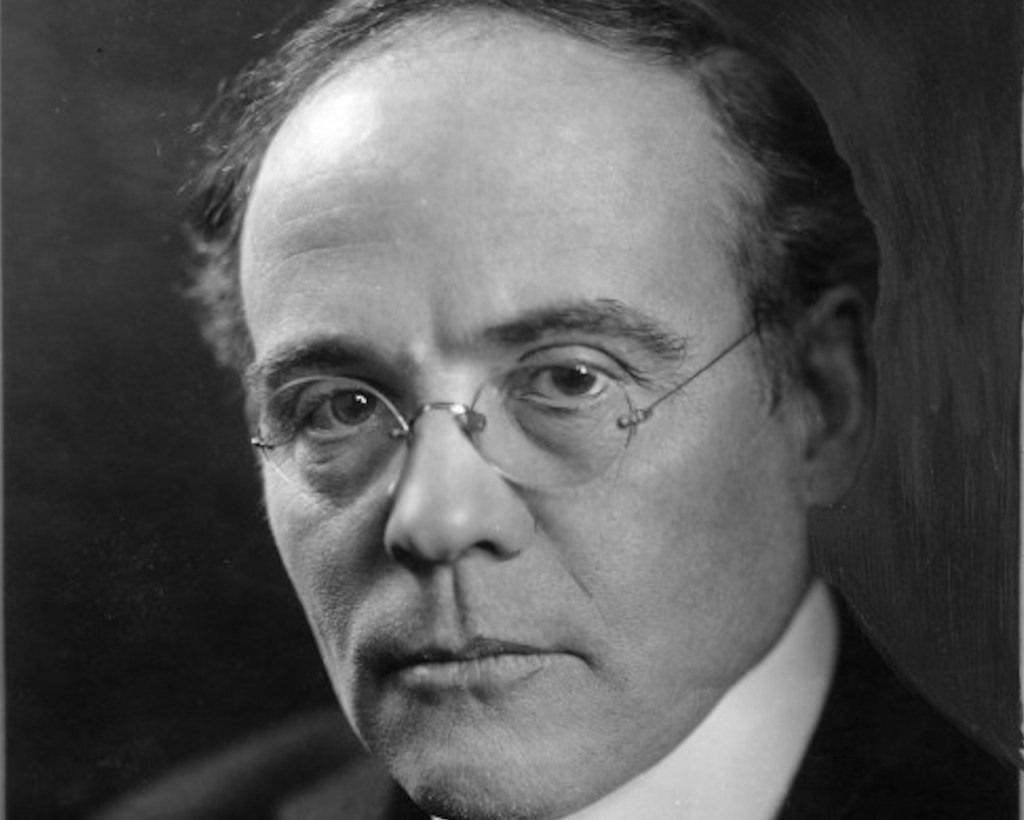
    Image: Edgar Lee Masters https://www.best-poems.net/edgar_lee_masters/index.html#google_vignette
    Image: Edgar Lee Masters

    Edgar Lee Masters’ “Julia Miller”

    Edgar Lee Masters’ American-Innovative sonnet “Julia Miller” from his American classic Spoon River Anthology reveals a troubled soul who leaves the world with the words of Jesus flickering before her eyes.

    Introduction and Text of “Julia Miller”

    Edgar Lee Masters’ “Julia Miller” from his American classic Spoon River Anthology vaguely resembles an American-Innovative sonnet, with its movements seeming to  follow the Italian form as practiced by Elizabeth Barrett Browning in her Sonnets from the Portuguese. 

    Masters’ choice of the American-Innovative sonnet likely reveals the notion that he wants to suggest this particular character is more poetic than some others, whose diatribes remain rather prosaic.

    Julia Miller

    We quarreled that morning,
    For he was sixty-five, and I was thirty,
    And I was nervous and heavy with the child
    Whose birth I dreaded.
    I thought over the last letter written me
    By that estranged young soul
    Whose betrayal of me I had concealed  
    By marrying the old man.
    Then I took morphine and sat down to read.
    Across the blackness that came over my eyes
    I see the flickering light of these words even now:
    “And Jesus said unto him, Verily  
    I say unto thee, To-day thou shalt  
    Be with me in paradise.”

    Commentary on “Julia Miller”

    Edgar Lee Master’s American-Innovative sonnet reveals a troubled woman who leaves the world with the words of Jesus flickering before her eyes.  The sonnet remains quite minimalist in its execution.  The speaker reveals several pertinent facts about herself but little by way any of in depth thought about her history.

    First Movement:  Quarreling with an Old Man

    We quarreled that morning,
    For he was sixty-five, and I was thirty,
    And I was nervous and heavy with the child
    Whose birth I dreaded.

    In Masters’ first movement, which corresponds to the first octave quatrain of the Italian sonnet, the speaker begins cryptically by asserting, “[w]e quarreled that morning.” She then reveals that it is an old man with whom she has quarreled, “[f]or he was sixty-five, and I was thirty.”  But she seems not to want to reveal too much too soon.

    Julia, however, continues to disclose that she is quite far along in pregnancy and that she was not happy about giving birth to this child; in fact, she says that she dreads the coming birth.  At this point, the reader might assume that the young woman is an unwed woman and has quarreled with her own father. 

    Second Movement:  Speculation

    I thought over the last letter written me
    By that estranged young soul
    Whose betrayal of me I had concealed  
    By marrying the old man.

    The second movement, which echoes the second quatrain in the octave of the Italian sonnet, unlocks the mystery that Julia has been slowly narrating.  She reveals that she had been thinking about “the last letter written me” by a young man, whom she describes as “that estranged young soul.”

    It turns out that Julia married the old man, with whom she has just quarreled, to cover up the fact that this “estranged young soul” had impregnated her and then deserted her.   Had Julia admitted to the old man her true reason for becoming his wife?  She allows the listener only to speculate.

    Third Movement:  Suicide

    Then I took morphine and sat down to read.
    Across the blackness that came over my eyes
    I see the flickering light of these words even now:

    The third movement then takes its form from the first tercet of the sextet of the Italian sonnet form.   In this movement, Julia reports that she has taken morphine “and sat down to read.”  She is committing suicide, and as she waits for death, she sees “the flickering light” of some words.  And she asserts that even after death, she still continues to see those words.

    Fourth Movement:  Flickering Words

    “And Jesus said unto him, Verily  
    I say unto thee, To-day thou shalt  
    Be with me in paradise.”

    The final movement, which completes the Italianesque echo of the second tercet of the sextet, features the Bible verse with which Julia Miller leaves this world. From the Bible verse, the implication arises that Julia feels rather optimistic about her journey after death as she takes the words of Jesus the Christ with her:

    And Jesus said unto him, Verily I say unto thee, Today shalt thou be with me in paradise. (KJV Luke 23:43)

    In addition to fixing the text into three lines, Masters’ made only two other small changes to the quotation: he inserts a hyphen in the word “Today,” and then he reverses the order from the original “shalt thou” to “thou shalt.”

    A Chosen Few

    One might speculate that Masters wanted to infuse certain narrators with a more poetic spirit than others; thus he employs certain poetic forms to reveal those individuals.   Oddly enough, it seems that “Julia Miller” is one of those chosen few.  Masters’ choices, as he dramatizes his characters, could infuse and inform a marvelous character-study of not only the speakers in the epitaphs but also of Edgar Lee Masters himself.

  • Indulgence’s Reward  

    Image created by Gemini inspired by the poem
    Image created by Gemini inspired by the poem

    Indulgence’s Reward  

    You will cut the name
    out of your brain,
    your heart will complain.
    You will shed tears

    then return to empty pages
    that fill you with words
    as if they were sons and daughters.
    You will shed words

    like old coats
    and they will grow cold
    without a body.
    You are not a prophet,

    just practiced in good-byes, 
    impaled upon the sword 
    of this world whose love 
    turns a knife in its own heart.

  • Edgar Lee Masters’ “Flossie Cabanis”

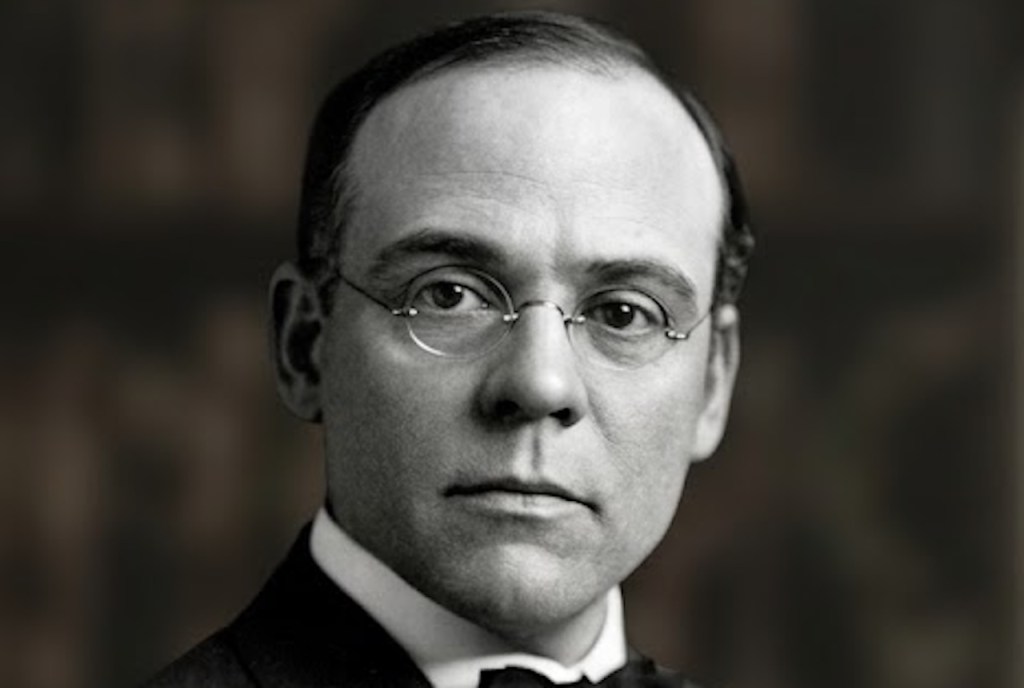
    Image:  Edgar Lee Masters -  Alchetron https://alchetron.com/Edgar-Lee-Masters
    Image:  Edgar Lee Masters –  Alchetron

    Edgar Lee Masters’ “Flossie Cabanis”

    Flossie Cabanis bemoans two great failures in her life:  fame as a Broadway star and a relationship with a rising “romantic actor.”

    Introduction and Text of “Flossie Cabanis”

    Edgar Lee Masters’ “Flossie Cabanis” from his American classic Spoon River Anthology features a drama queen who wishes that “Duse could stand amid the pathos / Of these quiet fields / And read these words.”

    Flossie alludes to the Italian actress, Eleonora Duse, who was noted for making lavish, sweeping statements, such as “If I had my will, I would live in a ship on the sea and never come nearer to humanity than that!”

     Flossie Cabanis 

    From Bindle’s opera house in the village  
    To Broadway is a great step.
    But I tried to take it, my ambition fired
    When sixteen years of age,  
    Seeing “East Lynne” played here in the village
    By Ralph Barrett, the coming
    Romantic actor, who enthralled my soul.  
    True, I trailed back home, a broken failure,
    When Ralph disappeared in New York,  
    Leaving me alone in the city—
    But life broke him also.  
    In all this place of silence  
    There are no kindred spirits.
    How I wish Duse could stand amid the pathos  
    Of these quiet fields
    And read these words.

    Commentary on “Flossie Cabanis”

    Flossie Cabanis bemoans two great failures in her life:  fame as a Broadway star and a relationship with a rising “romantic actor.”

    First Movement:  Broadway a Big Step

    From Bindle’s opera house in the village  
    To Broadway is a great step.

    Flossie reports that there is a great difference in stature between “Broadway” and “Bindle’s opera house,” the local playhouse in Spoon River.  She calls that difference a “great step.” 

    Second Movement:   Stage Stirred Her Soul

    But I tried to take it, my ambition fired
    When sixteen years of age,  
    Seeing “East Lynne” played here in the village
    By Ralph Barrett, the coming
    Romantic actor, who enthralled my soul.  

    The fact that the step was great, however, did not stop Flossie from making the effort by taking that step.  Her ambition was made itself known and became very strong when she was sixteen years old.   At that young age, Flossie attended the play “East Lynne” featuring Ralph Barrett, who was a rising star of stage.  This “romantic actor” stirred this ambition in her soul.

    Third Movement:  New York Ordeal?

    True, I trailed back home, a broken failure,
    When Ralph disappeared in New York,  
    Leaving me alone in the city—

    Completely skipping over her ordeal in New York, Flossie admits that she relocated back to Spoon River and considered herself “a broken failure.”  Not only did she fail in pursuing her acting career, but she also failed to hold on to a relationship with Ralph.  

    She reports that Ralph “disappeared in New York.”  Flossie was thus left alone to fend for herself in New York City.   She has not given any indication about how long she had remained in New York.  Her only focus is on her failures.

    Fourth Movement:  A Failing Pair

    But life broke him also.  
    In all this place of silence  
    There are no kindred spirits.

    Flossie then confides that not only was she a “broken failure,” but so was Ralph.  She does not elaborate, but she does offer a pregnant silence that allows her listener to imagine the pain and disappointment of both would-be stars.

    Flossie then describes Spoon River as a “place of silence” where there exist for her “no kindred spirits.”  Her ambition could not be realized in such a place, for she found no one with whom she could confide or share.

    Fifth Movement:  A Sense of Drama

    How I wish Duse could stand amid the pathos  
    Of these quiet fields
    And read these words.

    The one quality that Flossie continues to retain is her sense of drama.  She expresses the desire to have the melodramatic Italian actress Eleonora Duse stand out in the fields surrounding Spoon River and deliver her lament.  For Flossie those fields are filled with “pathos.”  

    Minimalist Sketch

    Flossie’s minimalist sketch leaves much to the imagination of her listener/reader.  It is only through very broad hints that the reader can interpret Flossie’s true ambitions.   It is possible that her only ambition was to become and remain the mate of Ralph Barrett as he pursued the heights of stardom on the stage.

    Thus it is quite likely that she had no real aspirations of following an acting career for herself.   However, by introducing and alluding to the famous Italian actress, she seems to be presenting Duse as her rôle model; the reader may, therefore, infer that Flossie’s ambition was two-fold:  she wanted both an acting career and a relationship with Barrett but failed at both.

  • Edgar Lee Masters’ “Percy Bysshe Shelley”

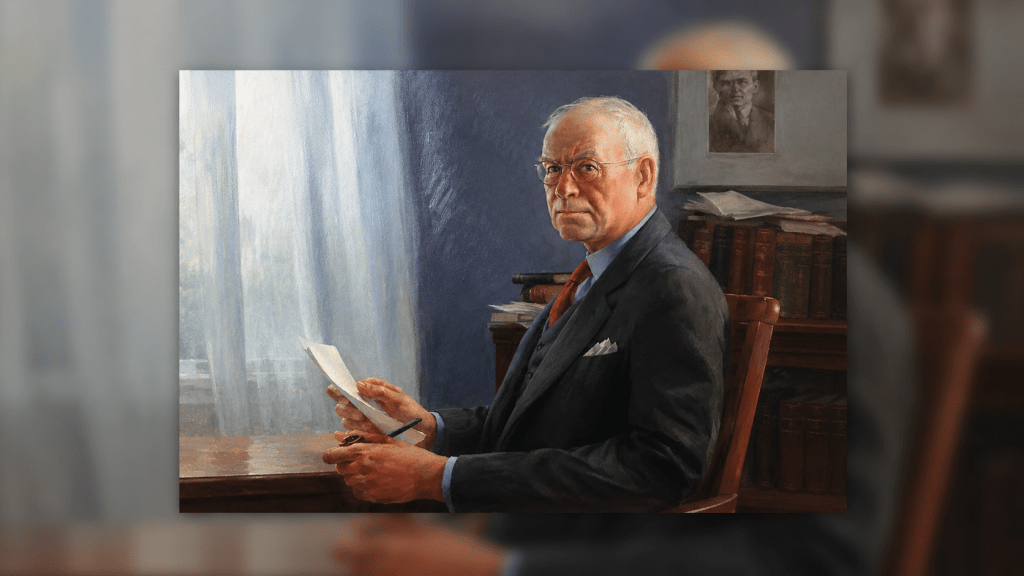
    Image:  Edgar Lee Masters - Portrait by Francis J. Quirk https://francisquirk.blogspot.com/2017/03/visit-to-national-portrait-gallery.html
    Image:  Edgar Lee Masters – Portrait by Francis J. Quirk

    Edgar Lee Masters’ “Percy Bysshe Shelley”

    The speaker in Edgar Lee Masters’ “Percy Bysshe Shelley” dramatizes the relationship between his father and himself, and those differences were vast and deep.

    Introduction and Text of “Percy Bysshe Shelley”

    Edgar Lee Masters’ “Percy Bysshe Shelley” from his American classic Spoon River Anthology consists of five tercets, each constructing its own movement and rendering this character-poem named for a poet one of the most highly structured of all the Spoon River poem offerings. The poem creates a drama, featuring the odd relationship between a father and son.

    The father had great aspirations for his son, but Percy did not have the mental and spiritual wherewithal to live up to the father’s wishes.  The interesting missing feature from the relationship seems to be any malice.  There is no hint of friction between the two, although they had very different temperaments and desires.

    Percy Bysshe Shelley

    My father who owned the wagon-shop
    And grew rich shoeing horses
    Sent me to the University of Montreal.
    I learned nothing and returned home,
    Roaming the fields with Bert Kessler,
    Hunting quail and snipe.
    At Thompson’s Lake the trigger of my gun
    Caught in the side of the boat
    And a great hole was shot through my heart.
    Over me a fond father erected this marble shaft,
    On which stands the figure of a woman  
    Carved by an Italian artist.  
    They say the ashes of my namesake
    Were scattered near the pyramid of Caius Cestius
    Somewhere near Rome.

    Commentary “Percy Bysshe Shelley”

    In this poem, the speaker is dramatizing a relationship between a father and son, whose differences are many.  But while the relationship seems to have distance, there seems to be no animosity expressed by either father or son.

    First Movement:  Sent to Prestigious University

    My father who owned the wagon-shop
    And grew rich shoeing horses
    Sent me to the University of Montreal.

    Percy announces that his father ran a lucrative “wagon-shop,” earning enough money to send Percy to the “University of Montreal.”  The elder Shelley “grew rich shoeing horses.” 

    The claim sounds rather odd, and perhaps intends to serve as an exaggeration.  While such a shop might keep the owner from poverty, it is not likely that such a business would allow the owner to grow rich.

    Second Movement:  Learned Nothing

    I learned nothing and returned home,
    Roaming the fields with Bert Kessler,
    Hunting quail and snipe.

    In the second tercet, Percy admits that at the prestigious Canadian university, “I learned nothing.”  So after flunking out, he “returned home.”   Percy’s major activity from then on was hunting, “roaming the fields with Bert Kessler.”  They hunted “quail and snipe.”

    Third Movement:  An Accidental Shooting

    At Thompson’s Lake the trigger of my gun
    Caught in the side of the boat
    And a great hole was shot through my heart.

    Percy dies in the middle of his poem.  On one of his hunting expeditions “at Thompson’s Lake,” he is accidentally shot through the heart when “the trigger of [his] gun” becomes “caught in the side of the boat.”   Again, Percy’s penchant for exaggeration emerges, “a great hole was shot through my heart.”

    Fourth Movement:  A Grave Difference

    Over me a fond father erected this marble shaft,
    On which stands the figure of a woman  
    Carved by an Italian artist.  

    Percy’s grave is quite a spectacular sight.  An Italian artist’s “figure of a woman” guards his remains.  His “fond father” had “erected this marble shaft” and had the carving of the woman placed there.  

    The disconnect between the father and son is clearly demonstrated in this movement.  The father’s interests are not the same as the son’s.   Because the son’s only interest was hunting, it would be expected that some hunting related theme might be used to decorate the younger man’s grave.

    Fifth Movement:  A Bit of History

    They say the ashes of my namesake
    Were scattered near the pyramid of Caius Cestius
    Somewhere near Rome.

    Percy then states a bit of historical information regarding the biography of the poet Percy Bysshe Shelley, “[his] namesake.”   The speaker reveals that the poet’s ashes “were scattered near the pyramid of Caius Cestius / Somewhere near Rome.”

    Lack of Conflict

    The name of this character is quite ironic, but it symbolizes the vast difference between this father and son.  Percy could not even succeed in college, and his main interest was hunting, while the father had great ambitions for his son, beginning with his name and ending with the grave marker sculpted by an Italian artist.

    While most disparities of this nature between father and son lead to a stressful and often volatile relationship, there is no evidence that these two characters resented each other.   Percy remains rather emotionless but refers to his father as “a fond father” and seems very accepting of that fondness.  Percy just reports a few salient facts about this life but does not seem to be aggrieved, as so many of the Spoon River epitaphs reveal.

  • Edgar Lee Masters’ “Sarah Brown”

    Image: Edgar Lee Masters http://www.poorwilliam.net/al-082314.html Poor William’s Almanack
    Image: Edgar Lee Masters Poor William’s Almanack

    Edgar Lee Masters’ “Sarah Brown”

    “Sarah Brown” reveals a genuine character, employing the Buddhist term “Nirvana” to describe her afterlife experience. 

    Introduction and Text of “Sarah Brown”

    The character “Sarah Brown” reveals an acquaintance with Buddhism as she employs the term “Nirvana” to describe her afterlife experience.  As the speaker in Edgar Lee Masters’ “Sarah Brown” from the American classic Spoon River Anthology, she is one of the most positive characters of the lot.  Although it is hinted that she committed adultery, she emphasizes “love” over sex.  

    It was Sarah’s husband who called her love for Maurice “guilty love,” but since her marriage apparently remained intact, it is not clear that she actually experienced a sexual liaison with the grieving Maurice.

    Sarah Brown 

    Maurice, weep not, I am not here under this pine tree.  
    The balmy air of spring whispers through the sweet grass,
    The stars sparkle, the whippoorwill calls,  
    But thou grievest, while my soul lies rapturous
    In the blest Nirvana of eternal light!
    Go to the good heart that is my husband,  
    Who broods upon what he calls our guilty love:—
    Tell him that my love for you, no less than my love for him
    Wrought out my destiny—that through the flesh
    I won spirit, and through spirit, peace.
    There is no marriage in heaven,
    But there is love.

    Commentary on “Sarah Brown”

    The speaker in this epitaph attempts to console her grieving husband who seemed to misunderstand his wife’s spiritual nature.

    First Movement:  Dust to Dust, Not Spoken of the Soul

    Maurice, weep not, I am not here under this pine tree.

    Sarah Brown addresses Maurice, as he mourns at her grave side.  She reveals to him that she is not in the grave “under this pine tree.”

    Second Movement:  As the Soul Sees

    The balmy air of spring whispers through the sweet grass,
    The stars sparkle, the whippoorwill calls,  
    But thou grievest, while my soul lies rapturous
    In the blest Nirvana of eternal light!

    To prove to Maurice that she, that is, her soul, is not confined to the dark, dank hole in the ground, she describes the setting above ground: the stars are out and a bird is singing.  

    She asserts that Maurice is mourning, but she is experiencing a blessed state of ecstasy wrapped in the bliss of “eternal light.”  Sarah Brown exemplifies a Spoon River resident whose soul has evolved to a higher realm than most of the other complaining deceased of the town.

    Instead of railing against the unfairness of the small minded folks among whom she lived, as so many others do, she reveals a very positive, even minded attitude, and she tries only to console those left behind, especially Maurice who has come to her grave to mourn.

    Third Movement:  Winds From the East

    Go to the good heart that is my husband,  
    Who broods upon what he calls our guilty love:—

    After attempting to relieve Maurice’s grief, Sarah Brown commands him to go to her husband who is smarting because he thought of Sarah’s affection for Maurice as “guilty love.”

    Sarah describes her husband as “the good heart” and continues to think of him as her husband still, even though she has departed earth, and despite the claim she later makes in the final movement.  

    Another indication that Sarah Brown is influenced by Eastern philosophical thought is that she focuses primarily on action in the present tense—the “eternal now”—as referred to in Buddhism.

    Fourth Movement:  Heightened Awareness

    Tell him that my love for you, no less than my love for him
    Wrought out my destiny—that through the flesh
    I won spirit, and through spirit, peace.

    Sarah Brown then reveals the message she wishes Maurice to deliver to her husband.  She wants her husband to know that her love for both men has been instrumental in shaping who she has become, that is, that love has “wrought out [her] destiny.”

    She clarifies that “through the flesh / [she] won spirit, and through spirit, peace.”  Her infidelity was no mere ordinary dalliance prompted by greed, but because of her heightened awareness, played a rôle in leading her soul to divine awareness.

    Fifth Movement:  Love Cannot Be Confined

    There is no marriage in heaven,
    But there is love.

    Finally, Sarah Brown reveals that “There is no marriage in heaven / But there is love.”  Sarah Brown became a free spirit while living and thus concludes from heaven that if love is supreme in the afterlife, then marriage cannot confine love while on the earth plane.