Linda's Literary Home

Tag: poetry

  • Edgar Lee Masters’ “Andy the Night-Watch”

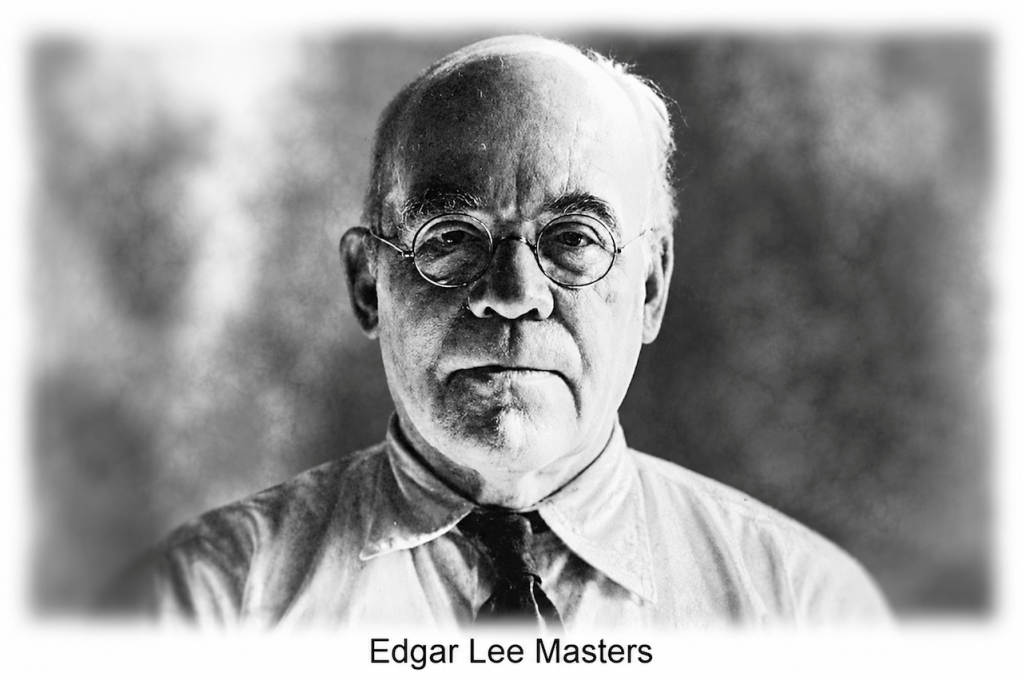
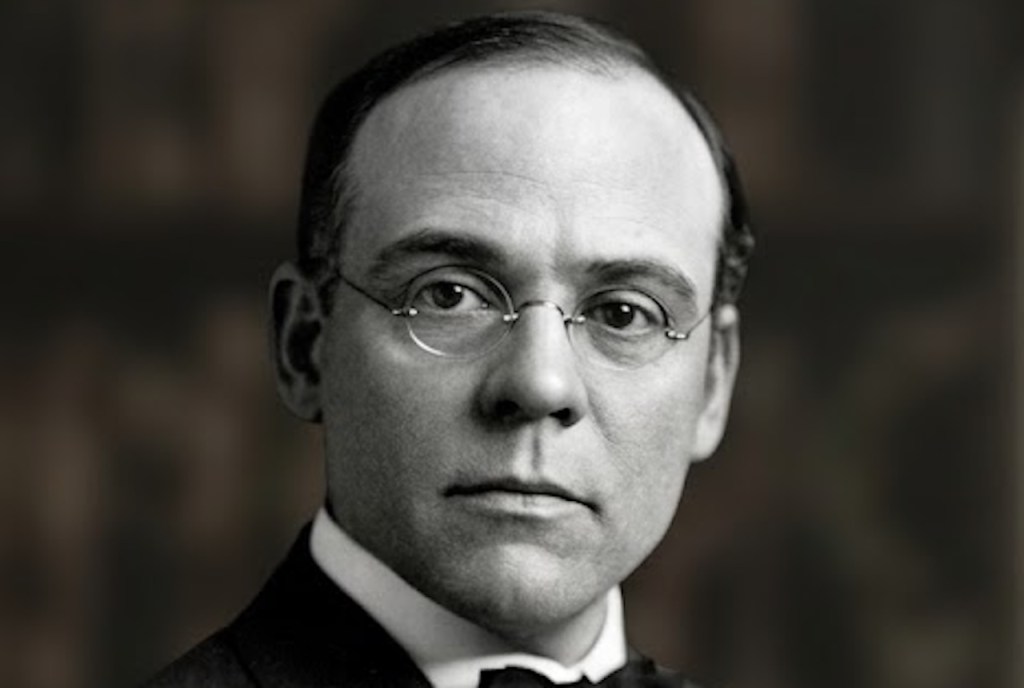
    Image: Edgar Lee Masters https://chicagoliteraryhof.org/inductees/profile/edgar-lee-masters
    Image: Edgar Lee Masters – Chicago Literary Hall of Fame

    Edgar Lee Masters’ “Andy the Night-Watch”

    Edgar Lee Masters’ “Andy the Night-Watch” remains one of the more pleasant accounts, as Andy reports his simple duties as a Spoon River security guard.

    Introduction and Text of “Andy the Night-Watch”

    Edgar Lee Masters’ “Andy the Night-Watch” from the American classic Spoon River Anthology features a night watchman who mentions another Spoon River resident Doc Hill in his report.   Andy’s account is straight forward without the innuendos that accompany many of the reports.  Andy is philosophical about his lot, seeing himself in a long line of men who have performed his job of night watchman for Spoon River.

    Interestingly, because Andy encounters Doc Hill in his nightly duties, he supports the physician’s claim made in his epitaph that he had gone about Spoon River both night and day caring for the sick.  Andy passes no moral judgment on the doc.  

    And Andy reveals no moral turpitude as so many of these characters do. Andy’s apparent guilelessness makes him one of the most appealing characters of the Spoon River citizens.  Most want to excuse their own sins while blaming others for them.

    Therefore, Andy’s epitaph surfaces as one of the more pleasant accounts, as he reports the simple duties he performed as a Spoon River security guard.   Andy’s only purpose is to offer a brief report about how he spent his time and to contrast his purpose on earth with his current tranquility, which he seems to appreciate.

    Andy the Night-Watch 

    In my Spanish cloak,
    And old slouch hat,
    And overshoes of felt,
    And Tyke, my faithful dog,
    And my knotted hickory cane,
    I slipped about with a bull’s-eye lantern
    From door to door on the square,
    As the midnight stars wheeled round,
    And the bell in the steeple murmured  
    From the blowing of the wind;
    And the weary steps of old Doc Hill
    Sounded like one who walks in sleep,
    And a far-off rooster crew.  
    And now another is watching Spoon River
    As others watched before me.
    And here we lie, Doc Hill and I
    Where none breaks through and steals,
    And no eye needs to guard.

    Commentary on “Andy the Night-Watch”

    Edgar Lee Masters’ “Andy the Night-Watch” reports his simple duties as a Spoon River security guard and then makes an interesting statement of comparison between his earthly life and his after-life.

    First Movement:  A Guard’s Accessories

    In my Spanish cloak,
    And old slouch hat,
    And overshoes of felt,
    And Tyke, my faithful dog,
    And my knotted hickory cane,

    Andy first describes his clothing and accessories, reporting that he wore a cloak which he describes as “Spanish.”  He donned a hat which was of the old and slouch variety. Finally, he wore overshoes made of felt—likely so he could amble about quietly on his nightly duties.

    For company and possible security assistance, Andy kept his companion pet dog Tyke along with him.  And he also carried a cane made of “knotted hickory.”  Such are the simple necessities for a night watchman in the small town of Spoon River.  Apparently, there was no need for a weapon other than the hickory cane.  

    Second Movement:  A Guard’s Duties

    I slipped about with a bull’s-eye lantern
    From door to door on the square,
    As the midnight stars wheeled round,
    And the bell in the steeple murmured  
    From the blowing of the wind;

    After cataloguing his accessories, Andy then proceeds to report his duties.  But before mentioning his duties, he inserts a further item, a lantern with a bull’s eye, to fill out the list of accessories that he either carried or wore.

    Andy describes his movement as “slip[ping] about,” likely indicating that he moved slowly as he checked the status of each door to the businesses and offices in town.  Most nights he was fortunate that not much seemed to be happening, so he was free to notice the “midnight stars” that “wheeled around.”  

    He also notes that he listened to “the bell in the steeple,” which he describes as making a murmuring sound as the wind blew past.  Again, Andy is demonstrating a calm, appreciative individual whose demeanor contrasts greatly with so many of the angry, vengeful after-life reporters from the Spoon River Cemetery.

    Third Movement:    Old Doc Hill

    And the weary steps of old Doc Hill
    Sounded like one who walks in sleep,
    And a far-off rooster crew.  

    It is in the third movement that Andy mentions “old Doc Hill,” whom the reader has previously encountered among these Spoon River after-death reporters.    Andy would hear the doctor’s “weary steps,” and Andy claims that those steps made it seem that the doctor might be walking in his sleep.  Likely, the shuffling sound put Andy in mind of sleep-walkers.

    Andy then mentions that he heard a far-off rooster crowing, which suggests that it is close to dawn.  The implication supports Doc Hill’s report that he went about caring for the sick all through the night.

    Fourth Movement:   Now Someone Else Guards

    And now another is watching Spoon River
    As others watched before me.
    And here we lie, Doc Hill and I
    Where none breaks through and steals,
    And no eye needs to guard.

    Andy then returns to his present circumstances wherein he, with a touch of melancholy, avers that someone else is now performing his night job of “watching Spoon River.”   And Andy places himself in the long line of history; the new person is watching “as others watched before me,” he philosophically opines.

    Both Andy and Doc Hill are now in their graves where no medical attention is required and where no one will break in to steal from rightful owners.  No one needs “to guard” anything in this final resting place.

    Andy has successfully compared his earthly duties to his duties in his current circumstance by simply stating the fact that no one ever breaks into things in the after-life world to steal things.  Thus, in that place, it is not necessary to have men who watch the night, which can become a dangerous, crime infested time on earth among the living.

  • Edgar Lee Masters’ “Doc Hill”

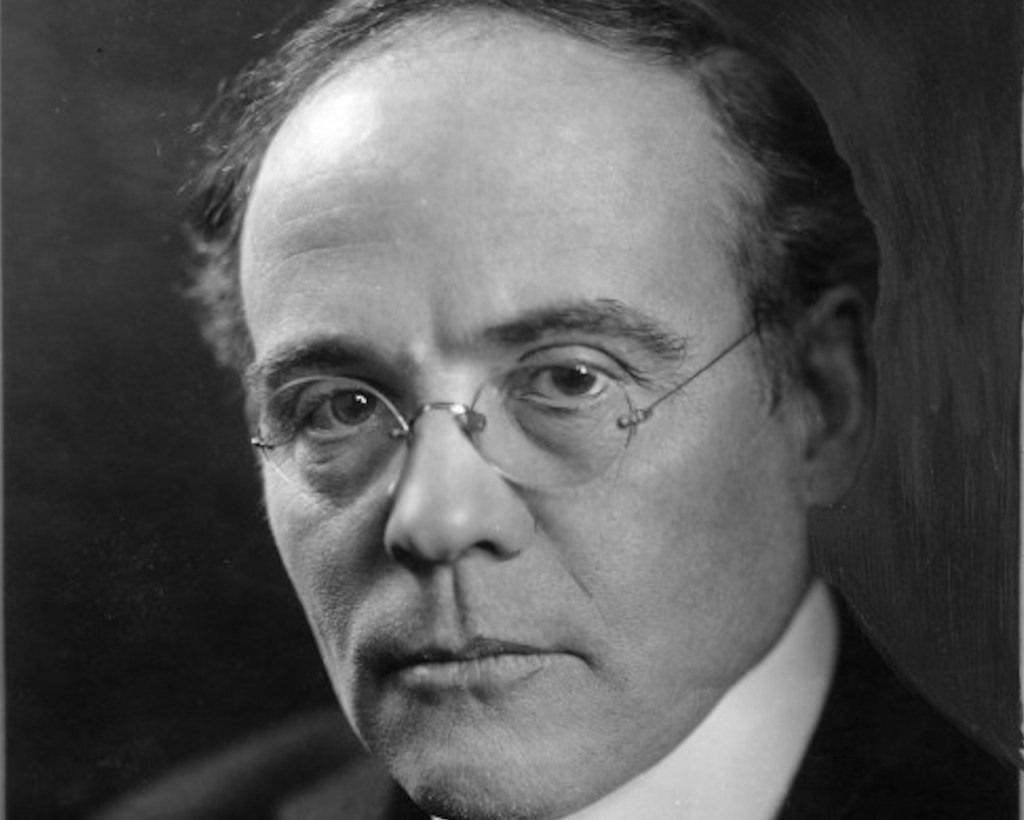
    Image: Edgar Lee Masters https://www.best-poems.net/edgar_lee_masters/index.html#google_vignette
    Image: Edgar Lee Masters

    Edgar Lee Masters’ “Doc Hill”

    Doc Hill was spurned by his wife and apparently also by his lackluster son.  The sad physician turned to healing the sick to find an outlet for his love and affection.

    Introduction and Text of “Doc Hill”

    The 13-line epitaph “Doc Hill” from Edgar Lee Masters’ American classic, Spoon River Anthology features the pathetic character of a town doctor who basically lived his life through the people he cared for in his medical practice.  Like many of the other graveyard complaining epitaphs, Doc Hill’s is full of pathos and self-pity.  

    But while apparently erasing from memory his own family, the physician does hold special regard for the many mourners who attended his funeral.  He especially entertained deep sorrow, however, for one Spoon River resident, Em Stanton. 

    Although the doc does not elaborate upon his relationship with Em Stanton, his reticence allows his audience to imagine the extent that would cause him such sorrow at seeing her standing alone grieving.

    Doc Hill 

    I went up and down the streets
    Here and there by day and night,
    Through all hours of the night caring for the poor who were sick.
    Do you know why?  
    My wife hated me, my son went to the dogs.
    And I turned to the people and poured out my love to them.
    Sweet it was to see the crowds about the lawns on the day of my funeral,  
    And hear them murmur their love and sorrow.
    But oh, dear God, my soul trembled, scarcely able
    To hold to the railing of the new life
    When I saw Em Stanton behind the oak tree
    At the grave,
    Hiding herself, and her grief!

    Commentary on “Doc Hill”

    Doc Hill confesses that his attention to his medical practice was only in part to assist the needy; it also assisted him by infusing into his life the love and affection that he failed to find in his own family life.

    The dejected Doc Hill harbors a secret that will remain a mystery. Readers are left to imagine the meaning of the implied relationship between the physician and Em Stanton, a woman who secretly visits the gravesite as the doctor’s body is being interred.

    First Movement:  The Wages of Altruism?

    I went up and down the streets
    Here and there by day and night,
    Through all hours of the night caring for the poor who were sick.

    The doc begins by reporting that he spent most of his time with his patients, most of whom were poor as well as sick.   Doc Hill made his way along the streets of the town during both daylight hours and during the nighttime.  His reason for spending that time away from home was in order to care for sick people, who needed and appreciated him.  

    As the doc’s life centered on his profession, he seemingly behaved as a rather altruistic individual.  However, readers become more and more skeptical of the scads of information given out by these Spoon River grave reporters.  

    Most of epitaphs include in their reporting complaints offered solely for the purpose of rehabilitating their reputations.  Instead of accepting any fault on their part, they are quick to lay all blame on others for their pathetic lots.  

    While Doc Hill has some blame to lay on his wife and his reprobate son, his main issue is that while he was seemingly abandoned and/or mistreated by his own family, the many sick and poor people of the town came to love him for his medical service to them.

    Yet, the physician seems to leave open the possibility that his motives were perhaps not as selfless and altruistic as they may seem.  Thus he finds it important to explain his reasoning for giving so much attention to others outside of his home life.

    Second Movement:  No Love at Home

    Do you know why?  
    My wife hated me, my son went to the dogs.
    And I turned to the people and poured out my love to them.

    Lest one think the doctor was an entirely altruistic workaholic or simply obsessed with his medical practice, he wants to explain that such was not the case.  The doc begins by proffering the question as to why he spent so much time with his ill patients.  

    He then reveals “why”:  His wife detested him, and his son felt no better toward his father.  Thus the doc had no family life.  He offers no details about his wife and son, other than that they abandoned him emotionally.

    The doctor had to find consolation somewhere so he turned to his profession that involved other people, particularly sick folks, who became appreciative of his services.  However, the doc does not seem to assert that he was merely looking for love for himself. 

    Part of his personality seems genuinely caring, although it also offers him an excuse for remaining absent from his home, marriage, and fatherhood.  Likely the doc’s explanation makes him sound more altruistic than one who is expecting attention in return: he was looking for people to whom he could give his love and caring. 

    The doc’s medical profession afforded him the opportunity, or perhaps excuse, to spend all of his time away from his own family while attending to others.  Less pathetic  and crass than many of the Spoon River crowd, he, nevertheless, remains one of the forlorn characters as he spins his yarn of sorrow.

    Third Movement:   The Return of Love

    Sweet it was to see the crowds about the lawns on the day of my funeral,  
    And hear them murmur their love and sorrow.

    Interestingly, the day’s events of his funeral allow him to revel in the return of the love he had bestowed, for he hears sweet murmurings emanating from the many folks attending the event as they offer their little tributes to the man who tended to their health needs.  Thus in death, he has achieved what he was never able to achieve in life with his own family.  

    The summation of caring and affection that showed itself on the day of his funeral seems to make up for the familial affection he had not experienced.   And that lack seems to extend into death, for he mentions the presence of neither his wife nor his son at his funeral.  Readers then may assume that they were not present, or that the doc cared so little for them that he fails to bother to account for their reactions to his death.

    Fourth Movement:  A Grieving Paramour?

    But oh, dear God, my soul trembled, scarcely able
    To hold to the railing of the new life
    When I saw Em Stanton behind the oak tree
    At the grave,
    Hiding herself, and her grief!

    However, the doc does reveal a rather mysterious implication about himself when he describes a woman, Em Stanton, whom he observes as she appears to hide “behind the oak tree,” pathetically watching the events at the grave-site.  Em Stanton appears to be assuaging her grief as she hides from the other mourners.  

    The observation of Em standing behind a tree apparently grief-stricken shakes the doc so badly that he can hardly hold his soul power together as he tries to “hold to the railing of the new life.”  This extreme reaction does seem to indicate that his relationship with Em Stanton likely indicates a close and deep emotional tie.

    The doc’s showering of affection on the townsfolk possibly included a romantic relationship with the woman behind the tree, Em Stanton, a woman who is now left to grieve in hiding.  By extension, readers might wonder if there may be other “Em-Stantons,” who simply failed to appear and mourn as his own family failed to appear.

  • The Eternal Now

    250a Image created by ChatGPT inspired by the poem
    Image created by ChatGPT inspired by the poem

    The Eternal Now

    Mind is musing on the Eternal Now:
    Seamless width where past and future fold
    Into a single point of searing light
    No clock  no calendar  no fleeting hour
    Only unbroken being always present

    Heart beats the drum with Its rhythm
    No yesterday  no tomorrow  only today 
    Not bracing for what has not yet come
    Sounding its music in the present skin
    Vibrant  adamant  unyielding

    Soul remains enshrined in Its temple
    A quiet realm where time cannot intrude
    Where every breath is neither first nor last
    But simply is  complete unto itself
    Eternity has no length  only depth

  • Edgar Lee Masters’ “Conrad Siever”

    Image: Edgar Lee Masters http://www.jackmasters.net/mastelm.html Jack Masters
    Image: Edgar Lee Masters – Jack Masters

    Edgar Lee Masters’ “Conrad Siever”

    Conrad Siever contrasts his feelings for two distinctive segments of his land: the part with the cemetery he finds “wasted”; but he loved the acres that held his apple tree and lovingly nurtured that tree in life and continues to do so even after death. 

    Introduction and Text of “Conrad Siever”

    The speaker of Edgar Lee Masters’ “Conrad Siever” from Spoon River Anthology is contrasting his feelings for the acres of his property where a cemetery is located with those acres that hold his prized apple tree.    

    Siever’s property is mentioned in two other Spoon River poems; in “Hare Drummer,” Hare asks if the young folk “still go to Siever’s / For cider, after school.”  Also in the epitaph,”Amelia Garrick,” Amelia refers to Siever’s woods, “Where the thickets from Siever’s woods / Have crept over.”  Thus, the reader infers that Conrad Siever owned many acres of land.

    The structure of this poem presents two movements that basically offer the theme of “not there, but here.” The first movement dramatizes the speaker’s negative or “not there” rubric; he did not love the part of his property that tendered certain features.  

    The second movement dramatizes the “but here” or positive part of the construction, which is the section of his land that he loved and attended to in life and seemingly continues to do so in death.

    Conrad Siever

    Not in that wasted garden
    Where bodies are drawn into grass
    That feeds no flocks, and into evergreens
    That bear no fruit—
    There where along the shaded walks
    Vain sighs are heard,
    And vainer dreams are dreamed
    Of close communion with departed souls—
    But here under the apple tree
    I loved and watched and pruned
    With gnarled hands
    In the long, long years;
    Here under the roots of this northern-spy
    To move in the chemic change and circle of life,
    Into the soil and into the flesh of the tree,
    And into the living epitaphs
    Of redder apples!

    Commentary on “Conrad Siever”

    Conrad Siever loved his apple tree and lovingly nurtured it in life and death.  

    First Movement:   Fruitless Evergreens

    Not in that wasted garden
    Where bodies are drawn into grass
    That feeds no flocks, and into evergreens
    That bear no fruit—
    There where along the shaded walks
    Vain sighs are heard,
    And vainer dreams are dreamed
    Of close communion with departed souls—

    Despite his owning considerable property, Siever begins with a negative assertion that he did not take his essential being in “that wasted garden,” where despite the continued interest of other people, there is no food for “flocks” and where fruitless evergreens abide. 

    He points out that that wasted garden strikes him as rather useless, where “vain sighs are heard,” and he adds that even “vainer dreams are dreamed.”  He is revealing that the part of  his property that includes a cemetery is where those vain dreamers come to attempt “close communion with departed souls.”

    Siever first concentrates on the part of his land that he finds least useful and therefore least important.  By beginning with a sort of condemnation of uselessness, he thereby emphasizes his interest in productive endeavors, which he finds important, much more significant than the land that merely hold the bodies of dead folks.

    Second Movement:  Not There, but Here

    But here under the apple tree
    I loved and watched and pruned
    With gnarled hands
    In the long, long years;
    Here under the roots of this northern-spy
    To move in the chemic change and circle of life,
    Into the soil and into the flesh of the tree,
    And into the living epitaphs
    Of redder apples!

    Siever has remarked that it is not to those useless parts of his property that he was attached but instead to “here under the apple tree.”  It was in this place that the speaker  afforded his affection for his property; he worked on his apple tree, pruning and tending to its needs, even as his hands became “gnarled,” likely causing pain during his hard labor.  Obviously, Siever’s real love and occupation was for his apple tree; thus, he tended it with great care and affection.

    Now Siever is buried under his beloved “northern-spy,” specifically and more importantly, “under the roots.” And he attests that he is still attending to his former occupation.  His spirit is now able to “move in the chemic change and circle of life.” That spirit circulates “into the soil and into the flesh of the tree.”  

    Siever dramatically and triumphantly announces that just as when alive he strove to produce better apples, his spirit is now accomplishing the same goal as it pushes itself “into the living epitaphs / Of redder apples!”

    Siever has shown that he bestowed his love and attention upon the fertile, apple-growing segment of his land.  Instead of “epitaphs” of dead people, he continues to grow living reports of useful fruit as he continues to pursue “redder apples.”  

    He is demonstrating that his loving interest was in useful, productive activity, rather than dreaming and sighing and eternal waiting.  Even in death, his strong spirit continues his dedication to caring for his apple producing tree.

  • City Boy 

    249a Image created by Gemini inspired by the poem.jpg
    Image created by Gemini inspired by the poem

    City Boy

    what she got for marrying the devil . . .    

    He was a peacock about his manhood,
    Measured his mind by the length of it.
    He was kicked out of high school but cut his wisdom
    Teeth on the Encyclopædia Britannica.
    He went to tell President Nixon
    How to run the country,
    And ended up in jail—in Wyoming.

    He told stories about planting his seed, 
    Claimed he was directed
    By an expert in eugenics. Threatened
    To incest his own daughter.
    But his head served as a block of meat
    His co-workers at the wire factory
    Would slice off at the lunch break..

    His mother was a gentle, efficient woman.
    His father was just gentle.
    But his brothers were determined
    To shit in every yard in the north end.

    He gave people the creeps.
    He was too self-slung to know.
    Narcissus breathed on his mirror.
    He made people cringe:  like when
    He took pictures of his sister in her coffin—
    The sister he told his brothers only he could satisfy.
    He wanted to remember her before she rotted…
    One can only guess…the way you remember 
    Road kill before it goes to flies.

    A slightly different version of appears in my collection Turtle Woman & Other Poems

  • Edgar Lee Masters’ “Hare Drummer”

    Image: Edgar Lee Masters https://www.best-poems.net/edgar_lee_masters/index.html#google_vignette
    Image: Edgar Lee Masters

    Edgar Lee Masters’ “Hare Drummer”

    ”Hare Drummer” portrays beautiful memories of pastoral scenery.

    Introduction and Text of “Hare Drummer” 

    Hare Drummer asks a series of questions, seeking to learn how things have continued on after his death.  That question format is reminiscent of A. E. Housman’s “Is my team ploughing,”  in which a dead man asks for a report about how things are going now that he has died.

    Hare Drummer

    Do the boys and girls still go to Siever’s  
    For cider, after school, in late September?
    Or gather hazel nuts among the thickets  
    On Aaron Hatfield’s farm when the frosts begin?
    For many times with the laughing girls and boys
    Played I along the road and over the hills
    When the sun was low and the air was cool,  
    Stopping to club the walnut tree  
    Standing leafless against a flaming west.
    Now, the smell of the autumn smoke,
    And the dropping acorns,
    And the echoes about the vales
    Bring dreams of life. They hover over me.
    They question me:  
    Where are those laughing comrades?
    How many are with me, how many
    In the old orchards along the way to Siever’s,  
    And in the woods that overlook  
    The quiet water?

    Interpretive Reading 

    Commentary on “Hare Drummer”

    Hare Drummer poses a series of questions about what life has been like for those who have lived on after he died. 

    First Movement:  Does Life Go On After? 

    Do the boys and girls still go to Siever’s  
    For cider, after school, in late September?
    Or gather hazel nuts among the thickets  
    On Aaron Hatfield’s farm when the frosts begin?

    Hare begins by asking if the young folk “still go to Siever’s / For cider, after school, in late September?”  He continues with his second question, asking if they still “gather hazel nuts among the thickets” on the farm owned by Aaron Hatfield “when the frost begins.”

    Hare’s purpose in questioning seems quite innocent, as if he is merely curious about the continuation of life as he had seen it.  And his questions and comments simply paint a portrait of simple, pastoral life including farms, hills, trees, cold weather, and “quiet water.”

    Second Movement:  Down Memory Lane

    For many times with the laughing girls and boys
    Played I along the road and over the hills
    When the sun was low and the air was cool,  
    Stopping to club the walnut tree  
    Standing leafless against a flaming west.

    Hare then offers the explanation that he had accompanied “the laughing girls and boys” as they all “played [ ] along the road and over the hills.”  He remembers how they would knock down walnuts from the tree which stood “leafless against the flaming west.”

    Third Movement:  The Smell of Autumn Smoke

    Now, the smell of the autumn smoke,
    And the dropping acorns,
    And the echoes about the vales
    Bring dreams of life. They hover over me.

    Intimating that he now smells “autumn smoke” and acorns drop on his grave, he dramatizes how “echoes about the vales / Bring dreams of life.”  His  memory abounds with sights and sounds that he experienced when he was alive.  These dreams and experiences “hover over me,” he asserts.

    Fourth Movement:  Questioned by Phantoms

    They question me:  
    Where are those laughing comrades?
    How many are with me, how many
    In the old orchards along the way to Siever’s,  
    And in the woods that overlook  
    The quiet water? 

    And just as Hare questions some phantom audience, he is questioned by the same phantoms.  They want to know how many of his former playmates are with him and how many are still making their way through “the old orchards along the way to Siever’s.”  And he also wonders how many still visit “the woods that overlook / The quiet water.”

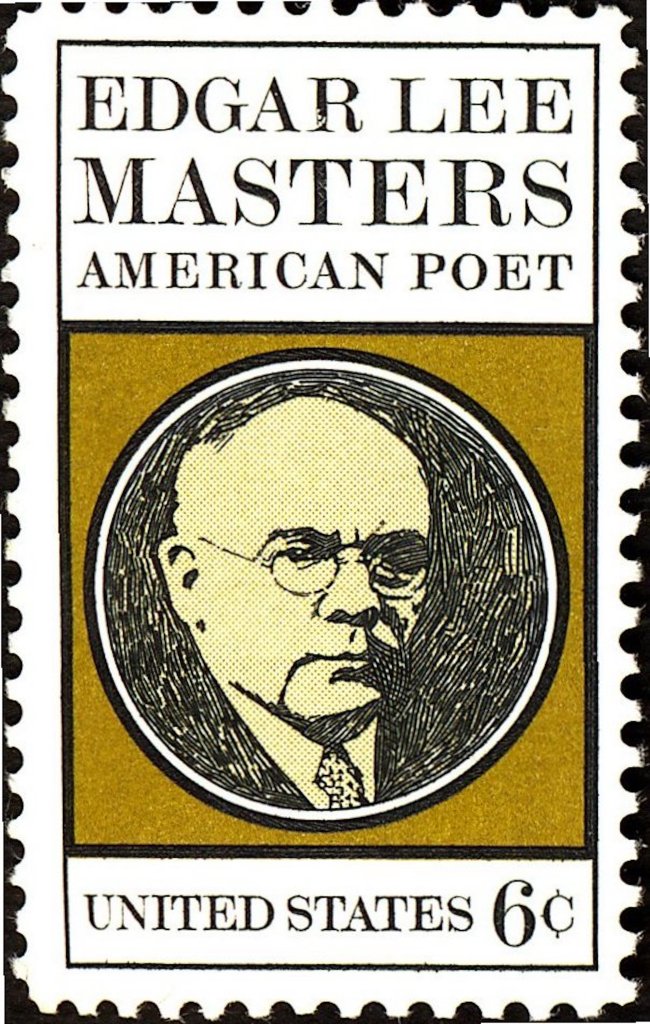
     Edgar Lee Masters - Commemorative Stamp
    Image: Edgar Lee Masters – Commemorative Stamp
  • A.E. Housman’s Poem XXVII “Is my team ploughing”

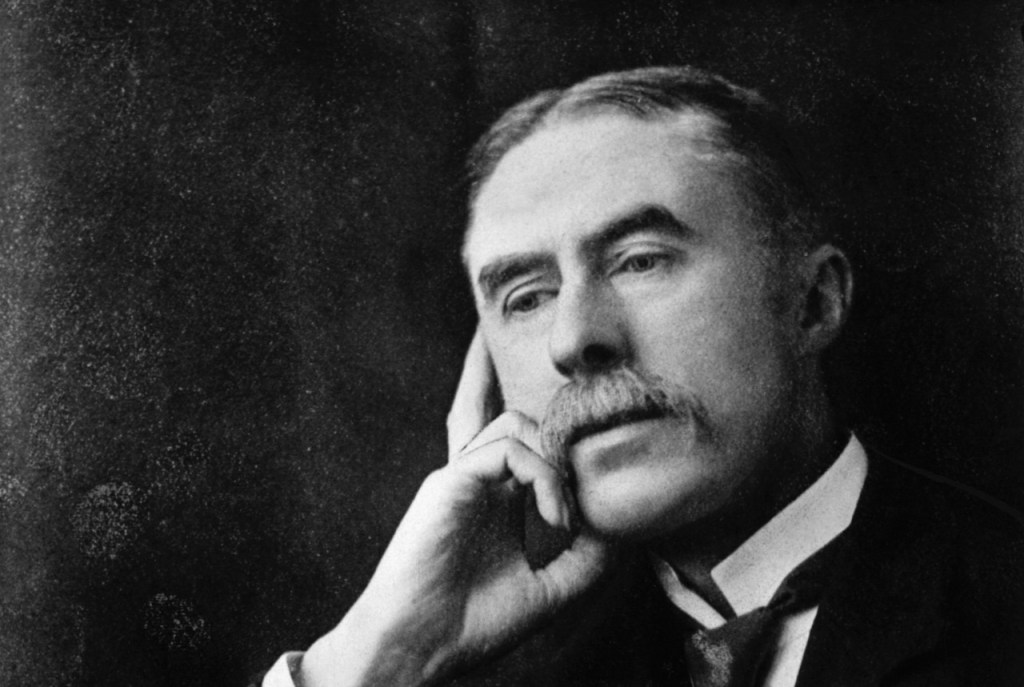
    Image:  A. E. Housman Photo by Hulton-Deutsch/Hulton-Deutsch Collection/Corbis via Getty Images https://www.poetryfoundation.org/poets/a-e-housman
    Image: A. E. Housman Photo by Hulton-Deutsch/Hulton-Deutsch Collection/Corbis via Getty Images 

    A.E. Housman’s Poem XXVII “Is my team ploughing”

    Two speakers appear in A. E. Housman’s “Is my team ploughing”:  one a dead man, the other his living friend.  The dead man asks for a report about how things are going now that he has died.

    Introduction and Text of  “Is my team ploughing”

    A E. Housman’s “Is my team ploughing” (XXVII) appears in A Shropshire Lad, the poet’s well-known, somewhat autobiographical collection.  In the poem, a deceased man questions a living friend about various aspects of their life together before the dead man died.

    The eight stanzas are sectioned into question and response, similar to an interview, with the dead man beginning with a question.  The dead man’s questions appear in quotation marks, followed by the living friend’s response without quotation marks.

    XXVII Is my team ploughing

    “Is my team ploughing,
       That I was used to drive
    And hear the harness jingle
       When I was man alive?” 

    Ay, the horses trample,
       The harness jingles now;
    No change though you lie under
       The land you used to plough. 

    “Is football playing
       Along the river shore,
    With lads to chase the leather,
       Now I stand up no more?” 

    Ay the ball is flying,
       The lads play heart and soul;
    The goal stands up, the keeper
       Stands up to keep the goal. 

    “Is my girl happy,
       That I thought hard to leave,
    And has she tired of weeping
       As she lies down at eve?” 

    Ay, she lies down lightly,
       She lies not down to weep:
    Your girl is well contented.
       Be still, my lad, and sleep. 

    “Is my friend hearty,
       Now I am thin and pine,
    And has he found to sleep in
       A better bed than mine?” 

    Yes, lad, I lie easy,
       I lie as lads would choose;
    I cheer a dead man’s sweetheart,
       Never ask me whose.

    Commentary on “Is my team ploughing”

    Two speakers appear in these lines: one a dead man, the other his living friend.  The dead man asks for a report about how things are going now that he has died.

    First Stanza:  The Dead Man Asks a Question

    “Is my team ploughing,
       That I was used to drive
    And hear the harness jingle
       When I was man alive?”

    The dead man begins by asking a question of his friend who is still alive. The deceased wishes to find out if his team of horses that he employed in ploughing his fields is still performing that function.

    Therefore he puts the question to his friend: “Is my team ploughing?” Continuing he adds, “That I used to drive, / And hear the harness jingle.” The dead speaker, no longer possessing the capability of tilling his farm fields, nor of listening to the jingling of the horses’ harnesses, seeks answers to the mystery of how those still living are functioning now that the deceased is no longer “man alive.”

    Second Stanzas:  The Living Man Responds

    Ay, the horses trample,
       The harness jingles now;
    No change though you lie under
       The land you used to plough.

    The friend immediately responds that the horses are indeed continuing to plough and their harnesses are still making their jingling sounds.  Life has continued on as before the deceased became deceased.  Everything goes on as it did before the poor dead farmer’s body was placed “under / The land [he] used to plough.”

    Third Stanza:  No Longer Able to Play

    “Is football playing
       Along the river shore,
    With lads to chase the leather,
       Now I stand up no more?”

    The dead speaker then wants to know if their other friends are still playing football; he shows that he remembers where they used to play, adding the colorful fact of the boys chasing the ball as they played their game.

    He emphasizes his current status to his living friend that he can no long join in the game. He makes sure the friend does not forget that being dead he can no longer play and enjoy himself as he did before.

    Fourth Stanzas:  Contrast Between the Living and the Dead

    Ay the ball is flying,
       The lads play heart and soul;
    The goal stands up, the keeper
       Stands up to keep the goal.

    The friend then responds that yes the boys are still playing their lively game. He stresses his positive answer, saying, the goal is still in place and the goalie still performs his task in the game.  By repeating the term “stands” the speaker emphasizes the contrast between the living players and the deceased questioner who can no longer “stand.”

    Fifth Stanza:  Hated to Leave His Sweetheart

    “Is my girl happy,
       That I thought hard to leave,
    And has she tired of weeping
       As she lies down at eve?”

    The dead man then queries after his girlfriend.  He hated having to leave her, and he says, he  “thought hard” on the issue.  He wonders if she has ceased mourning the loss of him, as he surmises that his sweetheart would have bitterly mourned his passing and that she might still be in mourning for him.

    Sixth Stanza:   A Well-Satisfied Sweetheart

    Ay, she lies down lightly,
       She lies not down to weep:
    Your girl is well contented.
       Be still, my lad, and sleep.

    However, the friend assures the dead man that the sweetheart is well satisfied, and as she lies down in bed at night, she is not pining nor shedding tears.  This turning point reveals that the friend may not be such a good friend to the dead man as it might have seemed;  the living friend knows too much about the sweetheart and has revealed to the dead man more than the poor fool would have wanted to know.

    Seventh Stanza:  His Hearty Friend

    “Is my friend hearty,
       Now I am thin and pine,
    And has he found to sleep in
       A better bed than mine?”

    The dead speaker then poses a final question about his friend, the one he has been interviewing all along. The dead man asks if his friend is “hearty,” as he once again emphasizes his own status as a dead man.  Instead of “hearty,” he is “thin and pine.” Thus he asks if the still living friend has found a better place to sleep than the grave.  Is it possible that the dead already knows, or suspects, the answer to that question?

    Eighth Stanza:  Quite Well and Sleeping Well

    Yes, lad, I lie easy,
       I lie as lads would choose;
    I cheer a dead man’s sweetheart,
       Never ask me whose.

    The living friend then assures his dead friend that he is quite well, and he sleeps well.  And he adds, “I cheer a dead man’s sweetheart.”  When the living friend, who has usurped the place of the dead man with the latter’s sweetheart, adds, “Never ask me whose,” the questioning does cease.

    But how likely is it that the dead man does not already have the answers to all of his questions?  The dead man’s questions seem to elicit responses that unveil the treachery of his so-called living friend.  Such an examination of possibilities places before the minds of readers and listeners the unending route of knowledge, experience, and truth that does not end with death.

    The Extended Paradox of a Dead Man Speaking

    Readers of A.E. Housman’s “Is my team ploughing” may react to the implausibility of a dead man holding a conversation with a living man.  That reaction will depend on how literally one takes the conversation.  Obviously, a literal conversation is impossible; thus, one must consider the fact that the conversation itself is a figure of speech, an extended paradox. 

    Paradoxes, which at first seem absurd, are justified upon further explanation.  But how does one justify a conversation between a dead man and a living man?  Only the living man can be offering a report of this conversation; thus, the dead man’s part of the conversation is also coming from the mind of the living man.  But why would a living man hold such a conversation, even if imaginary? 

    The answer is that the living man is being tormented with guilt at the way he treated the dead man while the latter was living, and now that his so-called friend is dead, he is committing the ultimate sin against their friendship by taking his place with the dead man’s sweetheart.  The living friend is merely attempting to assuage his own guilty conscience by holding the imaginary conversation in which he seems to be attempting  to solace his former friend.  

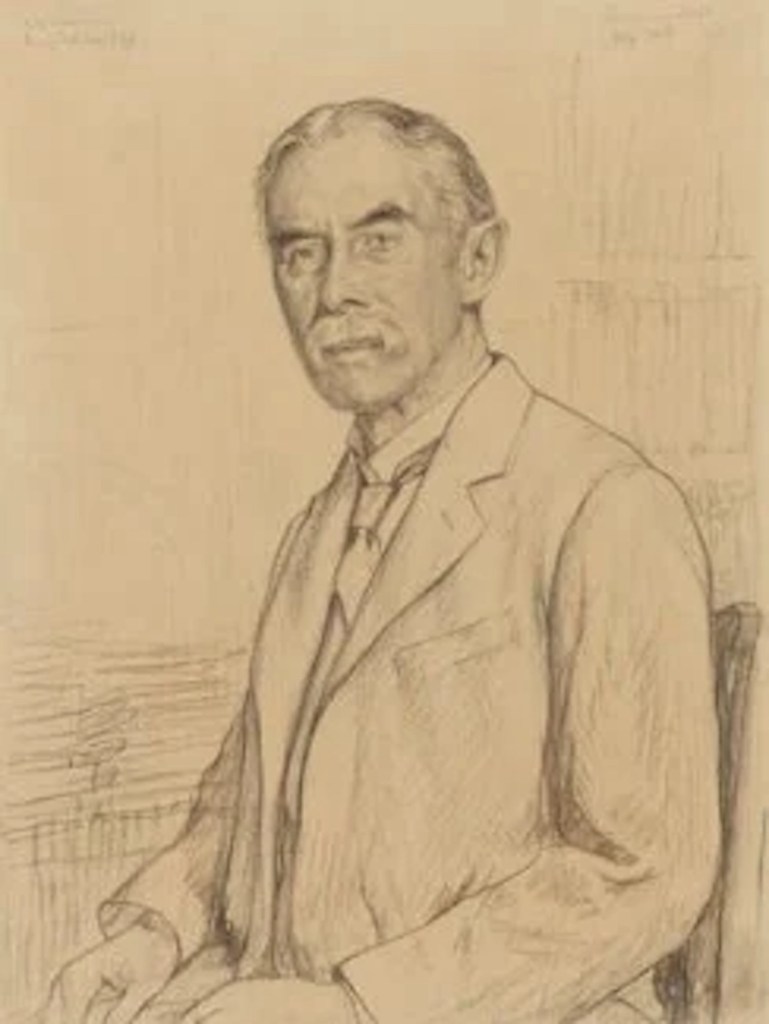
    Image:  Sketch of A. E. Housman by Francis Dodd  https://www.npg.org.uk/collections/search/portrait/mw03269/AE-Housman National Portrait Gallery, Image:  Sketch of A. E. Housman by Francis Dodd  https://www.npg.org.uk/collections/search/portrait/mw03269/AE-Housman National Portrait Gallery, London
    Image: Sketch of A. E. Housman by Francis Dodd National Portrait Gallery, London
  • Edgar Lee Masters’ “Frank Drummer”

    Image: Edgar Lee Masters https://chicagoliteraryhof.org/inductees/profile/edgar-lee-masters
    Image: Edgar Lee Masters – Chicago Literary Hall of Fame

    Edgar Lee Masters’ “Frank Drummer”

    “Frank Drummer” had high aspirations for himself but died young at age twenty-five.

    Introduction and Text of “Frank Drummer”

    The epitaph”Frank Drummer” from Edgar Lee Masters’ American classic Spoon River Anthology features a character study of a milder personality than most of the other Spoon River collection o f speakers.

    Frank Drummer

    Out of a cell into this darkened space—
    The end at twenty-five!
    My tongue could not speak what stirred within me,  
    And the village thought me a fool.
    Yet at the start there was a clear vision,
    A high and urgent purpose in my soul  
    Which drove me on trying to memorize  
    The Encyclopedia Britannica!

    Commentary on “Frank Drummer”

    Although the reader never learns to what specific goals he aspired, Frank reveals that he at least thought himself capable of achieving great things.  He demonstrates an intense emotional make-up that was likely responsible for his landing in jail.

    First Movement:  Died in Jail

    Out of a cell into this darkened space—
    The end at twenty-five!
    My tongue could not speak what stirred within me,  
    And the village thought me a fool.

    Frank reports that he died in jail and was immediately introduced to the grave, “this darkened space”—and at the young age of twenty-five.  His emotion was so strong that he could not even speak, and thus the town “thought me a fool.”  Frank, of course, sees himself as one destined for high achievement, but instead he committed some crime that brought him low.

    Second Movement:  Bright Mind Turned Dark

    Yet at the start there was a clear vision,
    A high and urgent purpose in my soul  
    Which drove me on trying to memorize  
    The Encyclopedia Britannica!

    However, early on in this life, his mind was bright and his soul possessed “[a] high and urgent purpose.”  That high purpose motivated him to try to “memorize / The Encyclopedia Britannica!”

    Frank’s evaluation of his own capabilities show that he was not tethered to reality.  He thinks that memorizing a set of encyclopedia was enough to support his contention that he was clear-minded and had “high purpose.”

  • Emily Dickinson’s “The Bible is an antique Volume”

    Image: Emily Dickinson - Amherst College - Daguerrotype of the poet at age 17, circa 1847 - likely the only authentic, extant likeness of the poet
    Image: Emily Dickinson – Amherst College – Daguerrotype of the poet at age 17, circa 1847 – likely the only authentic, extant likeness of the poet

    Emily Dickinson’s “The Bible is an antique Volume”

    Emily Dickinson’s “The Bible is an antique Volume” presents the speaker’s probing, skeptical, yet imaginative engagement with sacred narrative and its communicative power.

    Introduction and Text of “The Bible is an antique Volume”

    Emily Dickinson’s “The Bible is an antique Volume” dramatizes a speaker weighing the authority, authorship, and persuasive force of scripture. The poem unfolds as a series of compressed observations, blending irreverence with contemplative musing. Its slant rime and fragmentary cataloging mirror a mind testing inherited belief against intuitive awareness.

    The Bible is an antique Volume –

    Written by faded men
    At the suggestion of Holy Spectres –
    Subjects – Bethlehem –
    Eden – the ancient Homestead –
    Satan – the Brigadier –
    Judas – the Great Defaulter –
    David – the Troubador –
    Sin – a distinguished Precipice
    Others must resist –
    Boys that “believe” are very lonesome –
    Other Boys are “lost” –
    Had but the Tale a warbling Teller –
    All the Boys would come –
    Orpheus’ Sermon captivated –
    It did not condemn –

    Commentary on “The Bible is an antique Volume”

    The speaker investigates scriptural authority while pondering how narrative and tone shape spiritual receptivity.

    First Movement: “The Bible is an antique Volume”

    The Bible is an antique Volume –
    Written by faded men
    At the suggestion of Holy Spectres –

    The speaker opens by calling the Bible “an antique Volume,” immediately situating it within history rather than timeless immediacy. The adjective “antique” carries both reverence and distance, implying value yet suggesting obsolescence. The text becomes artifact, not living utterance, inviting contemplative musing rather than unquestioned submission.

    The past participial phrase “Written by faded men” further complicates authority. “Faded” suggests mortality, obscurity, and perhaps diminished relevance. The speaker subtly resists the notion of divine dictation, emphasizing human intermediaries whose voices have dimmed across time, thereby introducing epistemological uncertainty regarding sacred transmission.

    The prepositional phrase “At the suggestion of Holy Spectres” introduces ambiguity between divine inspiration and spectral abstraction. The term “Spectres” evokes immaterial presence, yet also ghostliness, hinting at intangibility. The speaker neither affirms nor denies divine origin but leaves it suspended between revelation and imaginative projection.

    Paramahansa Yogananda explains that true scripture must be inwardly realized, not merely inherited: spiritual truth must be experienced in the soul.  The speaker’s stance resonates with this principle, as she weighs external authority against internal perception.

    In my earlier essays on Dickinsonian poems, I have discussed the speaker’s tendency to challenge inherited doctrines through compressed irony. Here, that strategy emerges in her speaker’s careful diction, which neither outright rejects nor fully endorses scripture but reframes it as subject to human interpretation.

    Thus the opening movement establishes tension between antiquity and immediacy, between transmitted belief and living realization. The speaker positions herself as evaluator, not disciple, engaging the sacred text through intellectual and intuitive scrutiny.

    Second Movement: “Subjects – Bethlehem”

    Subjects – Bethlehem –
    Eden – the ancient Homestead –
    Satan – the Brigadier –
    Judas – the Great Defaulter –
    David – the Troubador –
    Sin – a distinguished Precipice
    Others must resist –

    The speaker catalogs biblical figures and locales as “Subjects,” reducing vast theological narratives into concise labels. This rhetorical compression transforms sacred history into literary inventory, suggesting that meaning depends upon presentation as much as content.

    The subjects “Bethlehem” and “Eden” appear as emblematic settings, yet “the ancient Homestead” renders Eden almost domestic. The speaker recasts mythic origins into familiar terms, diminishing their grandeur while enhancing accessibility, revealing her inclination to humanize the transcendent.

    The subject “Satan – the Brigadier” reframes evil through militaristic imagery, while the subject “Judas – the Great Defaulter” employs economic language. These descriptions secularize theological figures, translating spiritual drama into social metaphors. The speaker thus exposes how narrative framing shapes moral perception.

    The subject “David – the Troubador” highlights artistry rather than kingship, emphasizing the poetic dimension of scripture. This alignment meshes with the speaker’s broader concern: the power of storytelling. The Bible becomes not only doctrine but performance, its figures recast as roles within a literary tradition.

    The subject “Sin – a distinguished Precipice” offers a striking metaphor. The designation “Distinguished” lends allure, while the term “Precipice” signals danger. The speaker captures sin’s paradoxical attraction and peril, suggesting that moral failure possesses a dramatic, almost aesthetic fascination that demands resistance.

    Paramahansa Yogananda teaches that the human mind is drawn toward both uplift and delusion, requiring discrimination.  The speaker’s phrasing reflects this duality, acknowledging the seductive edge of transgression while affirming the necessity of resistance.

    In my earlier essays on Dickinson’s poems, I have discussed the speaker’s reshaping of traditional symbols to reveal their psychological resonance. Here, biblical figures become archetypes within human consciousness rather than fixed theological entities.

    Thus this movement reframes scripture as a collection of narratives whose meaning depends upon interpretive lens. The speaker neither dismisses nor venerates but reorganizes, revealing the elasticity of sacred storytelling.

    Third Movement: “And so – upon this wise – I prayed”

    Boys that “believe” are very lonesome –
    Other Boys are “lost” –
    Had but the Tale a warbling Teller –
    All the Boys would come –
    Orpheus’ Sermon captivated –
    It did not condemn –

    The speaker shifts to the social consequences of belief.  The line “Boys that ‘believe’ are very lonesome” suggests that faith isolates, while those who reject belief are “lost.” Neither condition appears wholly desirable, revealing a tension between belonging and conviction.

    The speaker then critiques delivery rather than doctrine with the claim “Had but the Tale a warbling Teller – / All the Boys would come.” The issue lies not in content but in expression. A more melodious, inviting voice might reconcile belief and community.

    The lines “Orpheus’ Sermon captivated – / It did not condemn” introduce a classical contrast. Orpheus persuades through beauty rather than judgment. The speaker implies that aesthetic appeal and compassion succeed where moral severity fails.

    Paramahansa Yogananda emphasizes that divine truth attracts through joy and love rather than fear. The speaker’s preference for a “warbling Teller” echoes this teaching, valuing inspiration over condemnation.

    In my earlier essays on Dickinsonian poems, I have discussed the speaker’s recurrent privileging of inward attraction over external coercion. Here, she suggests that spiritual teaching must harmonize with human receptivity to be effective.

    Thus the poem concludes with a subtle prescription: truth requires not only substance but song. Without beauty and gentleness, even sacred narratives risk alienation rather than illumination.

  • Edgar Lee Masters’ “Lydia Puckett”

    Image:  Edgar Lee Masters -  Alchetron https://alchetron.com/Edgar-Lee-Masters
    Image:  Edgar Lee Masters –  Alchetron

    Edgar Lee Masters’ “Lydia Puckett”

    Lydia Puckett spews forth a very different view of Knowlt Hoheimer.  Although he has asserted that he ran off and joined the army simply because he stole some livestock and would have landed in jail over it, Lydia believes Knowlt went to the army because she told him to buzz off.

    Introduction and Text of “Lydia Puckett”

    The character “Lydia Puckett” offers a little drama showcasing her thoughts on the topic of  Knowlt’s joining the army.

    Lydia Puckett

    Knowlt Hoheimer ran away to the war
    The day before Curl Trenary
    Swore out a warrant through Justice Arnett
    For stealing hogs.  
    But that’s not the reason he turned a soldier.
    He caught me running with Lucius Atherton.  
    We quarreled and I told him never again  
    To cross my path.
    Then he stole the hogs and went to the war—
    Back of every soldier is a woman.

    Commentary on “Lydia Puckett”

    Lydia Puckett spews forth a very different view of Knowlt Hoheimer.  Although he has asserted that he ran off and joined the army simply because he stole some livestock and would have landed in jail over it, Lydia believes Knowlt went to the army because she told him to buzz off.

    First Movement:  It Wasn’t the Hog-Stealing

    Knowlt Hoheimer ran away to the war
    The day before Curl Trenary
    Swore out a warrant through Justice Arnett
    For stealing hogs.  
    But that’s not the reason he turned a soldier.

    Lydia begins her epitaph by reporting some specifics not revealed by Knowlt.  Justice Arnett had sworn out a warrant for Knowlt to be arrested, after Curl Trenary, owner of the livestock stolen by Knowlt, had pressed charges against the thief.   

    Thus, Knowlt claims to have joined the army to avoid incarceration, but Lydia now insists that Knowlt did not got to war for that reason.

    Second Movement:  She Told Him to Buzz Off

    He caught me running with Lucius Atherton.  
    We quarreled and I told him never again  
    To cross my path.
    Then he stole the hogs and went to the war—
    Back of every soldier is a woman.

    Lydia and Knowlt had been sweethearts.  Then Lydia started seeing “Lucius Atherton” while still involved with Knowlt.  After Knowlt discovered Lydia’s cheating, the two quarreled.  Then Lydia ended her relationship with Knowlt.

    Knowlt, after the quarrel and break up of his relationship with Lydia, then committed the theft of Curl Trenary’s hogs.  He subsequently went off to war and was killed.  Lydia waxes philosophical about Knowlt’s having died as a soldier; she reasons, egomaniacally, “Back of every soldier is a woman.”

    Of course, Lydia may be exaggerating to hoist her own self-esteem.  One is wise to take much of the self-aggrandizement in these epitaphs with a huge grain of salt.  Same goes for Knowlt, although he is likely more truthful than Lydia, but certainty about either is far from certain.