Linda's Literary Home

Tag: poetry

  • Emily Dickinson’s “I had not minded – Walls”

    Image: Emily Dickinson - Amherst College - Daguerrotype of the poet at age 17, circa 1847 - likely the only authentic, extant likeness of the poet
    Image: Emily Dickinson – Amherst College – Daguerrotype of the poet at age 17, circa 1847 – likely the only authentic, extant likeness of the poet

    Emily Dickinson’s “I had not minded – Walls”

    in Emily Dickinson’s “I had not minded – Walls,” the Dickinsonian speaker is exploring the vast psychological boundaries of separation of the soul from its Creator. Ultimate spiritual separation remains incredibly agonizing. This poem examines barriers hindering profound soul communion.

    Introduction and Text of “I had not minded – Walls”

    This classic lyric isolates the intense human struggle against metaphysical boundaries. The text employs unique punctuation to dramatize profound spiritual isolation. It features short lines marked by the poet’s characteristic slant rime patterns.

    The speaker details an arduous quest to reach the Belovèd Entity. Formidable external blockades feel simple compared to thin spiritual barriers. This innovative structure emphasizes the inner world over earthly limitations.

    The narrative presents an incredible journey through cosmic obstructions. Physical structures offer tangible challenges that the soul can conquer. Intangible limits present much more treacherous territory for the seeker.

    I had not minded – Walls

    I had not minded – Walls –
    Were Universe – one Rock –
    And far I heard his silver Call
    The other side the Block –

    I’d tunnel – till my Groove
    Pushed sudden thro’ to his –
    Then my face take her Recompense –
    The looking in his Eyes –

    But ’tis a single Hair –
    A filament – a law –
    A Cobweb – wove in Adamant –
    A Battlement – of Straw –

    A limit like the Veil
    Unto the Lady’s face –
    But every Mesh – a Citadel –
    And Dragons – in the Crease –

    Commentary on “I had not minded – Walls”

    The text offers deep insights into human perception and cosmic limits. Tangible barriers dissolve before determined action. Spiritual veils present the most difficult challenges to overcome.

    First Stanza: “I had not minded – Walls”

    I had not minded – Walls –
    Were Universe – one Rock –
    And far I heard his silver Call
    The other side the Block –

    The opening lines establish a bold hypothesis regarding physical limitations. The speaker claims that immense material obstacles would cause no distress. Even total cosmic obstruction seems manageable to the determined soul.

    A massive block of rock represents tangible reality. The speaker possesses the strength to confront solid material challenges directly. Physical distance cannot diminish the power of deep spiritual focus.

    The distant Belovèd emits a beautiful silver call across space. This pure auditory signal guides the seeker through earthly darkness. It provides comfort amid the vast coldness of creation.  Hindus call this sound “Om”; Christians call it the “Comforter.”

    Material blockades fail to discourage the speaker’s intense longing. In my earlier essays on Dickinsonian poems, I have discussed the speaker’s confrontation with spatial alienation. This dynamic requires deep contemplative musing to resolve fully.

    The silver call represents the  internal divine pull toward unity. Paramahansa Yogananda explains that the inner cosmic sound guides seekers back to the Infinite Source. This sacred concept highlights the eternal nature of the soul.

    The universe as a single rock represents a unified challenge. The speaker welcomes any measurable distance separating the dualities of existence. Concrete boundaries provide a clear goal for the active seeker.

    Earthly limitations seem minor when compared to internal psychological blocks. The speaker desires a direct path toward the Belovèd’s presence.  Material walls cannot trap a mind focused on eternity.

    Second Stanza: “I’d tunnel – till my Groove”

    I’d tunnel – till my Groove
    Pushed sudden thro’ to his –
    Then my face take her Recompense –
    The looking in his Eyes –

    The speaker outlines an active plan to pierce through matter. Tunneling requires intense concentration and unyielding personal effort over time. This process represents the systematic dissolution of earthly blockades.

    The word groove indicates a specific path of destiny. The speaker follows a precise internal trajectory toward ultimate reunion. This focused movement ensures an eventual breakthrough into divine awareness.

    A sudden breakthrough rewards the diligent efforts of the soul. The speaker anticipates a glorious meeting after the long labor. This dramatic intersection brings the long separation to an end.

    The ultimate recompense is looking directly into the eyes of the Belovèd. This visual connection symbolizes complete understanding and divine realization. The face reflects the deep joy of absolute fulfillment.

    In my earlier essays on Dickinsonian poems, I have discussed the speaker’s relentless search for face-to-face divine encounter. This rewarding vision requires absolute dedication during long periods of trial. Creative focus empowers this deep meditation.

    The labor of tunneling mirrors the rigorous path of self-realization. Paramahansa Yogananda explains that steady scientific effort reveals the hidden divine presence within all creation. The soul must pierce the rock of material delusion.

    The meeting of the two grooves represents perfect attunement. The speaker values this direct contact above all worldly comfort. Looking into those Divine eyes satisfies the eternal longing of the heart.

    Third Stanza: “But ’tis a single Hair –”

    But ’tis a single Hair –
    A filament – a law –
    A Cobweb – wove in Adamant –
    A Battlement – of Straw –

    The tone shifts dramatically with the introduction of the word “but.” The speaker realizes that the true barrier is not physical rock. Instead, an incredibly thin obstruction creates the terrifying separation.

    A single hair or filament represents an almost invisible boundary. This microscopic limit proves more frustrating than a massive mountain range. Its subtle nature complicates the speaker’s intense desire for unity.

    The barrier is described as a binding cosmic law. This structural rule governs the separation between human consciousness and divine reality. The soul finds itself bound by invisible threads of existence.

    A cobweb woven in adamant presents a striking poetic paradox. The obstruction appears fragile yet remains completely unbreakable by human force. This delicate net resists the speaker’s most powerful assaults.

    The battlement of straw reinforces this theme of deceptive strength. Weak materials form an impenetrable defense against the seeking soul. This complex imagery demands deep and careful contemplative musing leading to true meditation.

    In my earlier essays on Dickinsonian poems, I have discussed the fragile structures that often hold immense metaphysical power. The speaker feels trapped by these subtle webs of cosmic law. Ordinary human effort fails against these boundaries.  This deceptive cosmic illusion mirrors the classic concept of cosmic delusion or maya. 

    Paramahansa Yogananda explains that the delicate veil of worldly illusion keeps human consciousness from perceiving the underlying Divine Reality. Breaking this web requires higher spiritual attunement.

    Fourth Stanza: “A limit like the Veil”

    A limit like the Veil
    Unto the Lady’s face –
    But every Mesh – a Citadel –
    And Dragons – in the Crease

    The speaker compares the final boundary to a delicate face veil. This feminine image suggests modesty, mystery, and deliberate concealment of truth. Yet this soft limit possesses an astonishingly defensive strength.

    Every single mesh of the veil becomes a powerful citadel. Small spaces transform into heavily fortified military centers of resistance. The speaker faces an army hidden within a delicate textile.

    But terrifying dragons guard the tiny creases of the fabric barrier. These mythical monsters represent psychological fears and cosmic guardians blocking progress. The journey ends not in open space but in narrow folds.

    The presence of dragons emphasizes the immense danger of internal exploration. In my earlier essays on Dickinsonian poems, I have discussed the speaker’s frequent encounters with internal terrors. Overcoming these monsters requires rigorous contemplative musing that leads to meditation.

    The fortified mesh represents the dense nature of worldly consciousness. Paramahansa Yogananda explains that the path to freedom requires conquering the inner psychological dragons of habit and delusion. The seeker must face these inner guards bravely.

    The rime scheme concludes with a powerful emphasis on cosmic confinement. The speaker recognizes that the softest barriers are often the most secure. True liberation demands a complete transformation of the soul’s inner sight.

    Ultimately, the poem exposes the intricate traps of the human mind. The speaker remains separated from the Belovèd by these subtle folds. Only divine intervention can dissolve these final structural creases.
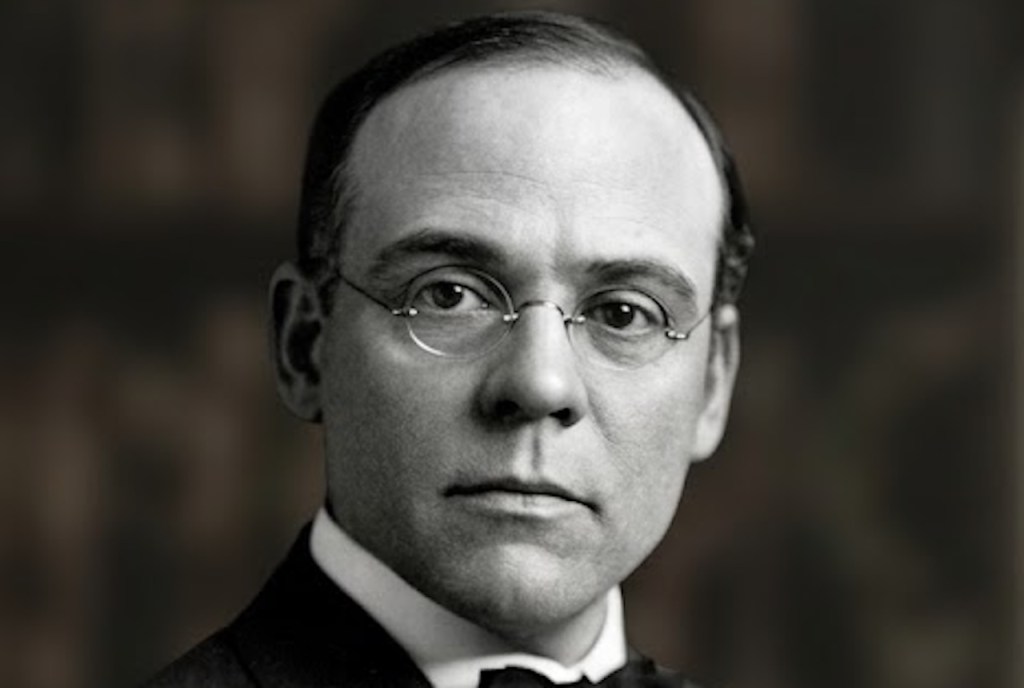

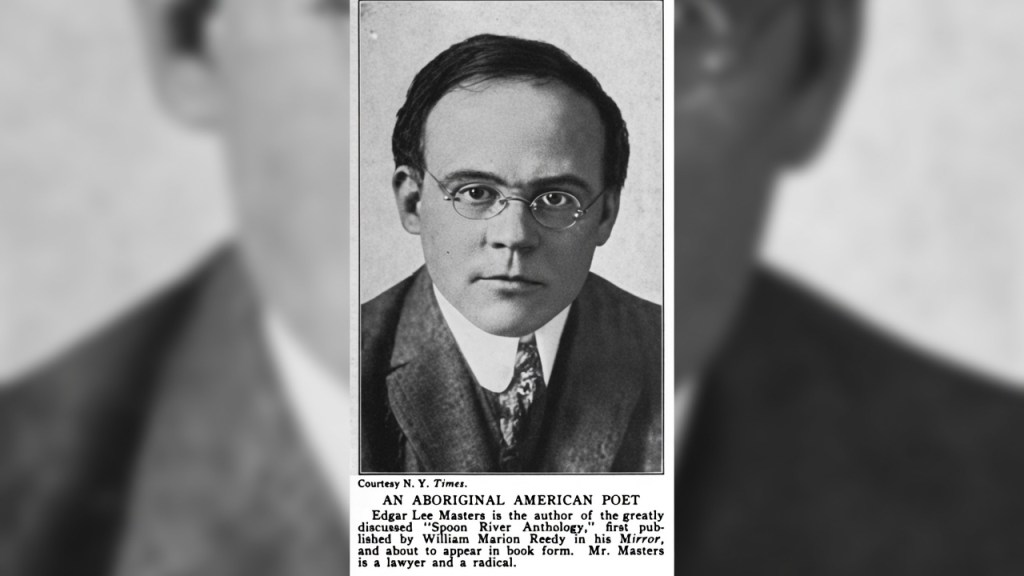
  • Edgar Lee Masters’  “Trainor, the Druggist”

    Image:  Edgar Lee Masters -  Alchetron https://alchetron.com/Edgar-Lee-Masters
    Image:  Edgar Lee Masters –  Alchetron

    Edgar Lee Master’  “Trainor, the Druggist”

    Trainor, the Druggist, offers an additional perspective on the Pantier marriage.

    Introduction and Text of “Trainor, the Druggist”

    Edgar Lee Masters’ “Trainor, the Druggist” from Spoon River Anthology offers a final installment covering the pitiful story of the Pantiers:  Mr. and Mrs. Benjamin Pantier and their son, Reuben. 

    Trainor, the chemist/druggist, dramatizes his take on the Pantiers’ marriage as he philosophizes about how chemicals and personalities may combine to produce results unlike either of the components.

    Trainor, the Druggist

    Only the chemist can tell, and not always the chemist,
    What will result from compounding
    Fluids or solids.
    And who can tell
    How men and women will interact
    On each other, or what children will result?
    There were Benjamin Pantier and his wife,
    Good in themselves, but evil toward each other:
    He oxygen, she hydrogen,
    Their son, a devastating fire.
    I Trainor, the druggist, a mixer of chemicals,
    Killed while making an experiment,
    Lived unwedded.

    Interpretive Reading of “Trainor the Druggist” 

    Commentary on “Trainor, the Druggist”

    Edgar Lee Masters just could not let go of the Pantiers; in “Trainor, the Druggist,” yet another and final installment focusing on the couple is offered.

    First Movement:  Begins by Contradicting Himself

    Only the chemist can tell, and not always the chemist,
    What will result from compounding
    Fluids or solids.

    Trainor begins by remarking and somewhat contradicting himself about what a chemist can know.  He first states that “only” a chemist can know the results of combining certain substances, but he quickly adds that not even a chemist can “always” know the result of “compounding / Fluids and solids.”

    By using the substances “fluids and solids,” Trainor avoids sounding overly esoteric and confusing in his statement, although later he settles on the use of “oxygen” and “hydrogen” to express the natures of the Pantiers.

    Second Movement:  Who?  Indeed!

    And who can tell
    How men and women will interact
    On each other, or what children will result?

    Trainor then asks a rhetorical question, wondering who can ever predict how a certain man and a certain woman might react to their relationship.  He also wonders, “what children will result?”

    Of course, no one can know how any given couple will eventually grow in a relationship, and the possibilities are endless, as are the possibilities of the kinds of children that might spring from any given relationship.  The chemist can know how certain chemicals will react with each, but even the chemist will have to admit that many combinations have yet to be tried.

    Third Movement:  The Pantiers

    There were Benjamin Pantier and his wife,
    Good in themselves, but evil toward each other:
    He oxygen, she hydrogen,
    Their son, a devastating fire.

    In the third movement, Trainor focuses on the Pantiers, concluding that each was “good in themselves.”  But when they were bound in a relationship, they were “evil toward each other.”

    Trainor then likens Benjamin to “oxygen,” while Mrs. Benjamin was like “hydrogen.”  But the combination was, unfortunately, not in a useful proportion that would result, for example, in water; it was some combination that produces “fire.”  Trainor says, “Their son, a devastating fire.”

    Fourth Movement:  Trainor, Somewhat Ditzy

    I Trainor, the druggist, a mixer of chemicals,
    Killed while making an experiment,
    Lived unwedded.

    In the final movement, the reader learns that Trainor was killed while “making an experiment.”  As a “mixer of chemicals,” Trainor turns out to be incompetent, but he reports that he “lived unwedded,” which, to Trainor’s way of thinking, gives him at least a measure of pride of achievement.

    Of course, the reader will remember that Reuben Pantier turned his life around and was able to extinguish the “devastating fire” in himself—an eventuality that also underscores the incompetence of the druggist.

    The Pantier Sequence

    The five epigraphs that comprise the “Pantier Sequence”: 

    1.  Benjamin Pantier  A husband who appears to be weakling allowing himself to be cowed by his wife, an arrogant bully.
    2. Mrs. Benjamin Pantier  Unbridled arrogance, overweening vanity along with cowardly weakness have combined to bring about the destruction of the marriage of Mr. and Mrs. Benjamin Pantier.
    3. Reuben Pantier  Reuben Pantier’s colorful character helps dramatize the power of spiritual love for healing the mind, heart, and soul, even through the distance of miles and decades.  Reuben is the son of the dysfunctional couple Mr. and Mrs. Benjamin Pantier.
    4. Emily Sparks  The epitaph is the fourth entry in the sequence of five epitaphs featuring a dysfunctional couple, their son, and the latter’s influential mentor.
    5.  Trainor, the Druggist  This epitaph offers a final installment covering the pitiful story of the Pantiers:  Mr. and Mrs. Benjamin Pantier and their son Reuben.
  • The Crown of Spirit

    Image created by Grok inspired by the poem
    Image created by Grok inspired by the poem

    The Crown of Spirit

    He wove her name by fate,
    Thunder stirred her blood:
    She would ride to him yet
    But her hand was stilled.

    Her gaze drove back mist
    From hours of waiting,
    Drawn by his unspoken promise—
    A whisper of a dream, a storm.

    Winter would teach the rite
    That cobbles the boot of memory.
    A soul in silence will grow wings,
    And the heart will forge arrows.

    You have shattered my night into silver
    With the crown of spirit that You
    Planted on my brow along with murmurs
    From every ancient vow.

    You have thundered on chariots of foam,
    Rising from the froth of the ocean,
    Sweeping past the ruins of time
    Twined in the gardens of the abyss.

    You have awakened my legend,
    My sleeping name, through the roaring
    Of Your every hidden trumpet
    Sounding from caves of endless birth.

    O Ancient King, deliver me to the crown
    Of Your Spirit where breath and blaze
    Quicken the bones sleeping in the vault
    Of a planet cradled in riddle and roar.

  • Divine Goal

    Image created by Grok inspired by the poem
    Image created by Grok inspired by the poem

    Divine Goal

    Belovèd opens wide the window’s frame,
    A sacred act that melts all pain away.
    On morning’s wing, she stands in light’s array,
    Defying storms that threaten without shame.
    Into the mystic mists her gaze now came,
    Divine awareness in the breeze’s sway.
    Though danger lurks within her mind’s display,
    Her soul, wrapped in a holy glow, takes aim.

    Her inner self learns how truly to see,
    Each tranquil scene a balm to make her whole.
    While thoughts dart swift and dust falls endlessly,
    Her spirit soars beyond the mundane toll.
    In stillness, love and joy flow ceaselessly,
    As divine Bliss remains her only goal.

  • Emily Dickinson’s “Safe in their Alabaster Chambers”

    Image: Emily Dickinson - Amherst College - Daguerrotype of the poet at age 17, circa 1847 - likely the only authentic, extant likeness of the poet
    Image: Emily Dickinson – Amherst College – Daguerrotype of the poet at age 17, circa 1847 – likely the only authentic, extant likeness of the poet https://www.amherst.edu/library/archives/holdings/edickinson

    Emily Dickinson’s “Safe in their Alabaster Chambers” (1859)

    Emily Dickinson’s “Safe in their Alabaster Chambers” contemplates death, resurrection, and the soul’s mysterious condition beyond earthly awareness. The speaker contrasts the stillness of the grave with the restless activity of the living world. Dickinson’s 1861 revision of the second stanza renders the contrast more cosmic in nature.

    Introduction and Text of “Safe in their Alabaster Chambers” (1859)

    Emily Dickinson’s “Safe in their Alabaster Chambers” is one of the speaker’s most profound meditations on death and immortality. The poem unfolds in two compact stanzas that juxtapose the silence of the tomb against the movement and noise of earthly existence. 

    In earlier essays, I have discussed Dickinson’s fascination with immortality and the soul’s destiny, concerns that appear repeatedly throughout her finest poems. Here the speaker creates a little drama in which the dead seem sheltered from time itself, while nature continues its cheerful but oblivious routines above them. The poem’s paradox emerges from the tension between physical death and spiritual continuance.

    Safe in their Alabaster Chambers (1859)

    Safe in their Alabaster Chambers
    Untouched by Morning
    And untouched by Noon—
    Sleep the meek members of the Resurrection—
    Rafter of satin,
    And Roof of stone.

    Light laughs the breeze
    In her Castle above them—
    Babbles the Bee in a stolid Ear,
    Pipe the Sweet Birds in ignorant cadence—
    Ah, what sagacity perished here!

    Commentary on “Safe in their Alabaster Chambers” (1859)

    The speaker presents death neither as annihilation nor as tragedy. Instead, she portrays a condition of profound stillness that transcends earthly commotion.

    First Stanza: “Safe in their Alabaster Chambers”

    Safe in their Alabaster Chambers
    Untouched by Morning
    And untouched by Noon—
    Sleep the meek members of the Resurrection—
    Rafter of satin,
    And Roof of stone.

    The opening line immediately places the dead within “Alabaster Chambers,” a metaphor for tombs or graves. The adjective “safe” establishes a surprisingly comforting atmosphere rather than one of dread. The speaker is offer the notion that these resting places serve as shelters.

    The occupants remain “Untouched by Morning” and “untouched by Noon.” Time no longer affects them because earthly cycles have lost their authority. Morning and noon symbolize the passage of worldly existence from beginning toward maturity.

    The speaker refers to the deceased as “the meek members of the Resurrection.” By employing the term “Resurrection,” she hints that death represents a temporary condition rather than a final ending. The dead await a future awakening beyond mortal perception.

    Paramahansa Yogananda explains that the soul remains immortal and merely passes through a change called death. He teaches that “the soul feels a joyous sense of relief and freedom” after leaving the body. The speaker’s image of peaceful sleepers harmonizes with that spiritual concept.

    The word “sleep” further softens the reality of death. Rather than depicting decay or destruction, the speaker offers an image of repose. The dead appear withdrawn from activity but not extinguished.

    The final two lines provide an elegant architectural image. A “Rafter of satin” suggests softness and refinement, while a “Roof of stone” reminds readers of the grave’s physical permanence. The combination unites comfort with solemnity.  The stanza presents a remarkable balance between Christian symbolism and Eastern mysticism. 

    In earlier essays, I have discussed Dickinson’s tendency to approach spiritual questions through intuition rather than doctrine. The speaker similarly leaves the mystery unresolved while emphasizing serenity.

    The first stanza ultimately suggests that the dead have entered a realm beyond ordinary measurements of time. Their condition remains inaccessible to earthly observers. Yet the speaker implies that their apparent silence conceals a deeper destiny.

    Second Stanza: “Light laughs the breeze”

    Light laughs the breeze
    In her Castle above them—
    Babbles the Bee in a stolid Ear,
    Pipe the Sweet Birds in ignorant cadence—
    Ah, what sagacity perished here!

    The second stanza shifts attention from the dead to the living world above them. Nature remains energetic, animated, and noisy. The speaker personifies the breeze as laughing in her “Castle.”  The image of the castle elevates the atmosphere of the upper world. Air, light, and movement continue their endless activity. Meanwhile, the dead remain separated from those earthly amusements.

    The bee “Babbles” into a “stolid Ear.” The adjective “stolid” rightly emphasizes the inability of the dead to respond. No sound, however lively, can penetrate their utterly profound stillness.    Likewise, the birds continue their songs in “ignorant cadence.” The birds are unaware of the significance of those who lie beneath them. Of course, Nature performs her routines without comprehending human mortality.

    The speaker’s insight becomes especially striking in the final line. “Ah, what sagacity perished here!” expresses admiration for the wisdom once possessed by the deceased. The exclamation acknowledges the loss of great minds and souls.   

    Yet the line also contains irony. If resurrection awaits, then that sagacity has not truly perished. Only its earthly expression has disappeared from human sight.  This speaker is completely aware that the soul is eternal.

    Paramahansa Yogananda explains that death does not destroy consciousness but merely removes the soul from its bodily garment. He teaches that the soul remains “an immortal soul, a child of God.” The speaker’s lament therefore resonates more as a human perception than an ultimate truth.

    The poem concludes without resolving the mystery. The cheerful sounds of nature continue above, while the dead remain hidden below. Through that contrast, the speaker invites readers to muse upon whether apparent endings conceal an unseen continuation of life.

    Note on the 1861 Revision

    In Thomas H. Johnson’s The Complete Poems of Emily Dickinson, the editor offers this poem as #216, but there are two versions of this poem, one from 1859 and one from 1861.  The first stanza is virtually unchanged, except for spacing, but the second stanza takes on a whole new aura.

    Safe in their Alabaster Chambers (1861)

    Safe in their Alabaster Chambers—
    Untouched by Morning
    And untouched by Noon—
    Lie the meek members of the Resurrection—
    Rafter of Satin—and Roof of Stone!

    Grand go the Years—in the Crescent—above them—
    Worlds scoop their Arcs—
    And Firmaments—row—
    Diadems—drop—and Doges—surrender—
    Soundless as dots—on a Disc of Snow—

    Dickinson’s 1861 revision shifts the poem’s emphasis from the quiet repose of the dead to the vast movements of cosmic time. In the 1859 version, the second stanza focuses on earthly nature—breezes, bees, and birds continuing their activities in ignorance of the dead below. The contrast remains local and intimate.

    The 1861 version expands the speaker’s vision dramatically. Instead of observing nature’s small routines, she contemplates immense cycles of history and the universe: “Years,” “Worlds,” and “Firmaments” move across the heavens while rulers and crowns vanish.  The dead remain unchanged in their “Alabaster Chambers,” but now entire civilizations and celestial systems pass before them.

    The final image, “Soundless as dots—on a Disc of Snow,” reduces worldly power and achievement to near insignificance. Kings, doges, and diadems disappear as silently as falling snowflakes. 

    The revision thus deepens the poem’s contemplative musing on eternity, suggesting not merely that the dead are removed from earthly life, but that they rest beyond the reach of time itself. The perspective becomes more metaphysical, more cosmic, and ultimately more awe-inspiring than that of the earlier version.

  • Emily Dickinson’s “To lose one’s faith – surpass” 

    Image: Emily Dickinson - Amherst College - Daguerrotype of the poet at age 17, circa 1847 - likely the only authentic, extant likeness of the poet
    Image: Emily Dickinson – Amherst College – Daguerrotype of the poet at age 17, circa 1847 – likely the only authentic, extant likeness of the poet

    Emily Dickinson’s “To lose one’s faith – surpass” 

    Emily Dickinson’s “To lose one’s faith – surpass” reveals the speaker’s vision of faith as a singular inward inheritance whose loss exceeds material loss.

    Introduction and Text of “To lose one’s faith – surpass”

    Emily Dickinson’s “To lose one’s faith – surpass” is an American-Innovative lyric featuring the Dickinsonian plethora of dashes, while remaining unrimed. The speaker contrasts spiritual loss with material loss.

    The tone remains steady and reflective, allowing meaning to unfold through simple comparative statements rather than extended argument or narrative expansion.  The speaker frames faith as something more interior than property or inheritance. The poem moves between material imagery and inward consequence.

    To lose one’s faith – surpass –

    To lose one’s faith – surpass –
    The loss of an Estate –
    Because Estates can be
    Replenished – faith cannot –

    Inherited with Life –
    Belief – but once – can be –
    Annihilate a single clause –
    And Being’s – Beggary –

    Commentary on “To lose one’s faith – surpass”

    The speaker presents faith as an inner possession whose loss creates a deeper condition than material ruin. The poem moves toward inward deprivation rather than external loss.

    First Stanza: Cannot Get Back

    To lose one’s faith – surpass –
    The loss of an Estate –
    Because Estates can be
    Replenished – faith cannot –

    The speaker begins with a quiet but firm comparison between faith and material inheritance. An estate represents something large, structured, and recoverable in worldly terms.

    The speaker completes the contrast by establishing permanence in loss. An estate may return through circumstance or restoration, but faith does not follow that pattern of recovery.

    The tone remains calm, almost observational, as if the speaker is stating a condition of reality rather than offering persuasion or argument. The word “surpass” suggests that spiritual loss rises above material loss in seriousness. The speaker sets a hierarchy of inward and outward value.

    The estate functions as a symbol of continuity in earthly life, where loss can be repaired through time, labor, or inheritance. Faith, however, is treated as singular and non-repeatable. Once absent, it does not return in the same inward form.

    The speaker’s phrasing suggests a quiet finality, where spiritual absence becomes a lasting condition rather than a temporary state.  The simplicity of diction reinforces the seriousness of the claim, allowing the idea to feel inevitable rather than debated.

    In earlier commentaries on Dickinsonian poems, I have discussed Dickinson’s creating  metaphysical weight through plain comparison rather than rhetorical expansion.  The speaker’s structure mirrors this method, placing two forms of loss side by side until their difference becomes unavoidable.

    Paramahansa Yogananda explains that inward perception of spiritual reality requires sustained alignment, and when that alignment is broken, outer substitutes cannot fully replace it, as taught.

    The speaker’s comparison therefore moves beyond economics into inward life itself, where restoration is not guaranteed.  The stanza closes with a sense of irreversible distinction between what can be regained and what cannot.

    Second Stanza: You, too, maybe!

    Inherited with Life –
    Belief – but once – can be –
    Annihilate a single clause –
    And Being’s – Beggary –

    The speaker shifts toward origin, suggesting that belief is not merely learned but carried within life itself as an initial endowment.  The phrase “but once” introduces a sense of singularity, as if belief arrives in a form that does not naturally duplicate.

    The speaker turns language itself into a structure of being. A disruption in understanding is presented as capable of total inward collapse.  The “single clause” suggests that even a small fracture in comprehension can affect the whole structure of belief.

    The tone remains restrained, yet the implication is severe, as though identity depends upon coherence of inward language.  The speaker concludes with a stark image of existential deprivation. “Beggary” becomes a condition of being rather than a social state.

    The loss described is not partial but total in inward effect, where existence continues but without spiritual fullness.  The simplicity of the final phrase intensifies its meaning, leaving the impression of stripped interior life.

    In other essays, I have noted that Dickinson often compresses entire states of existence into single concluding words that carry structural weight.  Paramahansa Yogananda explains that when inner awareness of divine connection is obscured, life continues outwardly but loses its sustaining inner richness.

    The speaker’s logic suggests that faith is not supplementary but foundational to inward coherence. The poem ends by presenting existence without faith as a condition of essential lack, where being remains but fullness and purpose are withdrawn.

  • Waltzing with Shadows

    Image created by Grok inspired by the poem
    Image created by Grok inspired by the poem

    Waltzing with Shadows

    Crimson leaves crunch beneath
    Bare toes as she threads
    Through autumn’s embrace
    Spinning in glimmering sunbeams.

    Visions of dark starlight spread
    Gleaming over the fresh paint
    Of sacred dawn. Azure fires
    Streak patches of emerald moss.

    Mist over the waters rises
    Bringing noon’s bright visage–
    A trail of dusty signals
    Damp life, panting and parting.

    Each pluck of melody’s string
    Spews seeds for future poppies
    To settle in quiet twilight, waltzing
    With shadows, ancient and alone.

  • Emily Dickinson’s “Going to Heaven!”

    Image: Emily Dickinson - Amherst College - Daguerrotype of the poet at age 17, circa 1847 - likely the only authentic, extant likeness of the poet
    Image: Emily Dickinson – Amherst College – Daguerrotype of the poet at age 17, circa 1847 – likely the only authentic, extant likeness of the poet

    Emily Dickinson’s “Going to Heaven!”

    The speaker of “Going to Heaven!” muses on the certainty of heaven with equal measures of astonishment and earthly attachment, moving through three stanzas of tender, searching honesty.

    Introduction and Text of “Going to Heaven!”

    The speaker in Emily Dickinson’s “Going to Heaven!” addresses an unnamed listener, confessing her astonishment at heaven’s inevitability while simultaneously expressing a glad reluctance to leave the Earth behind.

    On the literal level, the poem is a musing on what the speaker does and does not know about dying and what follows. She knows heaven is coming; she does not know when or how, and that gap between certainty and comprehension is the poem’s central drama. 

    On my literary website, Linda’s Literary Home, I have argued that the concept of immortality was one of Dickinson’s deepest preoccupations throughout her creative life, a question she returned to with unfailing curiosity and spiritual seriousness.

    The poem moves stanza by stanza from bewilderment, to communal longing, to a final and deeply personal grief held alongside gladness. The speaker never resolves the tension between loving the Earth and accepting heaven; she simply holds both, honestly and without apology. That honesty is what gives the poem its enduring emotional power.

    Going to Heaven!

    I don’t know when –
    Pray do not ask me how!
    Indeed I’m too astonished
    To think of answering you!
    Going to Heaven!
    How dim it sounds!
    And yet it will be done
    As sure as flocks go home at night
    Unto the Shepherd’s arm!

    Perhaps you’re going too!
    Who knows?
    If you should get there first
    Save just a little space for me
    Close to the two I lost –
    The smallest “Robe” will fit me
    And just a bit of “Crown” –
    For you know we do not mind our dress
    When we are going home –

    I’m glad I don’t believe it
    For it would stop my breath –
    And I’d like to look a little more
    At such a curious Earth!
    I’m glad they did believe it
    Whom I have never found
    Since the mighty Autumn afternoon
    I left them in the ground.

    Commentary on “Going to Heaven!”

    The speaker’s musing enacts a spiritual journey moving from bewilderment through communal longing to grief and gladness held together in the same breath. Each stanza adds a new layer to the speaker’s understanding of what heaven means and what it will cost her.

    First Stanza: What I Do Not Know

    I don’t know when –
    Pray do not ask me how!
    Indeed I’m too astonished
    To think of answering you!
    Going to Heaven!
    How dim it sounds!
    And yet it will be done
    As sure as flocks go home at night
    Unto the Shepherd’s arm!

    The speaker opens by announcing plainly that she cannot answer her listener’s questions about when or how she will go to heaven, not because she doubts it, but because the fact of it leaves her too astonished to speak. 

    The exclamation “Going to Heaven!” is less a cry of joy than a gasp of disbelief that such a thing should be true. The speaker is not refusing to answer; she is genuinely overwhelmed.

    She then makes a striking admission: heaven “sounds” dim to her, meaning the word itself feels thin and inadequate against the magnitude of what it names. This insight spring from a characteristically Dickinsonian observation—the language of religion, worn smooth by repetition, fails to convey the actual force of the reality it describes. The speaker senses the reality is immense; she simply cannot yet grasp it.

    Yet the stanza closes in warmth and confidence, comparing the soul’s going to heaven to flocks returning to the shepherd’s arm at nightfall. Paramahansa Yogananda teaches, in his “On Understanding Death and Loss,” that death is not a catastrophe but a natural passage of the soul into greater freedom and divine awareness. 

    The speaker’s shepherd simile expresses exactly that understanding: going home is the soul’s most natural motion, as inevitable and as gentle as a lamb finding its shepherd at dusk.

    Second Stanza: You, too, maybe!

    Perhaps you’re going too!
    Who knows?
    If you should get there first
    Save just a little space for me
    Close to the two I lost –
    The smallest “Robe” will fit me
    And just a bit of “Crown” –
    For you know we do not mind our dress
    When we are going home –

    The speaker now turns to her listener with sudden warmth, wondering aloud whether that person, too, may be going to heaven. “Who knows?” she asks—a phrase of genuine spiritual humility, acknowledging that she cannot determine the soul’s schedule, her own or anyone else’s. The tone shifts from private astonishment to something communal and tender.

    She then makes her most touching request: that a small space be saved for her near “the two I lost.” The term “two” points to specific, beloved persons already departed, whose identity the speaker keeps private but whose absence she carries openly. 

    The capitalized “Robe” and “Crown” gently deflate the grandeur traditionally associated with heavenly reward; the speaker asks for the smallest of each, expressing a humility that is as genuine as it is quietly playful.

    The stanza closes by returning to the phrase “going home,” linking it directly to the shepherd simile of the first stanza and reinforcing the poem’s central conviction that death is not exile but return. 

    Paramahansa Yogananda’s  teachings explain that the soul is a perfect reflection of God’s consciousness and that its passage beyond the physical plane is a homecoming to its Eternal Source. 

    The speaker’s easy dismissal of heavenly dress—“we do not mind our dress / When we are going home”—reflects that same priority: the reunion matters infinitely more than the clothing.

    Third Stanza: Glad for not Believing

    I’m glad I don’t believe it
    For it would stop my breath –
    And I’d like to look a little more
    At such a curious Earth!
    I’m glad they did believe it
    Whom I have never found
    Since the mighty Autumn afternoon
    I left them in the ground.

    The speaker now delivers the poem’s most surprising statement: she is glad she does not yet fully believe in her going to heaven, because that belief, fully realized, would stop her breath and take her from “such a curious Earth.” 

    She is not denying heaven; she is confessing that she still loves the Earth too much to be entirely ready to leave it. On my literary website Linda’s Literary Home, I have discussed Dickinson’s deep attentiveness to the natural world alongside her spiritual curiosity as a parallel devotion, neither canceling out the other.

    The speaker then turns her gladness in a new direction: she is glad that “they did believe it”—those she has not seen since a mighty autumn afternoon when she left them in the ground. 

    That single phrase, “left them in the ground,” is the poem’s most direct and devastating moment, stripping away all metaphor to name the plain fact of burial. Their belief in heaven was their comfort in dying, and she honors it with a gladness that is inseparable from grief.

    Paramahansa Yogananda teaches that souls who have departed dwell in expanded freedom and love, and that the bonds of deep spiritual friendship are not broken by death but simply suspended until reunion. 

    The speaker closes the poem holding two kinds of gladness at once —gladness to remain a little longer on the curious Earth, and gladness that those she loved and buried believed in the heaven toward which she, too, is inexorably going.

  • Edgar Lee Masters’ “Cassius Huffier”

    Image:   Edgar Lee Masters, Esq.   https://librarycollections.law.umn.edu/darrow/trials_details.php?id=4   Clarence Darrow Law Library
    Image: Edgar Lee Masters, Esq. – Clarence Darrow Law Library

    Edgar Lee Masters’ “Cassius Huffier”

    From Spoon River Anthology, Edgar Lee Masters’ American classic, the epitaph “Cassius Huffier” is written in the American-Innovative sonnet tradition:  reversing the Petrarchan octave and sestet, while revealing the depravity of the speaker.

    Introduction and Text of “Cassius Hueffer”

    Edgar Lee Masters’ “Cassius Hueffer” from the Spoon River Anthology offers up the acerbic belly-aching of a man who hated life so completely that even after his death, he continues his belly-aching about the epitaph written on his tombstone.

    Cassius Hueffer

    They have chiseled on my stone the words:
    “His life was gentle, and the elements so mixed in him
    That nature might stand up and say to all the world,
    This was a man.”
    Those who knew me smile
    As they read this empty rhetoric.

    My epitaph should have been:
    “Life was not gentle to him,
    And the elements so mixed in him
    That he made warfare on life,
    In the which he was slain.”
    While I lived I could not cope with slanderous tongues,
    Now that I am dead I must submit to an epitaph
    Graven by a fool!

    Commentary on “Cassius Hueffer”

    From Spoon River Anthology, Edgar Lee Masters’ American classic, the epitaph “Cassius Huffier” is written in the American-Innovative sonnet tradition:  reversing the Petrarchan octave and sestet, while revealing the depravity of the speaker.

    The Sestet:  “They have chiseled on my stone the words”

    They have chiseled on my stone the words:
    “His life was gentle, and the elements so mixed in him
    That nature might stand up and say to all the world,
    This was a man.”
    Those who knew me smile
    As they read this empty rhetoric.

    The speaker, Cassius Hueffer, lays out the epitaph that is carved into his grave marker: “His life was gentle, and the elements so mixed in him / That nature might stand up and say to all the world, / This was a man.”

    In order to refute the truth of such a claim, Huffier reports that the statement will make the people who were well acquainted with him “smile” because those folks would know well that those kind words are merely, “empty rhetoric.

    The epitaph states that Hueffer had been a gentle, loving man in whom “the elements” stacked themselves up to render him a genuine “man.”  The epitaph leads people to believe that Cassius Hueffer was a warm man, who always had a kind greeting for those he encountered, and he behaved as a caring soul who was loved and admired by everyone he  met.

    Of course, Hueffer knows otherwise; therefore, he declares that those words are merely “empty rhetoric.”  Huffier is also aware that the people who chafed under his abusive character flaws would comprehend immediately the emptiness of that rhetoric.  

    The Octave:  “My epitaph should have been”

    My epitaph should have been:
    “Life was not gentle to him,
    And the elements so mixed in him
    That he made warfare on life,
    In the which he was slain.”
    While I lived I could not cope with slanderous tongues,
    Now that I am dead I must submit to an epitaph
    Graven by a fool!

    After striking down such a beautiful yet vacuous epitaph as it is written, Hueffer suggests his own version, the one that he knows ought to be chiseled on his  grave marker:  “Life was not gentle to him, / And the elements so mixed in him / That he made warfare on life, / In the which he was slain.” 

    Hueffer contests the idea that his life was “gentle,” but he does not actually dispute the accuracy of the claim that his own life was gentle, just the “idea” that life was gentle “to him.”  

    Hueffer contends that life did not deal gently with him.  He then employs the same form to assert, “the elements” were “mixed in him” in such a way as to urge him always to be at “warfare on life.”  Thus, he battled in life like a warrior, but finally, he “was slain.”

    The speaker does not elaborate about the manner in which he was “slain,” but he does contend that he was not able to abide “with slanderous tongues.”  He continues in his vagueness, however; thus, the reader remains without any information about either the nature of the slander, or how Hueffer left this earth.

    But his last dig at life and society and particularly the person who is responsible for the inaccurately carved epitaph is especially focused as it points an accusing finger:  “Now that I am dead I must submit to an epitaph / Graven by a fool!”

    Resentful in Life, Resentful in Death

    Although many readers of this poem may remain puzzled by the specifics of Hueffer’s life—why he carried on as such a misanthrope?  what was the nature of the slander he actually suffered?  how did he finally die?—such issues, in the long run, are not vital to the message of the poem, which is simply the grievance of a man who lived a resentful life and now undergoes a resentful  death.

  • Whispers of the Hollow Chorus

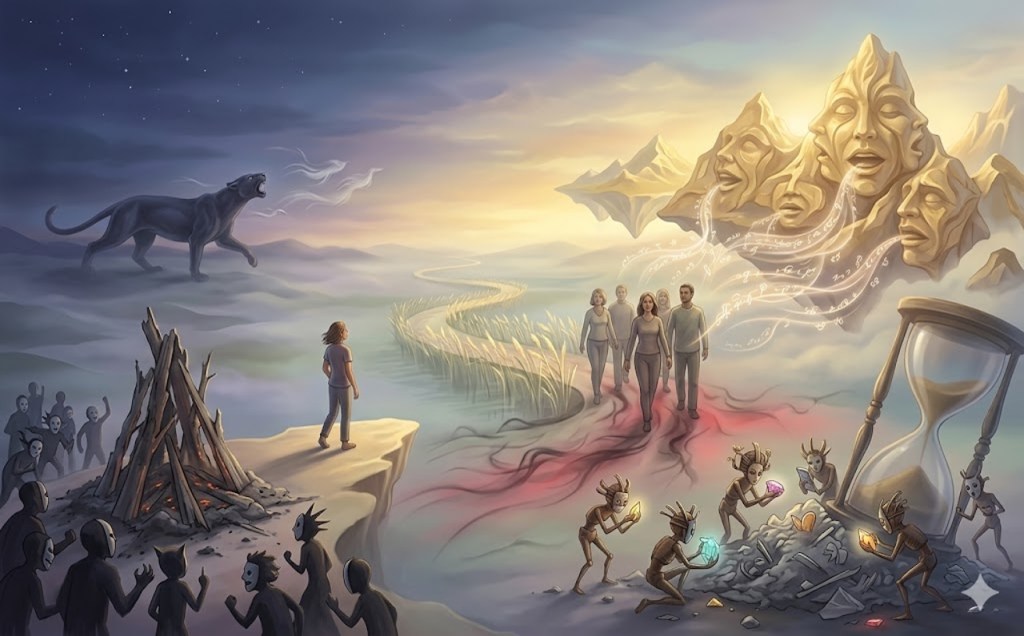
    Image created by Gemini inspired by the poem
    Image created by Gemini inspired by the poem

    Whispers of the Hollow Chorus

    A clamor rises from the gilded tongues,
    Their words a brittle hymn of flattery,
    Unsettling the calm, the steady souls.

    Far off, a panther keens through dusk,
    Its hunger blind to cunning’s weave,
    A primal chase beneath the stars’ disdain.

    Reeds hum soft under fleeting steps,
    Each blade kissed gold by dawn’s embrace,
    Yet stained by restless human sighs.

    The air grows thick with craving’s pulse,
    A thirst for strife that chars the spirit,
    Draining life from quiet, beating cores.

    Petty minds sift through ash and sham,
    Clutching falsehoods like fragile gems,
    Blind to time’s slow, leveling hand.

    When revels fade to embers cold,
    The crowd turns sharp its brittle rage,
    Against the free who greet the morn unshackled.