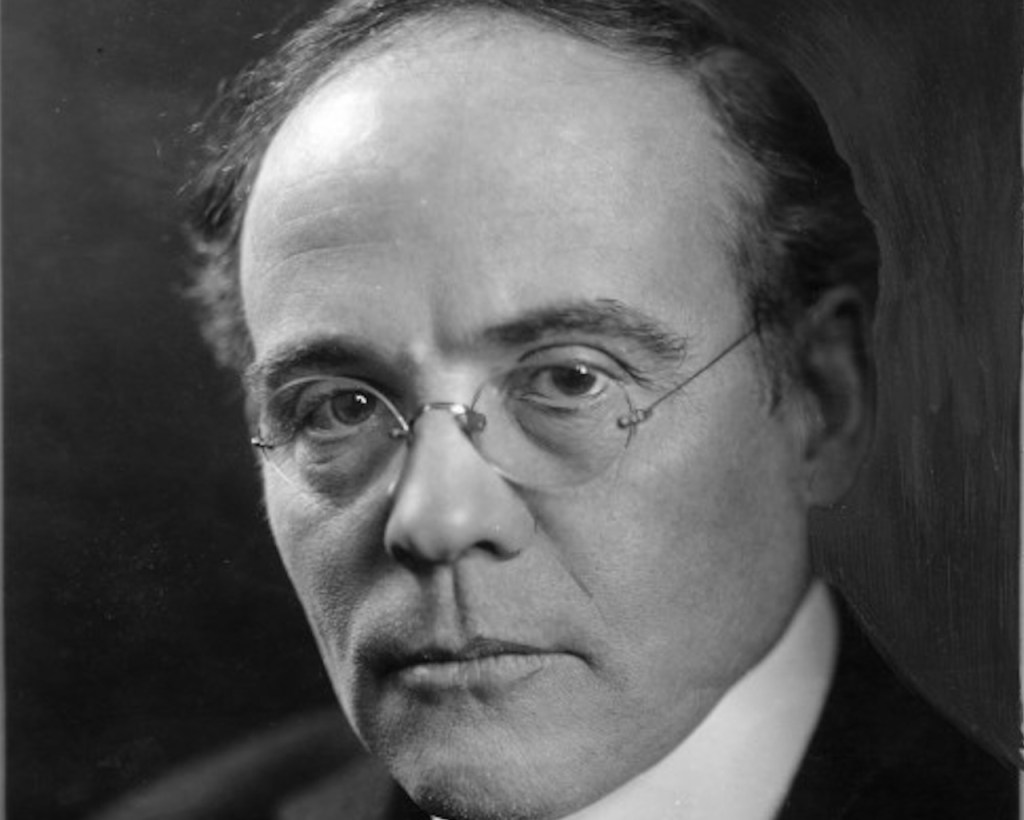
Edgar Lee Masters’ “Julia Miller”
Edgar Lee Masters’ American-Innovative sonnet “Julia Miller” from his American classic Spoon River Anthology reveals a troubled soul who leaves the world with the words of Jesus flickering before her eyes.
Introduction and Text of “Julia Miller”
Edgar Lee Masters’ “Julia Miller” from his American classic Spoon River Anthology vaguely resembles an American-Innovative sonnet, with its movements seeming to follow the Italian form as practiced by Elizabeth Barrett Browning in her Sonnets from the Portuguese.
Masters’ choice of the American-Innovative sonnet likely reveals the notion that he wants to suggest this particular character is more poetic than some others, whose diatribes remain rather prosaic.
Julia Miller
We quarreled that morning,
For he was sixty-five, and I was thirty,
And I was nervous and heavy with the child
Whose birth I dreaded.
I thought over the last letter written me
By that estranged young soul
Whose betrayal of me I had concealed
By marrying the old man.
Then I took morphine and sat down to read.
Across the blackness that came over my eyes
I see the flickering light of these words even now:
“And Jesus said unto him, Verily
I say unto thee, To-day thou shalt
Be with me in paradise.”
Commentary on “Julia Miller”
Edgar Lee Master’s American-Innovative sonnet reveals a troubled woman who leaves the world with the words of Jesus flickering before her eyes. The sonnet remains quite minimalist in its execution. The speaker reveals several pertinent facts about herself but little by way any of in depth thought about her history.
First Movement: Quarreling with an Old Man
We quarreled that morning,
For he was sixty-five, and I was thirty,
And I was nervous and heavy with the child
Whose birth I dreaded.
In Masters’ first movement, which corresponds to the first octave quatrain of the Italian sonnet, the speaker begins cryptically by asserting, “[w]e quarreled that morning.” She then reveals that it is an old man with whom she has quarreled, “[f]or he was sixty-five, and I was thirty.” But she seems not to want to reveal too much too soon.
Julia, however, continues to disclose that she is quite far along in pregnancy and that she was not happy about giving birth to this child; in fact, she says that she dreads the coming birth. At this point, the reader might assume that the young woman is an unwed woman and has quarreled with her own father.
Second Movement: Speculation
I thought over the last letter written me
By that estranged young soul
Whose betrayal of me I had concealed
By marrying the old man.
The second movement, which echoes the second quatrain in the octave of the Italian sonnet, unlocks the mystery that Julia has been slowly narrating. She reveals that she had been thinking about “the last letter written me” by a young man, whom she describes as “that estranged young soul.”
It turns out that Julia married the old man, with whom she has just quarreled, to cover up the fact that this “estranged young soul” had impregnated her and then deserted her. Had Julia admitted to the old man her true reason for becoming his wife? She allows the listener only to speculate.
Third Movement: Suicide
Then I took morphine and sat down to read.
Across the blackness that came over my eyes
I see the flickering light of these words even now:
The third movement then takes its form from the first tercet of the sextet of the Italian sonnet form. In this movement, Julia reports that she has taken morphine “and sat down to read.” She is committing suicide, and as she waits for death, she sees “the flickering light” of some words. And she asserts that even after death, she still continues to see those words.
Fourth Movement: Flickering Words
“And Jesus said unto him, Verily
I say unto thee, To-day thou shalt
Be with me in paradise.”
The final movement, which completes the Italianesque echo of the second tercet of the sextet, features the Bible verse with which Julia Miller leaves this world. From the Bible verse, the implication arises that Julia feels rather optimistic about her journey after death as she takes the words of Jesus the Christ with her:
And Jesus said unto him, Verily I say unto thee, Today shalt thou be with me in paradise. (KJV Luke 23:43)
In addition to fixing the text into three lines, Masters’ made only two other small changes to the quotation: he inserts a hyphen in the word “Today,” and then he reverses the order from the original “shalt thou” to “thou shalt.”
A Chosen Few
One might speculate that Masters wanted to infuse certain narrators with a more poetic spirit than others; thus he employs certain poetic forms to reveal those individuals. Oddly enough, it seems that “Julia Miller” is one of those chosen few. Masters’ choices, as he dramatizes his characters, could infuse and inform a marvelous character-study of not only the speakers in the epitaphs but also of Edgar Lee Masters himself.


Questions, comments, suggestions offered in good faith are always welcome. If you use a pseudonym, please include your real name, if you expect a response.