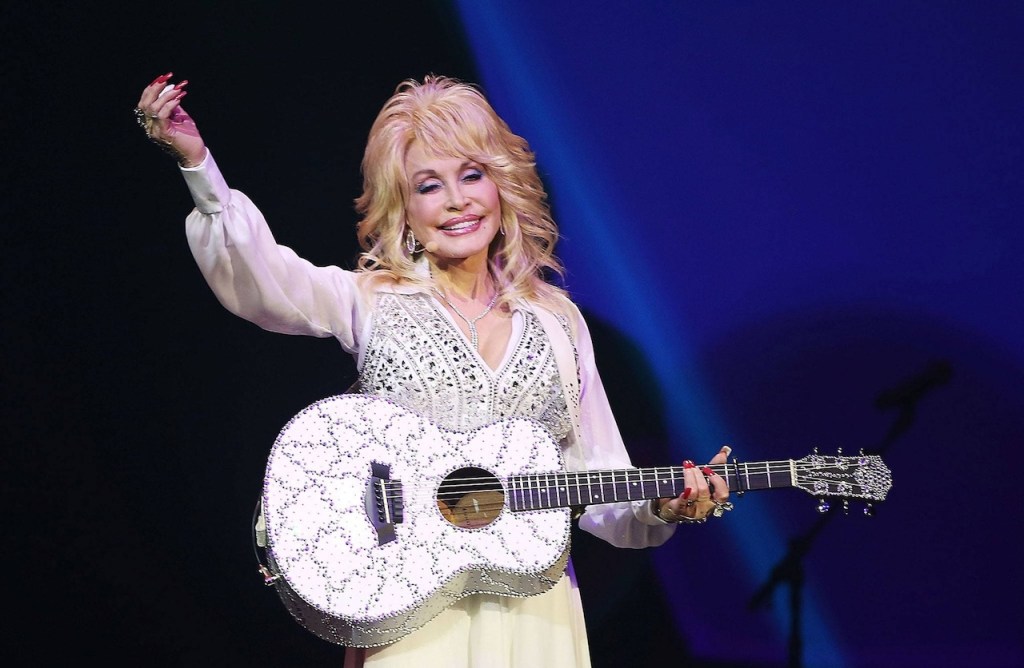
The Dolly Parton Effect
The songs and cheerful personality of the late Dolly Parton hold a special place in American music and culture. Her mellifluous voice, clever songwriting, and larger-than-life presence remain a recognizable and delightful experience for listeners across generations.
Although she drew deeply from traditional country themes of home, love, struggle, and faith, her creations virtually always sparkle with originality, humor, and heartfelt wisdom.
Introduction: From Mountain Roots to Worldwide Icon
About the artistry of Dolly Parton, critics and fellow musicians have long noted her rare combination of commercial success and authentic craft. She has been described as one of the greatest singer-songwriters in country music, a performer whose charisma, heartfelt lyrics, and business acumen captured the public’s imagination for nearly six decades [1].
Parton’s experimentation was not primarily with language form but with bridging worlds: pure country storytelling with broader pop accessibility, stage glitter with genuine humility, and personal ambition with public generosity.
Despite—or because of—her flamboyant image of big hair, rhinestones, and self-deprecating jokes about her appearance, her work attracted a wide following. Many of her songs became standards covered across genres. She sold more than 100 million records and ranked among the best-selling female artists of all time [2].
John Logan-style praise executes many parallels in assessments that place Parton among the major lyric voices of her era. Her catalog includes enduring hits that rank with the great love songs, working-class anthems, and autobiographical narratives of any time. Her creations are destined to become American classics.
Excellent commentary on what Dolly means to America:
Early Life
Dolly Rebecca Parton was born on January 19, 1946, in a one-room cabin on the banks of the Little Pigeon River in Locust Ridge (near Sevierville), Sevier County, Tennessee, to Robert Lee Parton, a sharecropper, farmer, and construction laborer, and Avie Lee Owens Parton [3]. Dolly was the fourth of twelve children in a family she later described as “dirt poor.” Her father could neither read nor write, a fact that later inspired much of her philanthropy. Her mother sang old mountain ballads and church songs, filling the home with music.
The family eventually moved to a two-room cabin without electricity or running water. Music was integral to life in Appalachia. Parton began singing in church at age six and received her first real guitar from an uncle around age eight. She wrote her first song, “Little Tiny Tasseltop,” about a corncob doll with corn-silk hair, when she was about five or six.
By age ten, Parton was performing regularly on local Knoxville radio and television (The Cas Walker Farm and Home Hour). Introduced by Johnny Cash, she made her Grand Ole Opry debut, where she earned several encores [4]. She was only 13 years old at the time.
She recorded early singles, including “Puppy Love,” and signed songwriting deals while still in her teens. After graduating from Sevier County High School in 1964—the first in her immediate family to do so—she left for Nashville the very next day, determined to pursue music full time.
Rise with Porter Wagoner and Solo Breakthrough
In Nashville, Parton signed with Monument Records. Her early single “Dumb Blonde” (1967) reached the country Top 40 and caught the attention of Porter Wagoner. She joined The Porter Wagoner Show that year as the “girl singer,” beginning a highly successful professional partnership. The duo scored numerous Top 10 country hits, and Parton gained national exposure. She also began releasing solo material on RCA.
By the early 1970s, Parton had her first solo No. 1 country hit with “Joshua” (1971). Songs such as “Coat of Many Colors” (drawing on her childhood poverty and a coat her mother made from scraps) showcased her gift for turning personal experience into universal storytelling.
In 1973–1974, seeking full independence, Parton decided to leave Wagoner’s show after seven years. She wrote “I Will Always Love You” as a farewell expression of gratitude and necessity; she has said she may have written it the same day as “Jolene.”
When Parton played the song for Wagoner, he wept, called it the prettiest song he had ever heard, and agreed she could go if he produced it. Both songs became major hits in 1974. “I Will Always Love You” later achieved global pop immortality through Whitney Houston’s version for The Bodyguard [5].
Parton left the Wagoner show in 1974 and built a solo career that expanded into pop crossover territory with albums such as Here You Come Again and the film and title song 9 to 5 (1980), for which she earned Academy Award and Golden Globe nominations.
She starred in films including The Best Little Whorehouse in Texas and Steel Magnolias, wrote extensively (more than 3,000 songs), and maintained a prolific recording and touring schedule.
Marriage and Private Life
On her first day in Nashville in 1964, Parton met Carl Thomas Dean outside a laundromat. They married on May 30, 1966, in a private ceremony in Ringgold, Georgia. Dean, who ran an asphalt-paving business, remained resolutely private throughout their nearly sixty-year marriage, rarely appearing in public with his famous wife.
The couple had no children. Parton often credited the independence and mutual respect in their relationship for the marriage’s longevity. Carl Dean died on March 3, 2025, at age 82 [6].
Business, Philanthropy, and Later Honors
In 1986, Parton partnered to transform a theme park in Pigeon Forge into Dollywood, which became a major economic engine for the region, attracting millions of visitors annually and creating thousands of jobs. She retained significant ownership and expanded related ventures.
In 1988, she founded the Dollywood Foundation, initially focused on reducing high-school dropout rates in Sevier County through incentives that dramatically improved graduation rates. In 1995, she launched Dolly Parton’s Imagination Library, inspired by her father’s illiteracy.
The Imagination Library mails free, age-appropriate books monthly to enrolled children from birth to age five. By the time of Parton’s death, it had gifted more than 300 million books across the United States and several other countries.
Unfortunately, one action that is likely to remain a lasting stain on Parton’s otherwise exemplary reputation was her $1 million donation [7] during the COVID-19 pandemic to Vanderbilt University Medical Center research that helped advance the Moderna mRNA vaccine. Furthermore unfortunately, she also publicly promoted that dangerous vaccination and even reworked her classic hit “Jolene” into a pro-vaccine novelty song.
Subsequent rigorous evidence has established that the Moderna vaccine carries a causal risk of myocarditis and pericarditis (highest in adolescent and young adult males, and even higher than the Pfizer product in several analyses), along with excess serious adverse events of special interest, identified in re-analyses of the original randomized trials.
On the positive site, however, she supported disaster relief, medical facilities in her home region, scholarships, and conservation efforts such as an eagle sanctuary at Dollywood. In 2022, her foundation received $100 million from Jeff Bezos’s Courage and Civility Award to distribute as she chose.
Parton was inducted into the Country Music Hall of Fame in 1999 and the Rock & Roll Hall of Fame [8] in 2022. She received the National Medal of Arts, Kennedy Center Honors, Grammy Lifetime Achievement Award, and numerous competitive Grammys, CMA, and ACM awards. She was named CMA Entertainer of the Year and earned the Jean Hersholt Humanitarian Award.
Death of the Artist
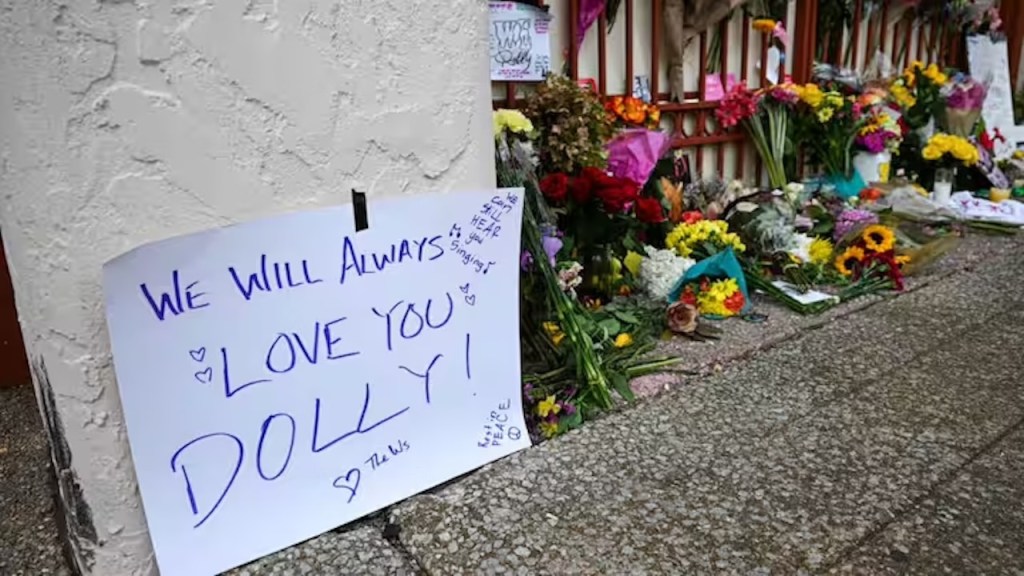
At age 80, after a brief battle with cancer, on August 25, 2026, Dolly Parton died at the Vanderbilt-Ingram Cancer Center in Nashville. Earlier in the year, she had canceled a series of performances she was scheduled to give in Las Vegas due to health issues.
Her family announced that she died peacefully, surrounded by loved ones. Glowing tributes have continued to pour in from across the field of music and from other public sectors, celebrating her as an extraordinary figure of joy, integrity, and generosity [9].
At the time of her death, Parton was widely regarded as one of the most beloved and accomplished performers in American popular culture—a songwriter of pleasing consistency, an entertainer of outstanding ability and warmth.
Parton was also a shrewd business woman, and a philanthropist, whose Imagination Library alone will continue to place books in children’s hands for years to come. In a 2019 interview [10] with Jenna Bush Hager, Parton said,
My dad was the smartest person I ever knew, but he couldn’t read and write, and that always bothered him. It troubled him. So I wanted to do something so my dad could be proud, and Daddy got to live long enough to hear the kids call me the “Book Lady,” and he was as proud of that as me being a star, and that meant so much to him. So I felt like I brought honor to my dad through that.
Thus Parton’s reputation as a “book lady” will likely endure just as so many of her songs will. Her grace, her intelligence, and her sheer star power that has continued to affect so many people around the world render her a phenomenon that will prove to elevate many of her songs to the status of American classics.
Sources
[1] Editors. “Dolly Parton Died After Brief Period With Cancer.” The New York Times. August 25, 2026.
[2] Editors. “Dolly Parton.” Country Music Hall of Fame and Museum. Accessed August 2026.
[3] Editors. “Dolly Parton.” Britannica. Updated 2026.
[4] Editors. “Dolly Parton’s Good Deeds: A Timeline.” Billboard. August 25, 2026.
[5] Editors. “Dolly Parton, queen of country music, dies at 80.” Reuters. August 25, 2026.
[6] Editors. “Carl Dean, Dolly Parton’s Husband of Nearly 60 Years, Dies at 82.” The New York Times. March 3, 2025.
[7] Joseph Fraiman, et al. “Serious adverse events of special interest following mRNA COVID-19 vaccination in randomized trials in adults.” National Library of Medicine. Aug 31, 2022.
[8] Editors. “Dolly Parton.” Rock & Roll Hall of Fame. Accessed 2026.
[9] Kristin M. Hall and Andrew Dalton. “Dolly Parton, music star, actor and beloved figure who spanned generations, dies at 80 of cancer.” AP. August 26, 2026.
[10] Julia Moore. “Jenna Bush Hager Was with Dolly Parton When She Learned Her Grandma Died. The Music Icon ‘Gave Me Such Grace,’ She Recalls.” People. August 25, 2026.
An American Classic “Coat of Many Colors”


Questions, comments, suggestions offered in good faith are always welcome. If you use a pseudonym, please include your real name, if you expect a response.