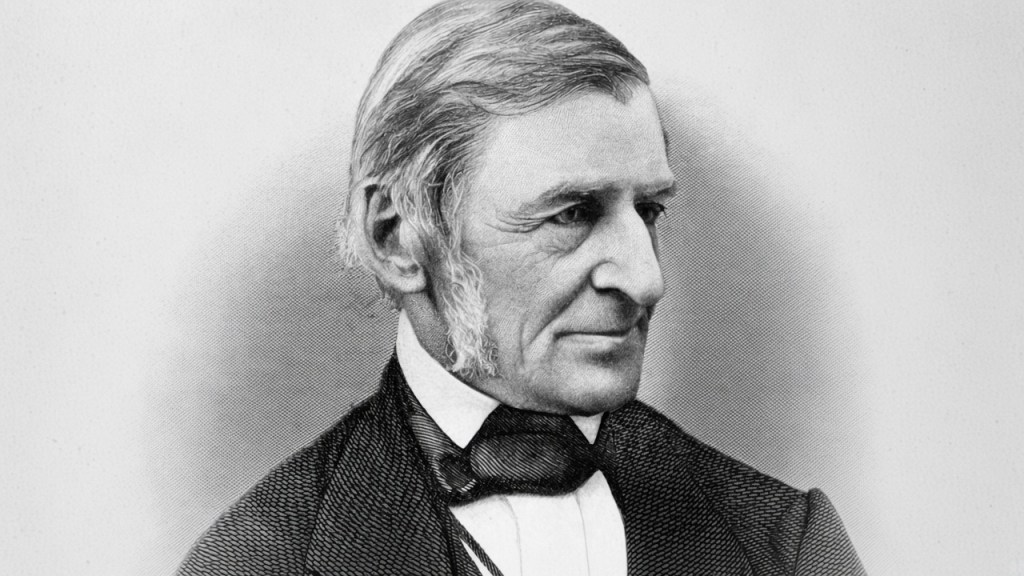
Image: Ralph Waldo Emerson https://freedomsway.org/story/ralph-waldo-emerson/ Freedom’s Way
Ralph Waldo Emerson’s “Threnody”
As a grieving father, Ralph Waldo Emerson composed his most famous poem “Threnody,” offering it as a tribute to his son Waldo, who succumbed to scarlet fever at the tender age of five.
Introduction and Text of “Threnody”
Ralph Waldo Emerson’s “Threnody” remains his most widely anthologized and studied poem. The elegy is long—289 lines, running nearly 1750 words; it displays in 10 stanzas with several interspersed rimed couples with varying rime schemes.
The poet, in this poem, has fashioned a speaker to eulogize his young son in a deeply moving and beautifully wise tribute. The Greek term “thanatos” conflated with the Greek term for song “oide” is employed, creating the English word “threnody.” Thus, the term yields the meaning,”song for the dead.”
Threnody
The south-wind brings
Life, sunshine, and desire,
And on every mount and meadow
Breathes aromatic fire,
But over the dead he has no power,
The lost, the lost he cannot restore,
And, looking over the hills, I mourn
The darling who shall not return.
I see my empty house,
I see my trees repair their boughs,
And he, the wondrous child,
Whose silver warble wild
Outvalued every pulsing sound
Within the air’s cerulean round,
The hyacinthine boy, for whom
Morn well might break, and April bloom,
The gracious boy, who did adorn
The world whereinto he was born,
And by his countenance repay
The favor of the loving Day,
Has disappeared from the Day’s eye;
Far and wide she cannot find him,
My hopes pursue, they cannot bind him.
Returned this day the south-wind searches
And finds young pines and budding birches,
But finds not the budding man;
Nature who lost him, cannot remake him;
Fate let him fall, Fate can’t retake him;
Nature, Fate, men, him seek in vain.
And whither now, my truant wise and sweet,
Oh, whither tend thy feet?
I had the right, few days ago,
Thy steps to watch, thy place to know;
How have I forfeited the right?
Hast thou forgot me in a new delight?
I hearken for thy household cheer,
O eloquent child!
Whose voice, an equal messenger,
Conveyed thy meaning mild.
What though the pains and joys
Whereof it spoke were toys
Fitting his age and ken;
Yet fairest dames and bearded men,
Who heard the sweet request
So gentle, wise, and grave,
Bended with joy to his behest,
And let the world’s affairs go by,
Awhile to share his cordial game,
Or mend his wicker wagon frame,
Still plotting how their hungry ear
That winsome voice again might hear,
For his lips could well pronounce
Words that were persuasions.
Gentlest guardians marked serene
His early hope, his liberal mien,
Took counsel from his guiding eyes
To make this wisdom earthly wise.
Ah! vainly do these eyes recall
The school-march, each day’s festival,
When every morn my bosom glowed
To watch the convoy on the road;
The babe in willow wagon closed,
With rolling eyes and face composed,
With children forward and behind,
Like Cupids studiously inclined,
And he, the Chieftain, paced beside,
The centre of the troop allied,
With sunny face of sweet repose,
To guard the babe from fancied foes,
The little Captain innocent
Took the eye with him as he went,
Each village senior paused to scan
And speak the lovely caravan.
From the window I look out
To mark thy beautiful parade
Stately marching in cap and coat
To some tune by fairies played;
A music heard by thee alone
To works as noble led thee on.
Now love and pride, alas, in vain,
Up and down their glances strain.
The painted sled stands where it stood,
The kennel by the corded wood,
The gathered sticks to stanch the wall
Of the snow-tower, when snow should fall,
The ominous hole he dug in the sand,
And childhood’s castles built or planned.
His daily haunts I well discern,
The poultry yard, the shed, the barn,
And every inch of garden ground
Paced by the blessed feet around,
From the road-side to the brook;
Whereinto he loved to look.
Step the meek birds where erst they ranged,
The wintry garden lies unchanged,
The brook into the stream runs on,
But the deep-eyed Boy is gone.
On that shaded day,
Dark with more clouds than tempests are,
When thou didst yield thy innocent breath
In bird-like heavings unto death,
Night came, and Nature had not thee,
I said, we are mates in misery.
The morrow dawned with needless glow,
Each snow-bird chirped, each fowl must crow,
Each tramper started, but the feet
Of the most beautiful and sweet
Of human youth had left the hill
And garden, they were bound and still,
There’s not a sparrow or a wren,
There’s not a blade of autumn grain,
Which the four seasons do not tend,
And tides of life and increase lend,
And every chick of every bird,
And weed and rock-moss is preferred.
O ostriches’ forgetfulness!
O loss of larger in the less!
Was there no star that could be sent,
No watcher in the firmament,
No angel from the countless host,
That loiters round the crystal coast,
Could stoop to heal that only child,
Nature’s sweet marvel undefiled,
And keep the blossom of the earth,
Which all her harvests were not worth?
Not mine, I never called thee mine,
But nature’s heir, if I repine,
And, seeing rashly torn and moved,
Not what I made, but what I loved.
Grow early old with grief that then
Must to the wastes of nature go,
‘Tis because a general hope
Was quenched, and all must doubt and grope
For flattering planets seemed to say,
This child should ills of ages stay,
By wondrous tongue and guided pen
Bring the flown muses back to men.
Perchance, not he, but nature ailed,
The world, and not the infant failed,
It was not ripe yet, to sustain
A genius of so fine a strain,
Who gazed upon the sun and moon
As if he came unto his own,
And pregnant with his grander thought,
Brought the old order into doubt.
Awhile his beauty their beauty tried,
They could not feed him, and he died,
And wandered backward as in scorn
To wait an Ζon to be born.
Ill day which made this beauty waste;
Plight broken, this high face defaced!
Some went and came about the dead,
And some in books of solace read,
Some to their friends the tidings say,
Some went to write, some went to pray,
One tarried here, there hurried one,
But their heart abode with none.
Covetous death bereaved us all
To aggrandize one funeral.
The eager Fate which carried thee
Took the largest part of me.
For this losing is true dying,
This is lordly man’s down-lying,
This is slow but sure reclining,
Star by star his world resigning.
O child of Paradise!
Boy who made dear his father’s home
In whose deep eyes
Men read the welfare of the times to come;
I am too much bereft;
The world dishonored thou hast left;
O truths and natures costly lie;
O trusted, broken prophecy!
O richest fortune sourly crossed;
Born for the future, to the future lost!
The deep Heart answered, Weepest thou?
Worthier cause for passion wild,
If I had not taken the child.
And deemest thou as those who pore
With aged eyes short way before?
Think’st Beauty vanished from the coast
Of matter, and thy darling lost?
Taught he not thee, the man of eld,
Whose eyes within his eyes beheld
Heaven’s numerous hierarchy span
The mystic gulf from God to man?
To be alone wilt thou begin,
When worlds of lovers hem thee in?
To-morrow, when the masks shall fall
That dizen nature’s carnival,
The pure shall see, by their own will,
Which overflowing love shall fill,
‘Tis not within the force of Fate
The fate-conjoined to separate.
But thou, my votary, weepest thou?
I gave thee sight, where is it now?
I taught thy heart beyond the reach
Of ritual, Bible, or of speech;
Wrote in thy mind’s transparent table
As far as the incommunicable;
Taught thee each private sign to raise
Lit by the supersolar blaze.
Past utterance and past belief,
And past the blasphemy of grief,
The mysteries of nature’s heart,
And though no muse can these impart,
Throb thine with nature’s throbbing breast,
And all is clear from east to west.
I came to thee as to a friend,
Dearest, to thee I did not send
Tutors, but a joyful eye,
Innocence that matched the sky,
Lovely locks a form of wonder,
Laughter rich as woodland thunder;
That thou might’st entertain apart
The richest flowering of all art;
And, as the great all-loving Day
Through smallest chambers takes its way,
That thou might’st break thy daily bread
With Prophet, Saviour, and head;
That thou might’st cherish for thine own
The riches of sweet Mary’s Son,
Boy-Rabbi, Israel’s Paragon:
And thoughtest thou such guest
Would in thy hall take up his rest?
Would rushing life forget its laws,
Fate’s glowing revolution pause?
High omens ask diviner guess,
Not to be conned to tediousness.
And know, my higher gifts unbind
The zone that girds the incarnate mind,
When the scanty shores are full
With Thought’s perilous whirling pool,
When frail Nature can no more,
Then the spirit strikes the hour,
My servant Death with solving rite
Pours finite into infinite.
Wilt thou freeze love’s tidal flow,
Whose streams through nature circling go?
Nail the star struggling to its track
On the half-climbed Zodiack?
Light is light which radiates,
Blood is blood which circulates,
Life is life which generates,
And many-seeming life is one,
Wilt thou transfix and make it none,
Its onward stream too starkly pent
In figure, bone, and lineament?
Wilt thou uncalled interrogate
Talker! the unreplying fate?
Nor see the Genius of the whole
Ascendant in the private soul,
Beckon it when to go and come,
Self-announced its hour of doom.
Fair the soul’s recess and shrine,
Magic-built, to last a season,
Masterpiece of love benign!
Fairer than expansive reason
Whose omen ’tis, and sign.
Wilt thou not ope this heart to know
What rainbows teach and sunsets show,
Verdict which accumulates
From lengthened scroll of human fates,
Voice of earth to earth returned,
Prayers of heart that inly burned;
Saying, what is excellent,
As God lives, is permanent
Hearts are dust, hearts’ loves remain,
Heart’s love will meet thee again.
Revere the Maker; fetch thine eye
Up to His style, and manners of the sky.
Not of adamant and gold
Built He heaven stark and cold,
No, but a nest of bending reeds,
Flowering grass and scented weeds,
Or like a traveller’s fleeting tent,
Or bow above the tempest pent,
Built of tears and sacred flames,
And virtue reaching to its aims;
Built of furtherance and pursuing,
Not of spent deeds, but of doing.
Silent rushes the swift Lord
Through ruined systems still restored,
Broad-sowing, bleak and void to bless,
Plants with worlds the wilderness,
Waters with tears of ancient sorrow
Apples of Eden ripe to-morrow;
House and tenant go to ground,
Lost in God, in Godhead found.
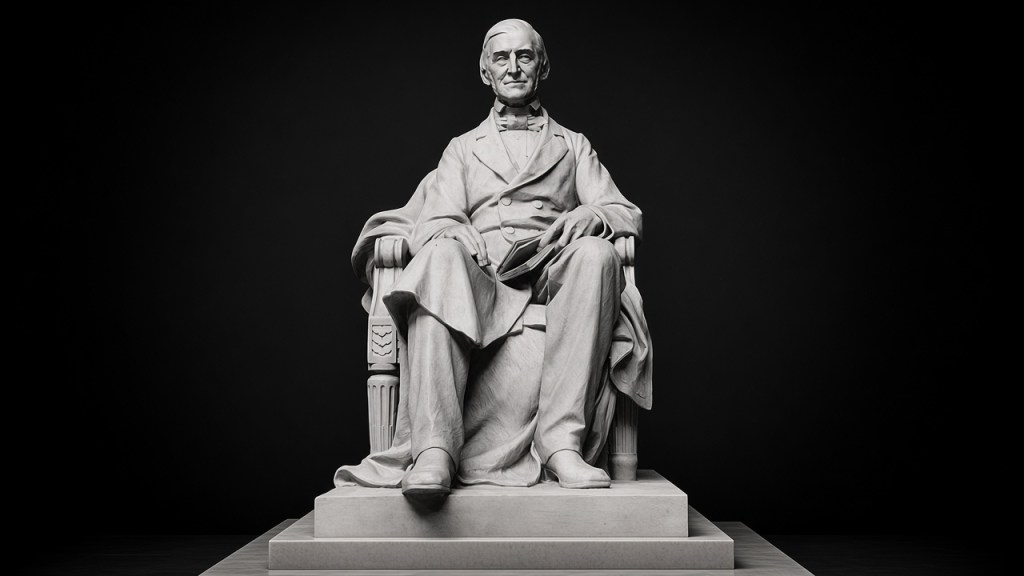
Image b: Ralph Waldo Emerson – Statue https://www.loc.gov/pictures/resource/cph.3c32129/ Library of Congress
Commentary on “Threnody”
Ralph Waldo Emerson’s “Threnody” with 289 lines is long, especially by a lyric standard; it reveals the grief of a father who has lost a son but who also possesses the extraordinary mental ability to express an intelligent and heartfelt tribute.
Emerson’s study of Eastern philosophical and religious concepts helped to prepare the poet for meeting the challenges faced by the loss of a loved lone. The understanding that the soul is immortal, although the physical body is not, offers a deep level consolation in times of loss and grief.
First Stanza: The Experience of Natural Pleasantries Only for the Living
The south-wind brings
Life, sunshine, and desire,
And on every mount and meadow
Breathes aromatic fire,
But over the dead he has no power,
The lost, the lost he cannot restore,
And, looking over the hills, I mourn
The darling who shall not return.
The speaker, who is in mourning, reveals that as the wind from the south is bringing life qualities to the living, it will yet have no effect on the dead. The speaker’s dire assertions are referring to his own young son, who has passed on and will not be able to sense the pleasant breezes of that south wind. As those breezes go on bringing life and wishes, they cannot influence the realm of a soul that has left its physical encasement (body).
Second Stanza: The Value of a Human Life
I see my empty house,
I see my trees repair their boughs,
And he, the wondrous child,
Whose silver warble wild
Outvalued every pulsing sound
Within the air’s cerulean round,
The hyacinthine boy, for whom
Morn well might break, and April bloom,
The gracious boy, who did adorn
The world whereinto he was born,
And by his countenance repay
The favor of the loving Day,
Has disappeared from the Day’s eye;
Far and wide she cannot find him,
My hopes pursue, they cannot bind him.
Returned this day the south-wind searches
And finds young pines and budding birches,
But finds not the budding man;
Nature who lost him, cannot remake him;
Fate let him fall, Fate can’t retake him;
Nature, Fate, men, him seek in vain.
Without his child filling its space, his home now seems empty. The world has turned into a place of sadness for this mourning father. The son, gone from his vision and from the sun rays, is terribly missed.
The speaker reveals the pride he took in the son, who was filled with grace and contributed much value to the world by his mere existence. His son was a wondrous being to his father, a joyous miracle that brought meaning and value to the father and to the world as well.
Third Stanza: Loved by Everyone
nd whither now, my truant wise and sweet,
Oh, whither tend thy feet?
I had the right, few days ago,
Thy steps to watch, thy place to know;
How have I forfeited the right?
Hast thou forgot me in a new delight?
I hearken for thy household cheer,
O eloquent child!
Whose voice, an equal messenger,
Conveyed thy meaning mild.
What though the pains and joys
Whereof it spoke were toys
Fitting his age and ken;
Yet fairest dames and bearded men,
Who heard the sweet request
So gentle, wise, and grave,
Bended with joy to his behest,
And let the world’s affairs go by,
Awhile to share his cordial game,
Or mend his wicker wagon frame,
Still plotting how their hungry ear
That winsome voice again might hear,
For his lips could well pronounce
Words that were persuasions.
The melancholy father is making it clear that his son garnered admiration and love from everyone who met him. The boy found favor with both “fairest dames” as well as “bearded men” whom the lad approached with any question.
Even important business people would stop to enjoy exchanging words with this exceptional, little boy; others would even stop to help mend the lad’s toys. The speaker is pleased that that others loved the boy because of his pleasant qualities.
Fourth Stanza: The Pleasure of Admiration
Gentlest guardians marked serene
His early hope, his liberal mien,
Took counsel from his guiding eyes
To make this wisdom earthly wise.
Ah! vainly do these eyes recall
The school-march, each day’s festival,
When every morn my bosom glowed
To watch the convoy on the road;
The babe in willow wagon closed,
With rolling eyes and face composed,
With children forward and behind,
Like Cupids studiously inclined,
And he, the Chieftain, paced beside,
The centre of the troop allied,
With sunny face of sweet repose,
To guard the babe from fancied foes,
The little Captain innocent
Took the eye with him as he went,
Each village senior paused to scan
And speak the lovely caravan.
The speaker recalls that he felt great joy as he observed the boy heading off to school. The children seemed to be like “little cupids” eager to learn. As a father, he felt great pride and took pleasure on seeing that his belovèd child was well liked by the other children, who admired the lad, and they would even follow his example.
Fifth Stanza: Recalling Special Scenes
From the window I look out
To mark thy beautiful parade
Stately marching in cap and coat
To some tune by fairies played;
A music heard by thee alone
To works as noble led thee on.
Now love and pride, alas, in vain,
Up and down their glances strain.
The painted sled stands where it stood,
The kennel by the corded wood,
The gathered sticks to stanch the wall
Of the snow-tower, when snow should fall,
The ominous hole he dug in the sand,
And childhood’s castles built or planned.
His daily haunts I well discern,
The poultry yard, the shed, the barn,
And every inch of garden ground
Paced by the blessed feet around,
From the road-side to the brook;
Whereinto he loved to look.
Step the meek birds where erst they ranged,
The wintry garden lies unchanged,
The brook into the stream runs on,
But the deep-eyed Boy is gone.
The speaker recalls watching his son as he played in the yard. In his coat and hat, the lad appeared to be hearing tunes played “by fairies.” He seemed to be the only one who could detect such rarified sounds.
Although the speaker can still see the same scenes as when the boy was in them, the emptiness without his boy to fill them brings pain to the speaker’s heart. The speaker recounts that the boy loved watching the flowing brook—but now “the deep-eyed Boy is gone.”
Sixth Stanza: The Suffering Crowded Heart
On that shaded day,
Dark with more clouds than tempests are,
When thou didst yield thy innocent breath
In bird-like heavings unto death,
Night came, and Nature had not thee,
I said, we are mates in misery.
The morrow dawned with needless glow,
Each snow-bird chirped, each fowl must crow,
Each tramper started, but the feet
Of the most beautiful and sweet
Of human youth had left the hill
And garden,they were bound and still,
There’s not a sparrow or a wren,
There’s not a blade of autumn grain,
Which the four seasons do not tend,
And tides of life and increase lend,
And every chick of every bird,
And weed and rock-moss is preferred.
O ostriches’ forgetfulness!
O loss of larger in the less!
Was there no star that could be sent,
No watcher in the firmament,
No angel from the countless host,
That loiters round the crystal coast,
Could stoop to heal that only child,
Nature’s sweet marvel undefiled,
And keep the blossom of the earth,
Which all her harvests were not worth?
Not mine, I never called thee mine,
But nature’s heir, if I repine,
And, seeing rashly torn and moved,
Not what I made, but what I loved.
Grow early old with grief that then
Must to the wastes of nature go,
‘Tis because a general hope
Was quenched, and all must doubt and grope
For flattering planets seemed to say,
This child should ills of ages stay,
By wondrous tongue and guided pen
Bring the flown muses back to men.
Perchance, not he, but nature ailed,
The world, and not the infant failed,
It was not ripe yet, to sustain
A genius of so fine a strain,
Who gazed upon the sun and moon
As if he came unto his own,
And pregnant with his grander thought,
Brought the old order into doubt.
Awhile his beauty their beauty tried,
They could not feed him, and he died,
And wandered backward as in scorn
To wait an Ζon to be born.
Ill day which made this beauty waste;
Plight broken, this high face defaced!
Some went and came about the dead,
And some in books of solace read,
Some to their friends the tidings say,
Some went to write, some went to pray,
One tarried here, there hurried one,
But their heart abode with none.
Covetous death bereaved us all
To aggrandize one funeral.
The eager Fate which carried thee
Took the largest part of me.
For this losing is true dying,
This is lordly man’s down-lying,
This is slow but sure reclining,
Star by star his world resigning.
The heavy-hearted speaker then reiterates that nature and the world somehow continue on even without the existence of the boy, who had gladdened the heart of his father. This phenomenon comes to mind of all bereaved human beings: the world somehow continues on, even though the belovèd deceased does not.
There seems to be a contradiction that the suffering mind is unable to comprehend, because of the pain that blinkers the thinking process. The heart crowded with suffering battles the mind, as it seeks relief from the pain and anguish of suffering.
The speaker is draining his heart’s blood of the vain wishes he had experienced that some healing force would appear to relieve the boy of the disease that finally made off with his precious life and then dashed the speaker’s world.
Seventh Stanza: Sorrowful Lamentation
O child of Paradise!
Boy who made dear his father’s home
In whose deep eyes
Men read the welfare of the times to come;
I am too much bereft;
The world dishonored thou hast left;
O truths and natures costly lie;
O trusted, broken prophecy!
O richest fortune sourly crossed;
Born for the future, to the future lost!
The speaker laments his grief but admits that he is sorrowing “too much”; yet, he thinks that the world is simply a poorer place without his son enriching it. This lad, who was given birth and thus was possessed by the future, is now gone, resulting in the very future itself being lost.
His obvious exaggeration may be expected of a mourning parent. The loss of a young child seems go against nature and against the world, and it drops a heavy burden on the suffering father, who must continue to live and continue to grapple with his loss.
Eighth Stanza: Ancient Philosophical Balm
The deep Heart answered, Weepest thou?
Worthier cause for passion wild,
If I had not taken the child.
And deemest thou as those who pore
With aged eyes short way before?
Think’st Beauty vanished from the coast
Of matter, and thy darling lost?
Taught he not thee, the man of eld,
Whose eyes within his eyes beheld
Heaven’s numerous hierarchy span
The mystic gulf from God to man?
To be alone wilt thou begin,
When worlds of lovers hem thee in?
To-morrow, when the masks shall fall
That dizen nature’s carnival,
The pure shall see, by their own will,
Which overflowing love shall fill,
‘Tis not within the force of Fate
The fate-conjoined to separate.
But thou, my votary, weepest thou?
I gave thee sight, where is it now?
I taught thy heart beyond the reach
Of ritual, Bible, or of speech;
Wrote in thy mind’s transparent table
As far as the incommunicable;
Taught thee each private sign to raise
Lit by the supersolar blaze.
Past utterance and past belief,
And past the blasphemy of grief,
The mysteries of nature’s heart,
And though no muse can these impart,
Throb thine with nature’s throbbing breast,
And all is clear from east to west.
The speaker’s intense grieving now reaches to the awareness of God. Because the speaker has studied ancient philosophical thought, he has become aware that the soul’s ever living essence never “dies.” He is aware that his son’s soul is still “living” on the spiritual plane of being.
And while that awareness may mitigate the grief by a small measure, it cannot remove the misery experienced following departure of that particular soul from that particular physical encasement (body).
The speaker knows that sometime in future his own soul will also transcend “The mystic gulf” between himself and God. Eventually, he will be able to realize completely that his belovèd son has simply experienced that transition before he did.
Ninth Stanza: God’s Love for His Created Beings
I came to thee as to a friend,
Dearest, to thee I did not send
Tutors, but a joyful eye,
Innocence that matched the sky,
Lovely locks a form of wonder,
Laughter rich as woodland thunder;
That thou might’st entertain apart
The richest flowering of all art;
And, as the great all-loving Day
Through smallest chambers takes its way,
That thou might’st break thy daily bread
With Prophet, Saviour, and head;
That thou might’st cherish for thine own
The riches of sweet Mary’s Son,
Boy-Rabbi, Israel’s Paragon:
And thoughtest thou such guest
Would in thy hall take up his rest?
Would rushing life forget its laws,
Fate’s glowing revolution pause?
High omens ask diviner guess,
Not to be conned to tediousness.
And know, my higher gifts unbind
The zone that girds the incarnate mind,
When the scanty shores are full
With Thought’s perilous whirling pool,
When frail Nature can no more,
Then the spirit strikes the hour,
My servant Death with solving rite
Pours finite into infinite.
Wilt thou freeze love’s tidal flow,
Whose streams through nature circling go?
Nail the star struggling to its track
On the half-climbed Zodiack?
Light is light which radiates,
Blood is blood which circulates,
Life is life which generates,
And many-seeming life is one,
Wilt thou transfix and make it none,
Its onward stream too starkly pent
In figure, bone, and lineament?
Essentially, the Divine Reality (God) had simply appeared to the father through the son for the purpose of teaching the father certain lessons that his karma had deemed that he must learn. This speaker is aware that the finite level of being is irrevocably tied to the Infinite through unbreakable, spiritual bonds.
The Divine Creator’s love for humankind seems to be tested in many ways, but none is greater than the loss a loved one—especially the loss of a belovèd child by a parent. By allowing the Creator to speak in his threnody, this speaker asserts a healing force that will offer a tribute to his son now existing on the astral level of being.
Tenth Stanza: The Soul’s Eternity
Wilt thou uncalled interrogate
Talker! the unreplying fate?
Nor see the Genius of the whole
Ascendant in the private soul,
Beckon it when to go and come,
Self-announced its hour of doom.
Fair the soul’s recess and shrine,
Magic-built, to last a season,
Masterpiece of love benign!
Fairer than expansive reason
Whose omen ’tis, and sign.
Wilt thou not ope this heart to know
What rainbows teach and sunsets show,
Verdict which accumulates
From lengthened scroll of human fates,
Voice of earth to earth returned,
Prayers of heart that inly burned;
Saying, what is excellent,
As God lives, is permanent
Hearts are dust, hearts’ loves remain,
Heart’s love will meet thee again.
Revere the Maker; fetch thine eye
Up to His style, and manners of the sky.
Not of adamant and gold
Built He heaven stark and cold,
No, but a nest of bending reeds,
Flowering grass and scented weeds,
Or like a traveller’s fleeting tent,
Or bow above the tempest pent,
Built of tears and sacred flames,
And virtue reaching to its aims;
Built of furtherance and pursuing,
Not of spent deeds, but of doing.
Silent rushes the swift Lord
Through ruined systems still restored,
Broad-sowing, bleak and void to bless,
Plants with worlds the wilderness,
Waters with tears of ancient sorrow
Apples of Eden ripe to-morrow;
House and tenant go to ground,
Lost in God, in Godhead found.
In the concluding stanza, the speaker reveals eternal verities: “Hearts are dust, hearts’ loves remain”; that which is “Lost in God” is then found in the “Godhead.” Being aware that the soul of a loved one continues on and is living promises the grieving bereaved that they will meet again at some divinely determined future time.
Eastern Philosophical Tenets
Ralph Waldo Emerson’s tribute to his son presents a helpful approach to certain tenets of Eastern philosophical thought. Students of that philosophy can be reassured that the concepts of karma and reincarnation operate well despite an individual’s knowledge or understanding of those concepts, or professed beliefs.
Undoubtedly, those concepts gave considerable comfort to the bereaved Emerson, whose loss of his five-year-old son could have been even more painful and overwhelming without knowledge of those concepts.
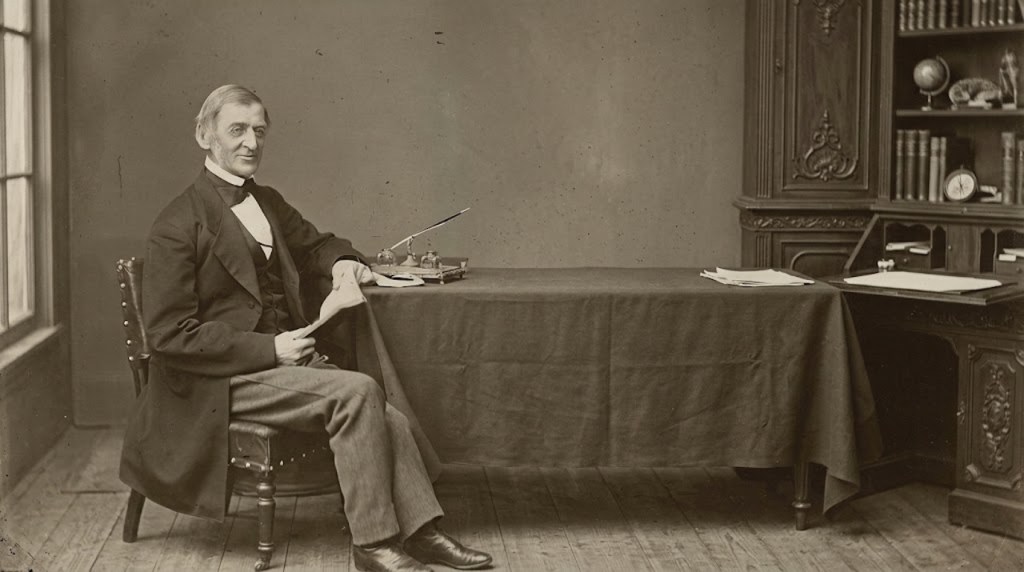
Image: Ralph Waldo Emerson https://www.npg.org.uk/collections/search/use-this-image/?mkey=mw122665 National Portrait Gallery, London


Questions, comments, suggestions offered in good faith are always welcome. If you use a pseudonym, please include your real name, if you expect a response.