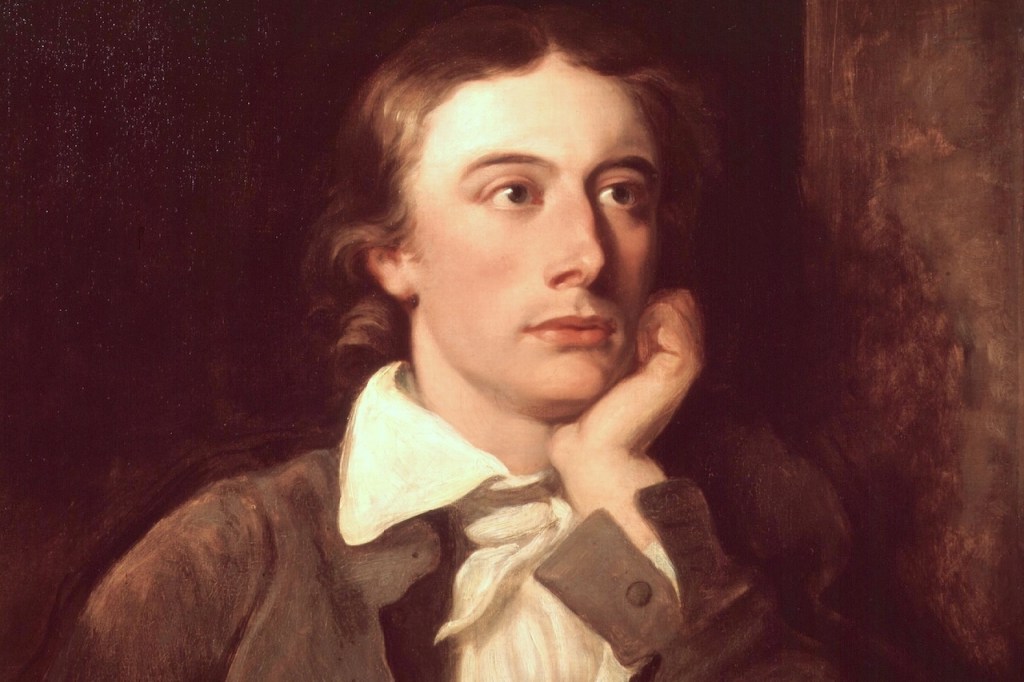
Life Sketch of John Keats
Despite dying at the tender age of 25, John Keats, one of the most noted names of the English Romantic Movement in literature, left some very well-crafted, note-worthy poems that center themselves thematically at the heart of what the Romantics were all about.
A Stellar Reputation
The name John Keats is one of the most recognized in the Western literary world, especially in the area of lyrical poetry. He remains one of the most broadly anthologized poets of the English Romantic Movement; his accomplishments remain an amazement because he died at the early age of 25, without leaving a large body of work.
Despite his dying so young, he has earned a stellar reputation that has continued to grow throughout the centuries, demonstrating that a high value is placed on his poetry. Keats’ poems continue to provide readers a pleasantly entertaining and enjoyable, as well as insightful, experience.
Early Years
Born in London, October 31, 1795, Keats lost both of his parents while he was still a child: his father Thomas Keats, who was a livery-stable owner, died when John was eight years old, and his mother Frances Jennings Keats died, when he was only fourteen [1].
John’s maternal grandmother turned her grandson’s upbringing over to two London merchants, Richard Abbey and John Rowland Sandell, who then became the boy’s main guardians. Abbey’s business dealt in tea, and it was he who took the greater responsibility in raising the young orphan. Sandell’s presence in John’s life remained minor.
Until age fifteen, Keats attended the Clarke School at Enfield. Abbey then ended the boy’s public schooling but enrolled him in the study of medicine leading to a license as an apothecary. Instead of continuing in the drug profession, however, Keats left that field and took up the writing of poetry.
First Publications
It was good fortune for Keats that he became acquainted with Leigh Hunt, an influential editor at the weekly newspaper, The Examiner, whose subtitle was “A Sunday paper on politics, domestic economy, and theatricals.” Hunt published Keats’ two most widely anthologized sonnets, “On First Looking into Chapman’s Homer” and “Sonnet VII: O Solitude! if I must with thee dwell.”
Serving as Keats’ mentor, Hunt became instrumental in assisting the Romantic Movement in becoming ascendant. Through Hunt the two most important literary figures of that movement, William Wordsworth and Percy Bysshe Shelley, gained widespread exposure.
And because of the influence of Hunt’s literary influence, Keats gained the ability and wherewithal to publish his book of poems in 1817, at the tender age of 22. Percy Bysshe Shelley had advised Keats to postpone attempting to publish until he was older giving the young poet time to gather a large collection of his original poems. Keats, of course, did not follow that advice, seeming to sense that his life may be short.
Facing the Critics
After having published his first collection of poems, Keats then published Endymion, a long poem of 4000 lines. Two critics from The Quarterly Review and Blackwood’s Magazine, then wrote scathing reviews of Keats’ long poem. It seemed that Shelley had been correct in his advice to the young poet to delay publication.
While Shelley essentially agreed with acid-tongued critics, he tried to temper his own criticism by emphasizing the fact that Keats was a talented poet and that likely the young poet’s health issues had contributed to the weakness of the long poem.
Composing a Creation Story
In the summer of 1818, Keats took part in a walking tour in the northern area of England and into part of Scotland. His brother Tom, who was suffering from tuberculosis, became very ill, so Keats left the northern trek to return home in order to care for his infirm sibling.
It was also around this period of his life that Keats met Fanny Brawne. The two fell in love, and it is thought that his romance with Fanny Brawne inspired many of Keats’ best poems during the years 1818 and 1819 [2].
Also during this same time frame, he was working on his creation myth titled “Hyperion,” which is a Miltonic Greek-inspired creation story. After his brother Tom died, Keats stopped working on the creation story, but then later the next year, he took it up again. But he revised it and changed the title to “The Fall of Hyperion.” Unfortunately, this piece remained unpublished until 1856, 35 years after John Keats’ death.
One of the Most Famous English Romantics
John Keats published one additional collection of poems in 1820 titled Lamia, Isabella, The Eve of St. Agnes, and Other Poems. Along with the three poems that are featured in the title of the collection, the volume also includes his incomplete “Hyperion,” “Ode on a Grecian Urn,” “Ode on Melancholy,” and “Ode to a Nightingale.”
These poems remain the heart of a group of his works that have been most widely anthologized. This collection was received with great praise from the literati, including such giants as Charles Lamb and many others. Leigh Hunt and Percy Byshee Shelley, among others, composed glowing, enthusiastic reviews of this Keats collection.
Even his incomplete “Hyperion” received lavish praise and was eagerly embraced as one of the finest poetic achievements in British poetry. At this point in Keats’ life, after publishing his second collection of poems, he was suffering from his lifelong battle with tuberculosis, which was then in its advanced stages [3].
His relationship with Fanny Brawne had continued warmly, even though his ill health had precluded the possibility of marriage. Keats required much time and space for him to engage his creative muse because of his health difficulties.
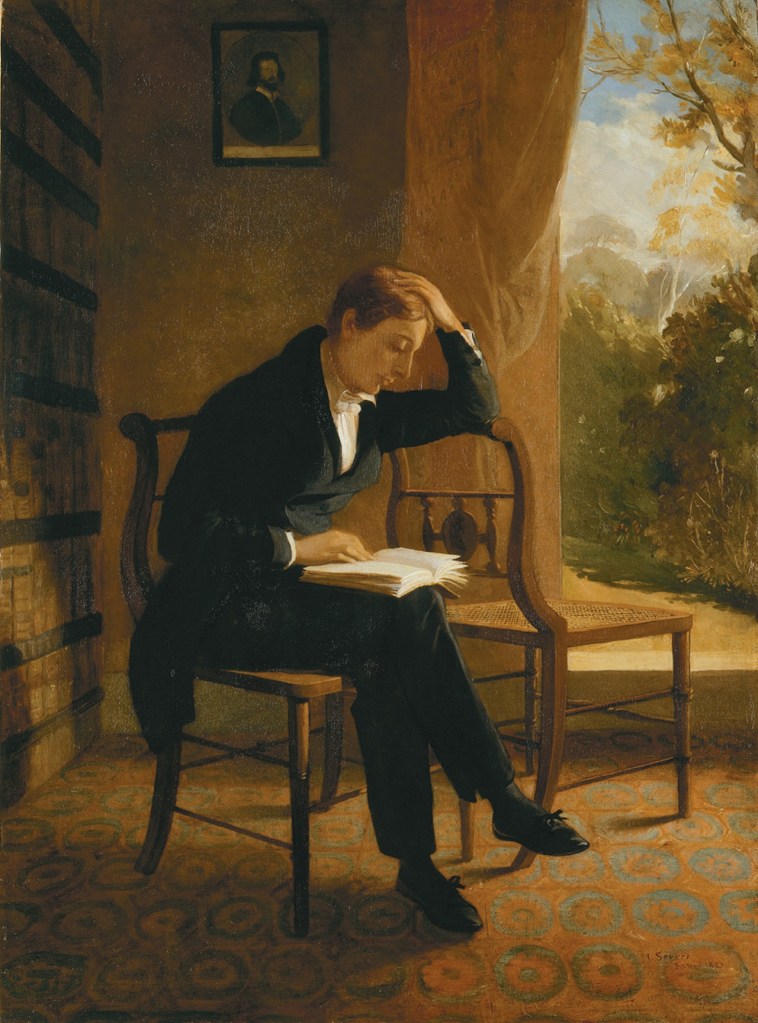
Keats’ doctor urged the poet to move to a warmer, drier climate; the cold, moist air of London exacerbated his condition. Thus, Keats relocated to Rome, Italy, and Joseph Severn, who was a painter, accompanied him.
Despite suffering an early death at age 25, John Keats remains one of the most recognizable names in the English Romantic Movement, along with William Wordsworth, Lord Byron, Percy Bysshe Shelley, Samuel Taylor Coleridge, William Blake, Anna Laetitia Barbauld, Felicia Dorothea Hemans, and Charlotte Turner Smith.
In Rome on February 23, 1821, John Keats died of tuberculosis [4], the disease that he had suffered for most of his life, His body is buried in Campo Cestio, also known as the Protestant Cemetery or the Cemetery for Non-Catholic Foreigners.
Sources
[1] Editors. “John Keats.” Poetry Foundation. Accessed November 16, 2026..
[2] Marilee Hanson. “John Keats Love Letter to Fanny Brawne.” English History. February 4, 2015.
[3] Stephanie Forward. “The Romantics.” The British Library. May 15, 2014.
[4] Mary Wilsey. “The Death of John Keats.” John Cabot University. February 23, 2021.
Commentaries on John Keats Poems
- In a drear-nighted December
- When I have fears that I may cease to be
- Sonnet XI On first looking into Chapman’s Homer
- Sonnet VII O Solitude! if I must with thee dwell
- To Autumn


Questions, comments, suggestions offered in good faith are always welcome. If you use a pseudonym, please include your real name, if you expect a response.