Linda's Literary Home

Category: Edgar Lee Masters

  • Edgar Lee Masters’ “Homer Clapp” 

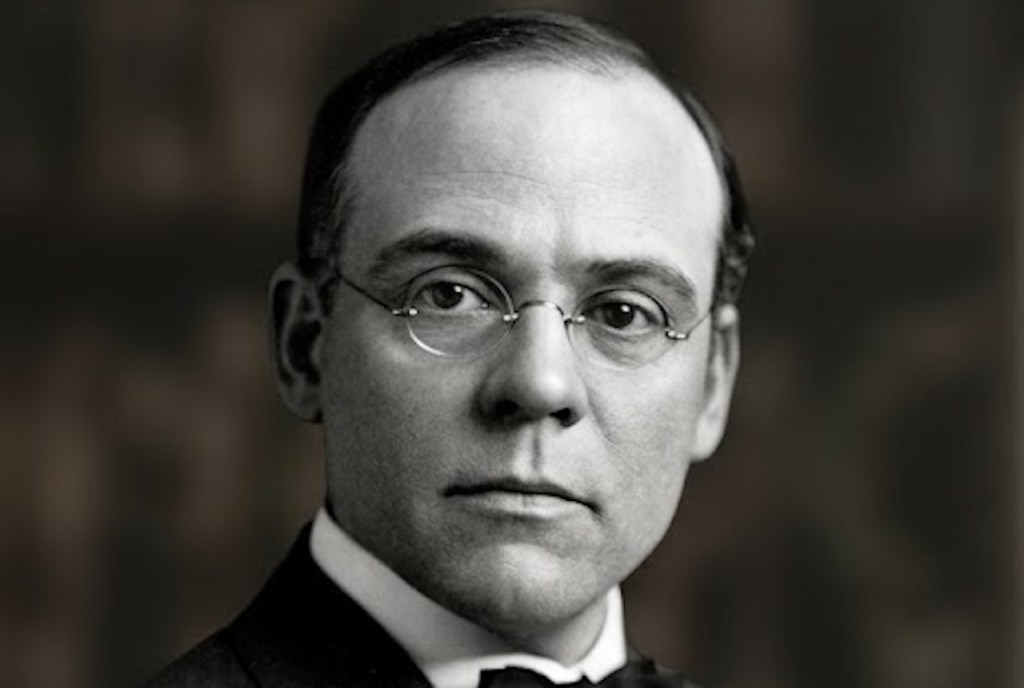
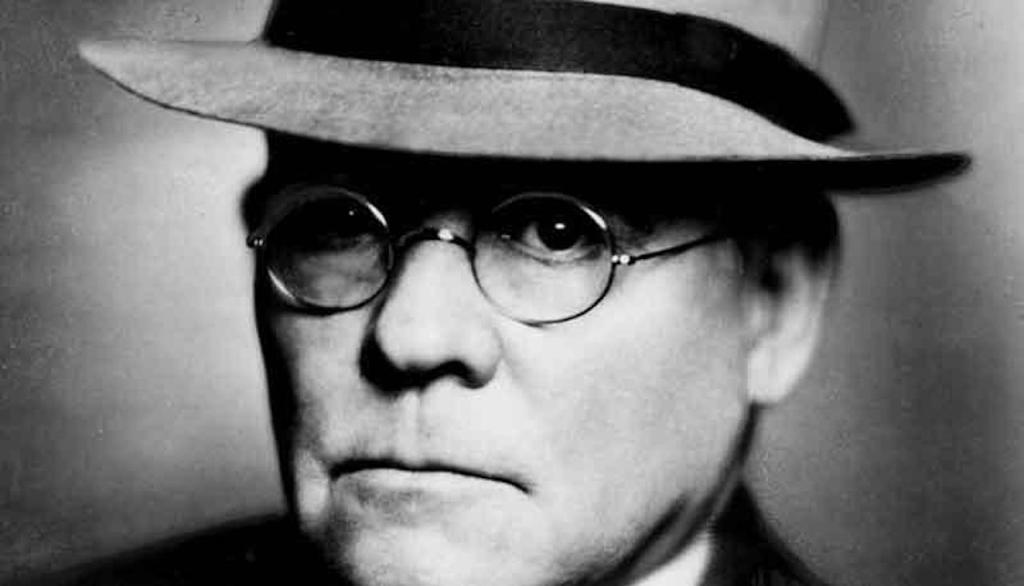
    Image: Edgar Lee Masters http://www.jackmasters.net/mastelm.html Jack Masters
    Image: Edgar Lee Masters – Jack Masters

    Edgar Lee Masters’ “Homer Clapp” 

    “Homer Clapp” is the third epitaph in the series which began with “Aner Clute.” Homer is a pitiful character, who feels sorry for himself because of the way he was treated by Aner Clute.

    Introduction and Text of “Homer Clapp”

    In Edgar Lee Masters’ epitaph titled “Homer Clapp” from Masters’ American classic Spoon River Anthology, the character laments an existence which resulted in his considering himself one of “Life’s fools.”

    Masters’ epitaph “Homer Clapp” is the third in the series beginning with “Aner Clute” and followed by “Lucius Atherton“; Homer is a sorry character, who complains that he was played for fool by Aner Clute.

    Homer Clapp

    Often Aner Clute at the gate  
    Refused me the parting kiss,
    Saying we should be engaged before that;  
    And just with a distant clasp of the hand  
    She bade me good-night, as I brought her home
    From the skating rink or the revival.  
    No sooner did my departing footsteps die away  
    Than Lucius Atherton,
    (So I learned when Aner went to Peoria)
    Stole in at her window, or took her riding
    Behind his spanking team of bays
    Into the country.
    The shock of it made me settle down,  
    And I put all the money I got from my father’s estate  
    Into the canning factory, to get the job
    Of head accountant, and lost it all.
    And then I knew I was one of Life’s fools,
    Whom only death would treat as the equal  
    Of other men, making me feel like a man.

    Commentary on “Homer Clapp”

    The third epitaph in the series “Homer Clapp” begins with “Aner Clute” followed by “Lucius Atherton.” Homer is a pitiful character, who feels sorry for himself because of how he was treated by Aner Clute.

    First Movement:  A Ridiculous Spectacle 

    Often Aner Clute at the gate  
    Refused me the parting kiss,
    Saying we should be engaged before that;  
    And just with a distant clasp of the hand  
    She bade me good-night, as I brought her home
    From the skating rink or the revival.  

    The character “Homer Clapp” is sad man, whose association with Aner Clute, the prostitute, left him degraded and beaten.  Aner had claimed that she began her life as a hooker because of being rebuffed by Lucius Atherton.  

    Later, however, Aner recants her story and claims ridiculously that she started living the life because of the way society views prostitutes—kind of like the way society views a boy who steals apples from a grocery store.  

    Homer commences his pathetic story “at the gate” with Aner Clute refusing to kiss him goodnight. She always refused to give him a good-bye kiss after he had taken her on a date either to “the skating rink”  or “the revival.”  

    Aner would extend to him only  a “distant clasp of the hand,” remarking that before she would permit him to kiss her, they would have to have become “engaged” to be married.  This ridiculous spectacle shows clearly Aner’s disingenuous nature and dramatizes her behavior which is full of deceit, making her resemble so many of the other dissembling Spoon River characters.

    Second Movement:  Town Gossip

    No sooner did my departing footsteps die away  
    Than Lucius Atherton,
    (So I learned when Aner went to Peoria)
    Stole in at her window, or took her riding
    Behind his spanking team of bays
    Into the country.

    Homer then appears to be providing town gossip as he claims that after he had left Aner at the gate, Lucius Atherton came sneaking in at Aner’s window.  The two then went about with “her riding / Behind his spanking team of bays.” 

    The window sneaking sounds like an over-dramatic claim. It remains somewhat vague and a shaky notion that Lucius would need to sneak in to take Aner for a ride.   However, Homer does report that he found out about Aner’s deceptive behavior only after she had relocated to Peoria.  The timeline seems to impart the notion that Aner had actually moved to Peoria for the purpose of becoming a prostitute.

    Aner, however, had concocted  her narrative about being jilted by Atherton before she moved from Spoon River. Still, it seems that Homer had heard about this claim of Aner’s  only after she had left Spoon River for Peoria.

    Homer’s bit of gossip that Atherton owned “a spanking team of bays” might hint that Atherton had, in fact, been considered a “rich man” by Aner and other Spoon River residents who were less well off than Atherton was.

    Third Movement:  No Kiss Until Engaged

    The shock of it made me settle down,  
    And I put all the money I got from my father’s estate  
    Into the canning factory, to get the job
    Of head accountant, and lost it all.

    Homer’s story turns out to be that because of Aner’s deception of dating Homer while leading him on and demanding that they be engaged before a kiss, and at the same time fooling around with Lucius, Homer experienced “shock.” 

    That shock caused Homer to sink his inheritance into the canning factory. and after placing all that money into the canning factory in order “to get the job / Of head accountant,” Homer “lost it all.”  

    Apparently, Homer lost his job along with his money as well as any chance for marital happiness.  However, Homer remains quite vague at this point and does not make clear what he means when he says he lost “it all.” 

    Fourth Movement:  Just a Fool

    And then I knew I was one of Life’s fools,
    Whom only death would treat as the equal  
    Of other men, making me feel like a man.

    Homer complains that his experiences in life, especially the Aner situation and loss of his money have convinced him that “[he] was one of Life’s fools.”  Homer considers himself the type of fool that, “only death would treat as the equal / Of other men.”  

    Therefore, because death will come to all men equally, Homer can “feel like a man,” with the knowledge that death would definitely arrive for him just as it will do for all other men.
  • Edgar Lee Masters’ “Lucius Atherton”

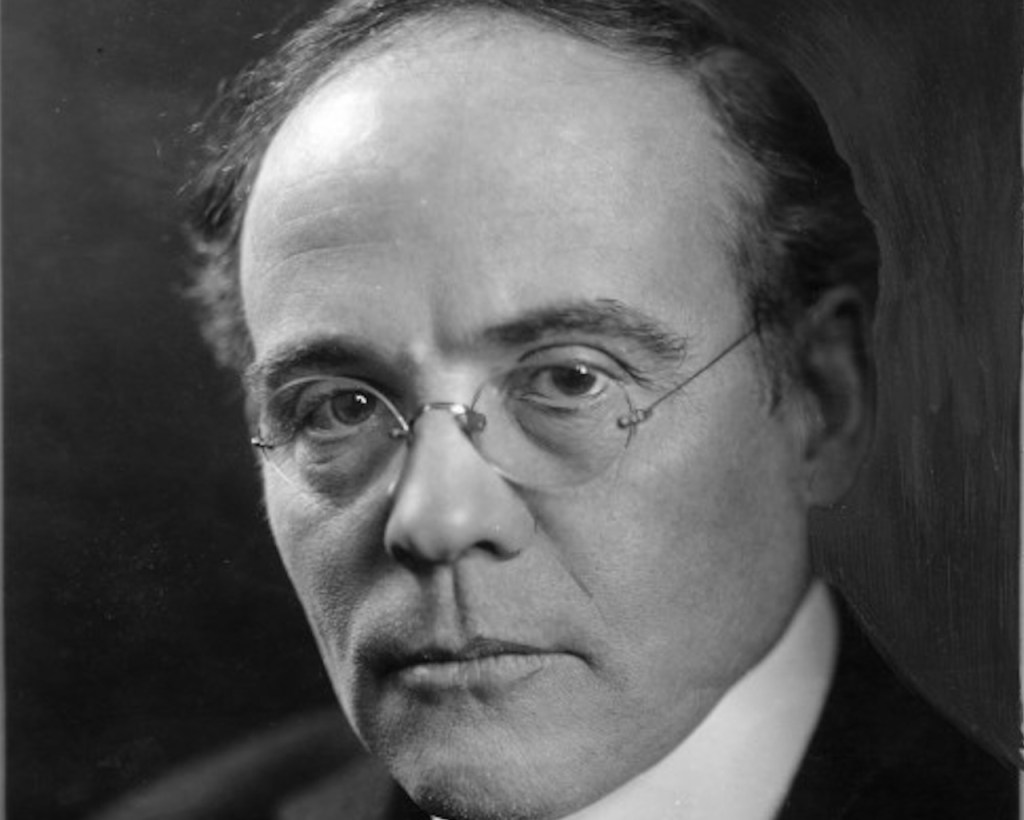
    Image: Edgar Lee Masters https://chicagoliteraryhof.org/inductees/profile/edgar-lee-masters
    Image: Edgar Lee Masters – Chicago Literary Hall of Fame

    Edgar Lee Masters’ “Lucius Atherton”

    The “Lucius Atherton” epitaph reveals a truly depraved and delusional man who decries his aging body simply because it no longer attracts women.

    Introduction and Text of “Lucius Atherton”

    A disgusting poseur, “Lucius Atherton,” from Edgar Lee Masters’ Spoon River Anthology, complains about the loss of his earlier handsomeness as well as the loss of his ability to draw to himself women of whom he could take advantage. 

    Readers will remember that “Aner Clute” had named Atherton as the man who jilted her, leaving her to take up the life of a prostitute.  Aner had claimed the Lucius was a rich man and that they had been engaged.

    Although Lucius’ epitaph offers no evidence that the two had been engaged or even that he was a rich man, it does confirm the fact the two star-crossed lovers had huge egos.

    Aner and Lucius also like many other Spoon River reporters from the grave possess a penchant for making excuses regarding their own excesses and debauchery.

    Lucius Atherton

    When my moustache curled,  
    And my hair was black,
    And I wore tight trousers  
    And a diamond stud,
    I was an excellent knave of hearts and took many a trick.
    But when the gray hairs began to appear—
    Lo! a new generation of girls  
    Laughed at me, not fearing me,  
    And I had no more exciting adventures
    Wherein I was all but shot for a heartless devil,
    But only drabby affairs, warmed-over affairs
    Of other days and other men.  
    And time went on until I lived at Mayer’s restaurant,  
    Partaking of short-orders, a gray, untidy,
    Toothless, discarded, rural Don Juan….
    There is a mighty shade here who sings
    Of one named Beatrice;  
    And I see now that the force that made him great
    Drove me to the dregs of life.

    Commentary on “Lucius Atherton”

    Formerly a dandy, Atherton begins his report as he reminisces about the man he had been earlier in his life.  He had a curling mustache and black hair, no doubt kept perfectly combed.

    First Movement:   Regrets Aging

    When my moustache curled,  
    And my hair was black,
    And I wore tight trousers  
    And a diamond stud,
    I was an excellent knave of hearts and took many a trick.

    The fatuousness of Lucious Atherton’s nature begins to appear early in his monologue.  His choices in behavior and dress suggest that he was likely little more than a male prostitute, who, however, instead of for money, compromised his integrity because of his vanity.

    Atherton sported “tight trousers / And a diamond stud.”  He describes himself as an “excellent knave of hearts and took many a trick.”  He had the ability to attract any woman he might have fancied.

    Second Movement:   Decrying Loss of Good Looks

    But when the gray hairs began to appear—
    Lo! a new generation of girls  
    Laughed at me, not fearing me,  
    And I had no more exciting adventures

    The sole purpose of Atherton’s soliloquy is to decry his loss of good looks as the reason that a “new generation” of women were not attracted to him; in fact, these new “girls” would ridicule him openly.  

    Atherton bemoans the fact that these new women showed no “fear” of him.  That he desired to have them fear him reveals the depraved nature of this despicable man.  He likely raped and beat the women that he had so easily attracted.

    Atherton’s aging body lost for him the ability to engage in “exciting adventures.”  The many “tricks” he had taken started to dwindle as the years piled up on his physique, and he is deeply disturbed by that loss.

    Third Movement:   No Long Worth Attention

    Wherein I was all but shot for a heartless devil,
    But only drabby affairs, warmed-over affairs
    Of other days and other men.

    While the process of aging was gripping savagely his physique, Atherton began to realize that he was no longer deemed to be worth the attention of this new generation of women.

    These new women considered him a “heartless devil,” and he devolved into a ridiculous humiliation to his former self.  Instead of good-looking women, he could pick up only what he describes as “drabby affairs” and “warmed-over affairs.” 

    With his decrepitude, Atherton had the ability to attract only women who had been with many “other men.”  He is filled with self-pity for his loss of his former handsome body with its magnetism to the female sex.

    Fourth Movement:  Whining Self-Pity

    And time went on until I lived at Mayer’s restaurant,  
    Partaking of short-orders, a gray, untidy,
    Toothless, discarded, rural Don Juan….

    Throughout Atherton’s caterwauling screed of whining self-pity, nowhere does he suggest that he offered any service to the community of humankind.  It remains unclear that he ever had a job.  He seems to hint that whatever means of support he formerly possessed he had also lost that. 

    Atherton claims he finally ended up “liv[ing] at Mayer’s restaurant,” where he ate, “short-orders.”  He is likely exaggerating, not actually saying that he resides at the restaurant but just takes most or all of his meals there.

    Likely the fact that Atherton leaves his listeners in the dark about how he met expenses and where he lived indicates a blurred mind, possibly being eaten up by syphilis.  

    Atherton then gives a truly pathetic description of himself:  “a gray, untidy, / Toothless, discarded, rural Don Juan.”  No doubt a grave insult to the real “Don Juan.”

    Fifth Movement:  Arrogant Popinjay

    There is a mighty shade here who sings
    Of one named Beatrice;  
    And I see now that the force that made him great
    Drove me to the dregs of life.

    Finally, with an arrogance to rival that of the pathetic popinjay Barack Obama, who liked to brag that he wrote two books all by himself, Atherton compares himself to the great poet Dante Alighieri, composer of The Divine Comedy.    

    Atherton would have us believe, “that the force that made [Dante] great / Drove me to the dregs of life.” Dante’s driving force was spiritual love, symbolically portrayed by the beautiful Beatrice.

    Atherton’s driving force was his penchant only for physical lust, demonstrated by his emphasis on his good looks and the pain that losing his physical appearance has caused him as he could no longer attract women for his exciting adventures.  

    While Lucius Atherton does belong to the same class of men that includes Bill Clinton, Atherton has nothing in common with Dante Alighieri.

  • Edgar Lee Masters’ “Aner Clute”

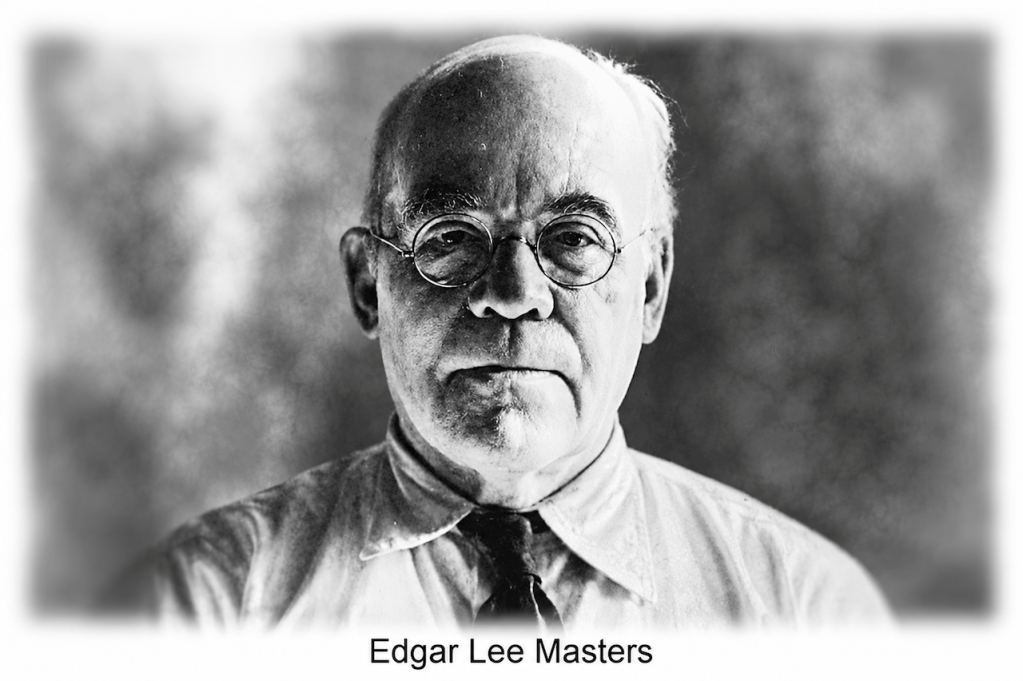
    Image: Edgar Lee Masters https://www.best-poems.net/edgar_lee_masters/index.html#google_vignette
    Image: Edgar Lee Masters

    Edgar Lee Masters’ “Aner Clute”

    Edgar Lee Masters’ speaker in “Aner Clute” compares her choosing “the life” to a boy stealing an apple from a grocery store.

    Introduction and Text of “Aner Clute”

    In Edgar Lee Masters’ “Aner Clute,” from Spoon River Anthology, the speaker is a prostitute, who blames others for her own life choices, as many of the Spoon River soliloquists are wont to do.

    The bulk of Aner Clute’s drama plays out in her comparison of her choosing “the life” to a boy stealing an apple from a grocery store.  Like many other Spoon River speakers, Miss Clute dabbles in a ridiculous fantasy designed solely to relieve her of her own guilty life choices.

    Aner Clute

    Over and over they used to ask me,
    While buying the wine or the beer,
    In Peoria first, and later in Chicago,
    Denver, Frisco, New York, wherever I lived,
    How I happened to lead the life,
    And what was the start of it.
    Well, I told them a silk dress,
    And a promise of marriage from a rich man—
    (It was Lucius Atherton).
    But that was not really it at all.
    Suppose a boy steals an apple
    From the tray at the grocery store,
    And they all begin to call him a thief,
    The editor, minister, judge, and all the people—
    “A thief,” “a thief,” “a thief,” wherever he goes.
    And he can’t get work, and he can’t get bread
    Without stealing it, why the boy will steal.
    It’s the way the people regard the theft of the apple
    That makes the boy what he is.

    Commentary on “Aner Clute”

    Edgar Lee Masters’ speaker in “Aner Clute” compares her choosing “the life” to a boy stealing an apple from a grocery store.

    First Movement:  Getting into “The Life”

    Over and over they used to ask me,
    While buying the wine or the beer,
    In Peoria first, and later in Chicago,  
    Denver, Frisco, New York, wherever I lived,
    How I happened to lead the life,
    And what was the start of it.

    Aner begins her drama by reporting that her johns (customers of a prostitute) would ask her how she got into “the life,” which is a euphemism for prostitution.  They supposedly wanted to know “what was the start of it.”   

    These johns in Peoria, Chicago, Denver, San Francisco, New York, or “wherever [she] lived” would put these questions to her as they were “buying the wine or the beer.”

    No doubt, they asked not so much because they cared how she became a “working girl,” but likely just to have something to say.   They probably had little else in common with their companion for the night, and such a question would seem personal enough yet non-intimidating.

    Second Movement:  Blame it on a Dress and a Promise

    Well, I told them a silk dress,  
    And a promise of marriage from a rich man—
    (It was Lucius Atherton).  

    Aner claims she would tell them she got into the business because of “a silk dress, / And a promise of marriage from a rich man.”  She even names the man, Lucius Atherton.

    Third Movement:  A Lie and Ludicrous Comparison

    But that was not really it at all.
    Suppose a boy steals an apple
    From the tray at the grocery store,
    And they all begin to call him a thief,  
    The editor, minister, judge, and all the people—  

    Aner then admits that her claim about the marriage promise and the silk dress was a lie, and she begins a ludicrous comparison of her choice to sell sex for a living to a boy stealing an apple from a grocery store.   Clute’s pitiful plaint is that “the editor, minister, judge, and all the people” took up the refrain of calling the boy “a thief.”

    Fourth Movement:  The Label Makes the Man

    “A thief,” “a thief,” “a thief,” wherever he goes.
    And he can’t get work, and he can’t get bread
    Without stealing it, why the boy will steal.  
    It’s the way the people regard the theft of the apple
    That makes the boy what he is.

    Clute continues her analogy and chorus of “all the people” calling the boy, “A thief,” “a thief,” “a thief.”  Everywhere the poor lad goes someone calls him a thief.   The boy’s reputation as a thief prevents the boy from finding any job.  He cannot even supply his own meals, so the boy can do only one thing—continue to steal.

    According to Aner, the boy’s predicament was not engendered by the boy stealing an apple; his life as a thief resulted from “the way the people regard the theft of the apple.”  Their heartless taunting “ma[de] the boy what he is.” 

    The reason that Aner’s analogy to the boy-turned-thief sounds utterly asinine is because it is.  She is implying that because she took money once for sex, she had to continue because everywhere she went, people would call her names like whore, slut, slattern or whatever.  

    So Aner’s difficulty was not her own making.  Her downfall was having other people label her a whore that made her actually become a prostitute.  Such is the convoluted thinking of many of these Spoon River cemetery inmates.  They are never to blame for their choices—they blame society in the town of Spoon River.

  • Edgar Lee Masters’ “A. D. Blood”

    Image: Edgar Lee Masters https://chicagoliteraryhof.org/inductees/profile/edgar-lee-masters
    Image: Edgar Lee Masters – Chicago Literary Hall of Fame

    Edgar Lee Masters’ “A. D. Blood”

    Edgar Lee Masters’ character A. D. Blood, who led a crusade to eliminate sin in Spoon River, is now suffering the agony of having a couple use his grave for trysting.

    Introduction and Text of  “A. D. Blood”

    In Edgar Lee Masters’ “A. D. Blood” from the American classic Spoon River Anthology, the speaker offers a report that is short and distinct; he has a simple complaint that he hurls at the Spoon River folk in the form of a question. Mr. A. D. Blood is bemoaning the agony he suffers from having a couple employ his grave as a bed where they engaging in the act of fornication.

    A. D. Blood

    If you in the village think that my work was a good one,  
    Who closed the saloons and stopped all playing at cards,  
    And haled old Daisy Fraser before Justice Arnett,
    In many a crusade to purge the people of sin;  
    Why do you let the milliner’s daughter Dora,
    And the worthless son of Benjamin Pantier  
    Nightly make my grave their unholy pillow?

    Commentary on “A. D. Blood”

    Edgar Lee Masters’ character A. D. Blood is complaining that a couple has been using his grave for trysting, and the righteous Blood, who fancies he ridded the town of sin, does not take kindly to that unholy act.

    First Movement:  Appreciation Doubted

    Mr. Blood cautiously assumes that the village of Spoon River appreciated the fact that he went about on “a crusade to purge the people of sin.”  Mayor Blood was instrumental in closing saloons and shutting down gambling.  

    Mr. Blood even snitched on Daisy Fraser’s prostitution activity, causing her to be hauled up in from of Judge Arnett repeatedly. Mr. Blood is sure that his work was good, but he can only surmise that the town agreed with him; thus he is forced to place his activities in an “if” clause and then ask his pertinent question.

    Second Movement:  A Legend in His Own Mind

    Because Mr. Blood had such a good influence on Spoon River, at least in his own mind, he now wonders why the town allows this impertinent couple to fornicate on his grave. Mr. Blood names the couple:  “the worthless son of Benjamin Pantier” and “the milliner’s daughter Dora.” 

    Mr. Blood colorfully refers to their dirty deed as “[n]ightly mak[ing] my grave their unholy pillow.”   But was Mr. Blood correct in calling Reuben Pantier “worthless”?  Emily Sparks offers a different opinion regarding Reuben.

  • Edgar Lee Masters’ “Willard Fluke”

    Image: Edgar Lee Masters https://www.best-poems.net/edgar_lee_masters/index.html#google_vignette
    Image: Edgar Lee Masters

    Edgar Lee Masters’ “Willard Fluke”

    The character, Willard Fluke, is spared an ignominious confession but at a great price.

    Introduction and Text of “Willard Fluke”

    Edgar Lee Masters’ “Willard Fluke” from his American classic Spoon River Anthology is the name of the father of “Lois Spears,” the blind woman whose simple purity serves as a welcome cleansing after interacting with the many unsavory speakers the reader meets in this anthology.

    Willard Fluke

    My wife lost her health,
    And dwindled until she weighed scarce ninety pounds.
    Then that woman, whom the men
    Styled Cleopatra, came along.
    And we—we married ones
    All broke our vows, myself among the rest.
    Years passed and one by one
    Death claimed them all in some hideous form,  
    And I was borne along by dreams
    Of God’s particular grace for me,
    And I began to write, write, write, reams on reams
    Of the second coming of Christ.
    Then Christ came to me and said,
    “Go into the church and stand before the congregation
    And confess your sin.”
    But just as I stood up and began to speak
    I saw my little girl, who was sitting in the front seat—
    My little girl who was born blind!
    After that, all is blackness!

    Commentary on “Willard Fluke”

    The character, Willard Fluke, is spared an ignominious confession but at a great price.

    First Movement:  The Sick Wife

    My wife lost her health,
    And dwindled until she weighed scarce ninety pounds.
    Then that woman, whom the men
    Styled Cleopatra, came along.
    And we—we married ones
    All broke our vows, myself among the rest.

    Willard begins by reporting about his wife, who “lost her health.”  His wife lost so much weight that she “weighed scare ninety pounds.”   Willard does not reveal the nature of his wife’s affliction—just that this loss of her health apparently triggered breaking of his marital vows, after “that woman, whom the men / Styled Cleopatra, came along.” 

    Along with the other men, Willard succumbs to temptation with the woman they “styled Cleopatra.”  He allows the reader to draw the appropriate conclusions about the temptress because his only point is that he sinned through his weakness.

    Second Movement:  Time Flies

    Years passed and one by one
    Death claimed them all in some hideous form,  
    And I was borne along by dreams
    Of God’s particular grace for me,
    And I began to write, write, write, reams on reams
    Of the second coming of Christ.

    Time fled by as it is wont to do, and all the men involved with the cleopatrian temptress died one by one in “some hideous form.”  Willard was strangely motivated to write about “the second coming of Christ.”  He wrote “reams on reams.”  Spurred on by guilt, trying desperately to save his soul, he used his writing is an alternative to meditation.

    Willard stresses that he was “borne along by dreams / Of God’s particular grace for [him].”  Because he placed his mind so squarely on God, he was motivated to write those reams.  His dreaming and writing served him as a form of worship.

    Third Movement:  A Visitation

    Then Christ came to me and said,
    “Go into the church and stand before the congregation
    And confess your sin.”

    Through Willard’s concentration on God’s grace and intense relationship with Christ in writing about the second coming, Willard so prepared his soul for a visit from the Savior.   

    When Christ did honor Willard with a visitation, the Savior advised Willard to “confess [his] sin” “before the congregation.”  Willard was admonished to stand before the entire church and admit his sin.

    The reader will note that Willard says “sin”—not sins.  This designation indicates that it is only the one adulterous sin that has rifled his life—only that one sin that motivated him to concentrate on God and write reams for Jesus.   It, of course, was a great sin, and Willard has taken it very seriously as tries to wipe it from his karma.

    Fourth Movement:  Delivered by Death?

    But just as I stood up and began to speak
    I saw my little girl, who was sitting in the front seat—
    My little girl who was born blind!
    After that, all is blackness!

    Willard attempts to obey Christ’s demand that he confess before the church; however, as Willard stands and begins to speak, he sees Lois, his little girl, “who was born blind!”  At that point, we lose Willard, who simply reports, “After that, all is blackness!”  

    The reader may understand only that Willard fainted before he was able to confess.  But then the reader is left wondering if Willard also died at this point.   The possibility is great because Willard obviously has taken on guilt for Lois’ blindness.  He has suffered for a lifetime, and quite possibly his heart just gave out before he could confess.

    If Willard did die at this point, the reader may interpret his death as God’s mercy because Willard did not have to endure the ignominy of confessing his sin to the church but was spared just as Abraham was spared of sacrificing his son, Isaac; that confession would have hurt his little blind daughter, but she, too, was spared.

  • Edgar Lee Masters’ “Justice Arnett”

    Image:  Edgar Lee Masters -  Alchetron https://alchetron.com/Edgar-Lee-Masters
    Image:  Edgar Lee Masters –  Alchetron

    Edgar Lee Masters’ “Justice Arnett”

    Justice Arnett is featured in his own poem where he demonstrates weakness and confusion, commensurate with many other of his fellow citizens of Spoon River.

    Introduction and Text of “Justice Arnett”

    Edgar Lee Masters’ “Justice Arnett” from the American classic Spoon River Anthology features a character, who died after his court docket fell and gashed his bald head.  This character is mentioned in three other anthology entries: “Daisy Fraser,” “Lydia Puckett” and “A. D. Blood.”

    Justice Arnett

    It is true, fellow citizens,
    That my old docket lying there for years
    On a shelf above my head and over  
    The seat of justice, I say it is true
    That docket had an iron rim
    Which gashed my baldness when it fell—  
    (Somehow I think it was shaken loose
    By the heave of the air all over town  
    When the gasoline tank at the canning works  
    Blew up and burned Butch Weldy)—
    But let us argue points in order,  
    And reason the whole case carefully:
    First I concede my head was cut,
    But second the frightful thing was this:
    The leaves of the docket shot and showered
    Around me like a deck of cards  
    In the hands of a sleight of hand performer.
    And up to the end I saw those leaves
    Till I said at last, “Those are not leaves,
    Why, can’t you see they are days and days
    And the days and days of seventy years?  
    And why do you torture me with leaves  
    And the little entries on them?”

    Commentary on “Justice Arnett”

    Justice Arnett demonstrates weakness and confusion, similar to  many of the other weak  and/or corrupt citizens, portrayed in the Spoon River collection of epitaphs.

    First Movement:   Confirming a Rumor

    It is true, fellow citizens,
    That my old docket lying there for years
    On a shelf above my head and over  
    The seat of justice, I say it is true
    That docket had an iron rim
    Which gashed my baldness when it fell—  

    Opening his monologue, the justice seems to be confirming the details of his demise as if there had been some speculation about it.  To end the speculation, he confirms, “It is true, fellow citizens.”  The docket that had been lying above his head for many years did, in fact, fall, and when it did, it “gashed [his] baldness.”

    Arnett positions the docket on a shelf not only above his head but also “over the seat of justice.”  He seems to need to emphasize that he occupied this “seat of justice,” for he wants to put himself in the best light, as most of the Spoon River speakers do.

    Second Movement:  The Cause of the Falling Docket

    (Somehow I think it was shaken loose
    By the heave of the air all over town  
    When the gasoline tank at the canning works  
    Blew up and burned Butch Weldy)—

    The reader then learns what caused the docket to fall.  The reader will recall the “Butch” Weldy incident, in which Weldy suffered two broken legs and was blinded for life.  Weldy was pouring gasoline into the tank at the canning factory when the tank blew up.  

    Arnett makes light of Weldy’s injuries by merely stating the accident “burned Butch Weldy.”  But the justice speculates that the explosion so “heaved the air all over town” that it shook loose the docket and caused it to fall.

    Third Movement:    Points of Order on Dying

    But let us argue points in order,  
    And reason the whole case carefully:
    First I concede my head was cut,
    But second the frightful thing was this:

    The justice then shifts to legalese to inflate his philosophizing about his ultimate demise:  “let us argue points in order.”  He has two points to “argue”:  one is that his “head was cut,” and two is that there was a frightful component to this incident.  

    The reader will sense that the justice sounds somewhat demented in his explanation.  The dementia might stem from Alzheimer’s disease or it might simply be the trauma of having been conked on the noggin by a big, heavy, metal-edged book.

    Fourth Movement:   The Image of Leaves

    The leaves of the docket shot and showered
    Around me like a deck of cards  
    In the hands of a sleight of hand performer.

    Arnett describes the events of the frightful occurrence, “[t]he leaves of the docket shot and showered / Around me like a deck of cards / In the hands of a sleight of hand performer.”  This description sounds quite realistic, and Arnett’s listeners can readily see the image he presents.

    Fifth Movement:   Logic and Dementia

    And up to the end I saw those leaves
    Till I said at last, “Those are not leaves,
    Why, can’t you see they are days and days
    And the days and days of seventy years?  
    And why do you torture me with leaves  
    And the little entries on them?”

    Arnett’s final words reveal the fright, possible dementia, and as well as a fairly well grounded logic.  The deck-of-card image turns back to leaves, which makes sense because pages in a book are called “leaves.” But then the justice recounts that he “said at last, ‘Those are not leaves’.” 

    Suddenly, Arnett is speaking as if refuting someone who has accused him of having nothing more than “leaves” in his court docket.  He reprimands his imaginary accuser, “Why, can’t you see they are days and days / And the days and days of seventy years?” 

    The justice disabuses his accuser of the notion that his docket was merely filled with leaves; it was filled with his life’s work.  Day after day for seventy years, he has recorded his life’s work in that docket.

    But then the justice makes a remarkable confession when he asks, “And why do you torture me with leaves / And the little entries on them?”

    Suddenly those days and days of the justice’s life’s work are again reduced to leaves with “little entries on them.”  In his fright and confusion, he is no longer certain that his life has made sense or even had any value.

  • Edgar Lee Masters’ “Lois Spears”

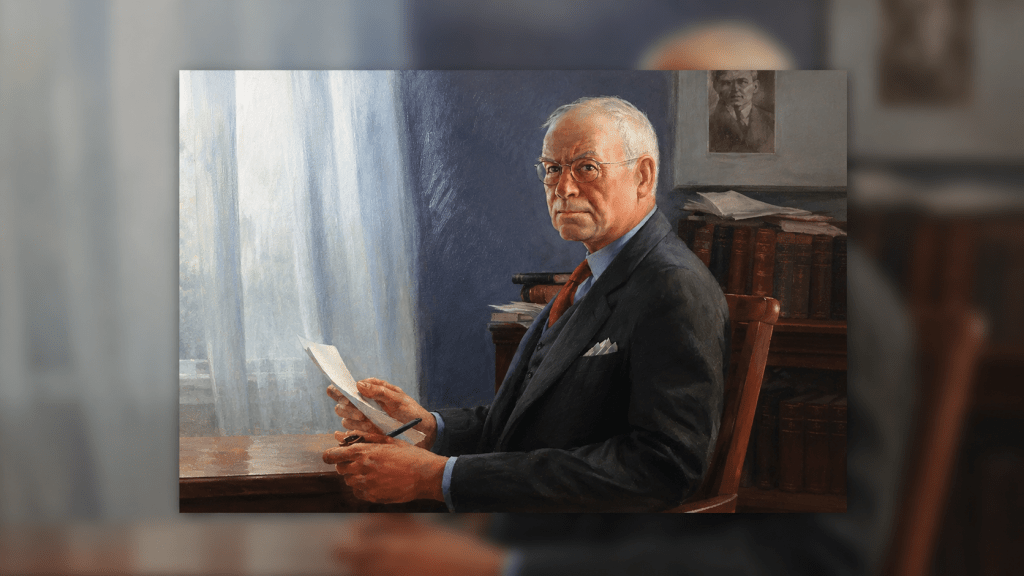
    Image:  Edgar Lee Masters - Portrait by Francis J. Quirk https://francisquirk.blogspot.com/2017/03/visit-to-national-portrait-gallery.html
    Image:  Edgar Lee Masters – Portrait by Francis J. Quirk https://francisquirk.blogspot.com/2017/03/visit-to-national-portrait-gallery.html

    Edgar Lee Masters’ “Lois Spears”

    The epitaph and character of “Lois Spears” will delight readers who have grown somewhat jaded with the jaded characters offered them in Masters’ Spoon River Anthology.

    Introduction and Text of  “Lois Spears”

    Edgar Lee Masters’ “Lois Spears” from American classic Spoon River Anthology surprises readers with its simple purity.  The many complaints from those who pursued lives on the seamy side and then tried to blame others for their misfortunes resonant with such volume that encountering a soul such as Lois provides a shock albeit a pleasant one.  

    This poem features only three movements.  The first movement’s opening sounds as if a third party is reporting for Lois, but then it becomes clear that it is Lois speaking in the last parenthetical line.   

    It is also important to note that the information in the parenthetical is deemphasized, though for the world it is of great moment.  The second movement finds Lois proclaiming herself “the happiest of women,” while the third and final movement reveals the reason for her height of happiness.

    Lois Spears

    Here lies the body of Lois Spears,
    Born Lois Fluke, daughter of Willard Fluke,
    Wife of Cyrus Spears,
    Mother of Myrtle and Virgil Spears,
    Children with clear eyes and sound limbs—
    (I was born blind).
    I was the happiest of women
    As wife, mother and housekeeper,
    Caring for my loved ones,
    And making my home
    A place of order and bounteous hospitality:
    For I went about the rooms,
    And about the garden
    With an instinct as sure as sight,
    As though there were eyes in my finger tips—
    Glory to God in the highest.

    Commentary on “Lois Spears”

    Edgar Lee Master’ epitaph “Lois Spears” will be a welcome delight to readers who have grown somewhat annoyed  with the jaded characters offered them in the American classic Spoon River Anthology.

    First Movement:  Official Announcement

    Here lies the body of Lois Spears,
    Born Lois Fluke, daughter of Willard Fluke,
    Wife of Cyrus Spears,
    Mother of Myrtle and Virgil Spears,
    Children with clear eyes and sound limbs—
    (I was born blind).

    Lois begins her report with a rather official sounding declaration, “Here lies the body of Lois Spears.”   She continues by identifying herself further with her maiden name, “Lois Fluke,” and that she was the “daughter of Willard Fluke.”  

    The significance of her maiden name becomes apparent as the reader encounters the strange, delightful character she exhibits.  She is, indeed, a fluke of nature, especially when found among the many disingenuous and shady characters of Spoon River.

    Lois further defines her identity by stating that she was the wife of “Cyrus Spears, / Mother of Myrtle and Virgil Spears.”  Her children, she is no doubt happy to report, both had “clear eyes”—they were not born with the same affliction that their mother had to endure.  

    Her children, furthermore, were otherwise healthy with “sound limbs.”  It is only after Lois has revealed the rudimentary biographical facts that she imparts the crucial information that she “was born blind.”

    Second Movement:  No Need for Pity

    I was the happiest of women
    As wife, mother and housekeeper,
    Caring for my loved ones,
    And making my home
    A place of order and bounteous hospitality:

    Lest her hearers begin to pity her, Lois immediately dispels the notion that she requires any by declaring herself, “the happiest of women.”  She was so happy because she cared for her “loved ones” and made her home “a place of order and bounteous hospitality.”  

    The magnanimity of such a remark offers solace to all who have struggled with positions that they deem beneath them—the lowly housewife, who was also blind, was able to function as the happiest of women simply by nurturing and making a home for her loved ones.

    Third Movement:   All Glory to God

    For I went about the rooms,
    And about the garden
    With an instinct as sure as sight,
    As though there were eyes in my finger tips—
    Glory to God in the highest.

    In the final movement, Lois proclaims that all glory belongs to “God in the highest.”  Lois was able to go about the rooms of her home and even grow a garden and claims she did so “with instinct as sure as sight.”   

    Lois Spears worked and achieved high accomplishments “[a]s though there were eyes in [her] finger tips.” That Mrs. Spears praises the Divine for her happy fluke of a life lifts her capital to further heights.   Mrs. Lois Spears takes her rank as one of the fine, pure souls who inhabited the otherwise carping village of Spoon River.

  • Edgar Lee Master’ “‘Ace’ Shaw”

    Image: Edgar Lee Masters http://www.poorwilliam.net/al-082314.html Poor William’s Almanack
    Image: Edgar Lee Masters – Poor William’s Almanack

    Edgar Lee Master’ “‘Ace’ Shaw”

    “Ace” Shaw features a typical Spoon River braggart whose report justifies his unseemly choice of profession.

    Introduction and Text of “‘Ace’ Shaw”

    Edgar Lee Masters’ “Ace’ Shaw” from Spoon River Anthology attempts to achieve justification of his unseemly choice of vocation by asserting that all jobs are simply the result of “chance.”

    The epitaph featuring the character of “Ace” Shaw therefore, reveals and features a typical Spoon River braggart whose report unveils a dodgy personality, whose report attempts to justify his unseemly choice of profession.

    “Ace” Shaw

    I never saw any difference
    Between playing cards for money
    And selling real estate,
    Practicing law, banking, or anything else.  
    For everything is chance.
    Nevertheless  
    Seest thou a man diligent in business?  
    He shall stand before Kings!

    Commentary on “‘Ace’ Shaw”

    Nicknamed for his chosen profession, “Ace” Shaw is attempting to rehabilitate his reputation as a gambler by claiming that all professions operate on the element of “chance.”

    First Movement:  A Gambler

    I never saw any difference
    Between playing cards for money
    And selling real estate,
    Practicing law, banking, or anything else.  

    “Ace” Shaw, whose nickname identifies him as a gambling man, claims that to him lawyers, bankers, real estate agents, and all others working in any profession or job for money are all gamblers, that is, all those professions are no different from “playing cards for money.”

    Point of view is always the most important issue in determining the conclusions each individual will form.  “Ace” being a gambling man, and one who is apparently dedicated to his craft, then views his choice as noble and as dicey as the next guy’s.  In order to accomplish this rationalization, he has to filter out the actual impact that each profession has on society.

    To this type of personality, narcissistic, egotistic, self-centered to the extreme, others do not matter so long as they render unto him what he thinks he deserves.  That gambling for money offers no service to society does not enter into Ace’s estimation in determining worth—only the ability to acquire money is his measure.  And by that simplistic measure, the gambler does have a point.

    However, Ace does not seem to understand that bankers, lawyers, real estate agents, and members of other professions such a medicine, education, media, or even public service actually provide a service to society for which they are remunerated according to the level of service.  

    That each professional might fail at his work is enough for Ace, and his ilk, to denigrate all of the potential service providers to little more than gamblers, like himself.  This line of thinking punishes the good for not being perfect.

    Second Movement:  Life of Choices

    For everything is chance.

    Ace claims that everything one does in life remains a gamble.  But some things are more fraught with the possibilities for negative occurrences than others.   If “everything is chance,” and nothing is sure, then why not set one’s goal higher than mere card playing? 

    Why not do something that offers a real service?  The only answer is that Ace prefers the life of a cardsharp; at the same time, intuitively, he knows his choice is less honorable than the bankers and lawyers he tries to belittle in order to make himself seem more important.

    Third Movement:   Lazy Man’s Philosophy 

    Nevertheless  
    Seest thou a man diligent in business?  
    He shall stand before Kings!

    Ace is lazy.  So instead of explaining his circumstances in order to prop up his choice, he simply quotes Proverbs 22:29:  “Seest thou a man diligent in business? / He shall stand before Kings!”  By introducing the quotation with “nevertheless,” Ace appears to be contradicting his earlier claims, but his personality would not allow such humility.  

    The gambler is once again simply justifying his choice by claiming that his proficiency will stand him in good stead.  The gambling Ace will “stand before Kings”—and not before the “mean” men who appear in the line, “he shall not stand before mean men,” which follows the two lines from Proverbs that Ace quotes.

  • Edgar Lee Masters’ “Dr. Siegfried Iseman”

    Image: Edgar Lee Masters https://www.best-poems.net/edgar_lee_masters/index.html#google_vignette
    Image: Edgar Lee Masters

    Edgar Lee Masters’ “Dr. Siegfried Iseman”

    Dr. Siegfried Iseman is the typical Spoon River speaker who blames others for his own destructive path.

    Introduction and Text of “Dr. Siegfried Iseman”

    The speaker in Edgar Lee Masters’ “Dr. Siegfried Iseman” from Spoon River Anthology is a disgraced physician who goes to imprison for peddling a concoction he called the “Elixir of Youth.” 

    Dr. Siegfried Iseman will be recognized as the typical Spoon River epitaph speaker who touts himself as a victim, as he huffs and puffs, blaming others for his own crimes on his path to self-destruction. 

    As scoundrels often justify their own perfidy, they not only blame others for their mishaps but they also feel an inner high-moral ground that sounds logical only to their misguided and twisted thinking.

    Dr. Siegfried Iseman

    I said when they handed me my diploma,
    I said to myself I will be good
    And wise and brave and helpful to others;  
    I said I will carry the Christian creed  
    Into the practice of medicine!
    Somehow the world and the other doctors  
    Know what’s in your heart as soon as you make  
    This high-souled resolution.  
    And the way of it is they starve you out.
    And no one comes to you but the poor.
    And you find too late that being a doctor  
    Is just a way of making a living.  
    And when you are poor and have to carry
    The Christian creed and wife and children  
    All on your back, it is too much!
    That’s why I made the Elixir of Youth,
    Which landed me in the jail at Peoria
    Branded a swindler and a crook  
    By the upright Federal Judge!

    Commentary on “Dr. Siegfried Iseman”

    Dr. Siegfried Iseman is the typical Spoon River speaker who blames others for his own destructive path.

    First Movement:  The No-Witness Convenience

    I said when they handed me my diploma,
    I said to myself I will be good
    And wise and brave and helpful to others;  
    I said I will carry the Christian creed  
    Into the practice of medicine!

    Dr. Iseman begins his confessional by recalling that at the beginning of his entry into the profession of medicine, he promised to be a good Christian doctor.  He intended to be “good / And wise and brave and helpful to others.” Even as Iseman was “handed” his diploma, these promises he mouthed to himself.  

    Interestingly, because the doctor had only silently “said” these things, there is conveniently no witness to his testimony. The lack of any evidence that Iseman had intended to acquit himself honorably allows him to backslide at least without others knowing about this original intentions, a fact that, no doubt, in the beginning of his moral failure gave him a sense of comfort.

    Second Movement:   Scoundrel Justification

    Somehow the world and the other doctors  
    Know what’s in your heart as soon as you make  
    This high-souled resolution.

    Siegfried then philosophically laments that making such a “high-souled resolution” opened him to the fraud, greed, and graft of “the world and the other doctors.”    Completely without substantial support for the claim, Iseman decries the fact that they all “know” what is the heart of the man of good intentions.  But this kind of conclusion is necessary when a scoundrel needs to justify his own improprieties.

    Third Movement:  Self-Victimized

    And the way of it is they starve you out.
    And no one comes to you but the poor.
    And you find too late that being a doctor  
    Is just a way of making a living.  

    Because Siegfried had made a pledge to himself to be good and noble, he became a victim of the other doctors who were not bound by such high-souled intentions.  They were free to “starve [him] out.”  

    Because only the poor came to Dr. Iseman, he found that he could not thrive financially as the others did.   Iseman’s lack of financial success ultimately led him to believe that, “being a doctor / Is just a way of making a living.”  And he learned this lesson “too late”—this is, too late to change his good intentions and thus begin acting unconscionably as the others had.

    Fourth Movement:  The Burden of Duty

    And when you are poor and have to carry
    The Christian creed and wife and children  
    All on your back, it is too much!

    Poor Siegfried, who remained poor, despite his medical practice became burdened by his “Christian creed” as well as by a “wife and children.”   With such heavy responsibilities “on [his] back,” Iseman exclaims, “it is too much!”

    Fifth Movement:   It’s the Judge’s Fault

    That’s why I made the Elixir of Youth,
    Which landed me in the jail at Peoria
    Branded a swindler and a crook  
    By the upright Federal Judge!

    Siegfried finally reveals that he concocted “the Elixir of Youth,” and that concoction “landed [him] in jail in Peoria.”   Iseman’s reputation was ruined, and he was “[b]randed a swindler and a crook.”  

    He sarcastically blames “the upright Federal Judge” for his predicament. Dr. Siegfried Iseman’s testimony from the grave resembles so many other Spoon River deceased, who excuse their own behavior by claiming  themselves victims of someone else.

  • Edgar Lee Masters’ “George Trimble”

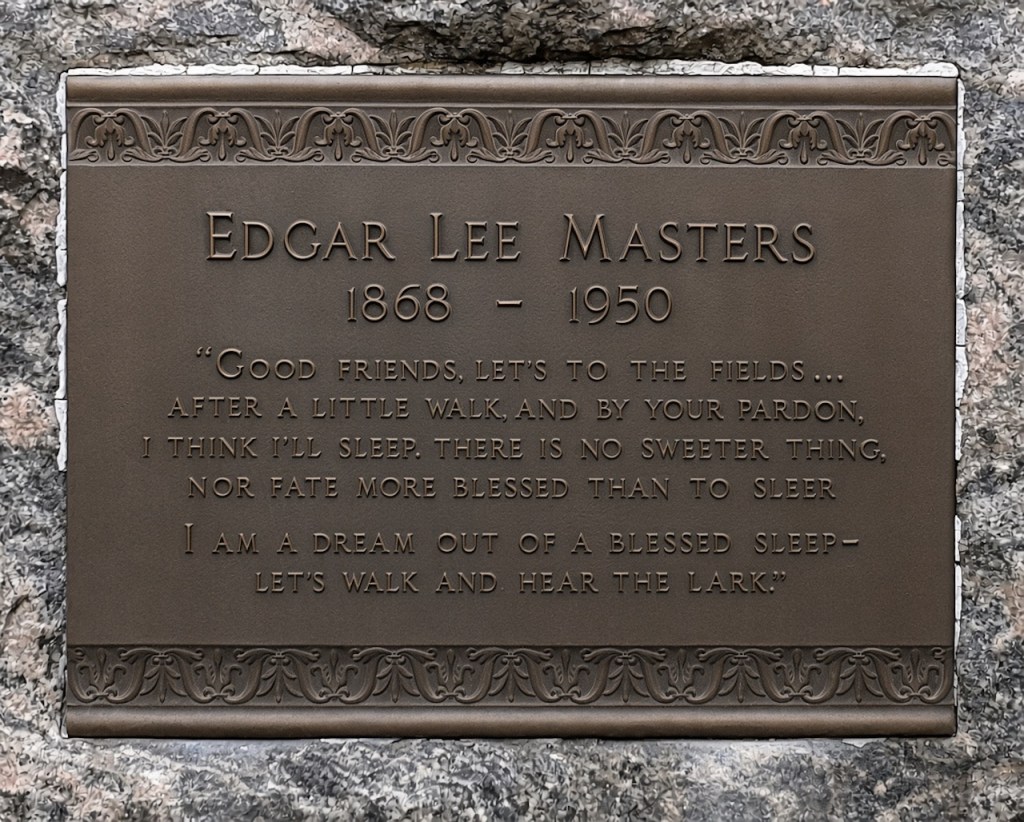
    Image Edgar Lee Masters Grave Marker
    Image: Edgar Lee Masters Grave Marker – Find a Grave

    Edgar Lee Masters’ “George Trimble”

    George Trimble deems himself the victim of his wife’s ruinous goading and now he lies unmourned in his Spoon River grave. But because his wife’s side of the story is never reported, the issue about her blame may raise doubts about Trimble’s accusation.

    Introduction and Text of “George Trimble”

    Edgar Lee Masters’ “George Trimble” from Masters’ American classic Spoon River Anthology features a failed politician, who blames his wife for goading him into throwing his hat into the ring. 

    Lying unnoticed, therefore unmourned, in his Spoon River grave, George Trimble considers himself a victim of his wife’s nagging. George joins the long, sad parade of characters who use their epitaphs to complain about their victimhood brought on by the behavior and urging of others.

    George Trimble

    Do you remember when I stood on the steps
    Of the Court House and talked free-silver,  
    And the single-tax of Henry George?  
    Then do you remember that, when the Peerless Leader
    Lost the first battle, I began to talk prohibition,
    And became active in the church?
    That was due to my wife,  
    Who pictured to me my destruction  
    If I did not prove my morality to the people.
    Well, she ruined me:
    For the radicals grew suspicious of me,
    And the conservatives were never sure of me—
    And here I lie, unwept of all.

    Commentary on “George Trimble”

    “George Trimble” tried to become a politician, but he had no solid political positions; therefore, he was unable to attract a following.   Like many of the other Spoon River epitaphs, his report is filled with attempts to rehabilitate his reputation, not by admitting his own blame but by placing the blame on others—especially his own wife.

    First Movement:   Remembering His Speech

    Do you remember when I stood on the steps
    Of the Court House and talked free-silver,  
    And the single-tax of Henry George?  

    George Trimble begins his lamentation from the grave by posing a question to his Spoon River fellow citizens:  he asks them if they remember a speech that he gave standing on the courthouse steps.  In that speech, he spoke about “free-silver” and the “single-tax of Henry George.”

    The references to “free silver” and “Henry George” demonstrate Trimble’s supposed political positions.  Those who favored the Free Silver policies wanted to replace the gold standard with silver.  

    And Henry George, who gained a reputation as an economist, believed that only land owners should be taxed. Although Henry George ran for office several times, he never succeeded in securing election.  

    However, Henry George did become quite famous through his writing and publishing his book, Progress and Poverty, which influenced the fields of politics as well as the economy.   In his book, Progress and Poverty, George attempts to work out and explain the issue of wide-spread poverty:

    Henry George seeks to explain why poverty exists notwithstanding widespread advances in technology and even where there is a concentration of great wealth such as in cities.

    Henry George’s influence through the “single tax” based on land value earned him a widely-noted reputation as he called for free trade, limitation on immigration from China, which was impacting employment options, encouragement of state ownership of certain natural resources, and regulation of monopolies.

    Unlike Henry George, George Trimble does not appear to hold any strong beliefs regarding any political position or policy; thus his lament becomes pathetic.  While Henry George did not allow losing elections to impede his progress as a thinker and achiever, George Trimble simply gave up any effort at success, and thus he had to engage a scapegoat to blame for his own lack of striving.

    Second Movement:  Losing the Election

    Then do you remember that, when the Peerless Leader
    Lost the first battle, I began to talk prohibition,
    And became active in the church?

    Without much political savvy or ideological conviction, Trimble loses the election.  He ironically refers to himself as “the Peerless Leader” who “lost the first battle.”  After this loss, Trimble says he took up the discussion of “prohibition,” and he joined the church, becoming an active member.  Thus he is showing some energy as he seems to be continuing to strive for accomplish of some political goal.

    However, the disparity between his actions and his paltry discourse shows a deeply conflicted psyche. By juxtaposing discussion about prohibition and becoming a church member, he is attempting to rehabilitate his moral fiber.

    Third Movement:   Weakness of Character

    That was due to my wife,  
    Who pictured to me my destruction  
    If I did not prove my morality to the people.

    George Trimble now concedes that he has done those things because of his wife.  He claims that she played on his sense of guilt by telling him he would court “destruction,” if he did not prove to people that he possessed “morality.” George is revealing his weakness of character if it was, in fact, accurate that his wife goaded him into trying to be that which he was not.  

    He appears to fail at every turn to think for himself, for after he reveals that it was his wife, who talked him into joining the church just to “prove [his] morality,” he seems to be implying that his wife might have been the reason he ran for office in the first place.   

    Sadly, the reader never learns what, if anything, George actually did accomplish.  Many of the other grave-yard residents possess that same flaw; their opinion of themselves remains much higher than any of their neighbors could muster in their favor.

    Fourth Movement:   A Shrewish Wife

    Well, she ruined me:
    For the radicals grew suspicious of me,
    And the conservatives were never sure of me—
    And here I lie, unwept of all.

    Finally, George levels his severe charge against his wife, whose side of the story is never told. He declares vehemently, “Well, she ruined me.”  He never gains any political backing, because “the radicals” became “suspicious of [him],” and “the conservatives were never sure of [him].”  

    Likely, Trimble does not even understand why both the “radicals” and the “conservatives” failed to trust him.  He fails to recognize that he had no solid political platform on which to base specific policies.  Little wonder that the two opposing parties would both remain wary of him.

    Now, George Trimble lies in his grave, and no one cares.  By Spoon River standards, he has gotten off lightly.  At least, he does not seem to have suffered the severe trauma of living as the target of hatred, as some of the other residents have lamented.  

    Still, George blames his wife that he has died an unremarkable death. Unfortunately, readers will continue to remain skeptical that even Mrs. Trimble were to blame because her side of issue is never revealed.

    But as George Trimble’s behavior goes, he joins many of his fellow cemetery reporters; blaming others for their own misfortune and lack of achievement is often the modus operandi of the Spoon River speakers from the grave.