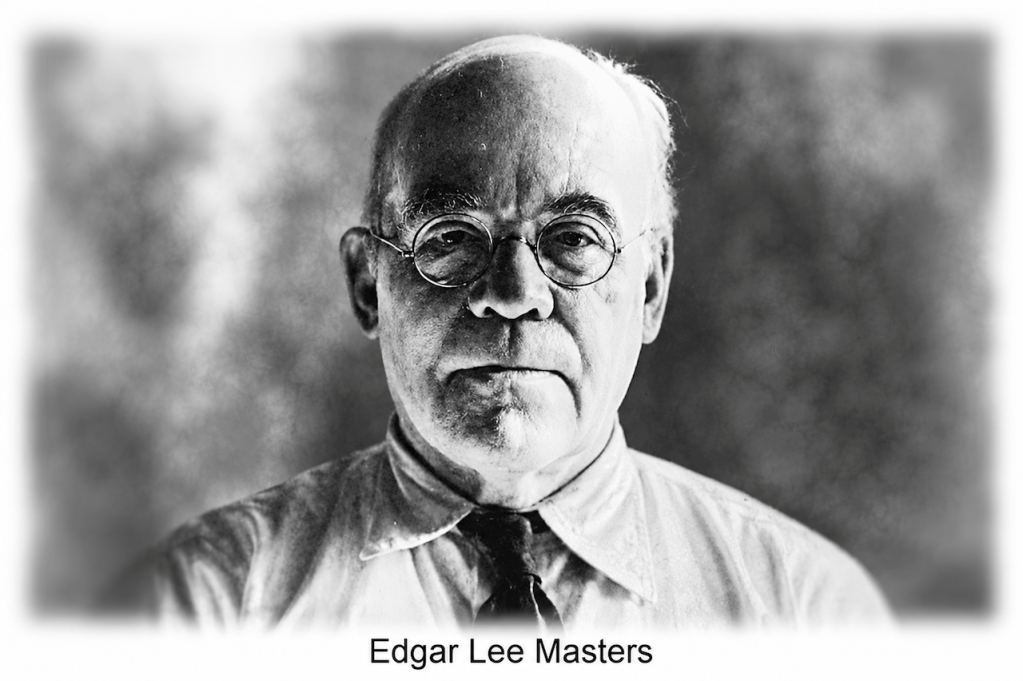
Edgar Lee Masters’ “Louise Smith”
In Edgar Lee Masters’ American-Innovative sonnet, “Louise Smith” is a woman, who was jilted after an eight-year engagement.
Introduction and Text of “Louise Smith”
In Edgar Lee Masters’ “Louise Smith” from his American classic Spoon River Anthology, the speaker laments allowing her love for the man who jilted her to turn into hate. This epitaph is offered in the form of an American-Innovative sonnet.
Louise is speaking many years after the sorrowful event. She becomes very philosophical about what happened to her. Thus Louise is offering advice to others about selfish wishes and the nature of the soul.
Louise Smith
Herbert broke our engagement of eight years
When Annabelle returned to the village
From the Seminary, ah me!
If I had let my love for him alone
It might have grown into a beautiful sorrow—
Who knows?—filling my life with healing fragrance.
But I tortured it, I poisoned it,
I blinded its eyes, and it became hatred—
Deadly ivy instead of clematis.
And my soul fell from its support,
Its tendrils tangled in decay.
Do not let the will play gardener to your soul
Unless you are sure
It is wiser than your soul’s nature.
Commentary on “Louise Smith”
Edgar Lee Masters’ American-Innovative sonnet, “Louise Smith,” feature the drama of a woman who was jilted after an eight-year engagement.
First Movement: An “Ah, Me!” Moment
Herbert broke our engagement of eight years
When Annabelle returned to the village
From the Seminary, ah me!
Louise says that after Annabelle came back to Spoon River “from the Seminary,” her fiancé Herbert broke their eight-year engagement. Louise then heaves a verbal indication of a sigh, “ah me!”
Second Movement: Waxing Philosophical
If I had let my love for him alone
It might have grown into a beautiful sorrow—
Who knows?—filling my life with healing fragrance.
Louise has garnered a philosophical stance regarding her unpleasant situation with Herbert. She has turned over the situation in her mind and concluded that if she had simply allowed herself to continue loving him and thus allowed herself to grieve, that love “might have grown into a beautiful sorrow.”
This “beautiful sorrow” likely would have led to a healing; she express that sentiment gently and graciously, “filling my life with healing fragrance.” The reader then realizes that Louise will possibly be announcing how she took a different route and the “healing fragrance” eluded her.
Third Movement: A Confession
But I tortured it, I poisoned it,
I blinded its eyes, and it became hatred—
Deadly ivy instead of clematis.
Louise then confesses that she “tortured” and “poisoned” that love. She “blinded its eyes,” and love transformed into hate. Louise allowed herself to become bitter, concentrating not on what the love had been but simply that Herbert had dumped her for Annabelle.
No doubt, Louise’s hatred was doubled as she included Annabelle in that violent emotion. Louise likens metaphorically her embattled loathing to “deadly ivy” whereas it had been “clematis.” Louise’s own hatred poisoned her mind and heart.
Fourth Movement: Poisoning Her Soul
And my soul fell from its support,
Its tendrils tangled in decay.
By allowing her heart and mind to poison her soul, to turn the beauty of clematis into the lethality of ivy, Louise caused her soul to fall “from its support.” Continuing with the plant metaphor, Louise says her soul support’s “tendrils tangled in decay.” Clematis produces lovely flowers as it climbs up a wall or trellis, but deadly ivy is poison ivy that can kill. Both grow on stems that are called tendrils.
Louise’s metaphor focuses on the tangling of the deadly ivy that would cause decay because the tangled stems would choke the plant keeping out air and sunlight. She is thus showing how her negative attitude choked off her positive emotions, which caused her love to become tangled in a web of hate where it decayed.
Fifth Movement: Advice to the Love-Lorn
Do not let the will play gardener to your soul
Unless you are sure
It is wiser than your soul’s nature.
Louise offers advice based on her own experience. She counsels others, “[d]o not let the will play gardener to your soul / Unless you are sure / It is wiser than your soul’s nature.”
Remaining with the plant metaphor, she tells her listeners not to allow selfish wishes to tend the soul, as a gardener would tend plants—that is, unless you know that those selfish wishes are more intelligent and “wiser” than the soul. Because the soul is always wiser than selfish wishes, Louise accomplishes the goal of her advice.


Questions, comments, suggestions offered in good faith are always welcome. If you use a pseudonym, please include your real name, if you expect a response.