Linda's Literary Home

Tag: character study

  • Edgar Lee Masters’ “Judge Somers”

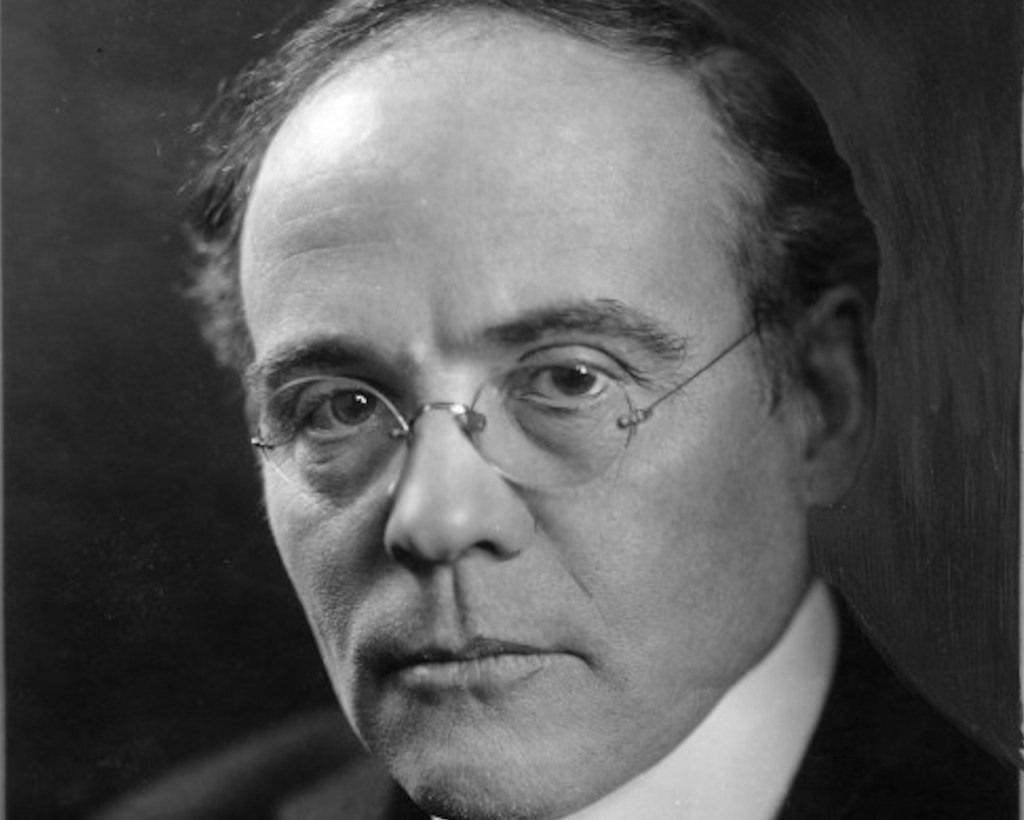
    Image:   Edgar Lee Masters http://www.jackmasters.net/mastelm.html Jack Masters
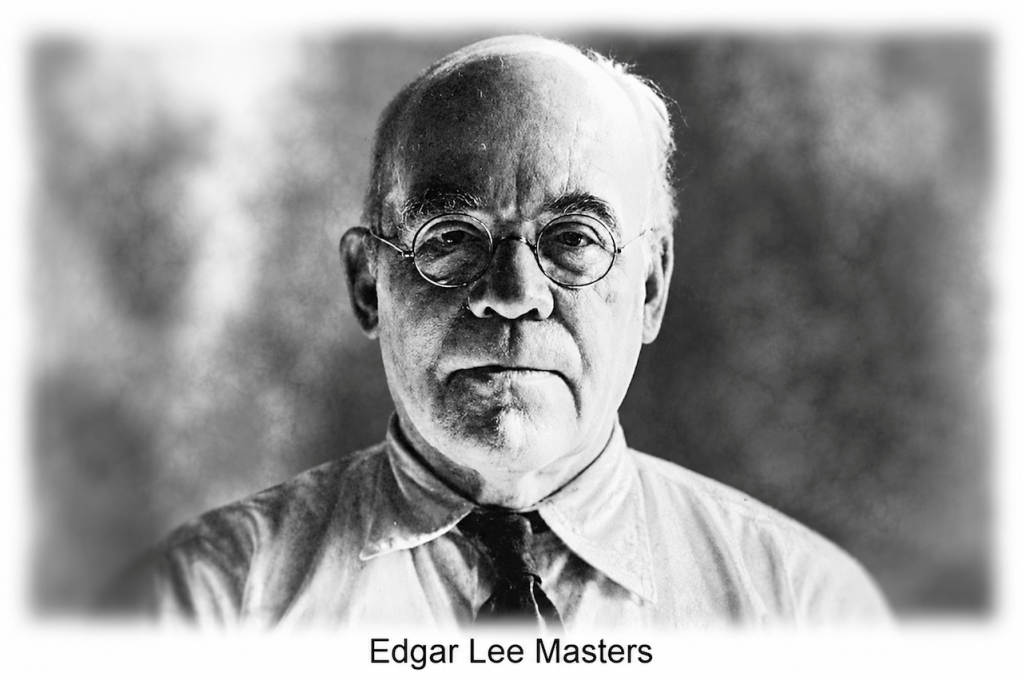
    Image: Edgar Lee Masters – Jack Masters

    Edgar Lee Masters’ “Judge Somers”

    Judge Somers’ complaint demonstrates that he is jealous of a man whom he deems to occupy a lower rung on the social status ladder than himself. 

    Introduction and Text of “Judge Somers”

    The class warfare that rages in the Spoon River reportage becomes evident as readers make their way through Edgar Lee Masters‘ American classic, Spoon River Anthology.  

    Businessmen, doctors, lawyers, judges, and politicians are the special targets of many of those whose employment ranges from simple shopkeepers, to farmers, to teachers, and householders whose outside job or career is never named.  Of course, preachers and other religious figures seldom come off well in these dramas either, likely owing to the atheist leanings of their creator.

    And the truly lowly dregs of society—murderers, prostitutes, adulterers, drunks, and thieves—are often given a bit too much of the benefit of doubt.  The good-hearted prostitute is often more credible than the banker despite the fact that his heart may be of equal goodness. 

    As in contemporary society where racism remains the primary cudgel of race-baiting hypocrites, back a century or so ago, the -ism du jour was classism, thus the emphasis on class warfare.

    While many of the epitaphs in Edgar Lee Masters’ American classic reveal issues motivated by class warfare, “Judge Somers” offers one of the most pronounced, as the judge deems himself better than his peers.

    The speaker in the epitaph “Judge Somers” is the judge himself, who wants to know why a man of importance, such as himself, has died unnoticed while the town drunk has been well noted.

    Judge Somers

    How does it happen, tell me,
    That I who was the most erudite of lawyers,
    Who knew Blackstone and Coke
    Almost by heart, who made the greatest speech
    The court-house ever heard, and wrote
    A brief that won the praise of Justice Breese—
    How does it happen, tell me,
    That I lie here unmarked, forgotten,
    While Chase Henry, the town drunkard,
    Has a marble block, topped by an urn,
    Wherein Nature, in a mood ironical,
    Has sown a flowering weed? 

    Commentary on “Judge Somers”

    Judge Somers’ complaint demonstrates that he is jealous of a man he deems to occupy a lower rung on the social status ladder than he does.

    First Movement:  Why Me?

    How does it happen, tell me,
    That I who was the most erudite of lawyers,
    Who knew Blackstone and Coke
    Almost by heart, who made the greatest speech
    The court-house ever heard, and wrote
    A brief that won the praise of Justice Breese— 

    This poem consists of two movements each beginning with a command embedded in a question.  The judge is demanding an answer to his question in both instances.  

    Judge Somers begins by asserting his demand/question, posited with “How does it happen, tell me.”  But in the first movement, he does not finish the question proper; he merely prefaces it by reporting all of his achievements.

    The judge feigns no modesty in his self-evaluation but flatly asserts that he was the most brilliant of attorneys.  Part of his erudition and brilliance was due to his having “almost by heart Blackstone and Coke.”  

    The judge is alluding to two British legal writers—Sir William Blackstone (1723-1780), who wrote the Commentaries, and Sir Edward Coke(1552-1634), who wrote and published treatises titled Institutes of the laws of England.

    The judge’s knowledge of these works sounds much more important than it is; a lawyer or judge practicing in a 19th century Illinois rural community would hardly be confronted with issues dealt with in these obscure legal works.

    Judge Somers then boasts that he “made the greatest speech / The court-house ever heard.”  In his own mind, not only was he a great orator, but he also “wrote / A brief that won the praise of Justice Breese.”  

    Again, the fictional speaker Somers alludes to a real-life justice, Justice Sidney Breese, who served on the Illinois Supreme Court as both a judge and as chief justice.  

    Second Movement:  How Does It Happen to Me?

    How does it happen, tell me,
    That I lie here unmarked, forgotten,
    While Chase Henry, the town drunkard,
    Has a marble block, topped by an urn,
    Wherein Nature, in a mood ironical,
    Has sown a flowering weed?

    So with such a shining reputation for accomplishment, the judge again poses his demand/question:  “How does it happen, tell me.”  He then completes the question for he wants to know why he is left to “lie here unmarked, forgotten.”  

    And to make matters worse, that “town drunkard” and scoundrel “Chase Henry” has been afforded “a marble block, topped by an urn.”  The judge adds that, “Nature,” with a splash of irony “has sown a flowering weed.”   

    The jealous judge then takes a bit of comfort from the ironic weed, but still he continues to chafe at the fact that he is forgotten while the town drunk seems to be celebrated.

    The reader knows a secret that the judge obviously does not know: that Henry’s memorial has nothing to do with Henry but can be laid at the door of rivalry between the Protestants and the Catholics.
  • Edgar Lee Masters’ “Serepta Mason,” “Amanda Barker,” “Constance Hately,” and “Chase Henry” 

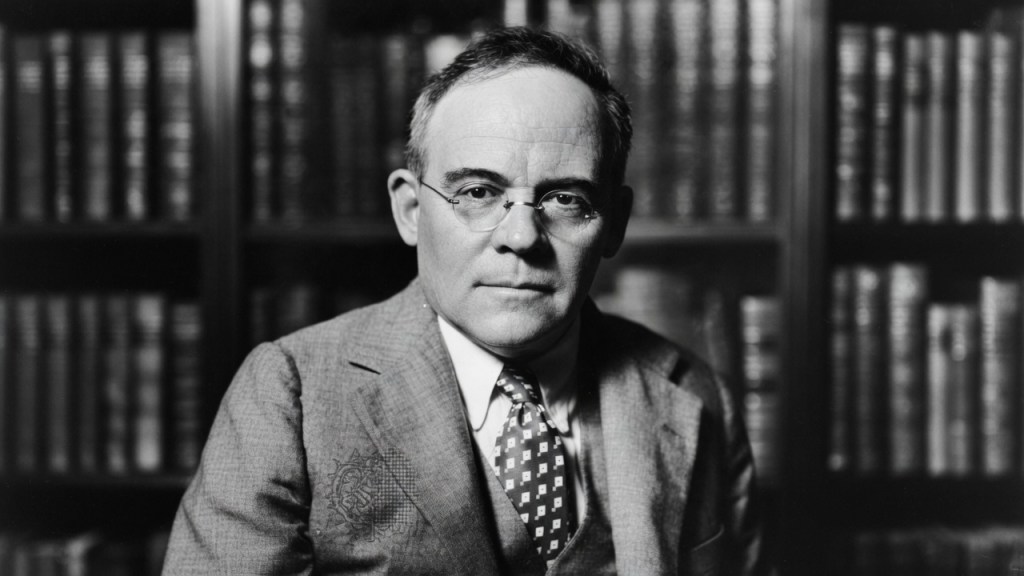
    Image: Edgar Lee Masters https://factfile.org/10-facts-about-edgar-lee-masters#google_vignette
    Image: Edgar Lee Masters

    Edgar Lee Masters’ “Serepta Mason,” “Amanda Barker,” “Constance Hately,” and “Chase Henry” 

    The four characters from Edgar Lee Masters’ Spoon River Anthology—”Serepta Mason,” “Amanda Barker,” “Constance Hately,” and “Chase Henry”— offer very specific complaints against others in the town who affected their lives in deleterious ways.

    Introduction: Four Flawed Characters Reveal Their Thoughts

    Serepta Mason accuses Spoon River residents of stunting her growth, as she likens herself to a flower.  Amanda Barker died in childbirth and blames her husband for killing her because he knew her poor health made her unable to bear a child.

    “Constance Hately” and “Chase Henry” offer brief sketches of two Spoon River curmudgeons.  The poems feature ten and eleven lines respectively.  Both reveal flawed characters who feel the need to unload the thoughts they lived with.  

    As most of the Spoon River characters confess sins, these two are no exception.  Constance seems to be trying to set the record straight, while Chase boasts about the irony that sometimes attaches to good vs evil intentions.

    Text of “Serepta Mason”

    My life’s blossom might have bloomed on all sides
    Save for a bitter wind which stunted my petals
    On the side of me which you in the village could see.
    From the dust I lift a voice of protest:
    My flowering side you never saw!
    Ye living ones, ye are fools indeed
    Who do not know the ways of the wind
    And the unseen forces
    That govern the processes of life.

    Reading of “Serepta Mason”  

    Commentary on “Serepta Mason”

    Serepta complains that the “fools” “in the village” were ever unable to understand that she had a good side as a well as a not so good one.  She begins her lament by announcing that she might have been a well-rounded, fully developed personality if she had not been “stunted” by the nastiness of the people in her town.

    She metaphorically likens her growth to a flower: “my life’s blossom,” which “might have bloomed on all sides.”  But because of the “bitter wind” “her petals” were kept from developing fully, and that “stunted” side of her was all that the villagers saw.

    Therefore, as the other ghosts from the Spoon River cemetery do, she raises her “voice of protest.”  She enlightens the villagers that she did, in fact, have a “flowering side,” but they never saw it.  She foists all the blame on the villagers, not considering her own share of blame that might be part of the equation.

    Serepta concludes her accusation with a rather grandiose philosophical attempt to convince herself that she is, in fact, accurate in her assessment:  she calls the “living ones” “fools” because they “do not know the ways of the wind / And the unseen forces / That govern the processes of life.”  The recurrence of the metaphor “wind” implies that she is castigating the townies for being gossip-mongers.

    Serepta’s complaint implies that she was damaged and her growth stunted by town gossip signified by “wind”:  “a bitter wind which stunted my petals” and “Who do not know the ways of the wind.”  

    Text of “Amanda Barker”

    Henry got me with child,  
    Knowing that I could not bring forth life
    Without losing my own.  
    In my youth therefore I entered the portals of dust.
    Traveler, it is believed in the village where I lived
    That Henry loved me with a husband’s love,
    But I proclaim from the dust
    That he slew me to gratify his hatred.

    Reading of “Amanda Barker” 

    Commentary on “Amanda Barker”

    Unlike Serepta who waxes poetic and philosophical with metaphoric comparison and aphoristic critique, Amanda speaks her mind very plainly and bluntly.  Amanda was married to Henry, who was aware that Amanda could not procreate children. 

    Henry knew that pregnancy would kill Amanda. Henry, however, impregnated Amanda while knowing that deadly fact, and sure enough, Amanda died young:  “In my youth therefore I entered the portals of dust.”

    Calling those who might have stumbled upon her tombstone “traveler,” Amanda offers her lament to those vague persons. She insists that the Spoon River citizens  found nothing wanting in Henry’s love for Amanda, but Amanda knew the truth:  Henry hated her and deliberately killed her out of that hatred. Amanda’s main focus in on having returned to “dust” before having lived her life.

    Constance Hately

    You praise my self-sacrifice, Spoon River,
    In rearing Irene and Mary,
    Orphans of my older sister!
    And you censure Irene and Mary
    For their contempt for me
    But praise not my self-sacrifice,
    And censure not their contempt;
    I reared them, I cared for them, true enough!—
    But I poisoned my benefactions
    With constant reminders of their dependence.

    Reading of “Constance Hately”

    Commentary on “Constance Hately”

    Constance addresses Spoon River residents, calling attention to the fact that they were always commending her for raising “Irene and Mary,” the orphaned daughters of her older sister.  She further reminds them that they also condemned Irene and Mary because they did not offer gratitude for their aunt’s sacrifice.

    Constance now reveals that the citizens’ appraisal of her “self-sacrifice” and the nieces’ attitude was flawed and inaccurate on both counts:  she reports that she does not deserve “praise” for her sacrifice, and the nieces, Irene and Mary, do not deserve the town’s scorn for their disrespect for her.  

    Constance admits that, indeed, she did raise them and she cared for them, but while she was doing so, she “poisoned” the girls’ minds “With constant reminders of the dependence.”  

    Her confession perhaps reveals a measure of remorse for her failure with her nieces, but on the other hand, she seems to be gloating that the town got it so wrong about her relationship with them.


    Text of “Chase Henry”

    In life I was the town drunkard;  
    When I died the priest denied me burial
    In holy ground.  
    The which redounded to my good fortune.  
    For the Protestants bought this lot,
    And buried my body here,  
    Close to the grave of the banker Nicholas,  
    And of his wife Priscilla.  
    Take note, ye prudent and pious souls,
    Of the cross-currents in life
    Which bring honor to the dead, who lived in shame.

    Reading of “Chase Henry”  

    Commentary on “Chase Henry”

    Chase Henry played his role in life as the town drunk, to which he seems gleeful to admit.  Of course, that was “in life.”  Now, he, like many of the Spoon River deceased, can wax philosophical and indignant about how he was treated “in life.”

    Chase’s indignity centers on the fact that after he died, his body was not allowed “burial / In holy ground.”  The priest would not accept the body of an immoral “drunkard” to foul the cemetery of the Catholic Church.

    But Chase deems that he has the last laugh because Protestants defied the Catholics by purchasing a burial plot for the drunkard.  Now he rests “Close to the grave of the banker Nicholas, / And of his wife Priscilla.”  Chase can boast that he has come up in the world—a lowly drunkard buried nearby to a highly regarded banker.

    Chase, in his best condescending, supercilious tone, offers a piece of advice to all “ye prudent and pious souls.”  He warns them that circumstances can change because of the “cross-currents of life,” and those who “lived in shame” can find “honor” in death.

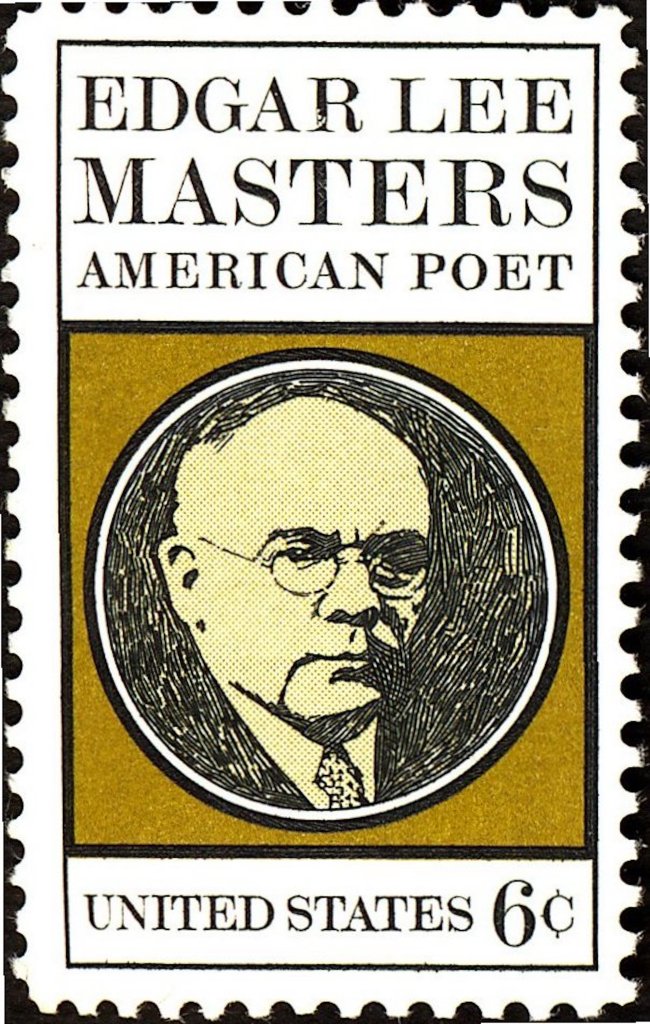
    Image: Edgar Lee Masters – Commemorative Stamp
  • Edgar Lee Masters’ “Hod Putt”

    Image:   Edgar Lee Masters  https://www.best-poems.net/edgar_lee_masters/index.html#google_vignette
    Image: Edgar Lee Masters

    Edgar Lee Masters’ “Hod Putt”

    Hod Putt chafed at his low station in life as an unsuccessful laborer who never seemed able to get ahead. His intense envy of those who were successful lead him down a path to perdition.

    Introduction and Text of “Hod Putt”

    The deceased inhabitants of the fictional village of Spoon River in Edgar Lee Masters’ American classic, Spoon River Anthology, are finally free to let loose their venom on whoever crossed them in life.  They now feel free to testify, but their testimony is only their side of it.  They can say whatever they like without being rebuked, reprimanded, or criticized.

    The advantage of this kind of scenario, masterfully crafted by the poet, is that the dead people have the same stage to make their claims.  The study thus reveals differing points of view, even as the individual speakers sometimes focus on similar circumstances.

    The Spoon River character study begins with an epitaph featuring the character “Hod Putt,” which qualifies as a versanelle, a short, pithy verse with a gripping punch offering a glimpse at human nature. The poem delivers that interesting punch as it reveals a truth about human nature and its desire to justify the unjustifiable to flatter the ego.

    Hod Putt 

    Here I lie close to the grave
    Of Old Bill Piersol,  
    Who grew rich trading with the Indians, and who
    Afterwards took the bankrupt law  
    And emerged from it richer than ever.
    Myself grown tired of toil and poverty
    And beholding how Old Bill and others grew in wealth,
    Robbed a traveler one night near Proctor’s Grove,
    Killing him unwittingly while doing so,
    For the which I was tried and hanged.
    That was my way of going into bankruptcy.
    Now we who took the bankrupt law in our respective ways  
    Sleep peacefully side by side.

    Commentary on “Hod Putt”

    Apparently, considering himself a failure in life’s rat race for riches, this speaker Hod Putt envied those who were successful or at least more successful than he was.

    From his perch in the afterworld, Putt attempts to improve his lack of substance by concocting an equivalence between his moral bankruptcy and the financial bankruptcy experienced by “Old Bill Piersol.”

    Putt belongs to that classification of Spoon River inmates who try to assuage their own guilt by laying a thick blanket of culpability onto others.  Readers can see clearly that these scofflaws are merely cutting off the heads of others so that they may appear to stand taller.

    First Movement:   Blinding Jealousy

    Here I lie close to the grave
    Of Old Bill Piersol,
    Who grew rich trading with the Indians, and who
    Afterwards took the bankrupt law
    And emerged from it richer than ever. 

    Hod Putt informs his audience that his grave lies near the “grave / Of Old Bill Piersol.” He reports that Piersol was an Indian trader who became wealthy through his lucrative trade association.

    Piersol, however, went bankrupt but then recovered his wealth quickly and grew “richer than ever”; these events cause Putt’s jealous nature to overcome his ability to think clearly.

    Second Movement:  A Double Felony

    Myself grown tired of toil and poverty
    And beholding how Old Bill and others grew in wealth,
    Robbed a traveler one night near Proctor’s Grove, 

    Putt implies that he was somewhat lackadaisical with no deep interest in high achievement; just keeping bread on the table caused him to grow “tired of toil and poverty.” While not fond of work, he also found poverty inconvenient.

    Putt assumed that “Old Bill and others” had used the system to become wealthy; thus he assumed he could also use the system for his own purposes.  He, therefore, dreamed up a plan: instead of working for his pay, he would take from others. He began his new endeavor in crime by robbing a traveler “near Proctor’s Grove.”

    Third Movement: Faulty Logic

    Killing him unwittingly while doing so,
    For the which I was tried and hanged.
    That was my way of going into bankruptcy.

    To Putt’s chagrin, he kills the victim while trying to take his property. This felony then gets Putt “tried and hanged.” Like any other act of faulty logic, he asserts that his act just constituted “bankruptcy.”

    He, no doubt, believes he is clever in comparing his crimes to what he assumes to be the crimes of others, as he draw a moral equivalency between financial bankruptcy and moral bankruptcy.  But his utterly counterfeit comparison to businessmen who declare legitimate bankruptcy according to the law demonstrates the criminal nature of Putt’s mind.

    Fourth Movement: Morally Bankrupt

    Now we who took the bankrupt law in our respective ways
    Sleep peacefully side by side.

    Putt shows that he is morally bankrupt; he concocts a moral equivalency between his felonious crimes and those of successful men, in this case, Old Bill Piersol, who merely followed bankruptcy laws.

    The smug Putt claims that he and Piersol “sleep peacefully side by side”; this claim implies that their “bankruptcies” are just the same.

    A Two-Fold Felon

    Readers will understand the difference between the two “bankruptcies”: Hod Putt is a criminal trying to vindicate himself while, in fact, revealing his felonious nature. Bankruptcy laws work within the legal system for those who declare bankruptcy.

    The laws governing bankruptcy do not exist in order to encourage theft but to allow the unfortunate to place their financial endeavor on the path to recovery. Putt declares that he intended to rob a man, but while committing the robbery, he killed the man.

    It is not likely that he intended to kill the man as he was committing his intensional felony.  But then, because of the accidental killing, Putt becomes a two-fold felon, failing to even understand his criminal acts. 

    Now after death, he disingenuously claims to be “sleeping peacefully side by side” with Old Bill Piersol. In his own imagination, Putt is free to believe that his “sleep” after death and that of a legitimate businessman are the same. 

    But imagination does not make it so.  The karma of all individuals dictates how well they rest—not how things may seem at any given time. Apparently, Putt remains blissfully unaware that karma will reckon with him—if not today, nor tomorrow, then sometime in future.