Linda's Literary Home

Tag: Spoon River Anthology

  • Edgar Lee Masters’ “Doc Hill”

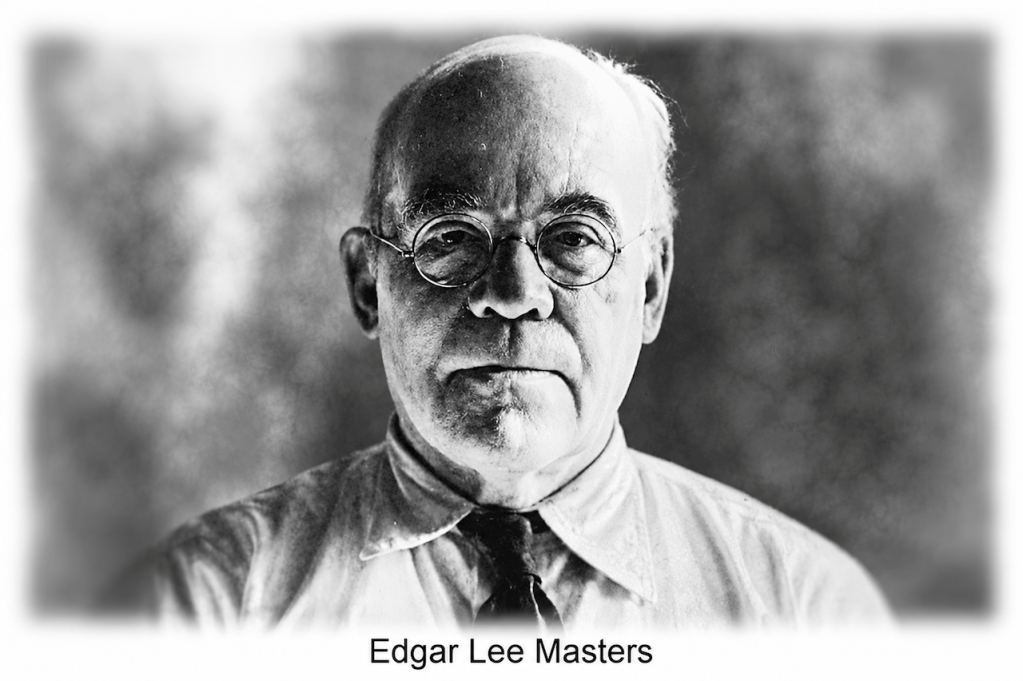
    Image: Edgar Lee Masters https://www.best-poems.net/edgar_lee_masters/index.html#google_vignette
    Image: Edgar Lee Masters

    Edgar Lee Masters’ “Doc Hill”

    Doc Hill was spurned by his wife and apparently also by his lackluster son.  The sad physician turned to healing the sick to find an outlet for his love and affection.

    Introduction and Text of “Doc Hill”

    The 13-line epitaph “Doc Hill” from Edgar Lee Masters’ American classic, Spoon River Anthology features the pathetic character of a town doctor who basically lived his life through the people he cared for in his medical practice.  Like many of the other graveyard complaining epitaphs, Doc Hill’s is full of pathos and self-pity.  

    But while apparently erasing from memory his own family, the physician does hold special regard for the many mourners who attended his funeral.  He especially entertained deep sorrow, however, for one Spoon River resident, Em Stanton. 

    Although the doc does not elaborate upon his relationship with Em Stanton, his reticence allows his audience to imagine the extent that would cause him such sorrow at seeing her standing alone grieving.

    Doc Hill 

    I went up and down the streets
    Here and there by day and night,
    Through all hours of the night caring for the poor who were sick.
    Do you know why?  
    My wife hated me, my son went to the dogs.
    And I turned to the people and poured out my love to them.
    Sweet it was to see the crowds about the lawns on the day of my funeral,  
    And hear them murmur their love and sorrow.
    But oh, dear God, my soul trembled, scarcely able
    To hold to the railing of the new life
    When I saw Em Stanton behind the oak tree
    At the grave,
    Hiding herself, and her grief!

    Commentary on “Doc Hill”

    Doc Hill confesses that his attention to his medical practice was only in part to assist the needy; it also assisted him by infusing into his life the love and affection that he failed to find in his own family life.

    The dejected Doc Hill harbors a secret that will remain a mystery. Readers are left to imagine the meaning of the implied relationship between the physician and Em Stanton, a woman who secretly visits the gravesite as the doctor’s body is being interred.

    First Movement:  The Wages of Altruism?

    I went up and down the streets
    Here and there by day and night,
    Through all hours of the night caring for the poor who were sick.

    The doc begins by reporting that he spent most of his time with his patients, most of whom were poor as well as sick.   Doc Hill made his way along the streets of the town during both daylight hours and during the nighttime.  His reason for spending that time away from home was in order to care for sick people, who needed and appreciated him.  

    As the doc’s life centered on his profession, he seemingly behaved as a rather altruistic individual.  However, readers become more and more skeptical of the scads of information given out by these Spoon River grave reporters.  

    Most of epitaphs include in their reporting complaints offered solely for the purpose of rehabilitating their reputations.  Instead of accepting any fault on their part, they are quick to lay all blame on others for their pathetic lots.  

    While Doc Hill has some blame to lay on his wife and his reprobate son, his main issue is that while he was seemingly abandoned and/or mistreated by his own family, the many sick and poor people of the town came to love him for his medical service to them.

    Yet, the physician seems to leave open the possibility that his motives were perhaps not as selfless and altruistic as they may seem.  Thus he finds it important to explain his reasoning for giving so much attention to others outside of his home life.

    Second Movement:  No Love at Home

    Do you know why?  
    My wife hated me, my son went to the dogs.
    And I turned to the people and poured out my love to them.

    Lest one think the doctor was an entirely altruistic workaholic or simply obsessed with his medical practice, he wants to explain that such was not the case.  The doc begins by proffering the question as to why he spent so much time with his ill patients.  

    He then reveals “why”:  His wife detested him, and his son felt no better toward his father.  Thus the doc had no family life.  He offers no details about his wife and son, other than that they abandoned him emotionally.

    The doctor had to find consolation somewhere so he turned to his profession that involved other people, particularly sick folks, who became appreciative of his services.  However, the doc does not seem to assert that he was merely looking for love for himself. 

    Part of his personality seems genuinely caring, although it also offers him an excuse for remaining absent from his home, marriage, and fatherhood.  Likely the doc’s explanation makes him sound more altruistic than one who is expecting attention in return: he was looking for people to whom he could give his love and caring. 

    The doc’s medical profession afforded him the opportunity, or perhaps excuse, to spend all of his time away from his own family while attending to others.  Less pathetic  and crass than many of the Spoon River crowd, he, nevertheless, remains one of the forlorn characters as he spins his yarn of sorrow.

    Third Movement:   The Return of Love

    Sweet it was to see the crowds about the lawns on the day of my funeral,  
    And hear them murmur their love and sorrow.

    Interestingly, the day’s events of his funeral allow him to revel in the return of the love he had bestowed, for he hears sweet murmurings emanating from the many folks attending the event as they offer their little tributes to the man who tended to their health needs.  Thus in death, he has achieved what he was never able to achieve in life with his own family.  

    The summation of caring and affection that showed itself on the day of his funeral seems to make up for the familial affection he had not experienced.   And that lack seems to extend into death, for he mentions the presence of neither his wife nor his son at his funeral.  Readers then may assume that they were not present, or that the doc cared so little for them that he fails to bother to account for their reactions to his death.

    Fourth Movement:  A Grieving Paramour?

    But oh, dear God, my soul trembled, scarcely able
    To hold to the railing of the new life
    When I saw Em Stanton behind the oak tree
    At the grave,
    Hiding herself, and her grief!

    However, the doc does reveal a rather mysterious implication about himself when he describes a woman, Em Stanton, whom he observes as she appears to hide “behind the oak tree,” pathetically watching the events at the grave-site.  Em Stanton appears to be assuaging her grief as she hides from the other mourners.  

    The observation of Em standing behind a tree apparently grief-stricken shakes the doc so badly that he can hardly hold his soul power together as he tries to “hold to the railing of the new life.”  This extreme reaction does seem to indicate that his relationship with Em Stanton likely indicates a close and deep emotional tie.

    The doc’s showering of affection on the townsfolk possibly included a romantic relationship with the woman behind the tree, Em Stanton, a woman who is now left to grieve in hiding.  By extension, readers might wonder if there may be other “Em-Stantons,” who simply failed to appear and mourn as his own family failed to appear.

  • Edgar Lee Masters’ “Conrad Siever”

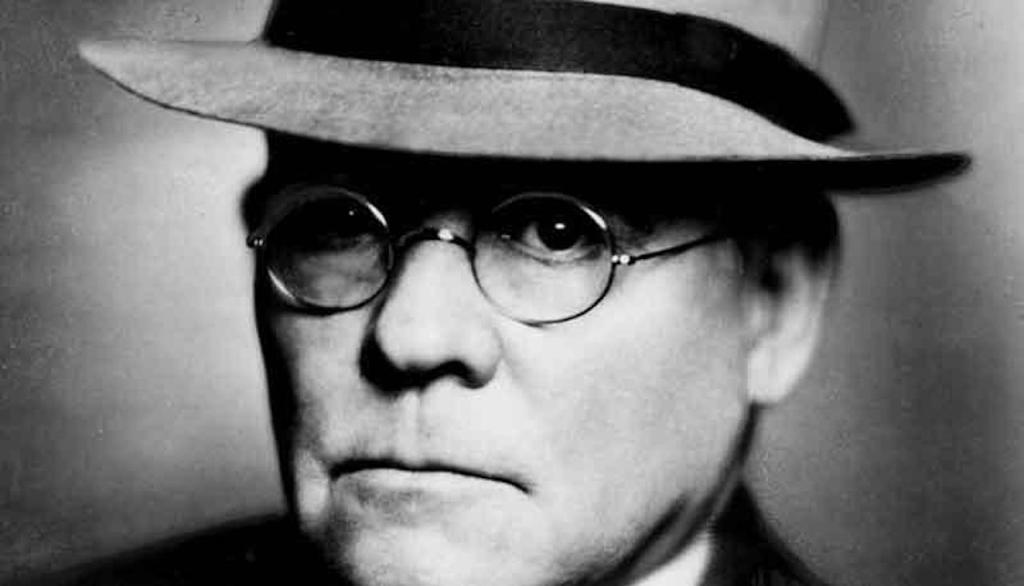
    Image: Edgar Lee Masters http://www.jackmasters.net/mastelm.html Jack Masters
    Image: Edgar Lee Masters – Jack Masters

    Edgar Lee Masters’ “Conrad Siever”

    Conrad Siever contrasts his feelings for two distinctive segments of his land: the part with the cemetery he finds “wasted”; but he loved the acres that held his apple tree and lovingly nurtured that tree in life and continues to do so even after death. 

    Introduction and Text of “Conrad Siever”

    The speaker of Edgar Lee Masters’ “Conrad Siever” from Spoon River Anthology is contrasting his feelings for the acres of his property where a cemetery is located with those acres that hold his prized apple tree.    

    Siever’s property is mentioned in two other Spoon River poems; in “Hare Drummer,” Hare asks if the young folk “still go to Siever’s / For cider, after school.”  Also in the epitaph,”Amelia Garrick,” Amelia refers to Siever’s woods, “Where the thickets from Siever’s woods / Have crept over.”  Thus, the reader infers that Conrad Siever owned many acres of land.

    The structure of this poem presents two movements that basically offer the theme of “not there, but here.” The first movement dramatizes the speaker’s negative or “not there” rubric; he did not love the part of his property that tendered certain features.  

    The second movement dramatizes the “but here” or positive part of the construction, which is the section of his land that he loved and attended to in life and seemingly continues to do so in death.

    Conrad Siever

    Not in that wasted garden
    Where bodies are drawn into grass
    That feeds no flocks, and into evergreens
    That bear no fruit—
    There where along the shaded walks
    Vain sighs are heard,
    And vainer dreams are dreamed
    Of close communion with departed souls—
    But here under the apple tree
    I loved and watched and pruned
    With gnarled hands
    In the long, long years;
    Here under the roots of this northern-spy
    To move in the chemic change and circle of life,
    Into the soil and into the flesh of the tree,
    And into the living epitaphs
    Of redder apples!

    Commentary on “Conrad Siever”

    Conrad Siever loved his apple tree and lovingly nurtured it in life and death.  

    First Movement:   Fruitless Evergreens

    Not in that wasted garden
    Where bodies are drawn into grass
    That feeds no flocks, and into evergreens
    That bear no fruit—
    There where along the shaded walks
    Vain sighs are heard,
    And vainer dreams are dreamed
    Of close communion with departed souls—

    Despite his owning considerable property, Siever begins with a negative assertion that he did not take his essential being in “that wasted garden,” where despite the continued interest of other people, there is no food for “flocks” and where fruitless evergreens abide. 

    He points out that that wasted garden strikes him as rather useless, where “vain sighs are heard,” and he adds that even “vainer dreams are dreamed.”  He is revealing that the part of  his property that includes a cemetery is where those vain dreamers come to attempt “close communion with departed souls.”

    Siever first concentrates on the part of his land that he finds least useful and therefore least important.  By beginning with a sort of condemnation of uselessness, he thereby emphasizes his interest in productive endeavors, which he finds important, much more significant than the land that merely hold the bodies of dead folks.

    Second Movement:  Not There, but Here

    But here under the apple tree
    I loved and watched and pruned
    With gnarled hands
    In the long, long years;
    Here under the roots of this northern-spy
    To move in the chemic change and circle of life,
    Into the soil and into the flesh of the tree,
    And into the living epitaphs
    Of redder apples!

    Siever has remarked that it is not to those useless parts of his property that he was attached but instead to “here under the apple tree.”  It was in this place that the speaker  afforded his affection for his property; he worked on his apple tree, pruning and tending to its needs, even as his hands became “gnarled,” likely causing pain during his hard labor.  Obviously, Siever’s real love and occupation was for his apple tree; thus, he tended it with great care and affection.

    Now Siever is buried under his beloved “northern-spy,” specifically and more importantly, “under the roots.” And he attests that he is still attending to his former occupation.  His spirit is now able to “move in the chemic change and circle of life.” That spirit circulates “into the soil and into the flesh of the tree.”  

    Siever dramatically and triumphantly announces that just as when alive he strove to produce better apples, his spirit is now accomplishing the same goal as it pushes itself “into the living epitaphs / Of redder apples!”

    Siever has shown that he bestowed his love and attention upon the fertile, apple-growing segment of his land.  Instead of “epitaphs” of dead people, he continues to grow living reports of useful fruit as he continues to pursue “redder apples.”  

    He is demonstrating that his loving interest was in useful, productive activity, rather than dreaming and sighing and eternal waiting.  Even in death, his strong spirit continues his dedication to caring for his apple producing tree.

  • Edgar Lee Masters’ “Hare Drummer”

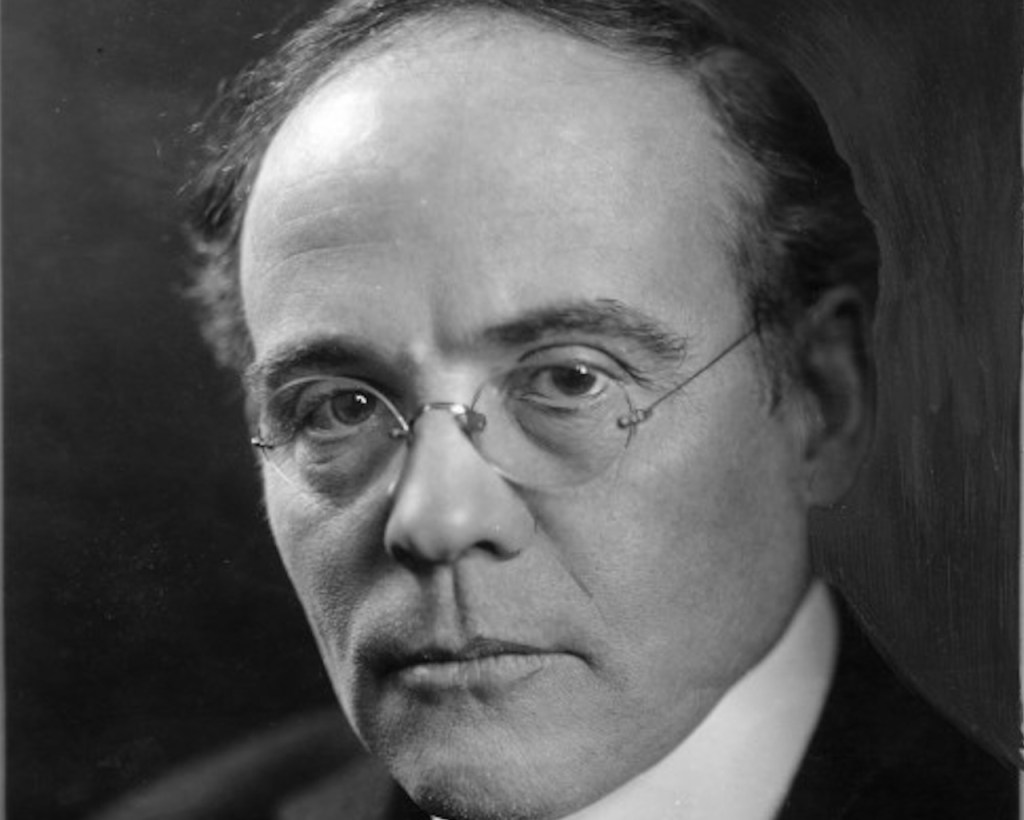
    Image: Edgar Lee Masters https://www.best-poems.net/edgar_lee_masters/index.html#google_vignette
    Image: Edgar Lee Masters

    Edgar Lee Masters’ “Hare Drummer”

    ”Hare Drummer” portrays beautiful memories of pastoral scenery.

    Introduction and Text of “Hare Drummer” 

    Hare Drummer asks a series of questions, seeking to learn how things have continued on after his death.  That question format is reminiscent of A. E. Housman’s “Is my team ploughing,”  in which a dead man asks for a report about how things are going now that he has died.

    Hare Drummer

    Do the boys and girls still go to Siever’s  
    For cider, after school, in late September?
    Or gather hazel nuts among the thickets  
    On Aaron Hatfield’s farm when the frosts begin?
    For many times with the laughing girls and boys
    Played I along the road and over the hills
    When the sun was low and the air was cool,  
    Stopping to club the walnut tree  
    Standing leafless against a flaming west.
    Now, the smell of the autumn smoke,
    And the dropping acorns,
    And the echoes about the vales
    Bring dreams of life. They hover over me.
    They question me:  
    Where are those laughing comrades?
    How many are with me, how many
    In the old orchards along the way to Siever’s,  
    And in the woods that overlook  
    The quiet water?

    Interpretive Reading 

    Commentary on “Hare Drummer”

    Hare Drummer poses a series of questions about what life has been like for those who have lived on after he died. 

    First Movement:  Does Life Go On After? 

    Do the boys and girls still go to Siever’s  
    For cider, after school, in late September?
    Or gather hazel nuts among the thickets  
    On Aaron Hatfield’s farm when the frosts begin?

    Hare begins by asking if the young folk “still go to Siever’s / For cider, after school, in late September?”  He continues with his second question, asking if they still “gather hazel nuts among the thickets” on the farm owned by Aaron Hatfield “when the frost begins.”

    Hare’s purpose in questioning seems quite innocent, as if he is merely curious about the continuation of life as he had seen it.  And his questions and comments simply paint a portrait of simple, pastoral life including farms, hills, trees, cold weather, and “quiet water.”

    Second Movement:  Down Memory Lane

    For many times with the laughing girls and boys
    Played I along the road and over the hills
    When the sun was low and the air was cool,  
    Stopping to club the walnut tree  
    Standing leafless against a flaming west.

    Hare then offers the explanation that he had accompanied “the laughing girls and boys” as they all “played [ ] along the road and over the hills.”  He remembers how they would knock down walnuts from the tree which stood “leafless against the flaming west.”

    Third Movement:  The Smell of Autumn Smoke

    Now, the smell of the autumn smoke,
    And the dropping acorns,
    And the echoes about the vales
    Bring dreams of life. They hover over me.

    Intimating that he now smells “autumn smoke” and acorns drop on his grave, he dramatizes how “echoes about the vales / Bring dreams of life.”  His  memory abounds with sights and sounds that he experienced when he was alive.  These dreams and experiences “hover over me,” he asserts.

    Fourth Movement:  Questioned by Phantoms

    They question me:  
    Where are those laughing comrades?
    How many are with me, how many
    In the old orchards along the way to Siever’s,  
    And in the woods that overlook  
    The quiet water? 

    And just as Hare questions some phantom audience, he is questioned by the same phantoms.  They want to know how many of his former playmates are with him and how many are still making their way through “the old orchards along the way to Siever’s.”  And he also wonders how many still visit “the woods that overlook / The quiet water.”

     Edgar Lee Masters - Commemorative Stamp
    Image: Edgar Lee Masters – Commemorative Stamp
  • Edgar Lee Masters’ “Frank Drummer”

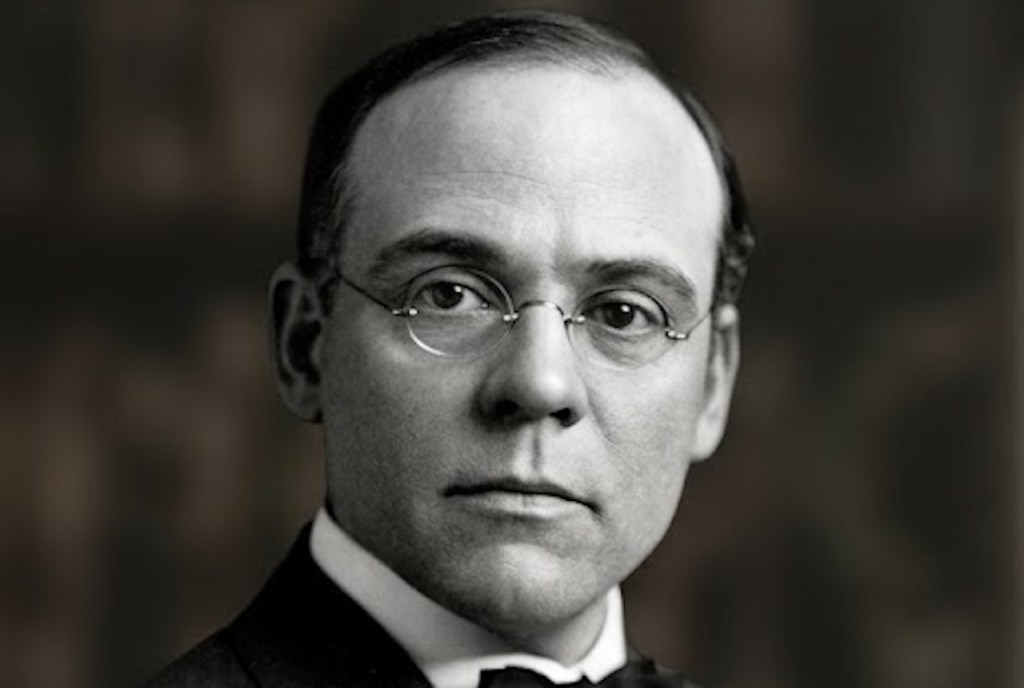
    Image: Edgar Lee Masters https://chicagoliteraryhof.org/inductees/profile/edgar-lee-masters
    Image: Edgar Lee Masters – Chicago Literary Hall of Fame

    Edgar Lee Masters’ “Frank Drummer”

    “Frank Drummer” had high aspirations for himself but died young at age twenty-five.

    Introduction and Text of “Frank Drummer”

    The epitaph”Frank Drummer” from Edgar Lee Masters’ American classic Spoon River Anthology features a character study of a milder personality than most of the other Spoon River collection o f speakers.

    Frank Drummer

    Out of a cell into this darkened space—
    The end at twenty-five!
    My tongue could not speak what stirred within me,  
    And the village thought me a fool.
    Yet at the start there was a clear vision,
    A high and urgent purpose in my soul  
    Which drove me on trying to memorize  
    The Encyclopedia Britannica!

    Commentary on “Frank Drummer”

    Although the reader never learns to what specific goals he aspired, Frank reveals that he at least thought himself capable of achieving great things.  He demonstrates an intense emotional make-up that was likely responsible for his landing in jail.

    First Movement:  Died in Jail

    Out of a cell into this darkened space—
    The end at twenty-five!
    My tongue could not speak what stirred within me,  
    And the village thought me a fool.

    Frank reports that he died in jail and was immediately introduced to the grave, “this darkened space”—and at the young age of twenty-five.  His emotion was so strong that he could not even speak, and thus the town “thought me a fool.”  Frank, of course, sees himself as one destined for high achievement, but instead he committed some crime that brought him low.

    Second Movement:  Bright Mind Turned Dark

    Yet at the start there was a clear vision,
    A high and urgent purpose in my soul  
    Which drove me on trying to memorize  
    The Encyclopedia Britannica!

    However, early on in this life, his mind was bright and his soul possessed “[a] high and urgent purpose.”  That high purpose motivated him to try to “memorize / The Encyclopedia Britannica!”

    Frank’s evaluation of his own capabilities show that he was not tethered to reality.  He thinks that memorizing a set of encyclopedia was enough to support his contention that he was clear-minded and had “high purpose.”

  • Edgar Lee Masters’ “Lydia Puckett”

    Image:  Edgar Lee Masters -  Alchetron https://alchetron.com/Edgar-Lee-Masters
    Image:  Edgar Lee Masters –  Alchetron

    Edgar Lee Masters’ “Lydia Puckett”

    Lydia Puckett spews forth a very different view of Knowlt Hoheimer.  Although he has asserted that he ran off and joined the army simply because he stole some livestock and would have landed in jail over it, Lydia believes Knowlt went to the army because she told him to buzz off.

    Introduction and Text of “Lydia Puckett”

    The character “Lydia Puckett” offers a little drama showcasing her thoughts on the topic of  Knowlt’s joining the army.

    Lydia Puckett

    Knowlt Hoheimer ran away to the war
    The day before Curl Trenary
    Swore out a warrant through Justice Arnett
    For stealing hogs.  
    But that’s not the reason he turned a soldier.
    He caught me running with Lucius Atherton.  
    We quarreled and I told him never again  
    To cross my path.
    Then he stole the hogs and went to the war—
    Back of every soldier is a woman.

    Commentary on “Lydia Puckett”

    Lydia Puckett spews forth a very different view of Knowlt Hoheimer.  Although he has asserted that he ran off and joined the army simply because he stole some livestock and would have landed in jail over it, Lydia believes Knowlt went to the army because she told him to buzz off.

    First Movement:  It Wasn’t the Hog-Stealing

    Knowlt Hoheimer ran away to the war
    The day before Curl Trenary
    Swore out a warrant through Justice Arnett
    For stealing hogs.  
    But that’s not the reason he turned a soldier.

    Lydia begins her epitaph by reporting some specifics not revealed by Knowlt.  Justice Arnett had sworn out a warrant for Knowlt to be arrested, after Curl Trenary, owner of the livestock stolen by Knowlt, had pressed charges against the thief.   

    Thus, Knowlt claims to have joined the army to avoid incarceration, but Lydia now insists that Knowlt did not got to war for that reason.

    Second Movement:  She Told Him to Buzz Off

    He caught me running with Lucius Atherton.  
    We quarreled and I told him never again  
    To cross my path.
    Then he stole the hogs and went to the war—
    Back of every soldier is a woman.

    Lydia and Knowlt had been sweethearts.  Then Lydia started seeing “Lucius Atherton” while still involved with Knowlt.  After Knowlt discovered Lydia’s cheating, the two quarreled.  Then Lydia ended her relationship with Knowlt.

    Knowlt, after the quarrel and break up of his relationship with Lydia, then committed the theft of Curl Trenary’s hogs.  He subsequently went off to war and was killed.  Lydia waxes philosophical about Knowlt’s having died as a soldier; she reasons, egomaniacally, “Back of every soldier is a woman.”

    Of course, Lydia may be exaggerating to hoist her own self-esteem.  One is wise to take much of the self-aggrandizement in these epitaphs with a huge grain of salt.  Same goes for Knowlt, although he is likely more truthful than Lydia, but certainty about either is far from certain.

  • Edgar Lee Masters’ “Knowlt Hoheimer”

    005a Image/Edgar-Lee-Masters-Portrait.jpg
    Image: Edgar Lee Masters

    Edgar Lee Masters’ “Knowlt Hoheimer”

    Edgar Lee Masters’ “Knowlt Hoheimer” features a 10-line poem (epitaph) with two movements.  As usual, this epitaph reveals the character of the speaker, even as he tries to castigate others.

    Introduction and Text of “Knowlt Hoheimer”

    In Edgar Lee Masters’ Spoon River Anthology, the short poem, or epitaph as Masters called them, “Knowlt Hoheimer” features a man who regrets among other things that he had the misfortune of dying in battle.

    Knowlt Hoheimer

    I was the first fruits of the battle of Missionary Ridge.  
    When I felt the bullet enter my heart
    I wished I had staid at home and gone to jail
    For stealing the hogs of Curl Trenary,
    Instead of running away and joining the army.
    Rather a thousand times the country jail  
    Than to lie under this marble figure with wings,  
    And this granite pedestal  
    Bearing the words, “Pro Patria.”  
    What do they mean, anyway?

    Commentary on “Knowlt Hoheimer”

    According to Knowlt, he simply joined the army to avoid jail.  He stole some livestock belonging to another man, and thus faced serving time for the crime.

    First Movement:  The Costs of Avoiding Jail 

    I was the first fruits of the battle of Missionary Ridge.  
    When I felt the bullet enter my heart
    I wished I had staid at home and gone to jail
    For stealing the hogs of Curl Trenary,
    Instead of running away and joining the army.

    Knowlt is claiming to have been the first casualty of “the battle of Missionary Ridge.”  He died after “the bullet enter[ed his] heart.”  Knowlt had signed up with the army and went off to war to avoid being incarcerated.  After stealing some farm animals belonging to Curl Trenary, Knowlt simply  ran off to join the army.  

    Because he is now dead, having become the first to die in the battle in which his infantry was engaged, he deeply regrets his choice.  He discovers that serving some jail time would be preferable to dying in war.

    Second Movement:  Regretting a Decision

    Rather a thousand times the country jail  
    Than to lie under this marble figure with wings,  
    And this granite pedestal  
    Bearing the words, “Pro Patria.”  
    What do they mean, anyway?

    Knowlt now professes great regret over his deadly decision.  He now figures that being jailed a thousand times would be better than dying and now lying under a slab of concrete with an inappropriate angelic symbol marking his grave.   Knowlt supposes that he would still be living, had he served his time in jail.  He imagines that serving a thousand jail terms would beat dying.

    Apparently, Knowlt has been recognized as a war hero. He rests beneath a majestic monument which he describes: “this marble figure with wings, / And this granite pedestal / Bearing the words, “Pro Patria.”  Knowlt reveals that he does not even comprehend that “Pro Patria” means “for country.”  He asks rather sarcastically, “What do they mean, anyway?”

    That he does not even know the Latin phrase suggests that he would not believe the sentiment even if he understood the words in translation.  He likely believes along with the speaker in “Dulce et Decorum Est” that Horace’s old adage was a lie.  Knowlt, by revealing what he does not know, further reveals his ignorant narcissism.

  • Edgar Lee Masters’ “‘Butch’ Weldy”

    Image: Edgar Lee Masters https://www.best-poems.net/edgar_lee_masters/index.html#google_vignette
    Image: Edgar Lee Masters

    Edgar Lee Masters’ “‘Butch’ Weldy”

    The epitaph “‘Butch’ Weldy” concludes the “Minerva” series. Butch declaims about his ordeal after a work related accident—with nary a nod to Minerva.

    Introduction with Text of Poem, “‘Butch’ Weldy”

    In Edgar Lee Masters’ “‘Butch’ Weldy” from the American classic Spoon River Anthology, the character of the man who impregnated Minerva Jones before he “got religion and steadied down” is revealed. 

    The reader will notice that Butch makes no reference to Minerva Jones, her father—Indignation Jones, or Doctor and Mrs. Meyers.   Butch’s choice of narrative subject reveals him to be a rather self-indulgent individual. The fifth and final installment in the “Minerva Jones” saga, “‘Butch’ Weldy” concludes the “Minerva Jones” series. 

    Butch declaims about his ordeal after a work related accident—with nary a nod to Minerva, but it is easy to understand how his own misery would tend to blot out his dealings with the ilk of Minerva, et al.

    Butch” Weldy

    After I got religion and steadied down
    They gave me a job in the canning works,  
    And every morning I had to fill  
    The tank in the yard with gasoline,
    That fed the blow-fires in the sheds
    To heat the soldering irons.
    And I mounted a rickety ladder to do it,
    Carrying buckets full of the stuff.
    One morning, as I stood there pouring,
    The air grew still and seemed to heave,
    And I shot up as the tank exploded,
    And down I came with both legs broken,
    And my eyes burned crisp as a couple of eggs.
    For someone left a blow-fire going,  
    And something sucked the flame in the tank.
    The Circuit Judge said whoever did it
    Was a fellow-servant of mine, and so
    Old Rhodes’ son didn’t have to pay me.  
    And I sat on the witness stand as blind
    As Jack the Fiddler, saying over and over,
    “I didn’t know him at all.”

    Interpretive Reading 

    Commentary on “‘Butch’ Weldy”

    ‘Butch’ Weldy reveals himself to be a young man who has tried to rehabilitate himself from his earlier bad behavior.  But he meets with a terrible work-related accident that leaves him blind and crippled.

    His getting religion and steadying down likely improved his life in some regards.   But then after accepting a job at the canning factory, things fell apart.  He eventually shows himself to be a rather muddled-brained fellow as the tries to navigate a court trial.

    First Movement:  Weldy Get Religion and Takes a Job at the Canning Factory

    After I got religion and steadied down
    They gave me a job in the canning works,  
    And every morning I had to fill  
    The tank in the yard with gasoline,
    That fed the blow-fires in the sheds
    To heat the soldering irons.
    And I mounted a rickety ladder to do it,

    Presenting himself as a ne’er-do-well, Butch reports that he was able to find work after he “got religion and steadied down,” exposing his character as a gad-about, who likely indulged in all manner of adolescent chicanery.  This estimation of Weldy’s character can be inferred from the fact that he impregnated Minerva Jones out- of-wedlock. 

    Likely, Butch led Minerva to believe he loved her and after carrying on with her for a time that suited his fancy, he dumped her.  It remains unclear if Weldy ever knew about the baby, Minerva was carrying.

    Equally likely, however, is that he left the village poetess after finding out about the pregnancy, which he would not have entertained a desire to support  As Minerva said, Butch left her “to her fate with Doctor Meyers.” 

    Butch explains his job at the canning works, how he “mounted a rickety ladder” every morning “to fill / The tank in the yard with gasoline.” This fuel then fed the “blow-fires in the sheds / To heat the soldering irons.” 

    Second Movement:   The Work Incident That Blinded and Crippled Butch 

    Carrying buckets full of the stuff.
    One morning, as I stood there pouring,
    The air grew still and seemed to heave,
    And I shot up as the tank exploded,
    And down I came with both legs broken,
    And my eyes burned crisp as a couple of eggs.
    For someone left a blow-fire going,  
    And something sucked the flame in the tank.

    Butch then states that on one work morning as he was filling the tank with gasoline that he had fetched up the ladder, he noticed that suddenly the air around him became still but “seemed to heave.”

    All of a sudden, his body was hurled upward “as the tank exploded.”   From this unfortunate event, Butch suffered two broken legs and his eyes “burned crisp as a couple of eggs,” thus, rendering him blind. 

    Third Movement:  The Trial and the Failure to Be Compensated

    For someone left a blow-fire going,  
    And something sucked the flame in the tank.
    The Circuit Judge said whoever did it
    Was a fellow-servant of mine, and so
    Old Rhodes’ son didn’t have to pay me.

    A fellow worker had allowed one of the fires to continue to burn. Butch explains that the air sucked the flame in the tank.  Butch’s narrative then lurches quickly to the trial in which the Circuit Judge fails to award Weldy any damages.

    Butch’s attempt to recover damages from the canning works for his injuries is thwarted by the court which found that because a fellow worker had been negligent and caused the accident, the owners of the canning works could not be held responsible. 

    Fourth Movement:    Weldy Sues the Wrong Party

    And I sat on the witness stand as blind
    As Jack the Fiddler, saying over and over,
    “I didn’t know him at all.”

    Butch repeatedly protests that he did not know the fellow worker at all.  This response reveals a lack of understanding; the court was not saying the Butch and the perpetrator were buddies; it was saying that the canning works’ owners were not responsible.  It would therefore seem to follow that if Butch were to sue the fellow worker, he might have a case. 

    Butch remarks that he sat on the witness stand, “as blind / As Jack the Fiddler,” repeating his claim that he did not know the fellow employ who neglected to douse the fire in the shed.  Jack the Fiddler is an allusion to “Blind Jack,” who appears later on in the Spoon River Anthology.

    The Minerva Jones Sequence

    1. Minerva Jones  The “Minerva Jones” epitaph features one of the most depraved characters of the Spoon River talking dead. She is self-absorbed and haughty, lacking empathy and self-awareness, causing her to remain ignorant of her own discordant thoughts. 
    2. “Indignation” Jones  In the second epitaph of the “Minerva” series, the poetess’ father, “Indignation” Jones, fulminates against Spoon River society.
    3. Doctor Meyers The third epitaph in the Minerva Jones series features “Doctor Meyers,” who performed the abortion that led to the death of the unfortunate poetess.
    4. Mrs. Meyers  In the fourth epitaph in this series,”Mrs. Meyers,” Dr. Meyers’ wife testifies that her husband, whom she calls “poor soul,” reaped what he sowed for his actions in life. The religious woman offers advice for a pleasant and peaceful life, reminding humanity to “Love God and keep his commandments.”
    5. “Butch” Weldy  The fifth and final epitaph “‘Butch’ Weldy” concludes the “Minerva Jones” series. Butch declaims about his ordeal after a work related accident—with nary a nod to Minerva.
  • Edgar Lee Masters’ “Mrs. Meyers”

    Image: Edgar Lee Masters, Esq. https://librarycollections.law.umn.edu/darrow/trials_details.php?id=4 Clarence Darrow Law Library
    Image: Edgar Lee Masters, Esq. – Clarence Darrow Law Library

    Edgar Lee Masters’ “Mrs. Meyers”

    In “Mrs. Meyers,” Dr. Meyers’ wife testifies that her husband, whom she calls “poor soul,” reaped what he sowed for his actions in life. The religious woman offers advice for a pleasant and peaceful life, reminding humanity to “Love God and keep his commandments.”

    Introduction with Text of “Mrs. Meyers”

    Edgar Lee Masters’”Mrs. Meyers” from Spoon River Anthology is an American-Innovative curtal sonnet.  The curtal sonnet features 11 lines with the traditional rime scheme of ABCABC DCBDC or ABCABC DBCDC.  The final line is often a half line; an example is Father Gerard Manley Hopkins’ “Pied Beauty.”  Father Hopkins is credited with this form’s invention.  

    However, Masters’ curtal departs from the traditional form as it dispenses with the rime scheme and is sectioned into two quatrains and one tercet; thus, it is an innovative or American curtal sonnet.

    “Mrs. Meyers” is the fourth poem (or epitaph as Masters labels these pieces) in the “Minerva Jones” sequence.  In this epitaph, Dr. Meyers’ wife offers her view of the Minerva Jones situation, offering further information about that saga, especially her husband’s rôle in it.

    In her simple statement featuring an unbiased view, Mrs. Meyers’ swears to the fact that her husband, whom she calls “Poor soul,” simply reaped his just rewards for his actions in life.  She is focusing primarily on the abortion that killed Minerva as well as her unborn baby.

    Mrs. Meyers

    He protested all his life long
    The newspapers lied about him villainously;
    That he was not at fault for Minerva’s fall,
    But only tried to help her.  
    Poor soul so sunk in sin he could not see
    That even trying to help her, as he called it,
    He had broken the law human and divine.
    Passers by, an ancient admonition to you:
    If your ways would be ways of pleasantness,
    And all your pathways peace,
    Love God and keep his commandments.

    Interpretive Reading:  

    Commentary on “Mrs. Meyers”

    Mrs. Meyers offers her opinion regarding her husband’s reputation and actions.  Often other characters help fill out the character of those who have earlier given testimony to their own actions and worth.  Mrs. Meyers additional information does add a snippet more to the saga beginning with Minerva and her abortion.

    First Movement:  A Drama of a Lifelong Protest

    He protested all his life long
    The newspapers lied about him villainously;
    That he was not at fault for Minerva’s fall,
    But only tried to help her.  

    The first movement of “Mrs. Meyers” is a quatrain stanza that has Mrs. Meyers speaking directly about her husband.  Without identifying him by name, the doctor’s wife simply begins by stating that her husband complained about his beleaguered lot for his entire life. 

    And the reader will remember that Doctor Meyers did just that; his little drama’s raison d’être is to expound on the grounds for his complaint.Mrs. Meyers reports more specifically about her husband’s protest; in his view, the newspapers reported falsely and viciously about the doctor.  

    Neither the doctor nor his wife offers any details regarding those reports. It is likely that Mrs. Meyers views the reports through a painful lens, while at the same time realizing that they were accurate.  But her husband always contended that he was only trying to help the pregnant poetess, Minerva Jones, by aborting her baby.

    Second Movement:   The Crime of Murder, Breaking the Sixth Commandment

    Poor soul so sunk in sin he could not see
    That even trying to help her, as he called it,
    He had broken the law human and divine.

    After explaining Doctor Meyers’ position on his situation, Mrs. Meyers reveals her philosophical, religious view of his problem.She believes that he committed a crime by murdering the unborn child.  And despite her sorrow and sympathy for him, she knows that those who commit such atrocities must be held accountable for breaking “the law human and divine.” 

    The doctor’s wife points out that her husband euphemistically referred to aborting Minerva’s baby as “trying to help her.”Mrs. Meyers calls her husband a “poor soul,” for he was obviously blind to his grave error.  

    He spent his lifetime trying to justify his complicity in committing the sin of murder, breaking the sixth Commandment, which in no way can be justified.  The doctor remained blind to his sin, while his wife saw it clearly.  The doctor was suffering from suicidal empathy.

    Third Movement:   The Tragedy of Poor Judgment

    Passers by, an ancient admonition to you:
    If your ways would be ways of pleasantness,
    And all your pathways peace,
    Love God and keep his commandments.

    Finally, Mrs. Meyers offers a piece of advice to the “passers by” who might become  aware of her account.  She tells them that if they would live a tranquil and peaceful life, they must “Love God and keep his commandments.”  

    Mrs. Meyers calls her advice “an ancient admonition,” which gives its import the weight of truth.   She had lived with a man who was basically a good soul but who allowed his ordinarily good judgment to be averted in order to appease a foolish woman.  

    Mrs. Meyers has lived with and observed the sorrow that results from failing to follow the ancient law of karma, of sowing and reaping.  The doctor’s wife offers her honest assessment of the situation; however, readers will likely hope that Doctor Meyers’ ultimate fate may be tempered by the fact that was simply trying to help a poor woman in her time of embarrassing trouble.

    The Minerva Jones Sequence

    1. Minerva Jones  The “Minerva Jones” epitaph features one of the most depraved characters of the Spoon River talking dead. She is self-absorbed and haughty, lacking empathy and self-awareness, causing her to remain ignorant of her own discordant thoughts. 
    2. “Indignation” Jones  In the second epitaph of the “Minerva” series, the poetess’ father, “Indignation” Jones, fulminates against Spoon River society.
    3. Doctor Meyers The third epitaph in the Minerva Jones series features “Doctor Meyers,” who performed the abortion that led to the death of the unfortunate poetess.
    4. Mrs. Meyers  In the fourth epitaph in this series,”Mrs. Meyers,” Dr. Meyers’ wife testifies that her husband, whom she calls “poor soul,” reaped what he sowed for his actions in life. The religious woman offers advice for a pleasant and peaceful life, reminding humanity to “Love God and keep his commandments.”
    5. “Butch” Weldy  The fifth and final epitaph “‘Butch’ Weldy” concludes the “Minerva Jones” series. Butch declaims about his ordeal after a work related accident—with nary a nod to Minerva.
  • Edgar Lee Masters’ “Doctor Meyers”

    Image:  Edgar Lee Masters  http://www.poorwilliam.net/al-082314.html  Poor William’s Almanack
    Image: Edgar Lee Masters Poor William’s Almanack

    Edgar Lee Masters’ “Doctor Meyers”

    The third poem in the Minerva Jones series features “Doctor Meyers,” who performed the abortion that led to the death of the unfortunate poetess.

    Introduction and Text of  “Doctor Meyers”

    Edgar Lee Masters’”Doctor Meyers” from Spoon River Anthology is an American-Innovative sonnet that innovatively and without rime begins with a couplet and then moves through the poem in four tercets.    The doctor’s involvement in Minerva’s situation deepens the drama and helps to fill out the characterization of the participants in this sordid event.

    Doctor Meyers 

    No other man, unless it was Doc Hill,
    Did more for people in this town than I.
    And all the weak, the halt, the improvident
    And those who could not pay flocked to me.
    I was good-hearted, easy Doctor Meyers.
    I was healthy, happy, in comfortable fortune,
    Blest with a congenial mate, my children raised,
    All wedded, doing well in the world.  
    And then one night, Minerva, the poetess,  
    Came to me in her trouble, crying.
    I tried to help her out—she died—
    They indicted me, the newspapers disgraced me,
    My wife perished of a broken heart.
    And pneumonia finished me.

    Reading of “Doctor Meyers” 

    Commentary on “Doctor Meyers”

    The third poem in the “Minerva Jones” series features “Doctor Meyers” the physician, who performed the illegal abortion that led to the death of the unfortunate poetess.

    The Couplet:   Braggart or Accurate and Evenhanded?

    No other man, unless it was Doc Hill,
    Did more for people in this town than I.

    The epitaph “Doctor Meyers” continues the “Minerva” series in the third installment of this mini-drama.  

    In the opening couplet, Doctor Meyers informs his listeners that he “did more for people of this town” than anyone else, with the possible exception of “Doc Hill.” A first impression taken from a cynical point of view might suppose that the character of Doctor Meyers resembles that of a braggart.  

    But because he reckons that another doctor might have done more for the people, the reader is likely to conclude that Doctor Meyers’ testimony is accurate and evenhanded. 

    The doctor does make it clear that he feels his service to his community had always been useful and valuable.  He sets up his drama in a way that makes his down-fall even more tragic than it otherwise would have been.

    First Tercet:   A Sympathetic Practice

    And all the weak, the halt, the improvident
    And those who could not pay flocked to me.
    I was good-hearted, easy Doctor Meyers.

    Doctor Mayers then describes his medical practice as a sympathetic one that cared for “all the weak, the halt, the improvident.”   And additionally, the sick ones “who could not pay” found Doctor Meyers helpful and accommodating as well.

    The doctor says that he was “good-hearted, easy Doctor Meyers,” and he is proffering the thoughts of those he had served.  Thus, he has established his stellar reputation as a fine, upstanding Spoon River citizen. 

    Again, a cynical view could be taken, but, in fact, he must have provided helpful services to those in need; otherwise, there is no explaining why patients “flocked to” him.  Also, he must have provided valuable medical services to most of the citizens because he remained financially well off.

    Second Tercet:  A Successful Life

    I was healthy, happy, in comfortable fortune,
    Blest with a congenial mate, my children raised,
    All wedded, doing well in the world.  

    The doctor then reports the quality of his life, describing it as “healthy, happy, in comfortable fortune.”  He had been “blest with a congenial mate,” and their children were successful and all married.  

    Doctor Meyers had achieved the success for which most people strive.  His successful, content life sets up the drama for his downfall.  This description of his life reveals one who has done his duty without deceiving or undermining others in his zeal to thrive.   Such a person deserves to live out his life in peace and tranquility—or so it would seem.

    Third Tercet:  Fate and the Unhealthy Turn

    And then one night, Minerva, the poetess,  
    Came to me in her trouble, crying.
    I tried to help her out—she died—

    But then the doctor’s fate takes an unhealthy turn, when one fateful night the village “poetess” Minerva Jones came to him crying because she was pregnant and unmarried. 
    Minerva was seeking to rid herself of her inconvenient condition.  

    The doctor tried to “help her out,” but then Minerva died.  By “help her out,” the doctor is euphemistically referring to the fact that he broke the law by performing an illegal abortion, killing Minerva’s unborn baby.

    In the first poem of the series, the reader had learned that Minerva had gone to Doctor Meyers after becoming impregnated with “Butch” Weldy’s child; Minerva reports that she died after treatment by Doctor Meyers.

    Fourth Tercet:  When Abortion Was Still Murder

    They indicted me, the newspapers disgraced me,
    My wife perished of a broken heart.
    And pneumonia finished me.

    Because abortion was illegal at that time, (Roe v Wade was decided in 1973, and these poems were written between 1900 and 1915), the doctor was arrested, indicted, and faced prison.   Of course, his fate was reported in the newspapers, and the turn of events adversely affected his wife.  He states that he died of “pneumonia.”

    Mrs. Meyers’ Perspective

    Without the next poem, “Mrs. Meyers,” number 4 in this series which offers testimony from the doctor’s wife, the reader might remain of the mind that Doctor Meyers did not deserve his fate.  But Mrs. Meyers puts things in their proper perspective.  Even so, the reader will continue to feel a certain amount of pity for this poor physician.

    Everyone associated with macabre tale deserves pity, even Minerva, who sought the abortion.  And unwanted pregnancy seldom leads to a congenial outcome.  Mrs. Meyers’ contribution offers a useful bit of information, helping fill out some of the details about this series.

    The Minerva Jones Sequence

    1. Minerva Jones  The “Minerva Jones” epitaph features one of the most depraved characters of the Spoon River talking dead. She is self-absorbed and haughty, lacking empathy and self-awareness, causing her to remain ignorant of her own discordant thoughts. 
    2. “Indignation” Jones  In the second epitaph of the “Minerva” series, the poetess’ father, “Indignation” Jones, fulminates against Spoon River society.
    3. Doctor Meyers The third epitaph in the Minerva Jones series features “Doctor Meyers,” who performed the abortion that led to the death of the unfortunate poetess.
    4. Mrs. Meyers  In the fourth epitaph in this series,”Mrs. Meyers,” Dr. Meyers’ wife testifies that her husband, whom she calls “poor soul,” reaped what he sowed for his actions in life. The religious woman offers advice for a pleasant and peaceful life, reminding humanity to “Love God and keep his commandments.”
    5. “Butch” Weldy  The fifth and final epitaph “‘Butch’ Weldy” concludes the “Minerva Jones” series. Butch declaims about his ordeal after a work related accident—with nary a nod to Minerva.
  • Edgar Lee Masters’ “‘Indignation’ Jones”

    Image: Edgar Lee Masters https://factfile.org/10-facts-about-edgar-lee-masters#google_vignette
    Image: Edgar Lee Masters

    Edgar Lee Masters’ “‘Indignation’ Jones”

    In the second poem/epigraph of the “Minerva” series, the poetess’ father, “Indignation” Jones, fulminates against Spoon River society.

    Introduction with Text of “‘Indignation’ Jones”

    Edgar Lee Masters’ “‘Indignation’ Jones” from Spoon River Anthology gives voice to the father of “Minerva Jones,” the village “poetess.  This father and daughter share two common character flaws:  their arrogance of a mightily, unearned self-worth and their vice of laying the blame for their own erroneous behavior on others. “Indignation” Jones’ blast of a full-throated denouncement of Spoon River society rings as hollow as Minerva’s, even as it is, perhaps, louder.

    “Indignation” Jones 

    You would not believe, would you,
    That I came from good Welsh stock?
    That I was purer blooded than the white trash here?
    And of more direct lineage than the New Englanders  
    And Virginians of Spoon River?
    You would not believe that I had been to school  
    And read some books.
    You saw me only as a run-down man,
    With matted hair and beard
    And ragged clothes.
    Sometimes a man’s life turns into a cancer
    From being bruised and continually bruised,  
    And swells into a purplish mass,
    Like growths on stalks of corn.
    Here was I, a carpenter, mired in a bog of life
    Into which I walked, thinking it was a meadow,  
    With a slattern for a wife, and poor Minerva, my daughter,
    Whom you tormented and drove to death.
    So I crept, crept, like a snail through the days  
    Of my life.
    No more you hear my footsteps in the morning,  
    Resounding on the hollow sidewalk,
    Going to the grocery store for a little corn meal  
    And a nickel’s worth of bacon.

    Interpretive Reading: 

    Commentary on “Indignation” Jones

    In the second poem of the “Minerva” series, the poetess’ father, “Indignation” Jones, offers his indignant rant against Spoon River society.

    First Movement:  An Indignant Man

    You would not believe, would you,
    That I came from good Welsh stock?
    That I was purer blooded than the white trash here?
    And of more direct lineage than the New Englanders  
    And Virginians of Spoon River?

    Indignation” Jones was apparently so bombastic as to carry the moniker “Indignation.”   Clearly, he deems himself superior to the other Spoon River residents as he fashions his claims in question form that reveal that he came from “good Welsh stock” and that his blood was pure—not like the “white trash” in Spoon River.

    Additionally, he pronounces himself and his stock’s lineage “more direct” than those from New England and Virginia that now reside in Spoon River. Jones is unlike the riffraff of the town; he asserts that his bloodline is untainted by southern Europeans or other races.

    Second Movement:  Unrecognized Erudition

    You would not believe that I had been to school  
    And read some books.
    You saw me only as a run-down man,
    With matted hair and beard
    And ragged clothes.

    Jones then claims that he has schooling and has book-learning; it was observed in his daughter’s epitaph that she too had some book-learning. But Jones is now taunting the town of Spoon River by accusing it of not believing that he had such erudition.

    Jones accuses the town of judging him by his outward appearance; all they saw was a disheveled man with unkempt “hair and beard,” wearing tattered clothing. Apparently, no one ever engaged in conversation with Jones, if his report can be given credence.

    Third Movement:  Unmasking Self-Pity

    Sometimes a man’s life turns into a cancer
    From being bruised and continually bruised,  
    And swells into a purplish mass,
    Like growths on stalks of corn.

    Philosophically, Jones surmises that sometimes men’s lives become ill-fated and diseased, as bad as “a cancer.”  Some men become bruised and continue to experience being bruised.  Because of the bruising, those lives turn into a swollen “purplish mass.”  They appear as nasty as the cancerous growths on cornstalks.

    Likening his life to a swollen, purplish mass on a corn stalk reveals Indignation’s own penchant for poetry.  And clearly it unmasks his own self-pity that along with the poetry he has passed on to his daughter Minerva, the village poetess.

    Fourth Movement:   A Carpenter, and  Yet

    Here was I, a carpenter, mired in a bog of life
    Into which I walked, thinking it was a meadow,  
    With a slattern for a wife, and poor Minerva, my daughter,
    Whom you tormented and drove to death.
    So I crept, crept, like a snail through the days

    The irony of “Indignation” Jones’ situation is enhanced as he reveals that he had been “a carpenter” by trade. But he has nothing more to say about his profession and moves quickly on to asserting his desperation at being mired down in a swamp-like condition his whole life-long.

    Jones had innocently entered this swamp, mistaking it for a lovely pasture.  He never tells his audience why he started out so optimistically, or exactly how or when he changed into the grump he now clearly is. He laments that his wife turned out to be “a slattern,” and his “poor Minerva” was “tormented and [driven] to death” by this unfeeling town.  

    Jones offers no clear reason for any down turn of luck:  was he a successful carpenter?  why did he marry a slattern in the first place?  was he aware that Minerva underwent an abortion, which, in fact, caused her death?

    Answers to these questions obviously would reveal that Jones is the actual cause of his own suffering, and like many of the talking dead here, who constantly place the blame on others for this bad luck, Jones is doing the same.

    Fifth Movement:    Depressed and Dejected

    So I crept, crept, like a snail through the days  
    Of my life.
    No more you hear my footsteps in the morning,  
    Resounding on the hollow sidewalk,
    Going to the grocery store for a little corn meal  
    And a nickel’s worth of bacon.

    Living depressed and dejected, mired in a nasty swamp-like existence, Jones moved “like a snail” through his days. Being stuck in a swamp and having a miserable existence accounts for his life seeming to move so slowly.

    But now he can announce that the riffraff can no longer hear his traipsing to the store in the morning to buy what little he could afford, only a “little corn meal” and a few cents’ worth of “bacon.  Consumed by an arrogant self-pity, “Indignation” Jones does not realize the vacuousness of his protestations of poverty.

    The Minerva Jones Sequence

    1. Minerva Jones  The “Minerva Jones” epitaph features one of the most depraved characters of the Spoon River talking dead. She is self-absorbed and haughty, lacking empathy and self-awareness, causing her to remain ignorant of her own discordant thoughts. 
    2. “Indignation” Jones  In the second epitaph of the “Minerva” series, the poetess’ father, “Indignation” Jones, fulminates against Spoon River society.
    3. Doctor Meyers The third epitaph in the Minerva Jones series features “Doctor Meyers,” who performed the abortion that led to the death of the unfortunate poetess.
    4. Mrs. Meyers  In the fourth epitaph in this series,”Mrs. Meyers,” Dr. Meyers’ wife testifies that her husband, whom she calls “poor soul,” reaped what he sowed for his actions in life. The religious woman offers advice for a pleasant and peaceful life, reminding humanity to “Love God and keep his commandments.”
    5. “Butch” Weldy  The fifth and final epitaph “‘Butch’ Weldy” concludes the “Minerva Jones” series. Butch declaims about his ordeal after a work related accident—with nary a nod to Minerva.