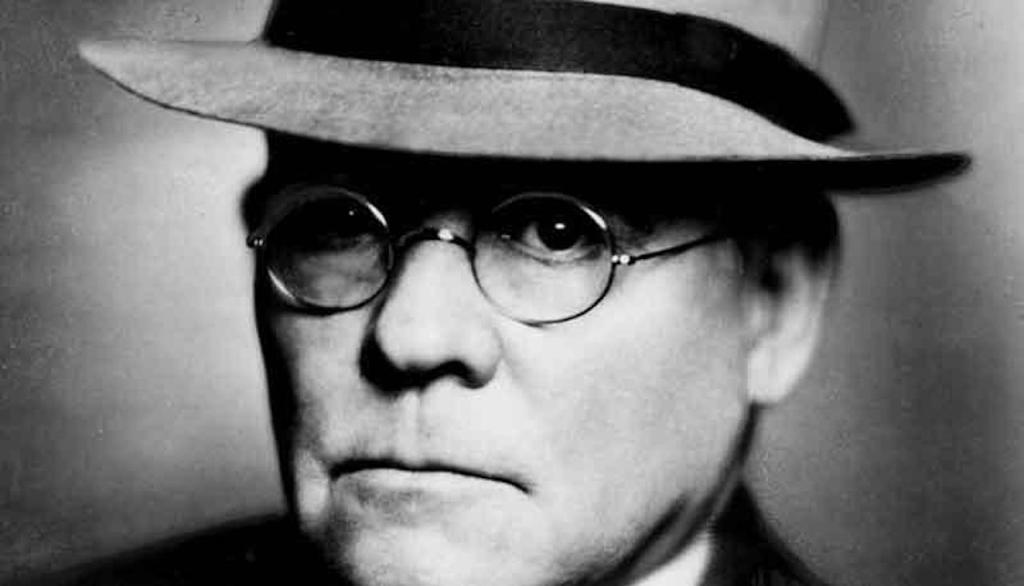
Edgar Lee Masters’ “A. D. Blood”
Edgar Lee Masters’ character A. D. Blood, who led a crusade to eliminate sin in Spoon River, is now suffering the agony of having a couple use his grave for trysting.
Introduction and Text of “A. D. Blood”
In Edgar Lee Masters’ “A. D. Blood” from the American classic Spoon River Anthology, the speaker offers a report that is short and distinct; he has a simple complaint that he hurls at the Spoon River folk in the form of a question. Mr. A. D. Blood is bemoaning the agony he suffers from having a couple employ his grave as a bed where they engaging in the act of fornication.
A. D. Blood
If you in the village think that my work was a good one,
Who closed the saloons and stopped all playing at cards,
And haled old Daisy Fraser before Justice Arnett,
In many a crusade to purge the people of sin;
Why do you let the milliner’s daughter Dora,
And the worthless son of Benjamin Pantier
Nightly make my grave their unholy pillow?
Commentary on “A. D. Blood”
Edgar Lee Masters’ character A. D. Blood is complaining that a couple has been using his grave for trysting, and the righteous Blood, who fancies he ridded the town of sin, does not take kindly to that unholy act.
First Movement: Appreciation Doubted
Mr. Blood cautiously assumes that the village of Spoon River appreciated the fact that he went about on “a crusade to purge the people of sin.” Mayor Blood was instrumental in closing saloons and shutting down gambling.
Mr. Blood even snitched on Daisy Fraser’s prostitution activity, causing her to be hauled up in from of Judge Arnett repeatedly. Mr. Blood is sure that his work was good, but he can only surmise that the town agreed with him; thus he is forced to place his activities in an “if” clause and then ask his pertinent question.
Second Movement: A Legend in His Own Mind
Because Mr. Blood had such a good influence on Spoon River, at least in his own mind, he now wonders why the town allows this impertinent couple to fornicate on his grave. Mr. Blood names the couple: “the worthless son of Benjamin Pantier” and “the milliner’s daughter Dora.”
Mr. Blood colorfully refers to their dirty deed as “[n]ightly mak[ing] my grave their unholy pillow.” But was Mr. Blood correct in calling Reuben Pantier “worthless”? Emily Sparks offers a different opinion regarding Reuben.


Questions, comments, suggestions offered in good faith are always welcome. If you use a pseudonym, please include your real name, if you expect a response.