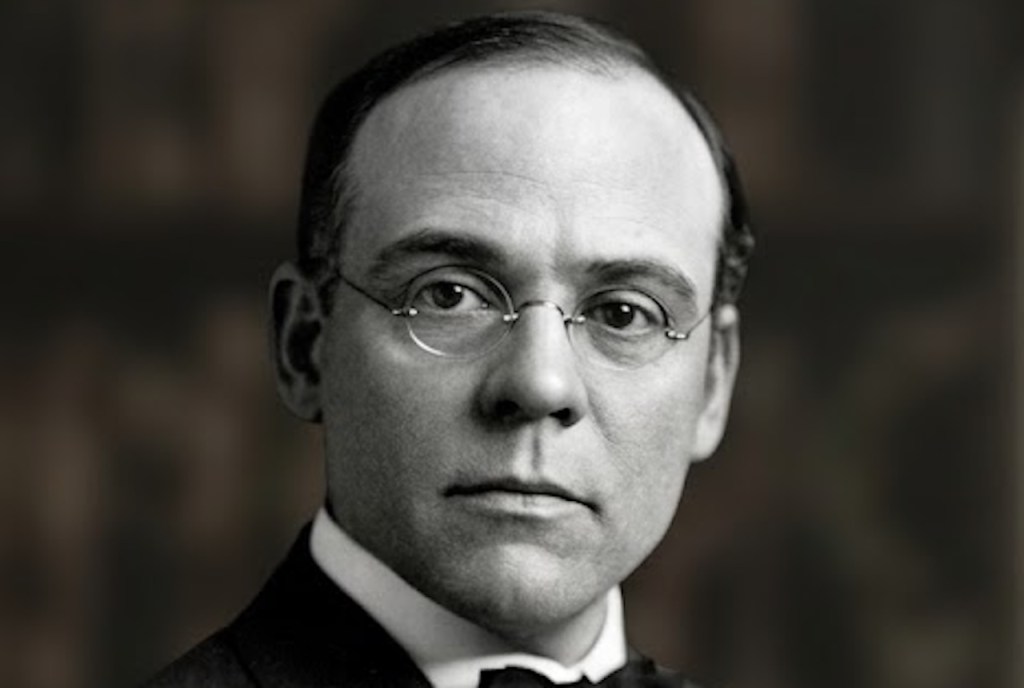
Edgar Lee Masters’ “John Horace Burleson”
The character John Horace Burleson is a failed writer, whose ambitions did not match his abilities.
Introduction and Text of “John Horace Burleson”
In Edgar Lee Masters’ “John Horace Burleson” from his American classic Spoon River Anthology, the speaker remains rather vague about important details of his life. The speaker had the unfortunate luck to win a prize for a school essay, and that bad luck tainted his view of his talent.
Even though Burleson was later lucky enough to publish a novel, he yearned to write a great epic about the war. As many mediocre and moderately talented artists do, Burleson overrated his abilities and then ends up blaming his marriage and his job for his failure to become known as the great writer he fancies he is.
John Horace Burleson
I won the prize essay at school
Here in the village,
And published a novel before I was twenty-five.
I went to the city for themes and to enrich my art;
There married the banker’s daughter,
And later became president of the bank—
Always looking forward to some leisure
To write an epic novel of the war.
Meanwhile friend of the great, and lover of letters,
And host to Matthew Arnold and to Emerson.
An after dinner speaker, writing essays
For local clubs. At last brought here—
My boyhood home, you know—
Not even a little tablet in Chicago
To keep my name alive.
How great it is to write the single line:
“Roll on, thou deep and dark blue Ocean, roll!”
Commentary on “John Horace Burleson”
The character speaking this epitaph is John Horace Burleson, a failed writer, whose ambitions did not equal his abilities. Comically, one might think of him as “Writing while pathetic.”
First Movement: Winning Can Be Bad
I won the prize essay at school
Here in the village,
And published a novel before I was twenty-five.
John Horace Burleson begins his epitaph by announcing that while a boy in school in the town of Spoon River, he enjoyed the pride of having won an essay contest. The speaker’s writing ability later landed him a publishing deal, and he came out with a novel before he had attained the age of twenty-five.
These Spoon River speakers customarily begin with some past memory that has made a deep impression on them. Burleson’s memory puts him at the beginning of what should have been a career in writing.
Second Movement: A Fly in the Ointment
I went to the city for themes and to enrich my art;
There married the banker’s daughter,
And later became president of the bank—
Always looking forward to some leisure
To write an epic novel of the war.
The speaker then begins to open up about what will turn out to be a fly in his ointment, that is, an eventuality that leads him astray. He moved to the city, which is Chicago, of course, as Spoon River is a fictional town in Illinois. Burleson then asserts that he moved to the city to bolster his writing career. He hoped to acquire subject matter for writing. He claims he wanted to, “enrich [his] art.”
Then the speaker reveals that he took the daughter of a banker for his wife. Later Burleson himself even became the bank’s president. As a man with the heavy responsibilities of husband and bank president, he does not have the time and wherewithal to do much writing.
However, the would-be writer could dream! And that’s what he did. Instead of writing, he just continually kept waiting until he could get sufficient time for the “leisure” that would afford him space to write his great American novel.
Burleson claims he had in mind to pen “an epic novel of the war,” which gives one pause. Perhaps he was chasing after the wrong goal. With his experience of winning a childhood essay contest, publishing a nondescript novel, and serving as a bank president, what experience did he have for writing about war, much less an epic about said subject?
Third Movement: Art Friendly
Meanwhile friend of the great, and lover of letters,
And host to Matthew Arnold and to Emerson.
As his life progresses, Burleson remains a friend of the arts and the great writers of the day because he fancied himself a great “lover of letters.” He claims to have entertained Matthew Arnold, the poet who composed the great and challenging poem “Dover Beach.”
Burleson also claims to have hosted Ralph Waldo Emerson, who composed many important, classic American essays and poems. The speaker merely name drops as he does not even make clear anything about the event during which he served as “host” to these great writers. Both Arnold and Emerson did lecture in Chicago—Emerson in 1867 and Arnold in 1884, nearly twenty years apart.
The visiting lectures of these writers reveal that Burleson could have, in fact, hosted each of them, but his failure to elaborate implies that he might be making up his claims and not actually had the privilege of meeting and greeting these great writers. Burleson offers no indication that he absorbed any influence or even acquired any lasting impressions of the writers.
Fourth Movement: Talentless and Driveless
An after dinner speaker, writing essays
For local clubs.
Nevertheless, Burleson’s life continues and he does find himself capable of giving after-dinner speeches from time to time. He also composes essays for “local clubs.” Again, the speaker remains mum about the subject matter involved in his speeches.
Burleson also offers no clue about what he wrote about for the clubs. The purpose of this omission is to likely throw suspicion on Burleson’s true talent as a writer. He claims to have had great ambitions but he makes it clear that he did not possess the talent and drive to accomplish his worthy goals.
Fifth Movement: Garnering no Notice
At last brought here—
My boyhood home, you know—
Not even a little tablet in Chicago
To keep my name alive.
And now Burleson’s death has brought him back to Spoon River, which is his “boyhood home.” And his next revelation is both telling and pathetic. Burleson’s life has made little impression on Chicago.
He has not even become well-known enough the merit a mention in the local newspapers. His name will die because no one has cared to even take note of his life and death. Thus it is, no doubt, likely that he is the only one who is taking note of his passing. And what happened to his wife? Did he spawn any offspring?
All the reader can glean from the little biographical information he offers is that Burleson yearned to write a great novel, met two of the biggest names in the field of the day but did not produce enough creatively to garner any notice.
Sixth Movement: How Great to Write . . .
How great it is to write the single line:
“Roll on, thou deep and dark blue Ocean, roll!”
Burleson’s final lines put the proper cap on his complaint. He singles out a line from Lord Byron’s Childe Harold’s Pilgrimage, Canto 4, Section 179, “Roll on, thou deep and dark blue Ocean, roll!“
Regarding this line, Burleson remarks how “great it is to write” such a line. Thus again the speaker is leaving his listeners scratching their heads wondering just what Burleson’s goal was.
Although he claimed he had the great desire to pen an epic war novel, he had won an essay contest, and had, in fact, published a novel, yet he selects a line from a poem to exalt as a model. Instead of writing, Burleson’s talents must have resided elsewhere, and he obviously did not know it; thus his claimed, chosen goal continued to elude him.
Ephemeral Fame
Many of the Spoon River soliloquists have been guilty of not truly being aware of their own intentions. Burleson’s true goal was likely just to achieve fame, not to actually become a great writer. And the great poet Emily Dickinson has succinctly summed up the ephemeral character of “fame”:
Fame is a bee.
It has a song –
It has a sting –
Ah, too, it has a wing.
Burleson’s bee of fame stung him and fled on its wing, leaving him little to sing about but his own sense of loss.


Questions, comments, suggestions offered in good faith are always welcome. If you use a pseudonym, please include your real name, if you expect a response.