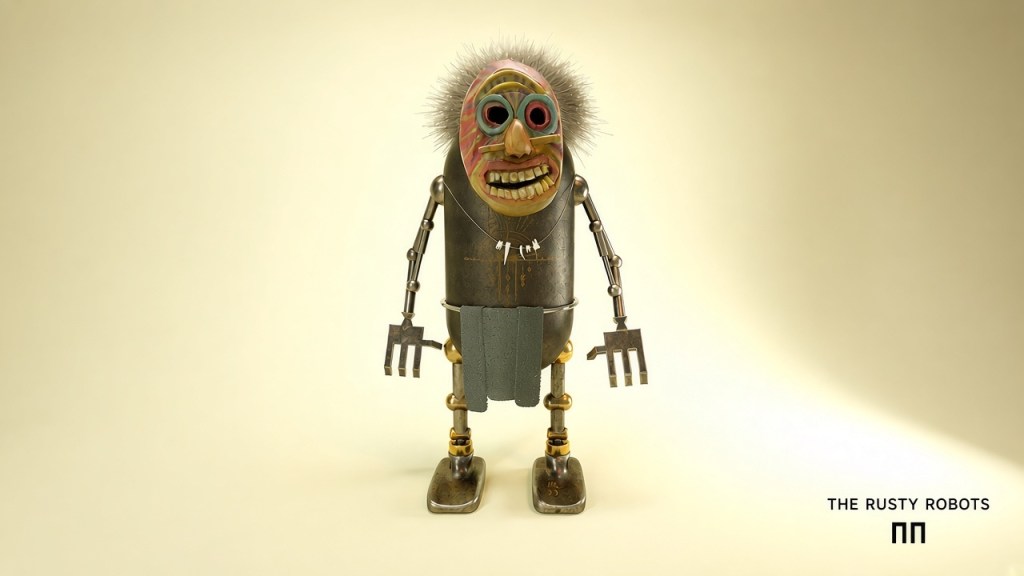
Superman did not wear his boots Like a rust belt robot. Rustbot strikes a blow for the humdrum: The “thou-shalt-nots” and the “thou-shalts” Drip no poetry. The carnivore shall Devour before being devoured & chase Each cent down the rodent hole: jump— Jump through the looking-glass.
Believe in only what you see, For beyond the rust belt, there Are shiny things, but they are not For us, they are for them People. We keep to ourselves Streetscape, river-bank, or pine-wood Where limbs scrape the clouds, And we all stay where we belong.
You don’t have to sell your soul To buy this advice. You have to rent It out on main street, where The clack of stilettos fuses With crack-heads, where gas-bag Gutter-crackers all sooner Hack as spit at you.
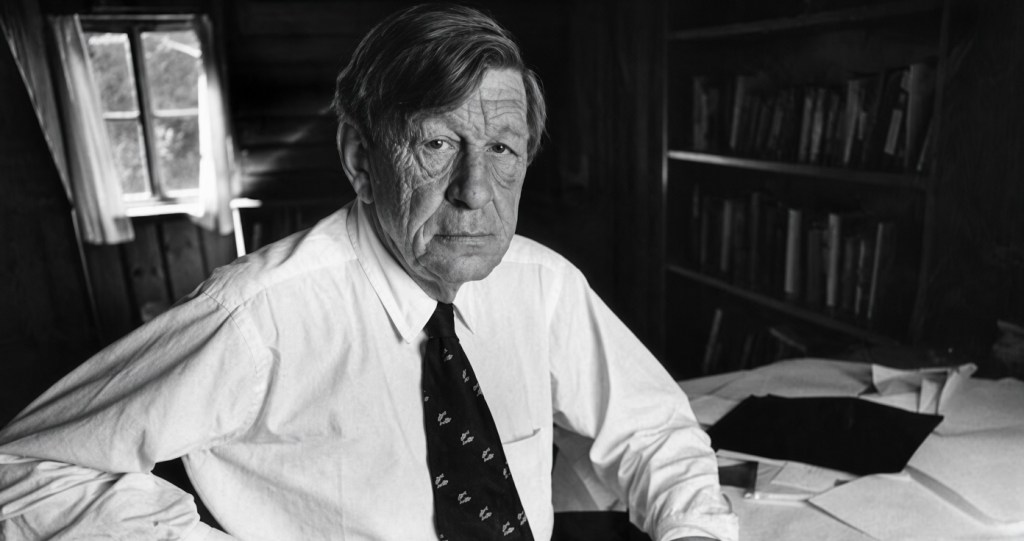
W. H. Auden’s politically influenced poem, “The Unknown Citizen,” portrays a character whose life has been stifled by “the State,” yet, who does not recognize his subjugation—making him a perfect citizen. In many respects, Auden’s speaker is foreshadowing the politics of 21st century America.
Introduction with Text of “The Unknown Citizen”
Poet W.H. Auden relocated from England to the United States in 1939. He experienced the stifling affects [1]of the New Deal legislation of the Franklin Delano Roosevelt administration.
The creeping socialistic policies were beginning to transform the once free nation into a ghetto of socialism. It has been calculated that those policies prolonged the Great Depression by as much as seven [2] years.
Once a country where the citizen was free to develop his talents and interests, the socialist policies of the FDR administration were beginning to stifle that character, placing the individual into a metaphoric, bureaucratic wall.
Auden’s dissatisfaction with this socialist trend plays out masterfully in his poem, “The Unknown Citizen.” The poem’s subtitle establishes a “citizen” without a name, who is thus characterless and without status as an individual.
The “citizen” has merely been designated by a vague string of letters and numbers which, however, are not without significance for the reader: “JS/07 M 378” likely alludes to the initials of the widely common name, “John Smith,” the “M” likely refers to “male,” while the numbers, station the man in the bureaucratic brick wall of similarity and conformity.
With bitter irony, this characterless individual is not an individual in the meaningful and humane sense of the word. That the state would erect a “marble monument” to such a brick-in-the-wall is risible.
Yet the designation—”unknown citizen”—is reminiscent of the term applied to those with high honor: “the unknown soldier,” whose remains cannot be identified but are granted honor for service to the country.
While honoring an unknown military serviceman, who lost his life defending his country has always been a high purpose for any country, no state would erect any kind of monument to the faceless, characterless individuals who make up the designated selection called “unknown citizen” as described in this highly symbolic and ironic poem.
The poem plays out in groups of rime with similar content, as it displays in eight movements.
The Unknown Citizen
(To JS/07 M 378 This Marble Monument Is Erected by the State)
He was found by the Bureau of Statistics to be One against whom there was no official complaint, And all the reports on his conduct agree That, in the modern sense of an old-fashioned word, he was a saint, For in everything he did he served the Greater Community. Except for the War till the day he retired He worked in a factory and never got fired, But satisfied his employers, Fudge Motors Inc. Yet he wasn’t a scab or odd in his views, For his Union reports that he paid his dues, (Our report on his Union shows it was sound) And our Social Psychology workers found That he was popular with his mates and liked a drink. The Press are convinced that he bought a paper every day And that his reactions to advertisements were normal in every way. Policies taken out in his name prove that he was fully insured, And his Health-card shows he was once in a hospital but left it cured. Both Producers Research and High-Grade Living declare He was fully sensible to the advantages of the Installment Plan And had everything necessary to the Modern Man, A phonograph, a radio, a car and a frigidaire. Our researchers into Public Opinion are content That he held the proper opinions for the time of year; When there was peace, he was for peace: when there was war, he went. He was married and added five children to the population, Which our Eugenist says was the right number for a parent of his generation. And our teachers report that he never interfered with their education. Was he free? Was he happy? The question is absurd: Had anything been wrong, we should certainly have heard.
Auden reading
Commentary on “The Unknown Citizen”
W. H. Auden’s widely anthologized classic poem portrays a pathetic character whose life has been stifled by “the State,” representing a form of government which seeks to subjugate the citizenry.
Auden employs irony to protest the state-owned life that goes against the basic American principle that the purpose of government is to protect “life, liberty, and the pursuit of happiness” for its citizens.
Auden’s wry description of his target reveals that this “unknown citizen” has had his independent ability to think and feel benumbed by the systemic, statist control under which he resides.
First Movement: A Bureaucrat Speaks
He was found by the Bureau of Statistics to be One against whom there was no official complaint, And all the reports on his conduct agree That, in the modern sense of an old-fashioned word, he was a saint, For in everything he did he served the Greater Community.
The speaker appears to be a bureaucrat who has found it important enough to file this report regarding the unknown individual, henceforth called “the unknown citizen.”
The speaker begins reporting that by a government agency no issues of resistance were ever detected by this “unknown citizen.” This unknown individual seemed to have functioned in a bureaucratically perfect manner throughout his life which resulted in his life “serv[ing] the Greater Community.”
The speaker offers a comic exaggeration of the citizen’s status by calling him a “saint”—but only in a “modern sense” of that “old-fashioned word,” indicating that any mystical or religious meaning be sucked out of that term. While a true saint remains a unique individual in his sainthood, this “saint” functions only for the state, not for his own unique relationship with the Divine.
Because the description of the citizen in this poem can be detected in the current political atmosphere of the USA, W. H. Auden has demonstrated a high level of prescience as his speaker reports on this state-obliging, willingly over-taxed citizen [3].
Such a citizen fits well the political ethos [4] of Manchurian Candidate Biden’s definition of a patriotic citizen [5], who, concurs with his former boss, Barack Obama, who insisted, “When you spread the wealth around, it’s good for everybody” [6].
The requirement for a controlling socialist state begins with citizens remaining willing pawns in the hands of government authority. Like sheep or lemmings, they follow and never question and that makes the statist overlord rich and satisfied with that citizenry.
Second Movement: An Unquestioning Joiner
Except for the War till the day he retired He worked in a factory and never got fired, But satisfied his employers, Fudge Motors Inc. Yet he wasn’t a scab or odd in his views, For his Union reports that he paid his dues, (Our report on his Union shows it was sound) And our Social Psychology workers found That he was popular with his mates and liked a drink.
This unknown citizen for his entire life labored in the factory or business concern called “Fudge Motor Inc.” He took time off as his patriotic duty called, such as serving in the military. He unquestioningly joined the “union” and paid his dues dutifully.
This unknown citizen enjoyed friends and a drink occasionally. Such a detail demonstrates the thorough intrusion of the state into the lives of individuals. The state has employed “Social Psychology workers” to determine the state-appropriate behavior of every aspect of every citizen’s life.
Auden’s prescience has foreshadowed the 21st century Democratic Party (USA) [7], which attempts to control every aspect of American lives today, from what people can eat and drink to how they use energy.
Third Movement: Controlling the Life of Everyman
The Press are convinced that he bought a paper every day And that his reactions to advertisements were normal in every way.
The unknown citizen read a daily newspaper. He responded properly to the commercial ads. Again, such a detail demonstrates the complete control that the government has over the individual.
The government is glad to report that this citizen had never lodged a complaint against it, as it is unlikely that he ever composed an editorial to the newspaper, detailing his dissatisfaction with any policies. He remained content with journalism, as well as with governmental bureaucracy, and he did not speak out against the social engineering.
Fourth Movement: Properly Insured
Policies taken out in his name prove that he was fully insured, And his Health-card shows he was once in a hospital but left it cured.
This subject of the state throughout his life bought the appropriate insurance policies. His health insurance covered his one hospital stay, and he left the facility returned to health again—and lucky for him, he was admitted to the hospital only once.
Fifth Movement: Alarming Information Possessed by the State
Both Producers Research and High-Grade Living declare He was fully sensible to the advantages of the Installment Plan And had everything necessary to the Modern Man, A phonograph, a radio, a car and a frigidaire.
The unknown citizen managed to procure all the modern conveniences, such as a record-player, a radio, an automobile, and even a refrigerator. Although this kind of information may be gleaned from survey companies that research such information, that the state is privy to it is alarming and unsatisfactory for a free society.
Sixth Movement: Proper Public Opinion
Our researchers into Public Opinion are content That he held the proper opinions for the time of year; When there was peace, he was for peace: when there was war, he went.
This citizen, according to “researchers into Public Opinion,” always maintained ways of thinking that pleased the state. He believed that there was peace if the state declared “there was peace.” But he accepted the state of war if the state reported that conflict broke out.
The governmental “Public Opinion” bureau would not be pleased if the citizen had bucked the system in any way, and no doubt bureaucratic sanctions of some sort would have been applied and reported. But this citizen passed the “Public Opinion” test.
Seventh Movement: Pleasing the State
He was married and added five children to the population, Which our Eugenist says was the right number for a parent of his generation. And our teachers report that he never interfered with their education.
This citizen’s family life also continued to please the state: the man took a wife and produced the appropriate number of children. That he did not “interfer[e] with their education” would be a blessing for the state, and of course, for the teachers’ unions [8]. The prescience of this poem is again observed as teachers’ unions currently are battling parents [9] to maintain power over those that they should serve.
Eighth Movement: The Struggle against a Faceless Bureaucracy
Was he free? Was he happy? The question is absurd: Had anything been wrong, we should certainly have heard.
Because this “unknown citizen” has been described as a non-thinker and a completely unfeeling individual, the inquiry into his status of freedom and happiness further demonstrates the irony of the situation. And yet, the final comment adds a further layer of ironic humor.
Because the bureaucratic offices had never heard any complaint from the man, they assume he was, in fact, free and happy, or at least thought himself to be thus. They reason that if anything were wrong, they would have heard.
Of course, the reader of this piece becomes painfully aware of the blandness and the dullness that the state has foisted upon this “citizen.” Following sheeplike the authoritative dictates of a powerful state was the status against which the Founding Fathers of the United States of America struggled to form the kind of government which would allow the most freedom for every citizen.
Poetry and Politics
While poetry and politics usually remain in an uneasy partnership, in the hands of an expert, a political statement can render itself workable in a poem. W. H. Auden was an expert at penning poems even of a political nature, even though he came to dislike many of his own political poems and “withdrew several from publication” [10].
Auden’s use of irony serves to carry “The Unknown Citizen” to a successful outcome. More important is the focus of the political poem; as political poems focus on merely damaging the reputation of an opponent or on falsehoods employed in propaganda, the pieces lose credibility.
But if, like “The Unknown Citizen,” the piece focuses on universal principles such as freedom and individuality, while dramatizing the results that failed policies bring about, the poem can work brilliantly.
Readers will note that the poem does not seek to disparage any government official’s reputation nor does it make propagandistic statements based on inaccuracies and blatant lies; it simply portrays the characteristics that the sheeplike citizen has assimilated in his desire to remain under the radar of state intrusion.
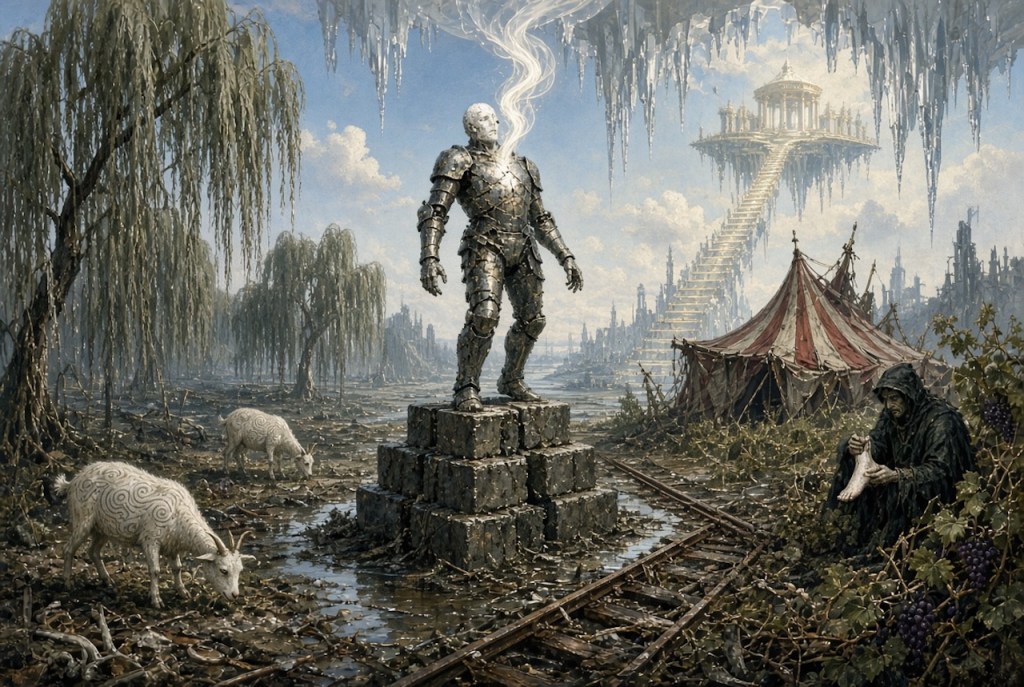
Unbuckled pride strains credulity On cinder blocks in the rain— Profit the man of steel Whose chalk mentality scratches Gold flecks of a summer night. Blank as the dank posted willows That slum the crum tide leeching The verbiage of metaphor walking Like sticks stuck down by the tracks.
In the brain waves of goats, they look For crystalline stalactites, But thiamine quelled the stretch As the Man of Steel hovered The neighborhood and plunged Into the hypocrisy of postmodern wit. Narrowing a brow, lifting a finger, Touting the untoutable, scraping The wilderness out of a circus town.
Night closes ultimately and Whimsy may fade But Dr. Frankenstink will cozy up to her lost foot As long as grapevines tangle on the waste land. Neither past nor future calls his name, and no island Brings comfort as much as departure without infamy. He left no logical heir to fan the flames of his poetry— That dust-drilled style of poetry that everybody reads Until morning echoes in the bottom of a bucket. Run on, Soul of the Man of Steel, to heaven’s loft.
“Understand therefore, that the LORD thy God giveth thee not this good land to possess it for thy righteousness. For thou art a stiffnecked people.” Deut. 9:6
When Auden said, “About suffering they were never wrong, The Old Masters,” he meant my parents. They went about it loud and long. My mother lost her father when she was twenty, married mine when she was twenty-one & practiced a vinegar tongue. He cursed the weather and my attitude. But they knew how to grow a garden.
When my husband plants onions, he doesn’t set them deep enough. They sit there growing like little pots sticking out of the ground. That’s wrong. They need to grow deep in the earth. So later when you pull up a green onion, the useless layers sluff off.
I never knew how they worshiped, I never knew if they prayed. I sat on the floor cross-legged like an Indian but as stiffnecked as an Israelite. I do, however, plant onions right.
William Butler Yeats possessed a lifelong dedication to the cultural and political rebirth of Ireland. He experienced life as a poet, playwright, and senator as he lived during turbulent shifts in Irish politics. He had a lifelong unquenchable thirst for artistic and spiritual truth.
William Butler Yeats remains one of the most influential literary figures of the modern era. His canon, which includes examples of his interest in Eastern philosophy, Irish folklore, and the vicissitudes of life, eventually resulted in the production of various literary forms such as poetry, drama, and essays [1].
Early Life and Education
Born on June 13, 1865, in Sandymount, County Dublin, William Butler Yeats was raised in a household that placed a high value on intellectual curiosity bolstered by cultural heritage.
His father, John Butler Yeats, was a skilled portrait painter, and his mother, Susan Pollexfen, created an environment steeped in Irish history and folklore. His early exposure to art, literature, and the stories of ancient Ireland instilled in Yeats a deep appreciation for myth and legend that would later become central themes in his work.
As a young man, Yeats attended the Metropolitan School of Art in Dublin, where he developed keen observational skills and his ability to capture what he saw into dramatic literary form such as poetry and plays.
His early attempts to write poetry were heavily influenced by Romanticism, and he found inspiration in the rich treasure house of Irish mythology and the natural world. These early experiences laid the groundwork for a lifelong exploration of the interplay between the tangible and the transcendent [2].
The Celtic Revival
In the 1880s and 1890s, Yeats became as a principal figure in the Celtic Revival—a cultural movement, aimed at reclaiming Ireland’s heritage from centuries of British domination.
Along with contemporaries such as Lady Gregory and Edward Martyn, Yeats sought to regain Irish identity through renewed interest and influence of its ancient myths and folklore. Yeats’ first poetry collections, including The Wanderings of Oisin and Other Poems (1889), offered a vision of Ireland as a land of fantastic beauty and heroic legend.
Yeats’ involvement in the Irish literary revival was not merely rhetorical and philosophical; he assisted in the founding of the National Literary Society and became a driving force behind the establishment of the Abbey Theatre, which became the center stage for modern Irish drama.
Through the Abbey Theatre, Yeats teamed up with playwrights and dramatists to stage works, combining Irish mythology with contemporary social and political issues; thus he became responsible for creating a distinctly Irish voice in the performing arts [3].
Changing Style and Interest in the Mysticism
As Yeats’ career progressed, his creative writings faced an important transformation. As he moved away from his early Romanticism, he took up themes of aging, disillusionment, and the search for spiritual meaning. This shift was influenced by his increasing interest in Eastern Philosophy and mystical traditions.
Yeats’ lifelong engagement with esoteric philosophy—ranging from Theosophy to the study of Eastern Philosophy—found expression in poems such as “The Second Coming” (1919) and “The Indian upon God” (1927). These works reflect a mind grappling with the decline of traditional values and the potential for rebirth through art and myth.
Yeats’ fascination with mysticism was not a mere intellectual exercise; it became deeply personal. He was a member of the Hermetic Order of the Golden Dawn, an organization dedicated to the study and practice of magical rituals and mysticism.
This involvement influenced his poems with symbolic imagery and complex mythological references that continue to captivate readers. The cyclical view of history that Yeats espoused—wherein civilizations rise, decay, and ultimately transform—became a recurring theme of his later work.
Unfortunately, Yeats’ study of Eastern Philosophy/Religion at times led him astray. Some of his works demonstrated that he failed to understand [4] the most important aspects of the concepts that he tried to portray in his poems.
While his poem “The Indian upon God” accurately reflects Eastern tenets, his “The Second Coming” and “Lapis Lazuli” go far astray. The bulk of his understanding of Eastern philosophical and religious concepts may be described no less than by the term assigned by T. S. Eliot “romantic misunderstanding.”
Politics and the Poet in Society
The early twentieth century was a period of political upheaval in Ireland, and Yeats became increasingly involved with the nationalist movement. Even though he never fully aligned himself with any particular political party, his writings and public statements often reflected a profound concern for the fate of his country. His poetry became the main medium through which he expressed hope but also anxiety about the future of his country.
Poems such as “Easter 1916” suggest that whatever happens no one can deny that those rebels will have died for their dreams. This speaker still cannot completely commit to those dreams. All he can admit is that everything has changed and “A terrible beauty is born.”
The Yeatsian musing of drama ultimately finds only that things have changed. The speaker cannot say if they have changed for better for worse. He and his generation will have to wait to see how that “terrible beauty” matures. However, this duality—of destruction and creation—reflects the eternal cycles that he so frequently explored in his verse.
Beyond his poetry, Yeats contributed directly to the political life of his nation. He served from 1922-1928 in the senate of the newly formed Irish Free State [5]. Although he was often seen as an outsider by both traditional nationalists and modernists, Yeats’ presence in the Senate suggested a belief in the vital role that artists and intellectuals play in shaping public discourse and guiding cultural evolution.
Yeats’ personal life was distressed by a long, unrequited love for Maud Gonne [6], an Irish revolutionary and actress. His feelings for Gonne inspired many of his poems, imbuing them with themes of love, loss, and longing. Gonne’s rejection of his marriage proposals did not deter Yeats from writing some of his most passionate poetry, where she often appears as a muse or an ideal.
Later in life, Yeats married Georgie Hyde-Lees, who not only became his companion but also a collaborator in his mystical explorations. They had two children, Anne and Michael, and their family life was documented in some of Yeats’ more personal poems, such as “A Prayer for My Daughter” and “The Circus Animals’ Desertion.”
The Alignment of Myth and Modernity
A central aspect of Yeats’ enduring appeal is his ability to weave together disparate strands of experience—myth and modernity, beauty and decay, hope and despair—into a coherent vision of the human condition. His poetry often reads as if it were both a dream and a prophecy, a blend of personal reflection and universal truth.
For instance, in “Sailing to Byzantium,” Yeats contrasts the ephemeral nature of the physical world with the possibility of spiritual transcendence [7]. The poem’s vivid imagery and rhythmic cadence invite readers to contemplate the eternal in the midst of the temporal, a duality that lies at the heart of Yeats’ artistic endeavor.
Yeats’ engagement with myth was not limited to the realm of poetry; it also informed his political and cultural projects. By reviving ancient Irish legends and traditions, he sought to restore a sense of identity and continuity to a country grappling with the forces of modernity and colonialism. His poem “The Fisherman” offers an example of this engagement.
His work with the Abbey Theatre was driven by the conviction that drama rooted in myth could foster a national spirit and provide a counterpoint to the homogenizing effects of globalization. In this way, Yeats not only redefined the poetic landscape but also contributed to a broader cultural renaissance in Ireland.
An Enduring Influence on Literature and Beyond
The influence of William Butler Yeats extends far beyond the confines of his own time. His exploration of spiritual and metaphysical themes paved the way for subsequent generations of poets and writers who sought to reconcile the material and the mystical. In the decades following his death, critics and scholars have revisited his work, probing its layers of symbolism and historical context to uncover new meanings and insights.
Contemporary literary critics often highlight the innovative structure and language of Yeats’ later poetry, noting how his use of recurring symbols and motifs creates a dense network of associations that invites endless interpretation.
His ability to encapsulate the complexities of Irish identity, the ravages of time, and the interplay between art and life continues to resonate in today’s discussions of literature and culture.
Moreover, Yeats’ political engagement and his belief in the transformative power of art have inspired not only writers but also activists and cultural leaders who view the arts as a vital force for social change [8].
That political engagement, however, begs for a caveat. As postmodernism crept ever nearer the hearts of the contemporary artists, the loss of skill and lack of interest in truth began to blight both poetry and criticism. That postmodern mind-set has little hope of heralding and power to transform society for the better.
Yeats’ Legacy
William Butler Yeats’ life and work remain a testament to the power of art to illuminate the deepest mysteries of existence. From his early days steeped in Irish folklore to his later explorations of mystical symbolism and political transformation, he navigated the tumultuous currents of change with a keen and reflective mind. His ability to articulate the paradoxes of beauty and decay, hope and despair, has left an indelible mark on the world of literature.
Yeats’ legacy is a reminder that art is not merely a reflection of life but also can serve as an agent of transformation, when steeped in desire for truth. His vision of history as a series of cyclic renewals, his embrace of the occult and the mythical, and his commitment to cultural and political renewal have all contributed to a body of work that continues to inspire and challenge readers. In celebrating Yeats, one celebrates the eternal quest for meaning—a quest that, like his poetry, transcends time and place.
Through his poetic innovations and his fervent commitment to the rebirth of Irish culture, William Butler Yeats carved out a unique space in the annals of literary history. His words continue to echo in classrooms, theaters, and the hearts of those who dare to dream beyond the confines of the everyday routine.
Death
In his later years, Yeats’ poetry grew increasingly reflective and introspective. The themes of mortality, the nature of artistic creation, and the inexorable passage of time became ever more emphasized.
Works such as The Tower (1928) and The Winding Stair and Other Poems (1933) reveal a man deeply aware of his own aging and the inevitable approach of death. Yet, even as he grappled with the transient nature of human life, he remained committed to the idea that art could capture eternal truths.
Despite experiencing poor health, Yeats continued to write and speak out on matters of art, politics, and philosophy until his final days. On the French Riviera, he spent his last months in quiet musing, as he sought solace and reflection away from the public eye.
On January 28, 1939, in Menton, France, [9] William Butler Yeats passed away peacefully . The world mourned not just the passing of a literary giant, but also the departure of a visionary who had continually challenged and enriched the cultural landscape of Ireland and beyond.
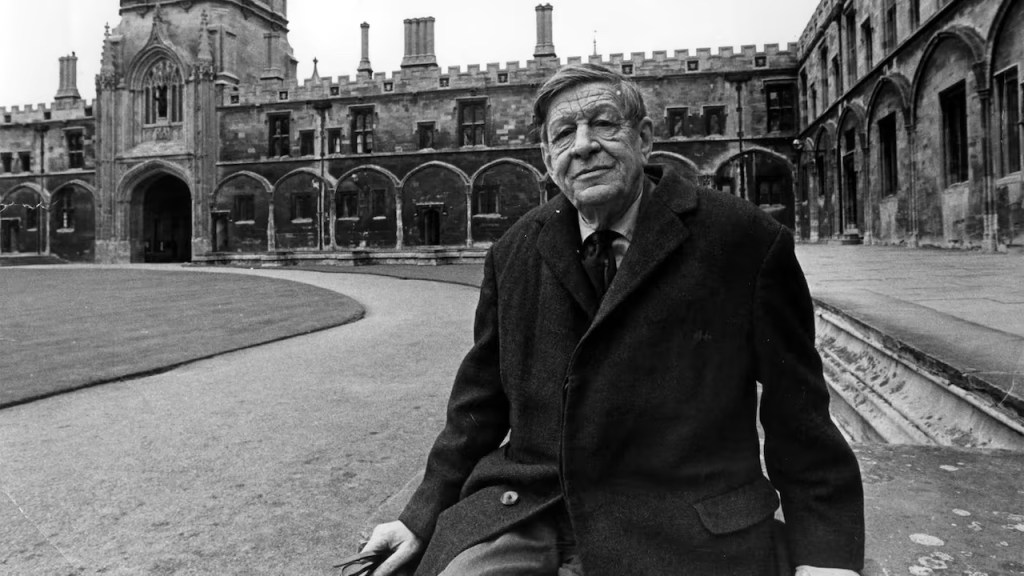
One of the most profound memorial poems to Yeats is W. H. Auden’s “In Memory of W. B. Yeats.” The following excerpt contains some of the poem’s most memorable lines, for example, “Mad Ireland hurt you into poetry”:
You were silly like us; your gift survived it all: The parish of rich women, physical decay, Yourself. Mad Ireland hurt you into poetry. Now Ireland has her madness and her weather still, For poetry makes nothing happen: it survives In the valley of its making where executives Would never want to tamper, flows on south From ranches of isolation and the busy griefs, Raw towns that we believe and die in; it survives, A way of happening, a mouth.
Sources
[1] Richard Ellmann,. Yeats. New York. Oxford University Press, 1989. [2] Mark Fryer,. The Life of W.B. Yeats: A Critical Biography. London. Bloomsbury Academic. 2001. [3] A. Norman Jeffares. The Cambridge Companion to W.B. Yeats. Cambridge University Press, 2006. [4] Linda S. Grimes. “William Butler Yeats’ Transformations of Eastern Religious Concepts.” Ball State University. PhD Dissertation. 1987. [5] Editors. “W. B. Yeats: Irish Author and Poet.” Britannica. Accessed February 22, 2025. [6] Lisa Fortin Jackson. “Great Irish Romances: W.B. Yeats and Maud Gonne.” Wild Geese. February 4, 2014. [7] C. S. Lieber. The Collected Works of W.B. Yeats. New York. Knopf. 1963. [8] William Butler Yeats. The Collected Poems of W.B. Yeats. Edited by Richard J. Finneran, New York. 2009. [9] Editors. “William Butlet Yeats.” Biography. August 17, 2020.
The speaker in Auden’s “Doggerel by a Senior Citizen” is a man of certain age, warning listeners that what he is about to spew is doggerel. But the claim is made in ironic jest; what the “doggerelist” is about to spew is the bitter truth, or at least in his humble opinion, about societal progress.
Introduction with Text from “Doggerel by a Senior Citizen”
By ironically jesting that his utterance will be only a bit of doggerel, the speaker in W. H. Auden’s “Doggerel by a Senior Citizen” lightens any blame he may receive, or any pushback against his views. The views and the biting criticism remain perfectly in line with the poet’s views as expressed in his utterly serious works, such as “The Unknown Citizen.”
Doggerel by a Senior Citizen
Our earth in 1969 Is not the planet I call mine, The world, I mean, that gives me strength To hold off chaos at arm’s length.
My Eden landscapes and their climes Are constructs from Edwardian times, When bath-rooms took up lots of space, And, before eating, one said Grace.
The automobile, the aeroplane, Are useful gadgets, but profane: The enginry of which I dream Is moved by water or by steam.
Reason requires that I approve The light-bulb which I cannot love: To me more reverence-commanding A fish-tail burner on the landing.
My family ghosts I fought and routed, Their values, though, I never doubted: I thought the Protestant Work-Ethic Both practical and sympathetic.
When couples played or sang duets, It was immoral to have debts: I shall continue till I die To pay in cash for what I buy.
The Book of Common Prayer we knew Was that of 1662: Though with-it sermons may be well, Liturgical reforms are hell.
Sex was of course — it always is — The most enticing of mysteries, But news-stands did not then supply Manichean pornography.
Then Speech was mannerly, an Art, Like learning not to belch or fart: I cannot settle which is worse, The Anti-Novel or Free Verse.
Nor are those Ph.D’s my kith, Who dig the symbol and the myth: I count myself a man of letters Who writes, or hopes to, for his betters.
Dare any call Permissiveness An educational success? Saner those class-rooms which I sat in, Compelled to study Greek and Latin.
Though I suspect the term is crap, There is a Generation Gap, Who is to blame? Those, old or young, Who will not learn their Mother-Tongue.
But Love, at least, is not a state Either en vogue or out-of-date, And I’ve true friends, I will allow, To talk and eat with here and now.
Me alienated? Bosh! It’s just As a sworn citizen who must Skirmish with it that I feel Most at home with what is Real.
Commentary on “Doggerel by a Senior Citizen”
Claiming to be offering a piece of doggerel, this speaker/senior-citizen offers his personal evaluation about what things are like in the year 1969.
First Movement: A Different Planet from Yesteryear
Our earth in 1969 Is not the planet I call mine, The world, I mean, that gives me strength To hold off chaos at arm’s length.
My Eden landscapes and their climes Are constructs from Edwardian times, When bath-rooms took up lots of space, And, before eating, one said Grace.
The speaker begins by alerting his listeners that he is reporting from the year 1969, and he then makes clear through a bit of exaggeration that the earth no longer represents the same “planet” upon which he had formerly existed. This new “earth” “planet” “world” has become a place of mayhem, and the disorder is so bad that he has difficulty keeping it at bay or out of his own life.
The speaker suggests that his own preference is for the Edwardian age [1], a period of prosperity and especially important in the areas of fashion and art. The speaker hints that religion was still a central feature in the family, as they said “Grace” before dining.
The speaker makes it clear that for him those times were “[his] Eden”—likely he does mean prelapsarian Eden [2]. He employs the rest of his discourse to show how the times in which he is now living can be considered quite postlapsarian [3]
Second Movement: Nostalgia Outsmarts Novelty
The automobile, the aeroplane, Are useful gadgets, but profane: The enginry of which I dream Is moved by water or by steam.
Reason requires that I approve The light-bulb which I cannot love: To me more reverence-commanding A fish-tail burner on the landing.
The speaker refers to the common inventions of the day, calling the mode of travel by car and plane “useful” but “profane.” He still longs for the steam engine and old-timey wind sailing.
Although he feels that he is likely required to accept used of the “light-bulb,” he cannot bring himself to “love” the object. He prefers the gaslight resembling a fish tail, which resulted from two gas jets spewing through two holes that fanned out and formed the fish tail shaped flame. Nostalgia often overcomes efficacy when it comes to every-day useful appliances.
Third Movement: From the Work Ethic to Debt Accumulation
My family ghosts I fought and routed, Their values, though, I never doubted: I thought the Protestant Work-Ethic Both practical and sympathetic.
When couples played or sang duets, It was immoral to have debts: I shall continue till I die To pay in cash for what I buy.
The speaker has overcome the idiosyncrasies of family life, coming to love those whom he had earlier found unpleasant; he has, however, always accepted the basic moral rectitude of those family members. They adhered to the “Protestant Work-Ethic,” which the speaker has always deemed practical and proper.
Back during the time when party entertainment often consisted of “couples [playing or singing] duets,” the society deemed acquiring debt an immoral act. The speaker assures his listener that to his dying day he will continue to accept that societal feature and continue to pay “in cash for what I buy.”
Fourth Movement: The Weakness of Liturgical Reforms
The Book of Common Prayer we knew Was that of 1662: Though with-it sermons may be well, Liturgical reforms are hell.
Sex was of course — it always is — The most enticing of mysteries, But news-stands did not then supply Manichean pornography.
The speaker remembers that before certain religious reforms a “Book of Common Prayer” held sway, and it dated all the way back to 1662, during the era of the Restoration of King Charles II [4].
Religious reformation always comes about through controversy. Those who have become accustomed to certain practices of worship distain any change and thus argue against “liturgical reforms” [5]. This speaker has already placed his likely position on such reforms; he naturally comes down solidly on the side against them, labeling such actions “hell.”
The speaker then cites “sex,” which is always engulfed in “mysteries,” as an example of one phase of life that has suffered because of “liturgical reforms”: the obnoxious duality of “Manichean pornography” now sits on “news-stands,” whereas in the more modest past, such sights would not have been tolerated.
Fifth Movement: The Problem with Language Study
Then Speech was mannerly, an Art, Like learning not to belch or fart: I cannot settle which is worse, The Anti-Novel or Free Verse.
Nor are those Ph.D’s my kith, Who dig the symbol and the myth: I count myself a man of letters Who writes, or hopes to, for his betters.
The speaker now tackles “Speech,” the art of the word, the use of letters that creates literary art. But first he delves into the vulgar act of belching or farting, which along with the “mannerly” use of language, would not be acceptable. Children would then learn to avoid the grossness involved in such human effusions.
The speaker says he has not decided which art form is more vile: “the Anti-Novel” or “Free Verse.” The proliferation of those holding doctoral degrees, particularly the Ph.D., does not impress this speaker; he finds this who revel in “myth” and “symbol” hold little interest for him.
He contrasts himself with those book-learned fellows: he assures his listeners that he himself is “a man of letters.” But instead of trying to appeal to the vulgar, profane masses, he strives to compose for “his betters.” He remains a bit humble in his claim by inserting “or hopes to.”
Sixth Movement: Lack of Discipline
Dare any call Permissiveness An educational success? Saner those class-rooms which I sat in, Compelled to study Greek and Latin.
Though I suspect the term is crap, There is a Generation Gap, Who is to blame? Those, old or young, Who will not learn their Mother-Tongue.
The speaker then refers to permissiveness as the bane of success in education. He finds the old-fashioned disciplines focusing on learning “Greek and Latin” to be a much “saner” focus for the classroom. He was such a student and now feels he has benefited for the rigor of such study of language.
Mentioning the buzz-phrase of the late sixties “Generation Gap,” he says its likely a worthless expression, even though he does detect that such a thing exists. But he wonders who is to blame for it? Is the the “old or young”? But then he answers his question by asserting that both are to blame, that is, those who refuse to learn “their Mother-Tongue.”
Seventh Movement: Love and Reality
But Love, at least, is not a state Either en vogue or out-of-date, And I’ve true friends, I will allow, To talk and eat with here and now.
Me alienated? Bosh! It’s just As a sworn citizen who must Skirmish with it that I feel Most at home with what is Real.
The speaker concludes with some uplifting thoughts: love, for example, never goes out of style, and he retains good friends with whom he can pleasantly dine and converse.
He seems to reject the notion that he might feel “alienated,” but he does suggest that the loosening of societal mores causes him to “skirmish” with it all. He insists that he feels most comfortable with “what is Real.” He does not equivocate with what he thinks that reality entails; he has just laid it all out in his piece of “doggerel.”
This room in my literary home holds links to poems, novels, and other literary works primarily written by others along with my personal commentaries on the works.