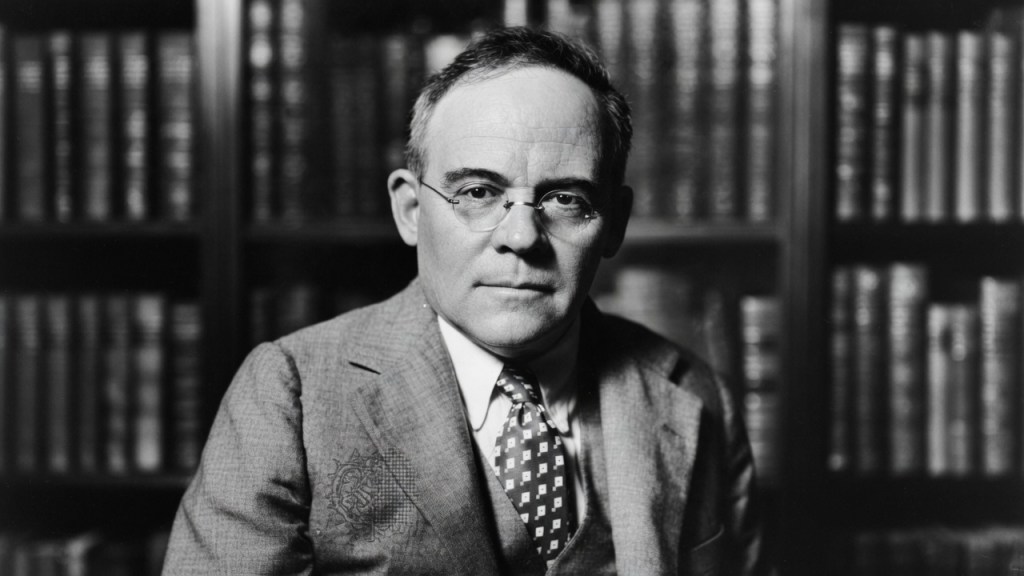
Edgar Lee Masters’ “Harold Arnett”
After committing suicide, “Harold Arnett” confirms the futility of the act.
Introduction and Text of “Harold Arnett”
Edgar Lee Masters’ “Harold Arnett” from the poet’s American classic Spoon River Anthology portrays a character who learns that the duty of facing trials and tribulations does not end with merely leaving the physical world.
Harold Arnett
I leaned against the mantel, sick, sick,
Thinking of my failure, looking into the abysm,
Weak from the noon-day heat.
A church bell sounded mournfully far away,
I heard the cry of a baby,
And the coughing of John Yarnell,
Bed-ridden, feverish, feverish, dying,
Then the violent voice of my wife:
“Watch out, the potatoes are burning!”
I smelled them … then there was irresistible disgust.
I pulled the trigger … blackness … light…
Unspeakable regret … fumbling for the world again.
Too late! Thus I came here,
With lungs for breathing … one cannot breathe here with lungs,
Though one must breathe…. Of what use is it
To rid one’s self of the world,
When no soul may ever escape the eternal destiny of life?
Commentary on “Harold Arnett”
After committing suicide, Harold Arnett confirms the futility of the act.
First Movement: Mind on Failure
I leaned against the mantel, sick, sick,
Thinking of my failure, looking into the abysm,
Weak from the noon-day heat.
The speaker begins his dismal report by describing how he is feeling very sick as he “lean[s] against the mantel.” His mind was on something at which he has failed, but about which he never reveals any information. He continues, saying he was peering into some deep chasm, and the hot mid-day heat was making him feel weak.
Second Movement: Church Bell and Crying Baby
A church bell sounded mournfully far away,
I heard the cry of a baby,
And the coughing of John Yarnell,
Bed-ridden, feverish, feverish, dying,
Then the violent voice of my wife:
Arnett then reports that he hears the distant chiming of “a church bell,” and he also hears a baby crying. At first, the reader will take these to be actual sounds that Arnett is hearing as he indulges his melancholy at the fireplace.
But then Arnett adds that he hears John Yarnell coughing. Unless John Yarnell is a sick guest in Arnett’s home, it is likely that Arnett is hearing all of these sounds only in his memory’s ear and not literally. Arnett never clears up any of these vague strands of thought because they are not the focus of his soliloquy.
Third Movement: A Violent Voice
Then the violent voice of my wife:
“Watch out, the potatoes are burning!”
I smelled them … then there was irresistible disgust.
Arnett snaps the reader into the scene as he claims he hears “the violent voice of [his]wife.” That “violent voice,” the reader later realizes will be the last thing Arnett hears, and perhaps its implication for the personality of the wife adds to the motivation of Arnett’s own violent act.
That violent voice screeched out to Arnett, trying to alert him that the potatoes were on fire. Arnett then becomes aware of the burning stench and is filled with an “irresistible disgust.”
Fourth Movement: There Is no Unringing the Bell
I pulled the trigger … blackness … light…
Unspeakable regret … fumbling for the world again.
With the sound of a “violent voice” and the disgusting smell of burning potatoes in his consciousness, Arnett “pulled the trigger,” killing himself. Immediately, he sees “blackness . . . light” and feels “unspeakable regret.”
Arnett then finds that he is “fumbling for the world again.” After Arnett had pulled the trigger, his next reflex was to attempt to unpull it. He immediately feels regretful of his impulsive act and tries, in vain, to get back to his life.
Fifth Movement: Moving Toward Destiny
Too late! Thus I came here,
With lungs for breathing … one cannot breathe here with lungs,
Though one must breathe….
However, Arnett’s “fumbling,” of course, fails. He reports, “Too late!” Therefore he says he “came here.” Instead of being taken to his grave, Arnett claims he “came” to it, sounding as if he simply leisurely gave up and walked into death instead of having been forced into it.
Arnett then focuses on the very physical, human act of “breathing.” As he entered death, he entered with “lungs for breathing,” but the very dreadful truth is that in the grave, or simply in the state beyond life, “one cannot breathe with lungs.”
Arnett’s emphasis on lungs and breathing demonstrates the strong connection between breathing and remaining in the physical body. Although Arnett’s physical body still possessed lungs, they became useless to him in the after-life state, and he is frustrated by that conundrum; he says, “one must breathe.”
Sixth Movement: The Futility of Suicide
… Of what use is it
To rid one’s self of the world,
When no soul may ever escape the eternal destiny of life?
Arnett’s conclusion demonstrates the futility of suicide. Framed as a question, Arnett’s final reaction emphasizes that souls cannot escape from their well-earned karma by simply ridding themselves of their physical bodies. Arnett asks, “what use is it,” to leave the world behind, when the soul still continues to be affected by its own “destiny of life,” another name for which is karma.


Questions, comments, suggestions offered in good faith are always welcome. If you use a pseudonym, please include your real name, if you expect a response.