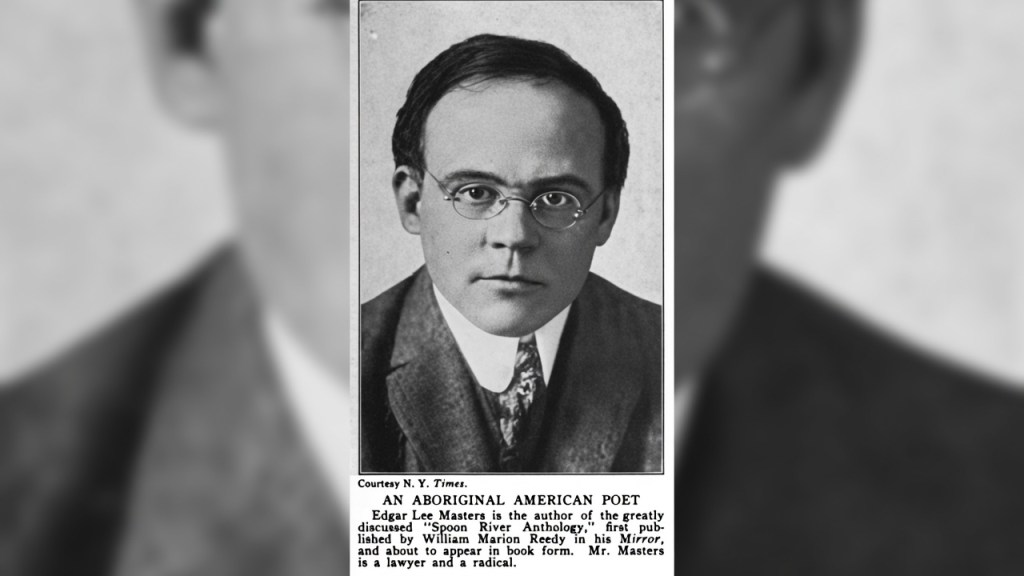
Edgar Lee Masters’ “Margaret Fuller Slack”
Named for America’s first feminist writer Margaret Fuller, Mrs. Slack laments marriage and motherhood that crushed her dreams of greatness in becoming a famous writer or the next George Eliot.
Introduction and Text of “Margaret Fuller Slack”
Edgar Lee Masters’ “Margaret Fuller Slack” from his American classic Spoon River Anthology depicts a tormented woman, who believes motherhood doomed her ambition to become a great writer.
Ironically named after the first American feminist, “Margaret Fuller,” Mrs. Slack does possess the egotistical personality of her namesake, while suffering the ills that they both decry.
Margaret Fuller Slack
I would have been as great as George Eliot
But for an untoward fate.
For look at the photograph of me made by Penniwit,
Chin resting on hand, and deep-set eyes—
Gray, too, and far-searching. But there was the old, old problem:
Should it be celibacy, matrimony or unchastity?
Then John Slack, the rich druggist, wooed me,
Luring me with the promise of leisure for my novel,
And I married him, giving birth to eight children,
And had no time to write.
It was all over with me, anyway,
When I ran the needle in my hand
While washing the baby’s things,
And died from lock-jaw, an ironical death. Hear me, ambitious souls,
Sex is the curse of life!
Commentary on “Margaret Fuller Slack”
Named for America’s first feminist writer, Margaret Fuller, Mrs. Slack laments marriage and motherhood that crushed her dreams of greatness in becoming the next George Eliot.
First Movement: She Would Have
I would have been as great as George Eliot
But for an untoward fate.
Mrs. Slack begins her tirade by proclaiming the greatness she “would have” accomplished: she “would have been as great as George Eliot.” Nevertheless, this speaker did not ascend to such a great height, because “untoward fate” stepped on her dreams.
Second Movement: A Photo of Profundity
For look at the photograph of me made by Penniwit,
Chin resting on hand, and deep-set eyes—
Gray, too, and far-searching.
Mrs. Slack possesses a “photograph of [herself] made by Penniwit,” an artist who later also speaks in the Spoon River Anthology. Margaret uses the photograph to support her contention that she was marked for greatness.
In the photo, she sits with her “chin resting on hand,” and she has “deep-set eyes” that are “gray” and “far-searching.” These qualities in her estimation reveal a profundity that should have allowed her to accomplish greatness, the absence of which she now laments.
Third Movement: The Age Old Problem
But there was the old, old problem:
Should it be celibacy, matrimony or unchastity?
Margaret then philosophizes about the human condition, claiming the “old, old problem” is whether one should remain celibate, marry, or simply commit fornication. Mrs. Slack does not reveal how deeply she thought about those alternatives, or even if she had thought about them at all. As the speaker reminisces, she, no doubt, adds to her own self worth, by implying that she had thought and pondered those issues.
Fourth Movement: The Promise of Leisure
Then John Slack, the rich druggist, wooed me,
Luring me with the promise of leisure for my novel,
And I married him, giving birth to eight children,
And had no time to write.
Before Mrs. Slack had the opportunity to determine which path was the right one for her to travel to fame, she found herself “wooed” by “John Slack, the rich druggist.” The druggist “lur[ed]” her by “promis[ing] [her] leisure”—time she would use to write “[her] novel.”
With this promise of leisure, Margaret married the druggist, but instead of writing, she proceeded to give birth to “eight children.” Of course, with eight children, she can fall back on the excuse that she “had no time to write.” Apparently, Mrs. Slack remained blissfully unaware that famous poet, Anne Bradstreet, created a significant body of writing while birthing and raising eight children.
Fifth Movement: Dying of Lock-Jaw, Filled with Words
It was all over with me, anyway,
When I ran the needle in my hand
While washing the baby’s things,
And died from lock-jaw, an ironical death.
Margaret then reveals how she died, “It was all over with me, anyway, / When I ran the needle in my hand.” She met with this sad fate, while “washing the baby’s things.” She contracted “lock-jaw” and died.
Mrs. Slack finds dying of lock-jaw to be “ironical,” no doubt, because she considered herself filled with words—words unfortunately that would remain unexpressed because of the time-consuming servitude of raising a family. And, of course, in keeping with her own selfishness, she does not consider how her absence will impact the lives of the children she leaves behind.
Sixth Movement: The Urge vs the Philosophy
Hear me, ambitious souls,
Sex is the curse of life!
Margaret’s final statement oversimplifies her lot but reveals her philosophical conclusion about “life” as she remarks, “Sex is the curse of life!” Readers, unfortunately, will never be able to experience the profundity of that statement because Margaret’s ambition to write was obliterated by her urge to procreate.


Questions, comments, suggestions offered in good faith are always welcome. If you use a pseudonym, please include your real name, if you expect a response.